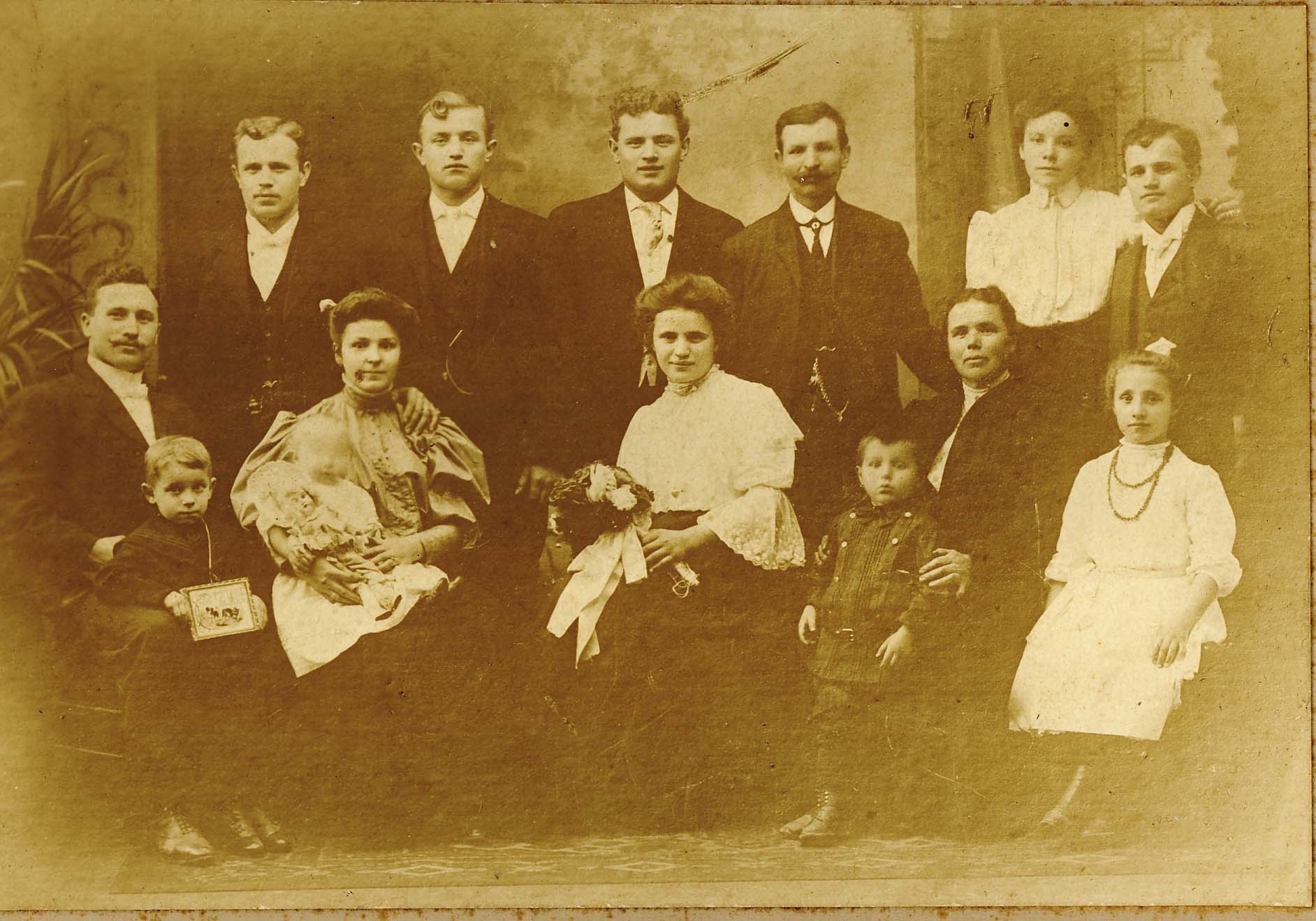
I always return to this picture because it is the only picture of Caroline and all her children. Her LIVING children.
As I’ve searched the parish records for birth records, I’ve encountered additional children of Caroline and Joseph. Upon examination of the 1910 Federal Census, she lists 14 children born with eight living! Here they are:
*Phillip – born on March 1, 1879. Died on May 1, 1883 of smallpox
John – born on March 5, 1880. Died on February 1, 1942
*Francis – born March/April 1881. Died August 23, 1881, of Dysentery
*Maria – born on March 18, 1883. Died on May 15, 1883 of smallpox
Joseph – born on August 9, 1884. Died on November 9, 1974
Konrad – born on May 3, 1886. Died on December 28, 1944
Charles – born on September 18, 1887. Died on April 30, 1952
Francis – born on September 1, 1889. Date of death unknown
*Stanislaus – born on August 14, 1891. Died on August 14, 1891, at birth
Mary – born on January 21, 1893. Died on Mary 1, 1995
Elizabeth – born on September 24, 1896. Date of death unknown
*Baby Girl Bonk – born June 28, 1899. Died on June 28, 1899, at birth
Walter Bonk – born on August 29, 1903. Died on August 3, 1998
I’m missing the 14th birth, but I’m still reviewing the records. Caroline and Joseph were married in 1876 so I checked 9 months from their wedding to 9 months before Phillip was born with no success. Next up will be the gaps between the other births!
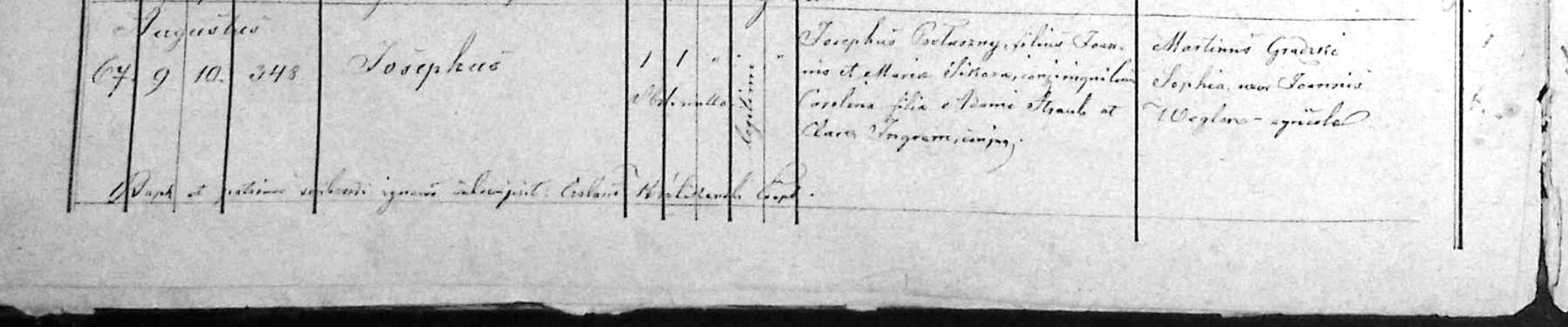
Joseph Posluszny, born August 9, 1884, was my grand-uncle. He was the fourth child of Joseph and Caroline (Straub) Posluszny. Like his brother John, he was born in Lipnica, part of the district of Dzikowiec in southeast Poland. I’ve found a discrepancy in his date of birth in his WWI enlistment record but his birth record from the Lipnica archives shows he was born in 1884.
Joseph’s birth record – August 9 birth, 10th baptism, house number 248
Birth records list their father’s occupation as Colonista, which indicates they were German settlers who migrated to the region in the 18th century as part of a colonization effort by the Austrian Empire. With that migration came land, and family stories say they had a farm.
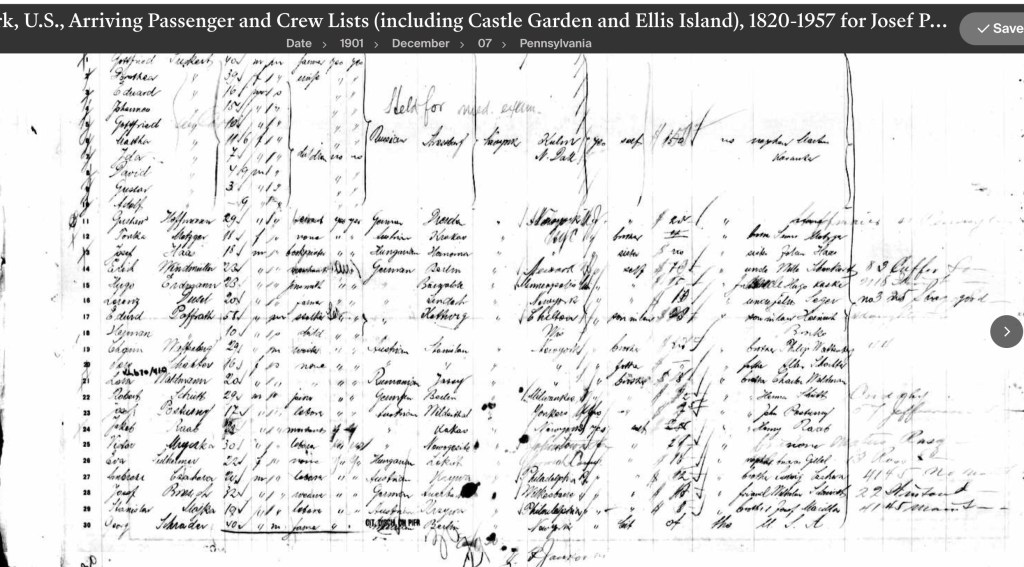
At 17, he departed for the United States on November 24, 1901, and arrived in New York Harbor on December 1st. His ship, Pennsylvania, departed from Hamburg, Germany, with stops at Boulogne-sur-Mer, France, and Plymouth, England, before arriving at its final destination of New York harbor. He was in Zwischendeck, better known as Steerage. Two weeks door to door, I wonder what he was thinking as he traveled. There is no person on his manifest page coming from Wildenthal so it appears he traveled alone.
He was heading to his brother, John Posluszny, who immigrated in 1900. The address for John on the manifest says 57 Jefferson Street in Yonkers. Although there isn’t a census listing for John in 1900, which I mentioned in my story about him, I found their uncle, Michael Straub, his wife Elizabeth, son Michael, and son John at that address.
Ship’s manifest from Joseph’s arrival Line 23
Joseph settled in as a hatter, just like his siblings, and continued to live on Jefferson Street at number 41 in the 1905 census.
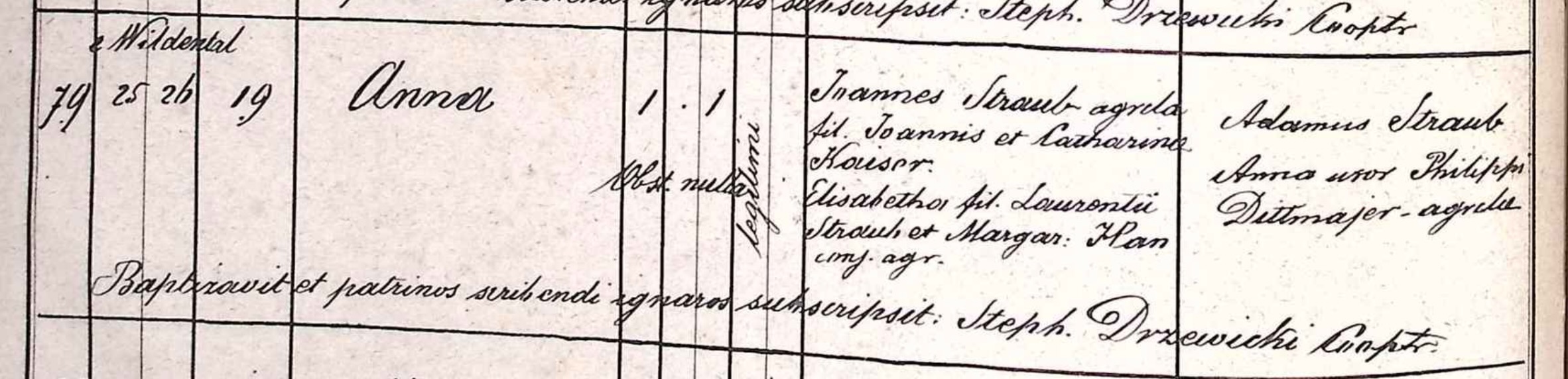
His future wife, Anna Straub, was born in Wildenthal (now Dzikowicz) on December 25, 1887, to Joannes Straub and his wife Elizabetha. Elizabetha’s maiden name, and married name, were Straub, so there may be a familial connection to Joseph’s mother.
Anna’s birth record – December 25 birth, 26th baptism, house number 19
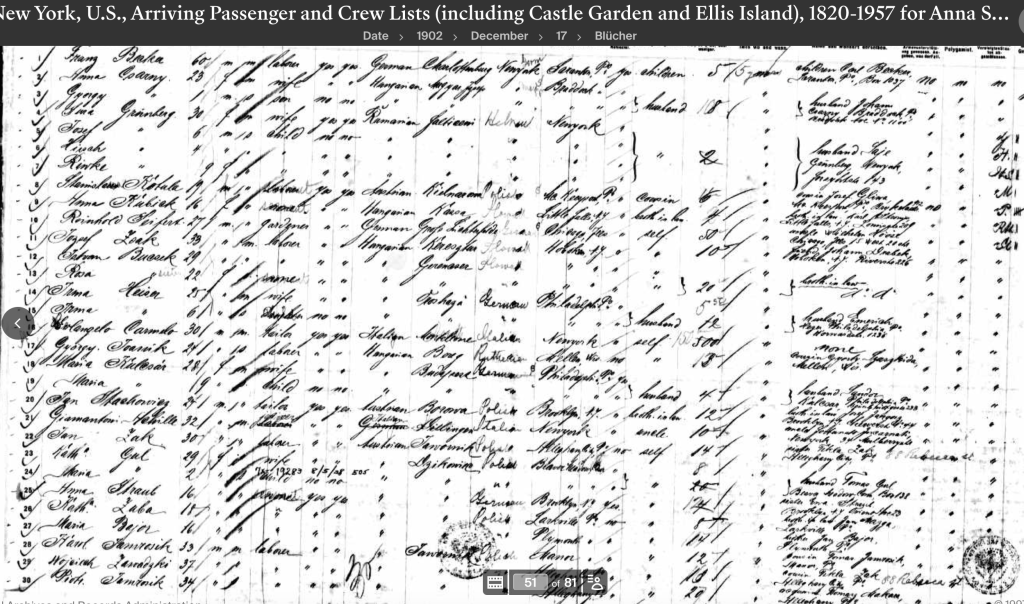
Anna departed Hamburg Germany on the Blücher and arrived in the United States on December 17, 1902. She headed to the home of her sister, Eva Straub, in Brooklyn, NY, with $12 in her pocket.
Ship’s manifest from Anna’s arrival Line 25
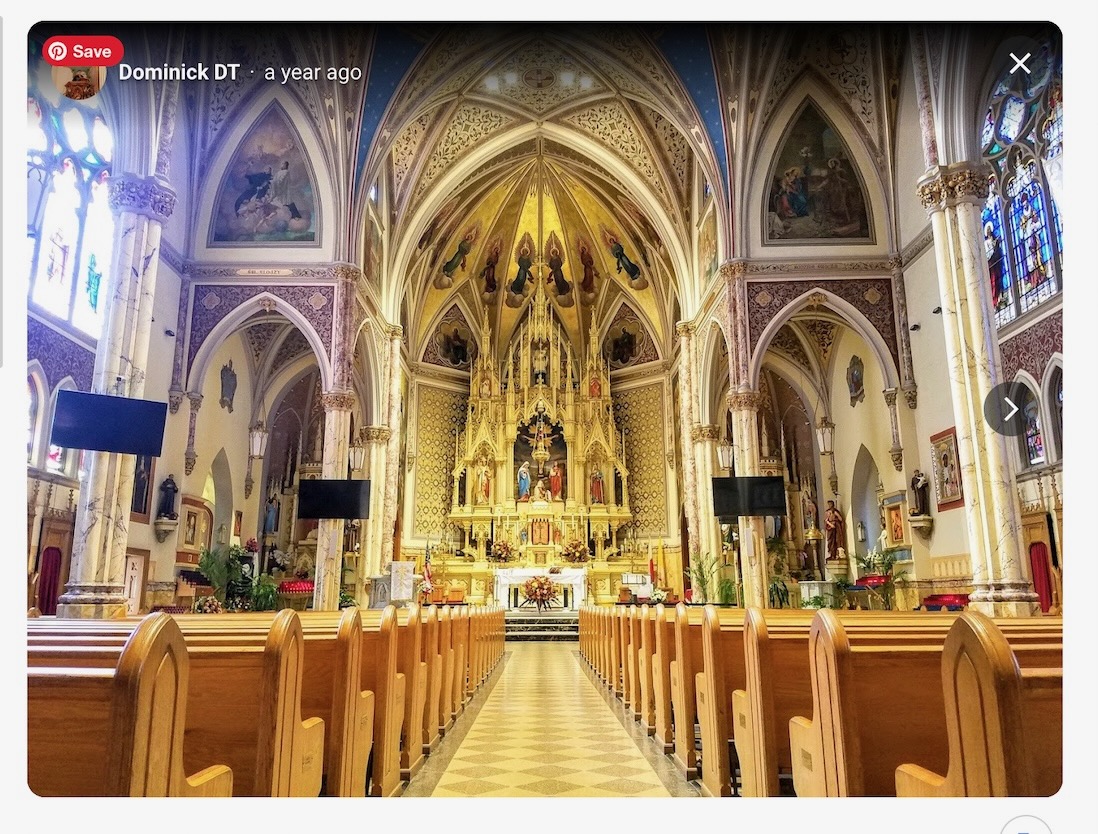
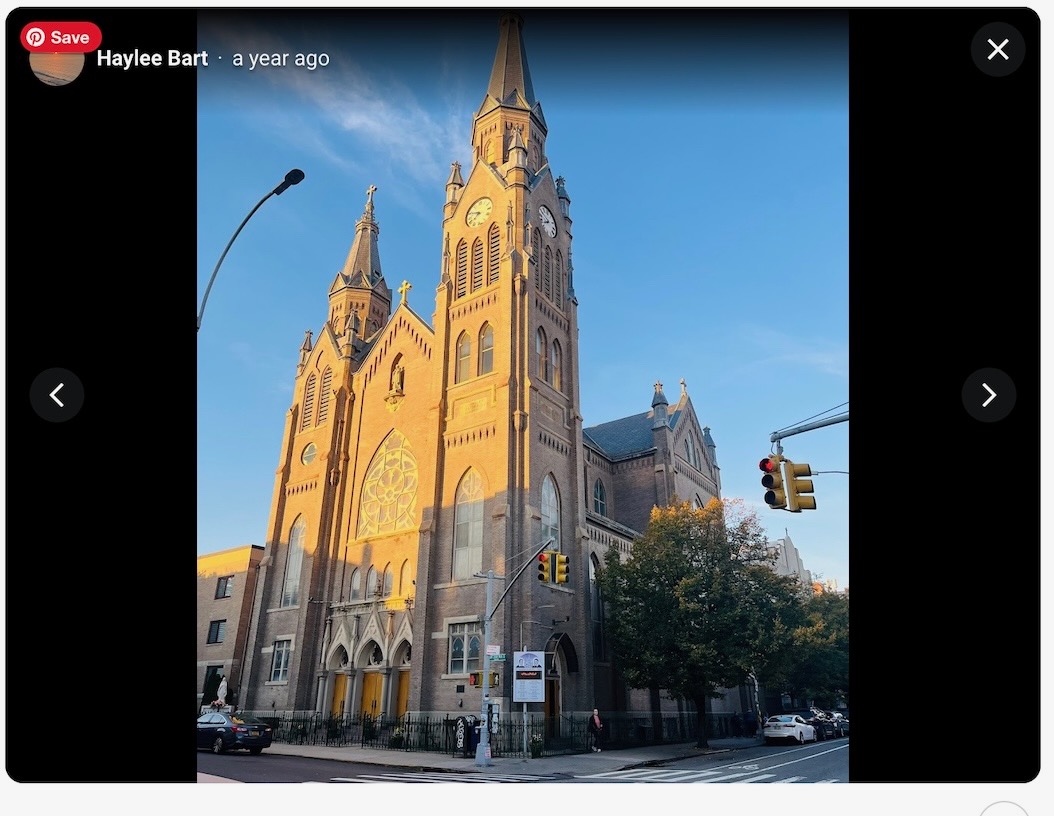
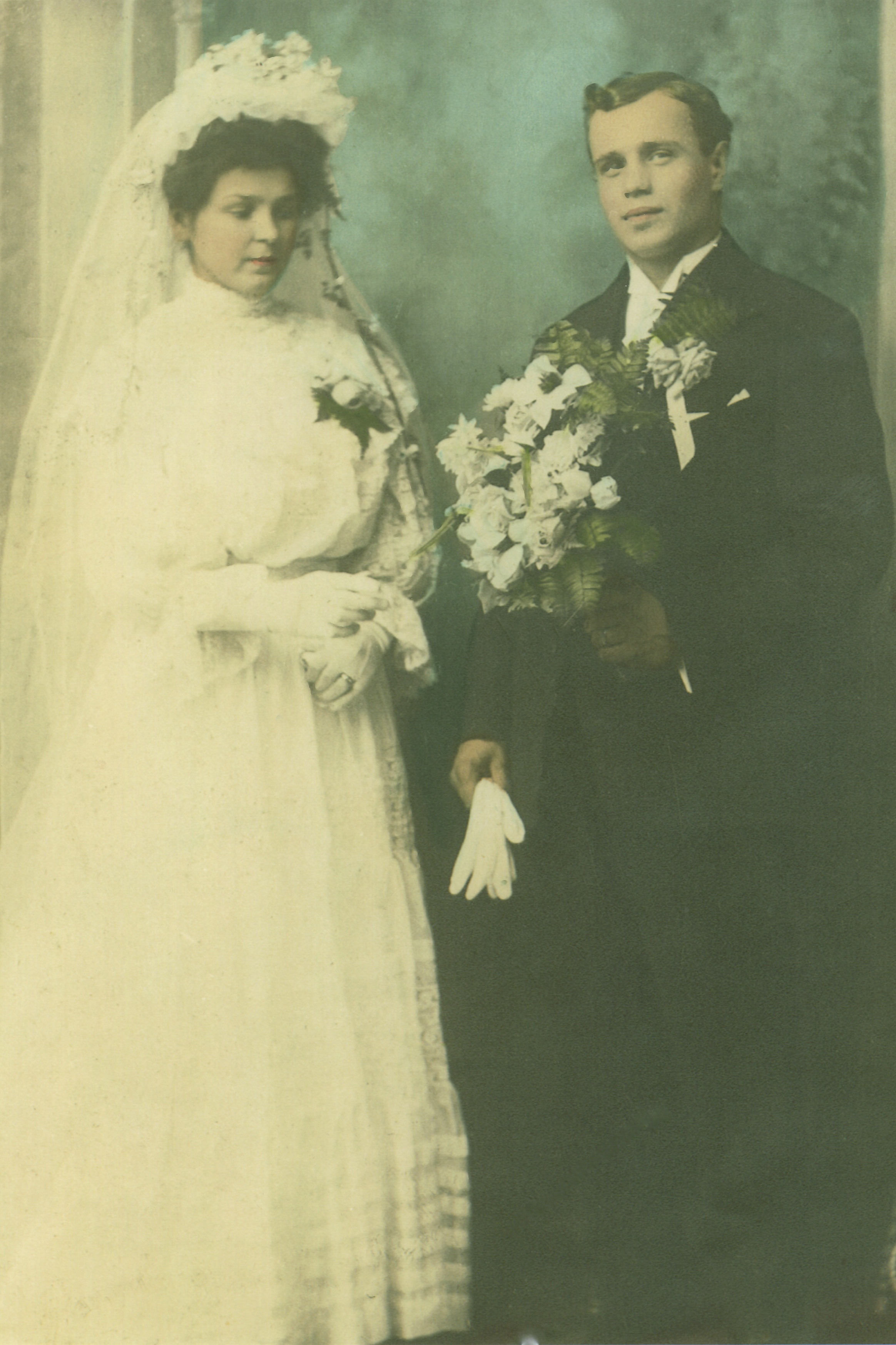
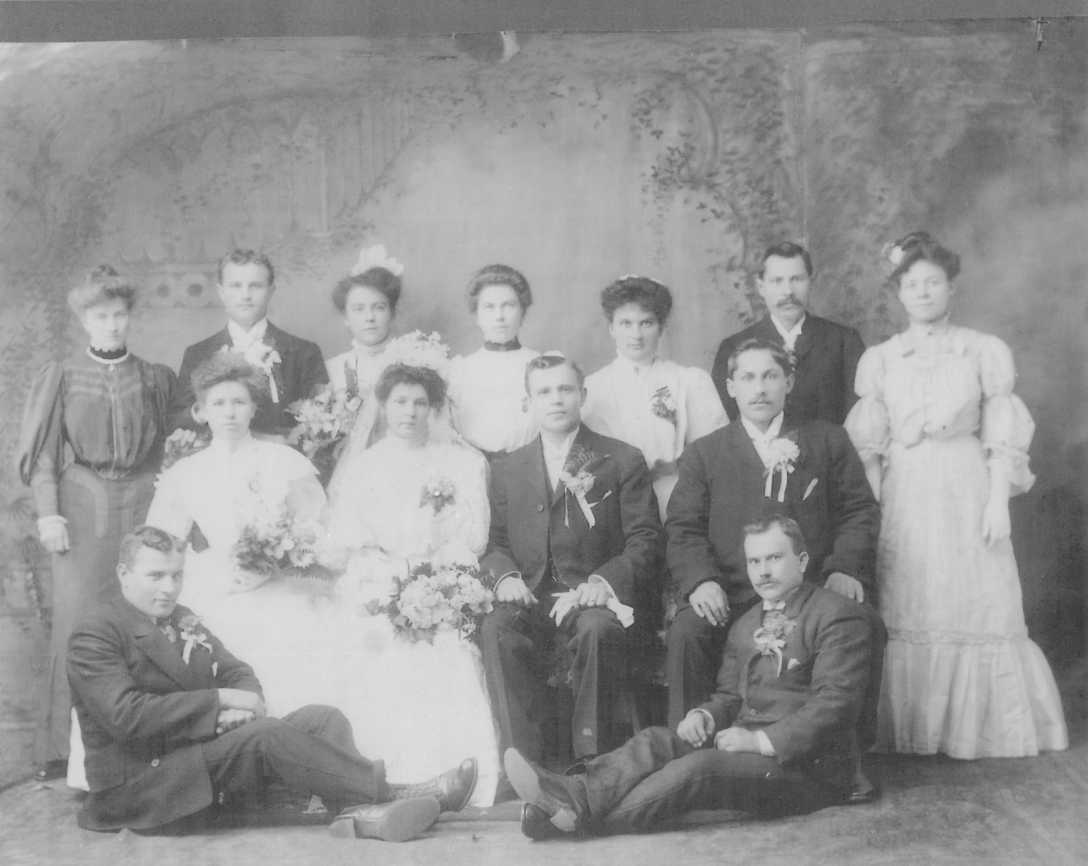
There’s no New York census record for Anna in 1905. But, they met, and Joseph and Anna were married on February 11, 1906, in St. Stanislaus Koskta Roman Catholic Church, Greenpoint (Brooklyn), NY. The church was only 2 years old when they were married.
St. Stanislaus, BrooklynSt. Stanislaus, present dayAnna and Joseph 1906Wedding party – brother, Charles is floor left, and John floor right. Brother, Konrad (other records say brother, Frank) standing second left. Back right, Ann’s brother, Adam Straub and wife, Margaret. Seated right, Anna’s brother, Lawrence Straub, wife Josie, top left. Unsure if Julianna is woman 3rd from left.
Joseph and Anna’s first child, a daughter Margaret, was born on December 1, 1906, in Yonkers, New York. Margaret is the baby in the front row of the Posluzny Family photo, held by Anna, and Joseph is standing at her right side.
Joseph and Anna moved to Newark, where he worked as a finisher in a hat shop. According to the 1910 Federal Census for New Jersey, Eva, her husband Walter Ingram, and Anna and Eva’s sister Lizzie, 18, lived with them.
The 1920 Federal Census finds them living in Norwalk, Connecticut, in a home they own. Joseph is working as a hatter in a factory. I talked about their hatter profession last year. Joseph worked for the Hat Corporation of America in Norwalk until he retired.
1930 is the first time Joseph is listed as Joseph POST, not POSLUSZNY or POSLUSHNY. Joseph and his brother Charles, who also ended up in Norwalk, were the only two who used Post exclusively as their last name. Aunt Judy said that she wished her father, Konrad, had done the same because she got tired of it being mispronounced. I always used it in response to someone talking about my maiden name Jakiela. I’d say, “You think that’s bad? My mother’s maiden name was Posluszny!”
They had 3 more children: Charles in 1910, Ann in 1915, Joseph in 1917, and Elizabeth in 1922.
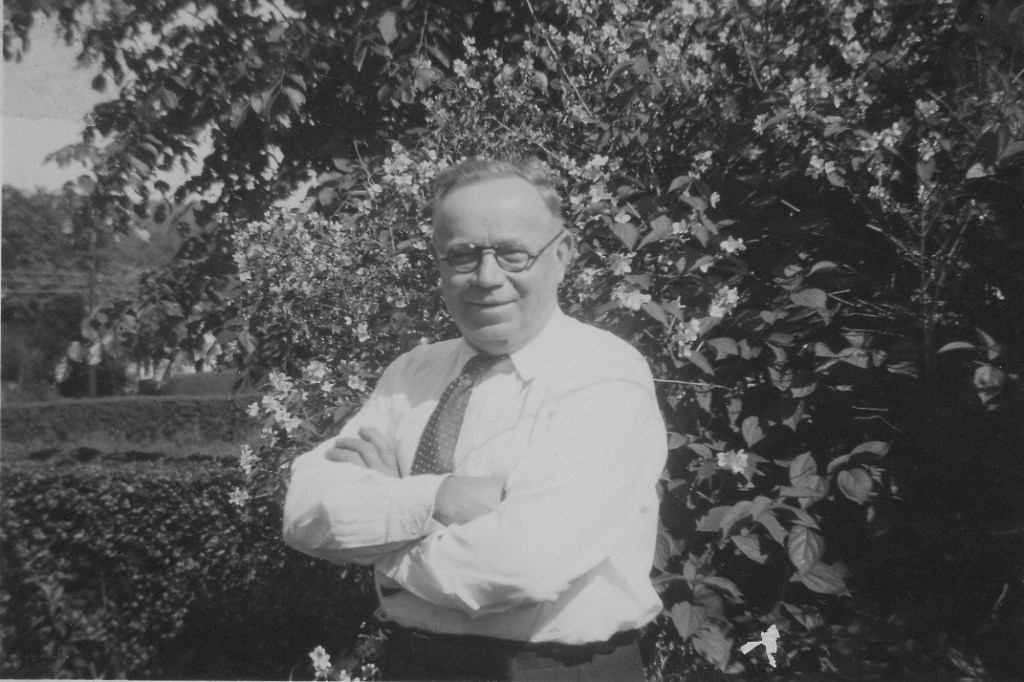
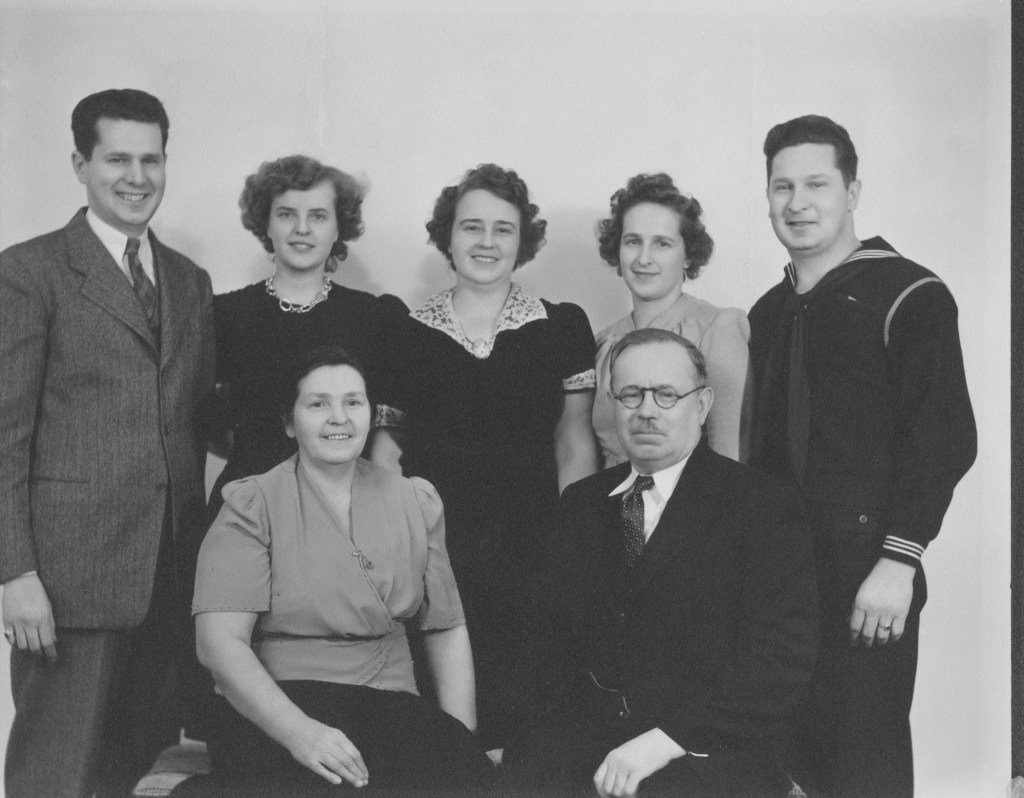
Joseph, Margaret (back) Charles, Joseph, Anna and Ann (seated) abt. 1919Joe Post abt 1940Joe, Betty, Margaret, Ann and Charlie (back) abt. 1945
I didn’t know Joseph and Anna and their family. The ages of their children fell in line with my mother’s family and my mother and their youngest daughter, also named Elizabeth, were both born in 1922.
Interestingly, Joseph, Jr., was born in Wallingford in 1917 and in my early searches I found Joseph his father in the 1915 town directory as a farmer in Yalesville. I never knew if it was really him, and that was the only year. I don’t know why there was the break in location or occupation. Sometime between the 1910 census and 1920 census, his mother and step father came to Wallingford, possibly at the same time from New Jersey.
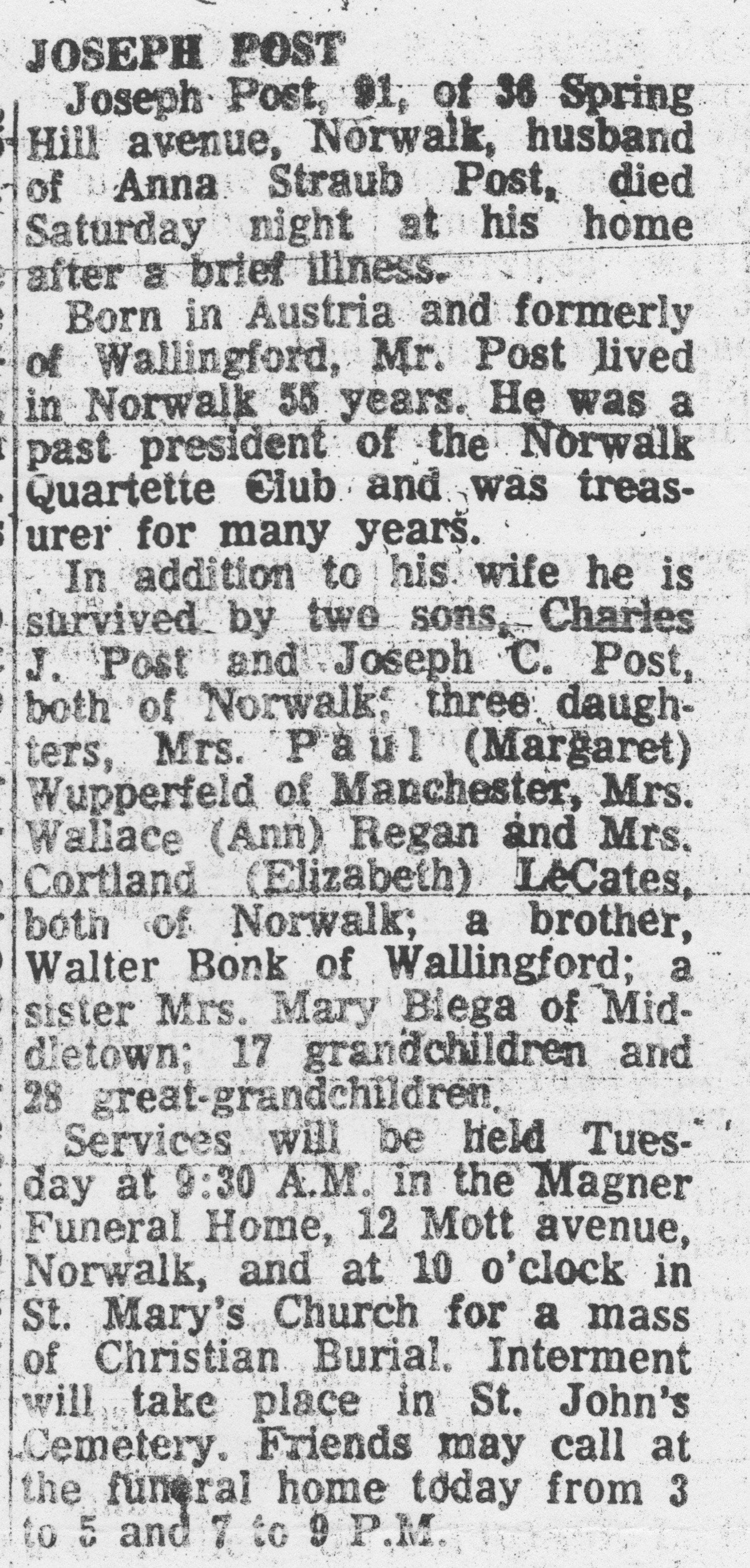
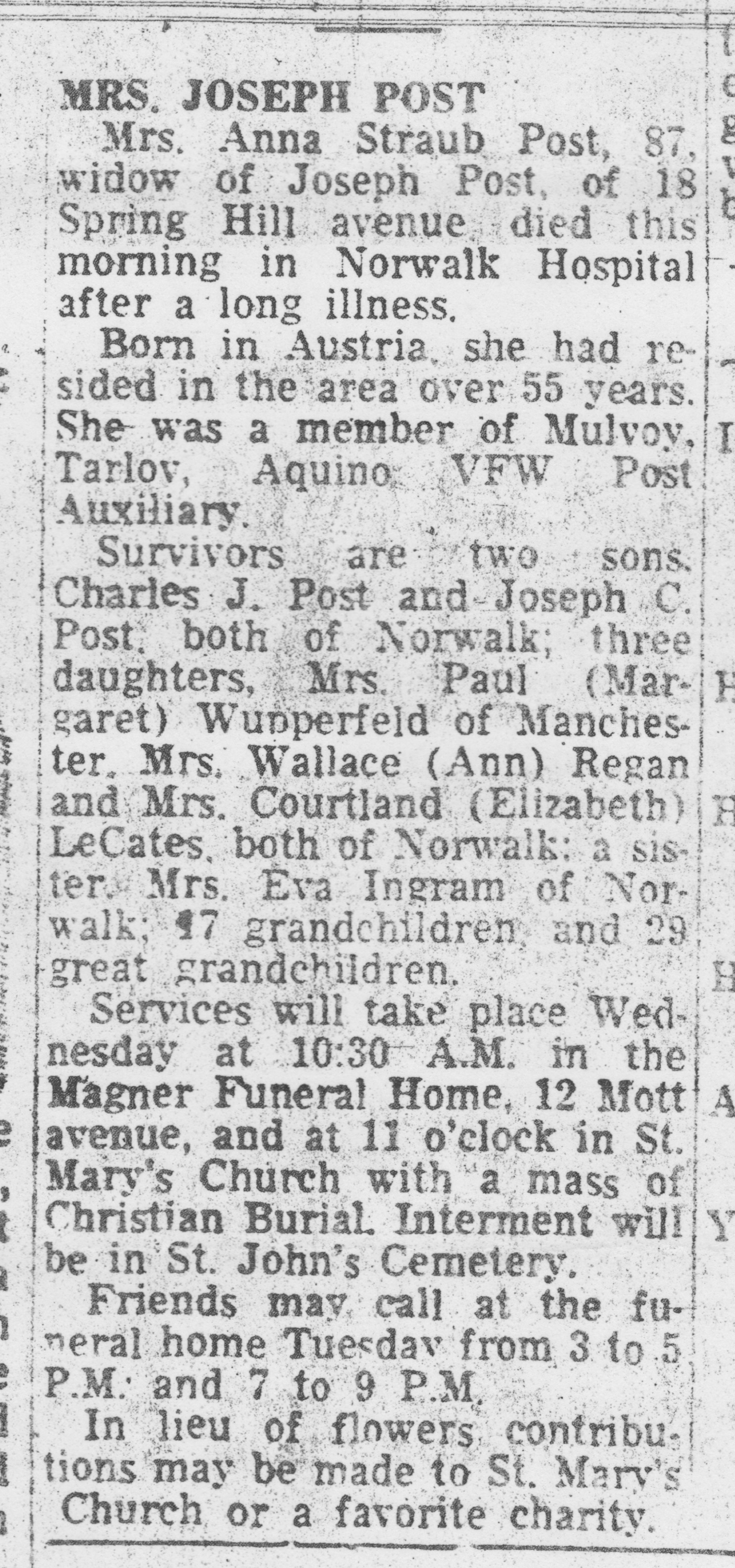
The next generation, Joe and Anna’s grandchildren, were people I have met in the past. Ann married Walter (Wally) Regan and they had eight children. Margaret married Paul Wupperfeld and they had four children. Charles and his wife Mayre, were childless, Joseph Jr, and his wife, Dorothy had 2 children, and Elizabeth and her husband, Courtland (Court), had four children. The Regans and the Wupperfelds attended the Fourth of July picnics at Pickerel Lake, hosted by two aunts and uncles. Joseph and Anna possibly were there as well. In my head, I hear Aunt Judy calling them “the Fairfield Posts”, and “Uncle Joe”. We also attended a party at Crystal Lake in Ellington hosted by one of the Wupperfeld children when I was about 10 or 11. I have a connection with one of Joe and Anna’s great-grandchildren, Jennie, through Ancestry and her family tree contains at least 25 grandchildren and many great-grandchildren. Like my relative through John Posluszny, I appreciate that connection to the past.
Joseph died at 90 years old on November 9, 1974, in Norwalk. Eleven months later, Anna died on October 20, 1975, at 87 years old.
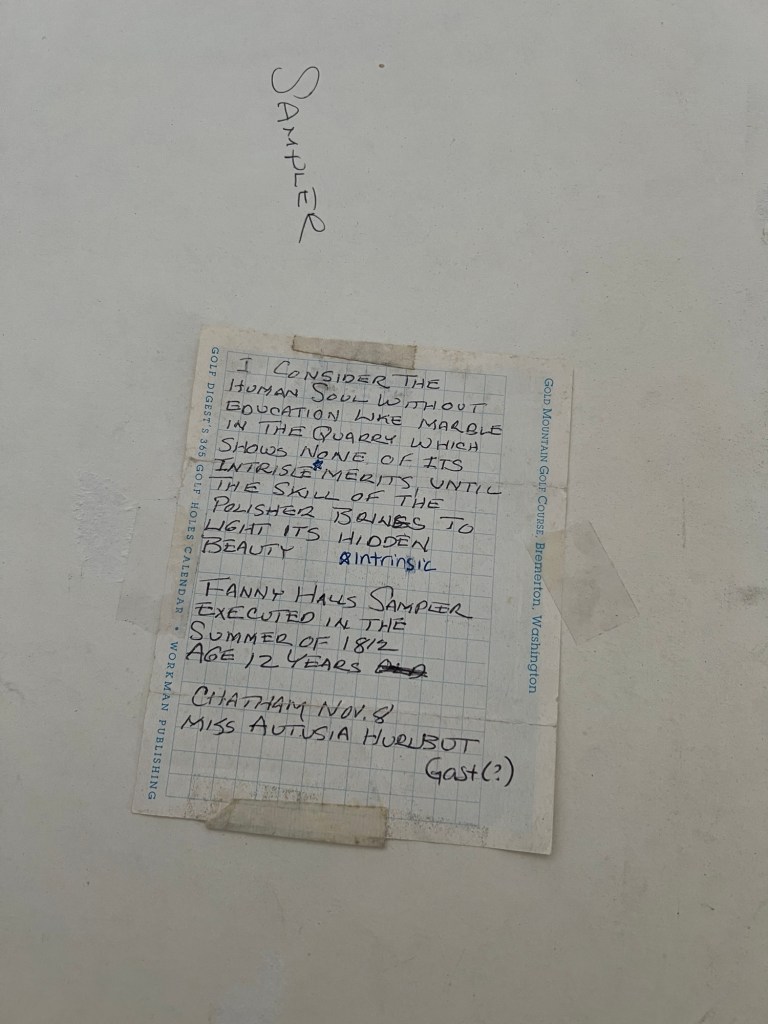
When my father was cleaning out the paint store he worked at, and eventually owned, he discovered a cross stitch sampler among the remnants in the attic.
Cross stitch sampler from 1817Cross Stitch Sampler information transcribed
He had it stored between pieces of cardboard, and he must have left it with me after he moved from our home somewhere around 1998. We must have talked about it before then, but Ancestry was new to me and the information wasn’t as abundant as it is now, so I wasn’t able to find much information. Or else, I didn’t really try that hard!
In 2017, I made inquiries to 2 antique stores I found online who worked with samplers. After sending pictures, one wanted me to send it to them to appraise and both were not thrilled with the condition of it and said it would sell better if it was mounted and framed which could cost in the area of $1,500. Since my father was a picture framer, I was not shocked by that cost. So, I dropped the idea and continued to hang on to it.
Present day 2025, I was organizing my ancestry notebooks and pictures and came across the sampler again beneath old photo albums.
I recalled a conversation, maybe on an Ancestry forum, when I was told “Chatham” was not the one in Massachusetts as we originally thought, but it was an early town in Middlesex County, Connecticut and now part of present day Portland Connecticut.
So I contacted the Portland Historical Society and offered them the sampler and they happily agreed to accept it! They are open the 2nd Sunday of every month and today is that day. If they are open after this “big storm”, I’ll bring it there today.
Let me tell you about Fanny Hall the 12 year old cross stitcher.
Fanny was born in Chatham, Connecticut on April 27, 1802 to Samuel Hall and Ruth Bates Hall. A record says “Middletown Upper Houses:577”. Fanny was one of 10 children born to Samuel and Ruth.
From Middletown Upper Houses by Charles Collard Adams, M.A., published 1908
Fanny married James Wells White of Chatham on January 20, 1825. Of note, her sister Hannah, born October 29, 1803 married Wanton Ransom of Hartford on that same day.
Hall Family marriages in the Chatham Vital Records
Fanny and James’ married life was short lived. Fanny died on November 8, 1825 in Portland Connecticut at the age of 20. I ran across an article in the National Library of Medicine about an article written by Dr. Thomas Miner concerning an epidemic in 1823 in Middletown of “Typhus Syncopalis”, Sinking Typhus, or New England Spotted Fever. Perhaps that is how she died?
The abstract: “In 1825 Dr. Thomas Miner wrote about an epidemic that occurred in Middletown, Connecticut in 1823. He called this disease “Typhus syncopalis,” sinking typhus, or New England spotted fever. Differences in the understanding of disease processes in the early 19th century preclude a definitive modern equivalent fortyphus syncopalis. In addition, there are disagreements among Dr. Miners’ contemporaries with regard to fever classification systems. Examination of the symptoms and physical findings as described by Dr. Miner suggest the presence of encephalitis or meningitis as well as a syndrome resembling a shock-like state. Based on symptom comparisons, this paper suggests that typhus syncopalis was likely meningococcemia caused by Neisseria meningiditis”.
James went on to marry Margaret B. Lewis on December 24, 1827 and they had four children. Their first child was a daughter, born in 1829, whom they named Fanny Hall White.
Back to the original Fanny Hall! Both Fanny’s father, Samuel, and her mother, Ruth Bates were from families of early settlers in New England. Very briefly, I had traced Ruth Bates Hall’s family back to an early 1600s voyage to “The New World”.
Samuel’s earliest recorded ancestor and Fanny’s 5x great grandfather, John Hall, was one of the earliest settlers in Middletown. He was born on June 5, 1584 (my father’s birthday!), in Canterbury England. He died on May 26, 1673 and is buried in the Riverside Cemetery in Middletown Connecticut.
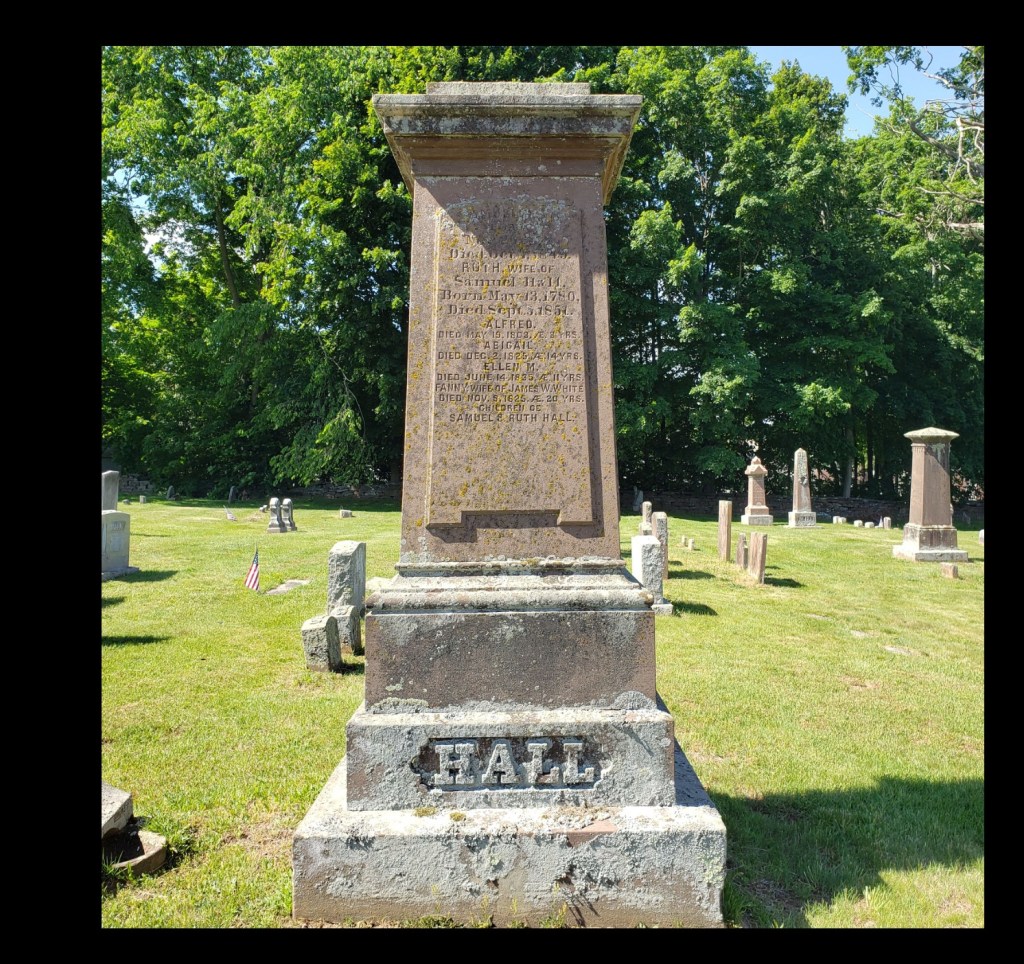
Samuel was born in November of 1777 to Joel and Hannah Ranney Hall in Chatham, Connecticut and lived there throughout his life until his death in October of 1849. He and family members are buried in Trinity Cemetery in Portland with other family members.
Hall Family StoneHall Family Stone
This was an interesting search for Fanny Hall and her ancestors. I look forward to handing off her 208 year old sampler to the Portland Historical Society where it belongs.
If you’re interested, here is a link to the history of Portland Connecticut. Like my hometown of Wallingford, it broke off into the different towns we know of today.
January 31st. 38 years ago, on January 31st, 1987, my mother was diagnosed with brain cancer. Glioblastoma Multiform. It was not a question of IF she would die, but WHEN. It was so invasive throughout her brain, there was nothing they could do for her.
I’ve written about our journey with her illness here and here. Boy, did it suck. Her decline was so rapid, it was like she let out a sigh of relief from getting found out. I felt so fecking helpless. Maybe that’s why I always cajole my family members with a “you’re fine, you’re fine!” Like I can will their pain or illness out of them because I couldn’t do it for her.
So many years later, I see myself standing at the copier at work hearing my name as I’m paged for a phone call. I hear Gail saying, “I’ll always think of this when I pay my taxes”. I see me sitting with my sisters in the hospital cafeteria discussing what she’ll wear for her funeral. Weeks later, trying to force her to eat because the visiting nurse said when she stops, the end will only be a few weeks (it was). I went out that afternoon for the St. Patricks Day parade in New Haven and tied.one.on. We knew it wouldn’t be long.
She died 8 weeks after her diagnosis. Every year between January 31st and April 4th, I remember what it felt like to see her slip away.





 It's All About Family