A Military Life Through Postcards

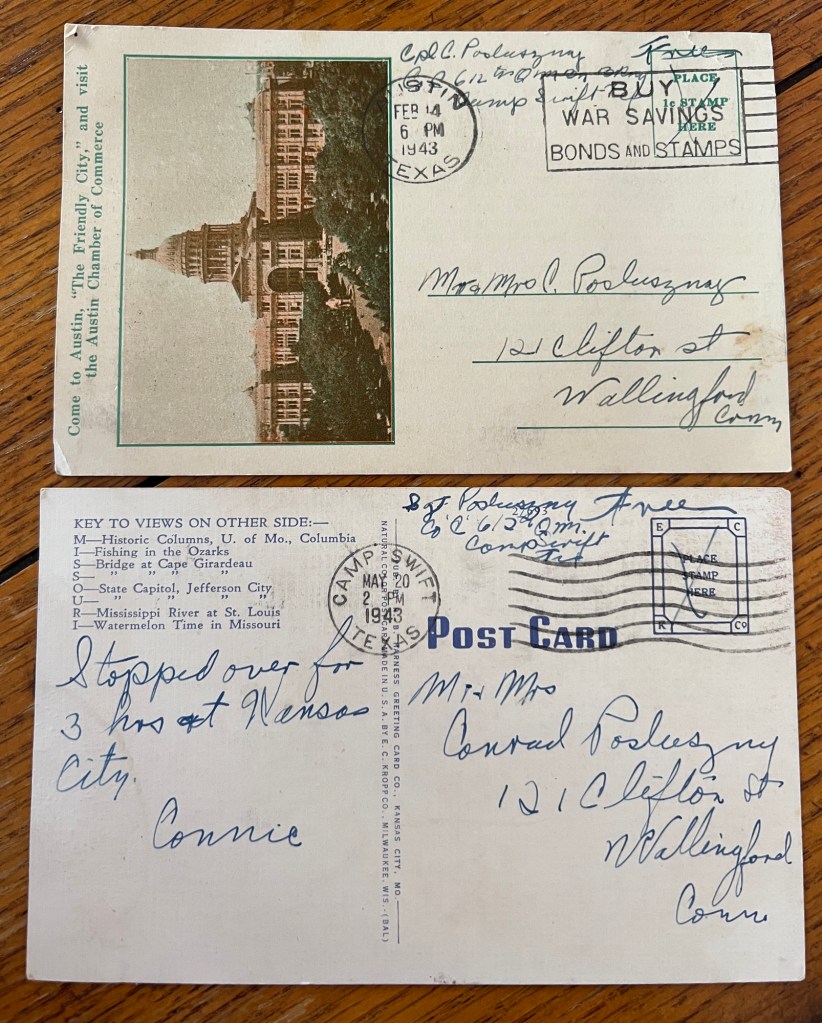
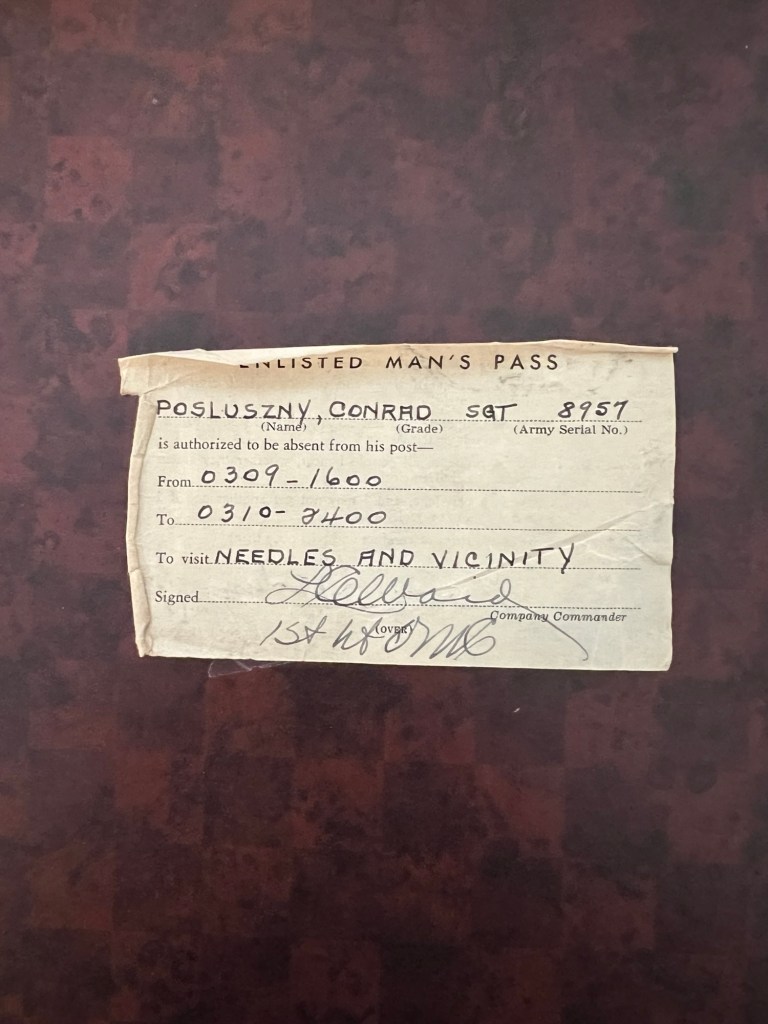
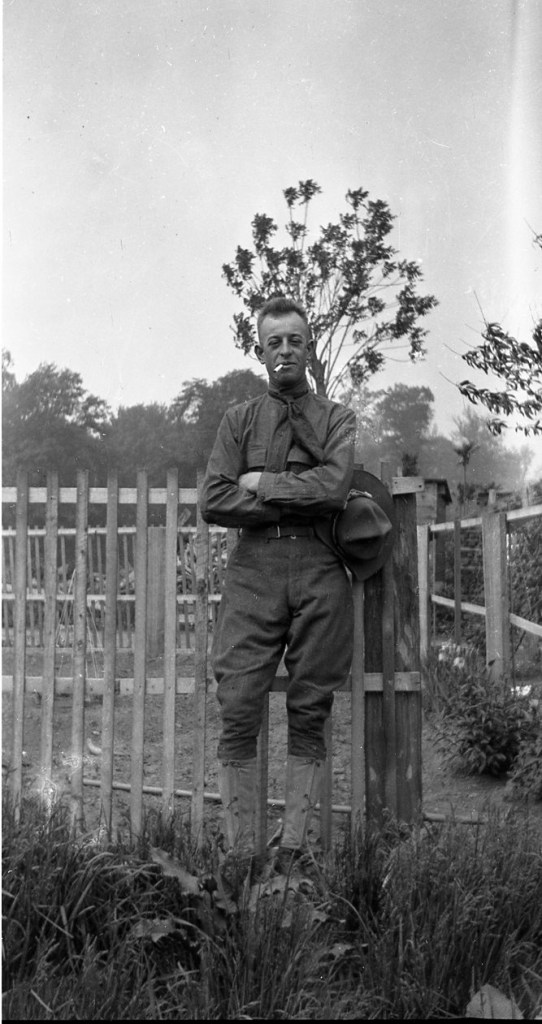
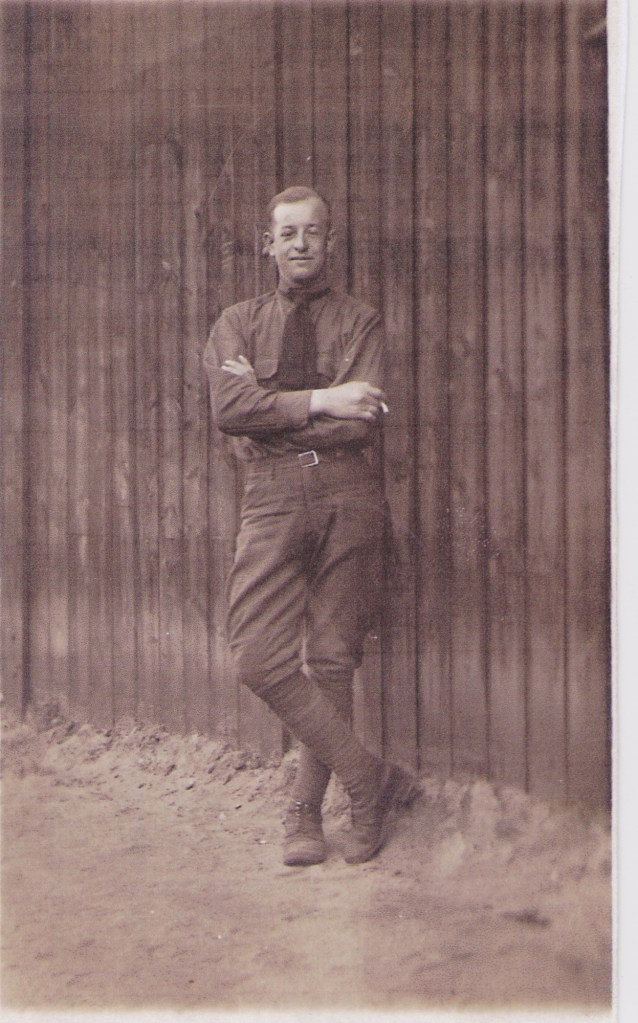
While writing my Uncle Connie’s story, I was drawn to my mother’s postcard collection that included cards he sent from various military locations.

After organizing them by location and date, with the help of Google AI, I was able to put together a timeline of his service.

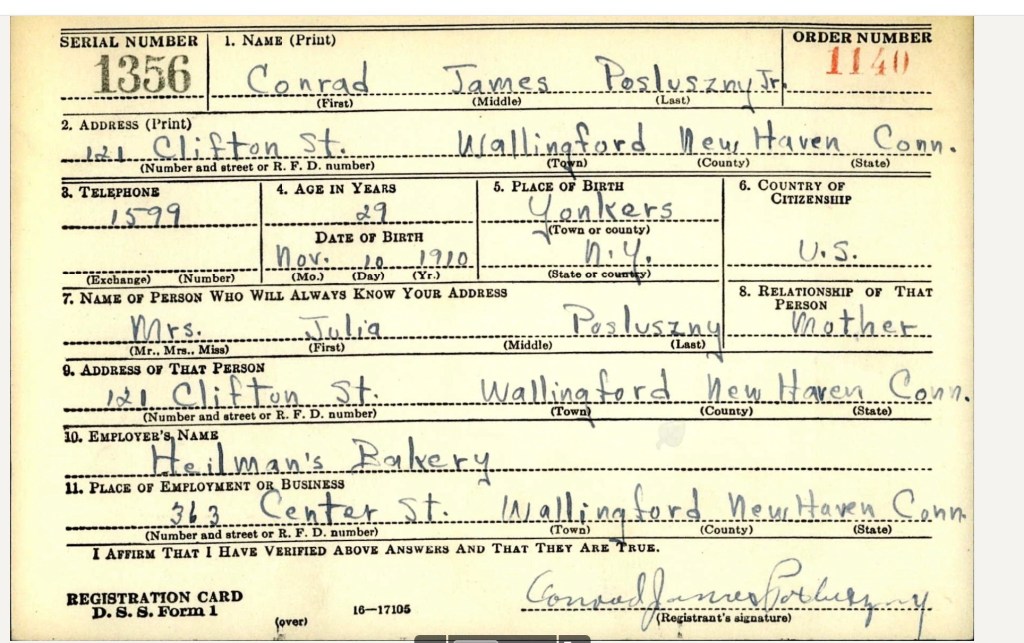
Connie completed his draft card on October 16, 1940, when he was 20 years old, and was drafted on November 10, 1942.
Fort Devens, Massachusetts

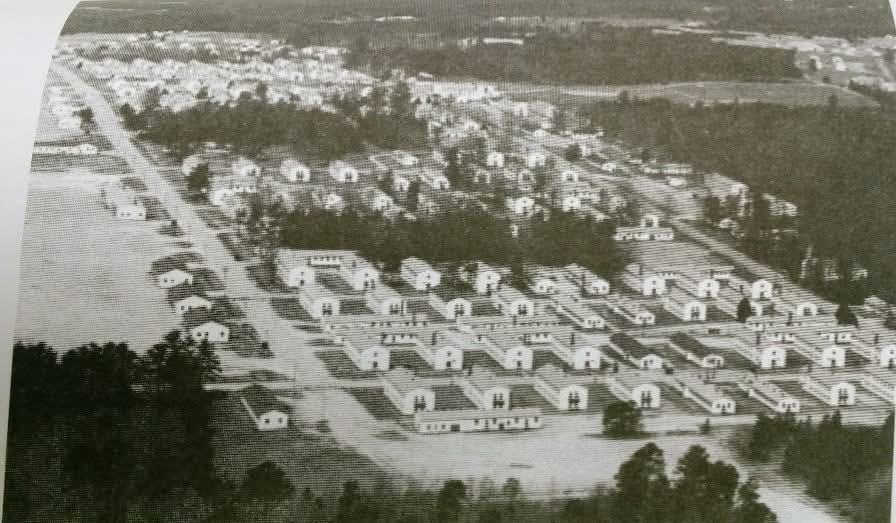
First up was his induction at Fort Devens, Massachusetts, in November of 1942. Fort Devens served as a massive reception center for the Northeast. It was built in 1917 for the First World War. My grandfather, Charles Jakiela, was stationed there and trained before he headed off to France. Connie went through Basic Training, which included physical and aptitude testing, received his uniform, learned how to salute, and was assigned his service number.
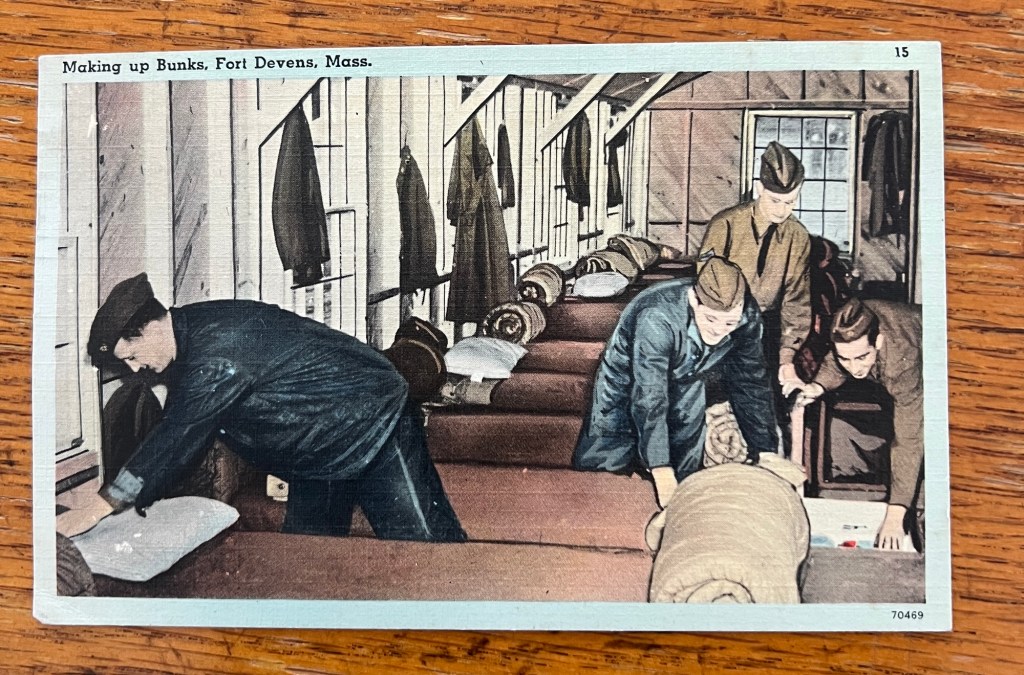
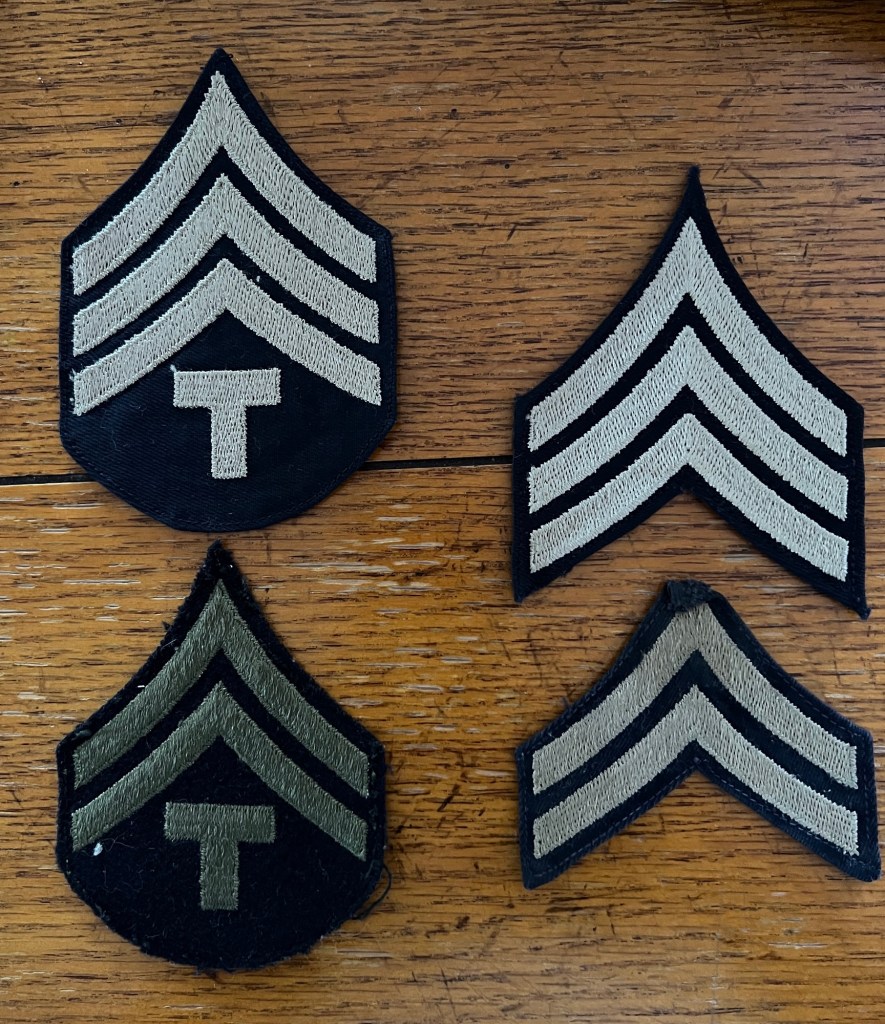
When his file hit the Quartermaster’s desk, that man was very happy! As an experienced baker, Connie was highly prized. The Army desperately lacked experienced tradesman to work and train the thousands of new draftees. As a commercial baker, he already had “muscle memory” for scaling recipes, managing proofing times, and troubleshooting bad dough. Connie was assigned to the Quartermaster Corps, and sent to Camp Swift outside of Austin, Texas. He entered basic training as a Private but left as a Corporal.

Camp Swift, Bastrop, Texas

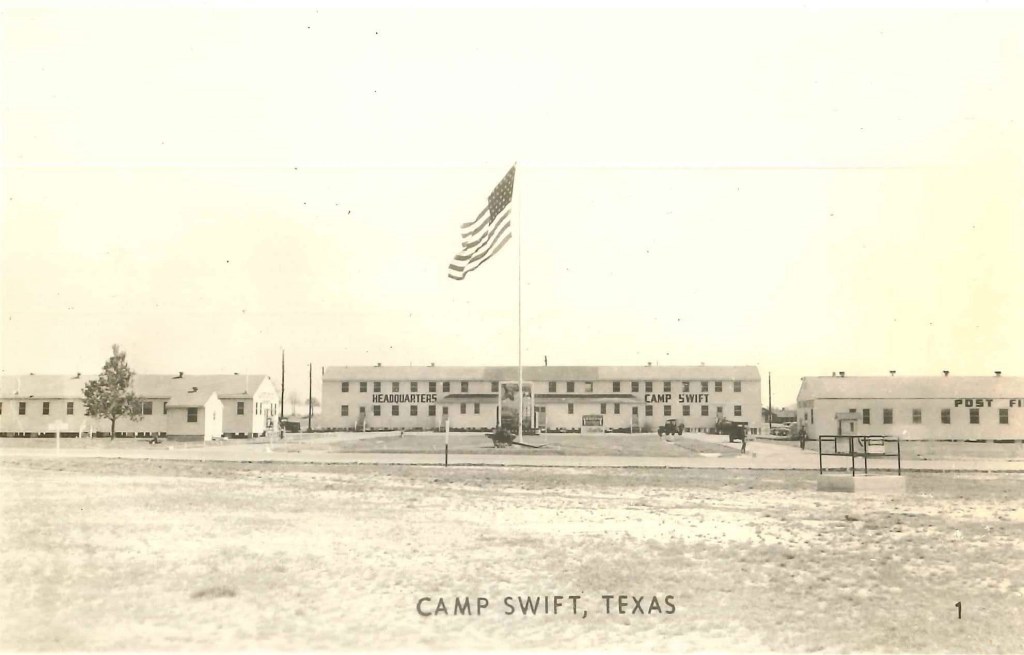
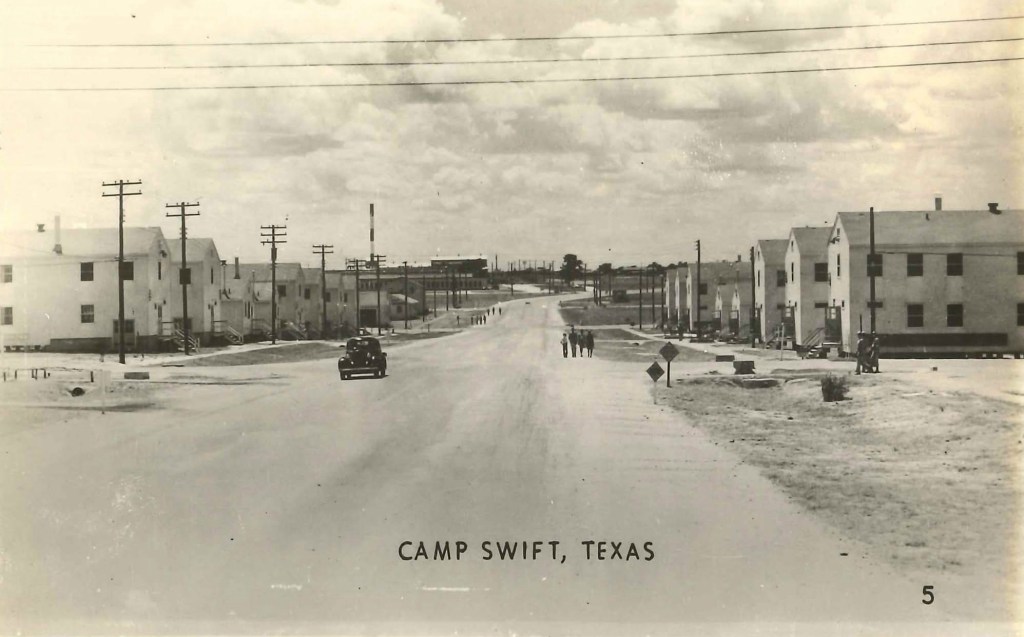
He arrived at Camp Swift in Bastrop, Texas, in early 1943 with Company C, 612th Quartermaster Bakery. The 612th Quartermaster Battalion was a massive parent organization comprising a Headquarters Company and four distinct baking companies, A, B, C, and D, totalling roughly 600 to 800 men. They all trained together in one place under a single Colonel. As a Corporal, he was given a leadership role and his own squad of men. He had to physically teach his squad the mechanics of scaling recipes, managing yeast fermentation, and handling heavy kitchen tools safety. Based on his skills, within 3 months of being there, he was promoted to Sargeant. This meant he was no longer just an assistant instructor, he was the Boss, fully responsible for an 8 to 12 man baking shift or an entire mobile oven section. He was also responsible for calculating the entire chemistry of the bake. He had to adjust ingredients for the brutal Texas humidity, trouble shoot mechanical failures on the gasoline mixers, and ensure his crew didn’t burn the rations! The camp was known for its harsh, dust-choked terrain.
Fort Sam Houston, San Antonio Texas

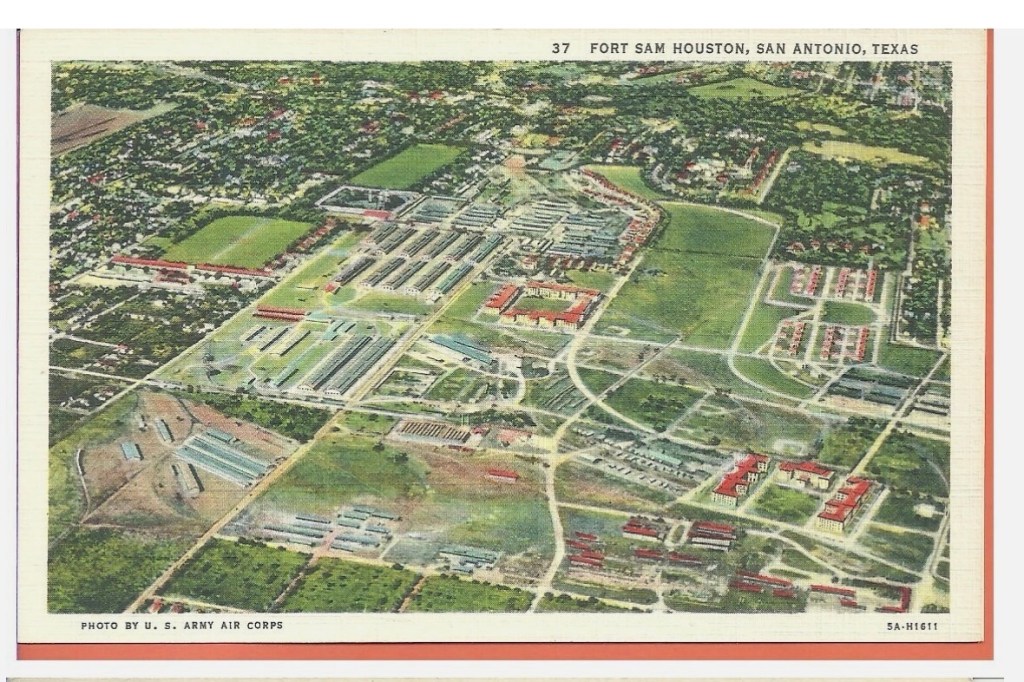
Sometime in late May or early June of 1943, Connie and Company C were moved to Fort Sam Houston in San Antonio, Texas, for advanced logistical maneuvers. His training here would have included large-scale field exercises under the U.S. Third/Fourth Armies. The company had to prove it could feed an entire moving division. They practiced rolling their mobile baking trailers into the Texas brush, setting up camouflaged operations in the middle of the night, baking thousands of rations under strict “blackout” conditions, and packing them onto trucks for delivery to infantrymen on the mock front lines, all while mimicking gas attacks or air raids. He was a long way from Heilman’s Bakery on Center Street in Wallingford, Connecticut.
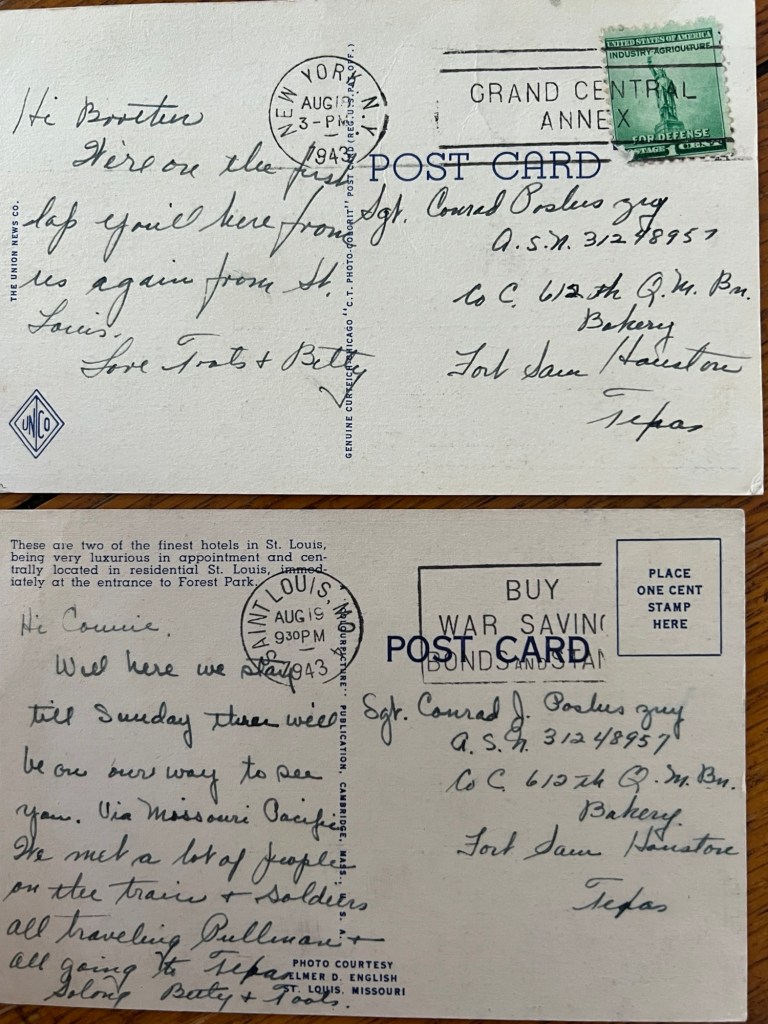
In late 1943 and early 1944, the army realized that a massive 800-man battalion was too slow and clumsy to deploy to shifting front lines. They divided up the battalions, and Connie’s section was broken off, reorganized, and renamed the 158th Quartermaster Bakery Company. It was a streamlined independent unit of just 150 to 180 men commanded by a single Captain.

The 612th QM had been a centralized, stationary mass production designed to set up one massive, permanent bakery at a major rear-base depot far behind the lines and bake bread for an entire fixed region. The new 158th QM was designed to be extremely mobile. The Pentagon could attach them to a moving field army or a specific Corps. They could pack their trucks, board ships, landing craft, or trains, and rapidly move from location to location, setting up mobile bakeries right behind advancing combat troops.

Camp Pickett, Virginia

Connie’s first stop as part of the 158th QM was to Camp Pickett, Virginia, where they began their independent field training maneuvers. I have three postcards from this time period, dated June 4, 1944, June 15th, and one unreadable date. The 158th QM was part of the XVIII Corps, comprised of thousands of men, containing multiple divisions and support units.
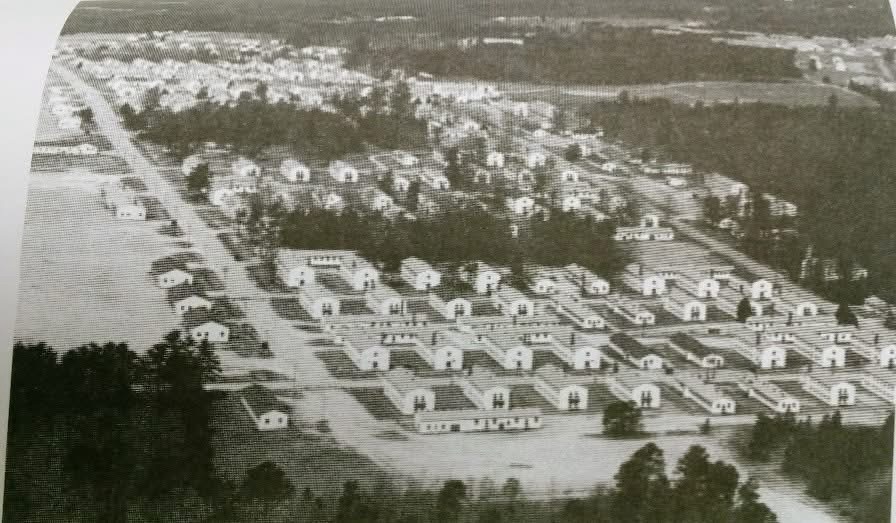
Camp Pickett, Virginia

If the June 4, 1944 date rings any bells, Camp Pickett was a premier staging and training base for the June 6th D-Day invasions for the East Coast Ports of Newport News and Norfolk, Virginia. The camp was in a state of hyper-vigilance as entire divisions had just finished rolling through the base to head to the ports. In preparation for heading to Europe, Connie and the 158th QM would have continued their field-baking maneuvers out in the woods and fields to simulate operating under combat conditions, as well as forced marches with full combat gear.
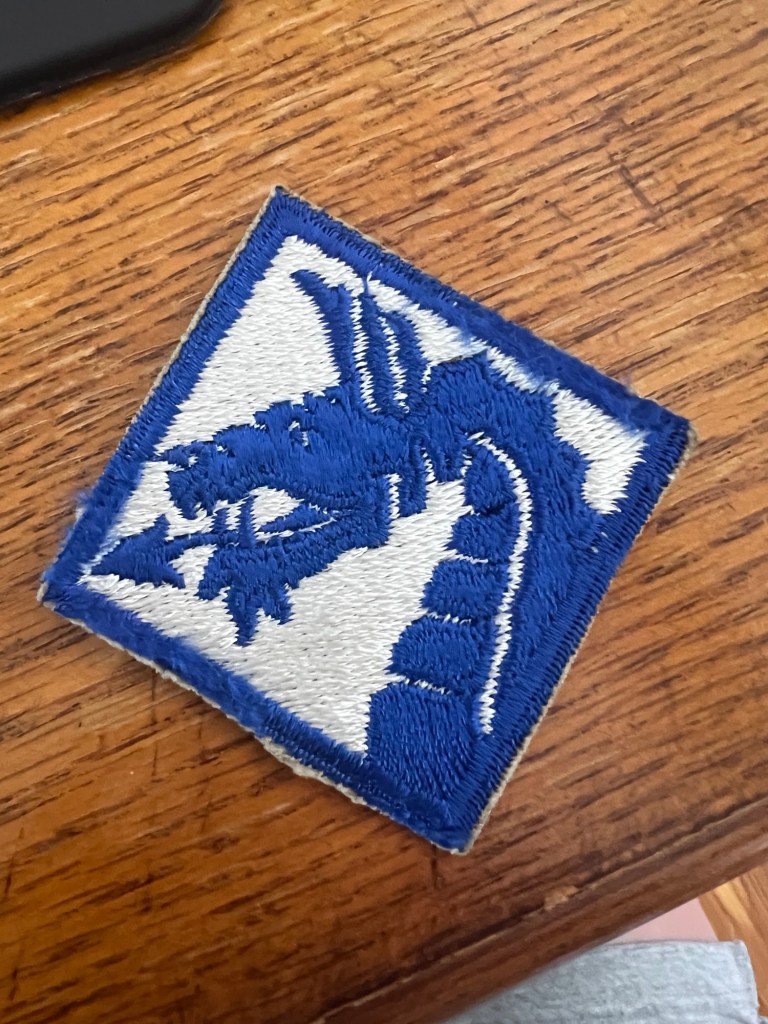
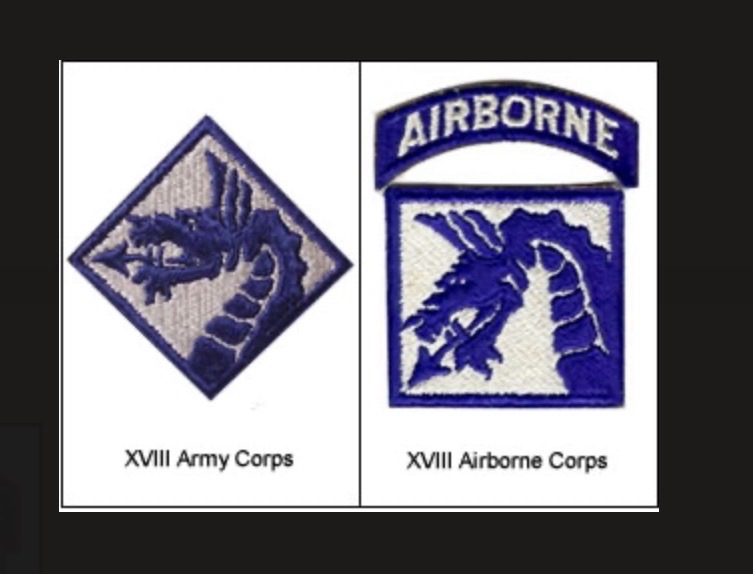
During his time as part of the XVIII Corps, Connie wore this patch on his uniform. The Corps was originally activated as the II Armored Corps, but was redesignated as the XVIII Corps in October of 1943. It became the XVIII Airborne Corps in August of 1944 and it went on to participate in major European campaigns, including the Battle of the Bulge. After August 1944, the dragon would be squared with AIRBORNE curved across the top.

By the June 15th postcard, news of the successful Normandy landing would have reached the troops, and the mood at the base shifted dramatically.

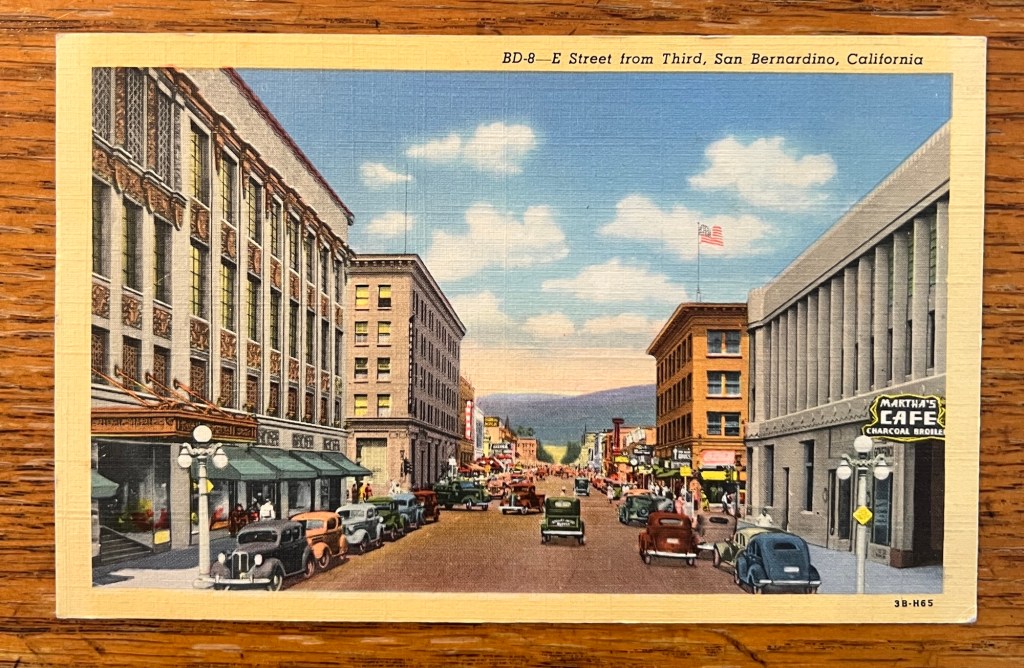
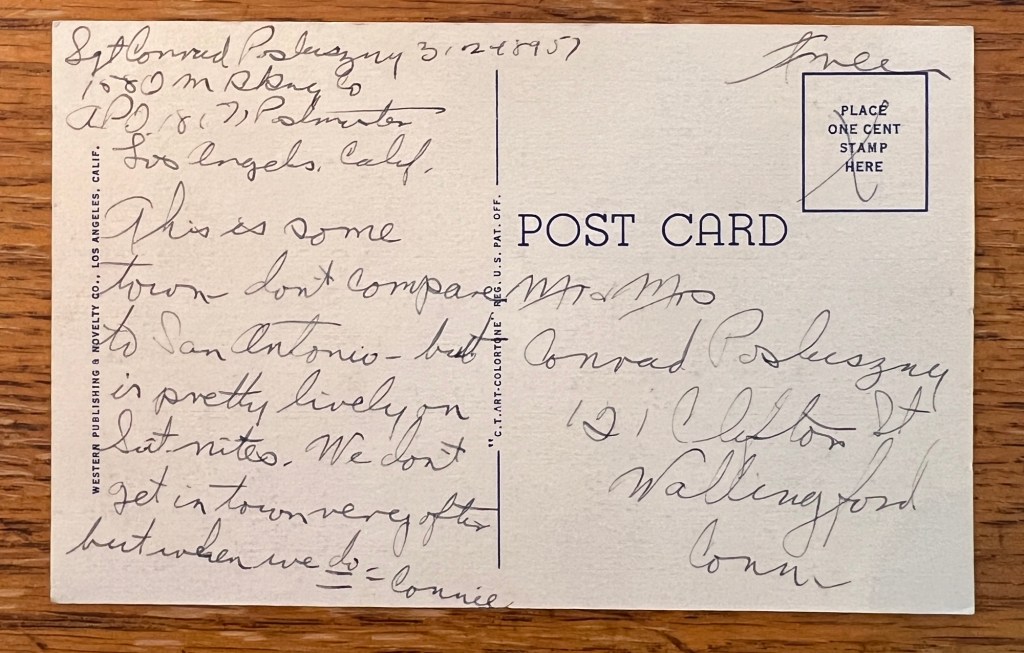
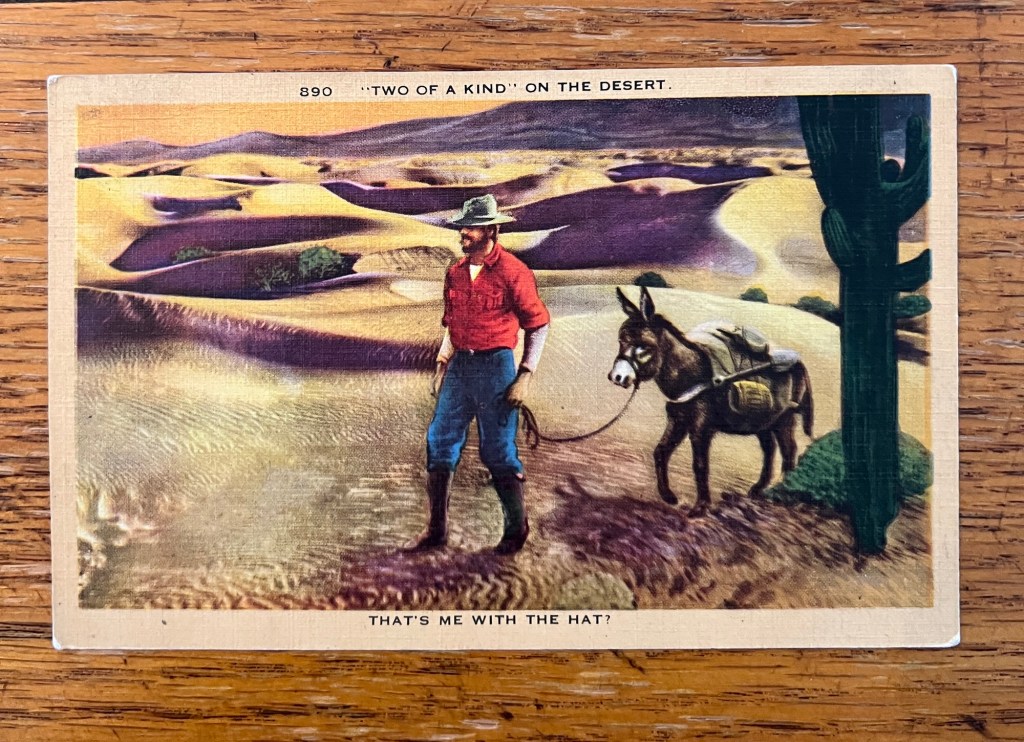
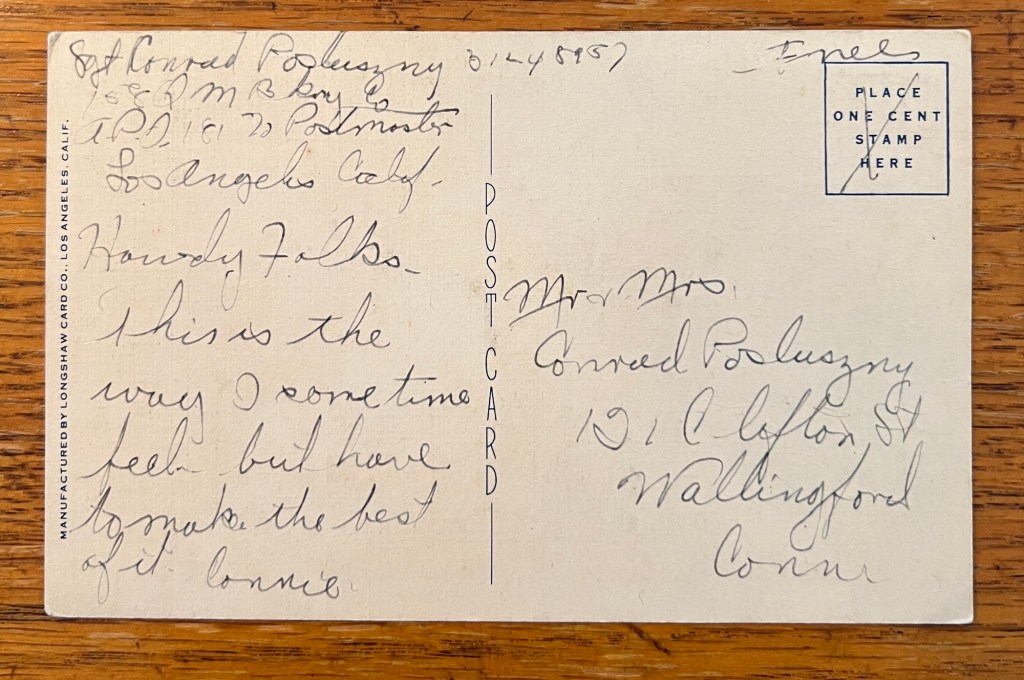
But, plot twist! Because the war in Europe was progressing rapidly after D-Day, the Pentagon began shifting freshly trained independent units to the Pacific Theater, where logistics were a nightmare and thousands of troops staging on islands needed to be fed. Connie and his 158th QM Bakery were on their way overseas, but over the Pacific Ocean, not the Atlantic. They packed up and headed to the Desert Training Center and its general depot in San Bernardino, California. His postcards now include the line “APO 181”. Army Post Office, designated for deployed military personnel. His family would not know where he was, only that he was “deployed”.

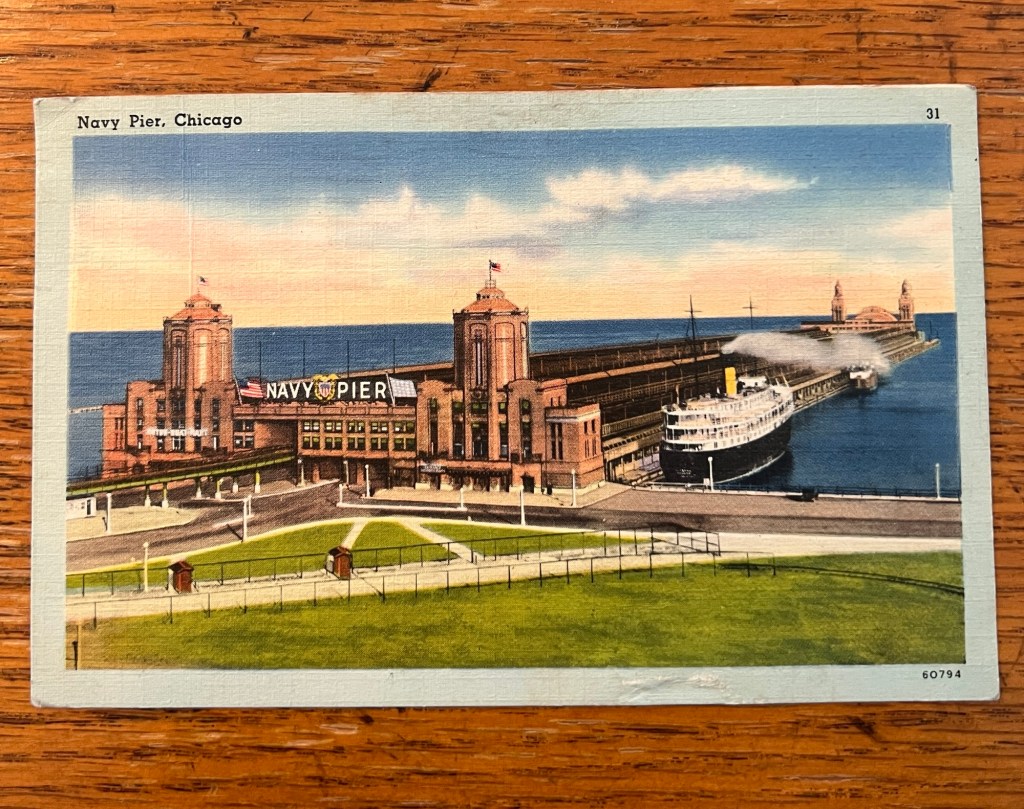
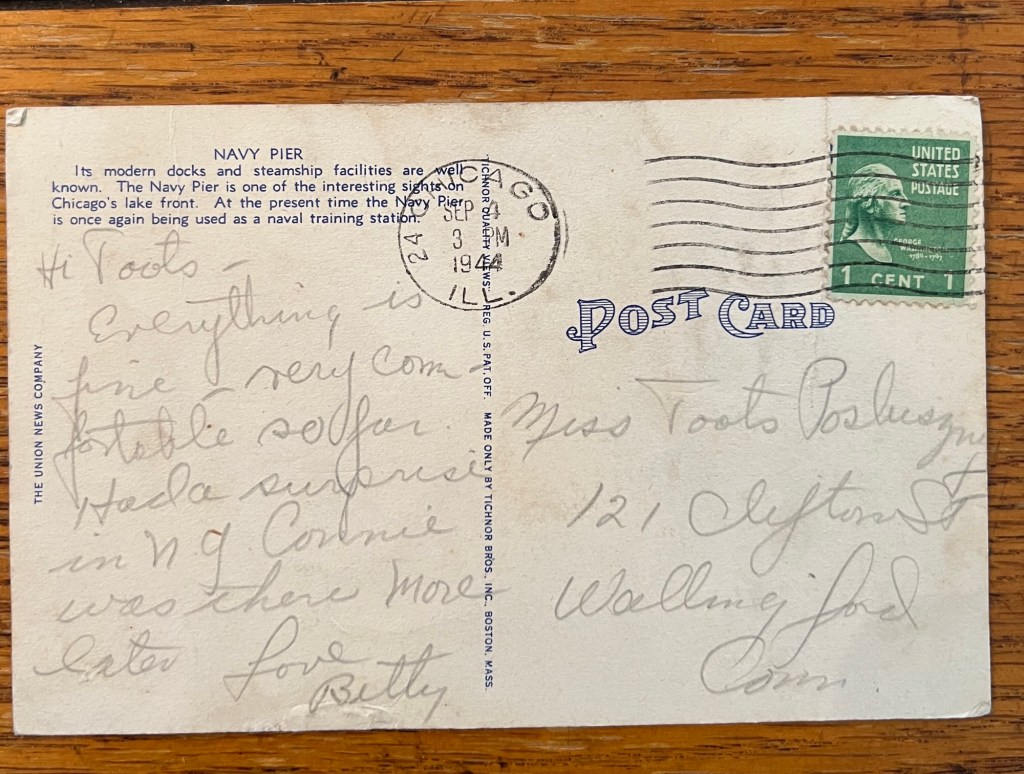
But when did they leave Virginia for San Bernardino? All of his postcards with APO addresses, have no postmarks. But I had a possible clue. There is a postcard postmarked Chicago on September 4, 1944 from my mother, who was on her way to visit her Tanta Lizzie and Uncle Ben in Los Angeles, to her sister Tootsie back home. It says in part, “…Had a surprise in N.Y., Connie was there. More later”. Was he on his way to San Bernardino with his Bakery Company? Was he on leave before heading out? It appears he didn’t visit Wallingford or call home. I’ll never know the situation, but the time frame of leaving Camp Pickett and heading to San Bernardino lines up with this card.
San Bernardino, California

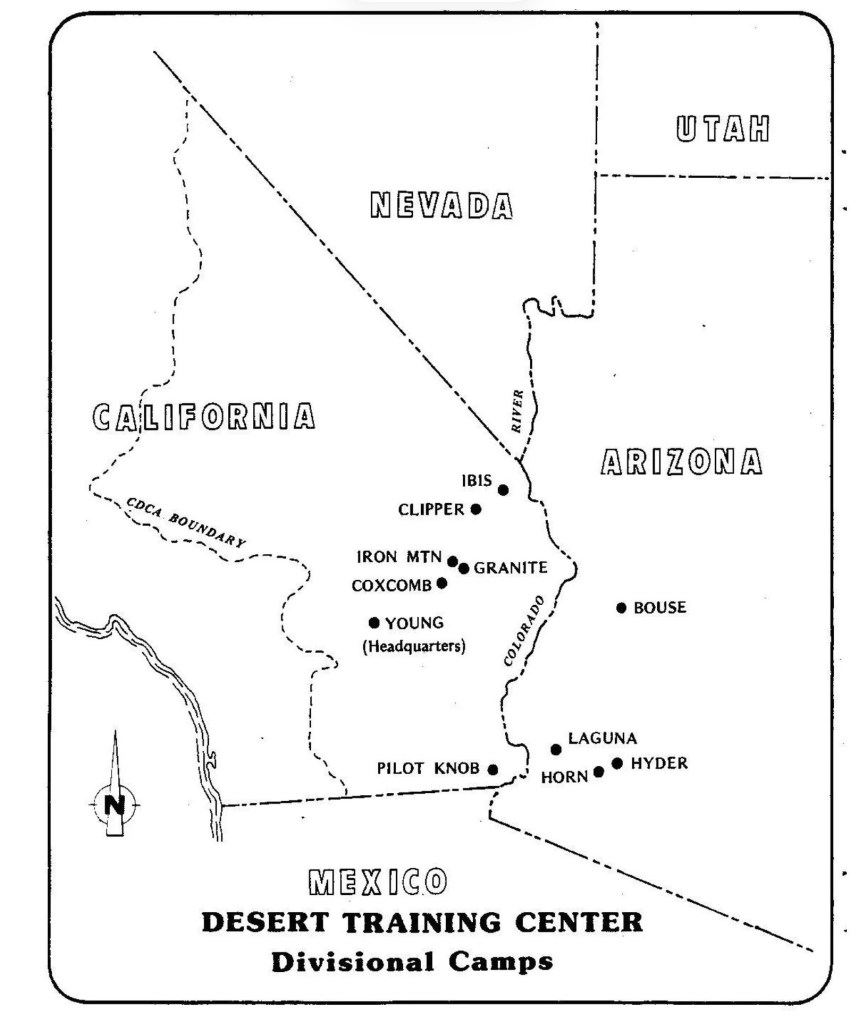
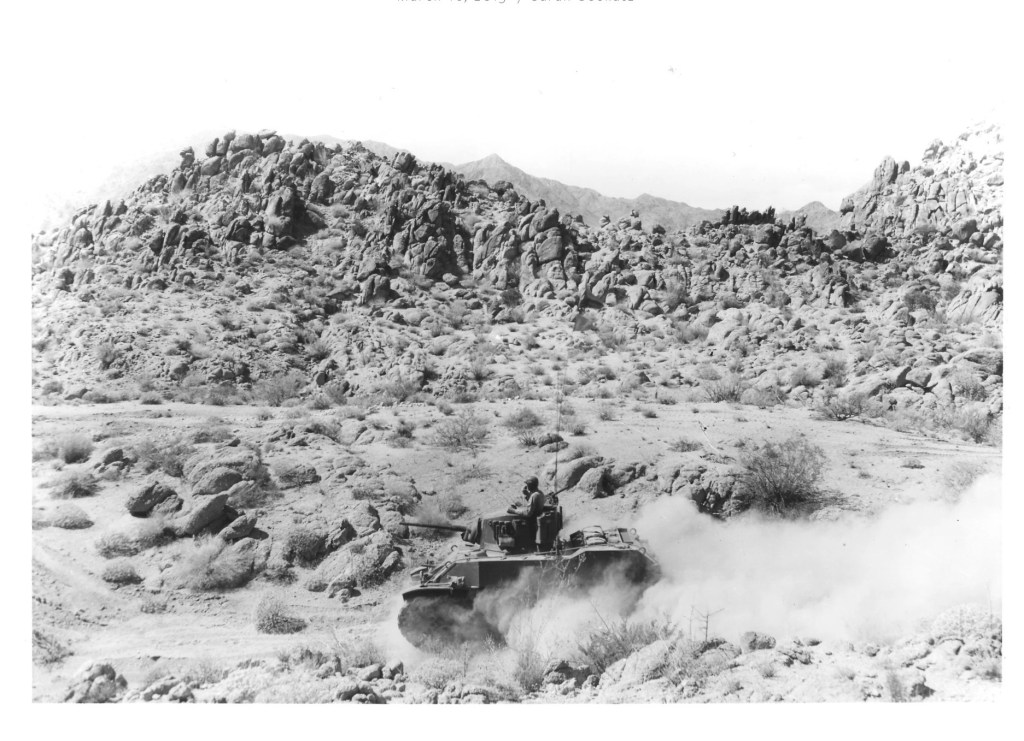
Camp Young, outside of Indio, was the headquarters for the Desert Training Center, also known as the California-Arizona Maneuver Area. It was comprised of eleven camps in California and Arizona, along with its general depot in San Bernardino. The DTC was created in the Spring of 1942 for soldiers to practice in climate similar to Northern Africa. Since fighting in that area lasted only 6 months, the focus was switched from desert warfare to general military training for the European and Pacific Theaters. The San Bernardino DTC base general depot served them all. The depot utilized the rail yards, fairgrounds and warehouses in San Bernardino to route supplies and mail into the desert camps.

In addition to the general depot, Connie and the 158th QM Bakery Company continued their training at one of the DTC camps with final high-heat conditioning and waterproofing of the heavy machinery before they headed overseas.
Family Worries

For the last year and a half, the family has received postcards from Connie. First Fort Devens, then Camp Swift, Fort Sam Houston, where my mom and Aunt Tootsie traveled to visit him, and on to Camp Pickett in Virginia. Receiving a card from Virginia in the days leading up to D-Day might have come as a shock and raised concerns that he would be heading to Europe. What did they think when they suddenly started receiving postcards from California, with an APO number, knowing things were heating up in the Pacific?

Something that would have amplified the family’s concern about this location change was the death of Connie’s cousin, George Burghardt, in the line of duty. Twenty-two-year-old George was somewhere in France when he was hit by fragments from an artillery shell. This resulted in a fracture to his skull with brain damage on July 8, 1944. His body arrived home on July 19th, with a funeral held the following day.

It all became too much. Early on December 28, 1944, Connie’s father, while working overnight as a janitor at the steel mill, went into the plant manager’s office and took one of the guns stored there and shot himself in the head. The chief guard said he had come to work in good spirits, but the newspaper reported he may have been “brooding about the dangers that might befall his son, who was believed to be stationed in New Guinea.” My grandfather suffered from depression, like other members of his family, and the worry for Connie compounded his illness.

I don’t know if Connie learned of his father’s death while he was gone or once he arrived back in the United States. If he arrived in California in September or October of 1944, and didn’t head to Guam until June or July of 1945, there would have been ample time for him to be notified, but not likely able to leave for the funeral.

Overseas

The 158th QM Bakery was sent to the Island of Guam, where they operated mobile ovens to feed thousands of troops assembling the planned invasion of mainland Japan, and their address changed to APO 182. The 182 activity date is listed as July 4, 1945, but they would have been preparing for and in transit long before that. Considering Guam was not recaptured from Japan until July 21, 1945, Connie and his 158th QM Bakery may have been feeding the troops while the fighting was going on or they were still enroute.

Once on the ground, to move a single company’s equipment, it took a fleet of 45 GMC 2-1/2 ton “Deuce and a half” tactical trucks. A full bakery company had 32 M-1942 bake ovens, 16 gasoline mixers, and 64 insulated fermentation cans to hold the rising dough. The ovens had two sections, with each section weighing 550 pounds!
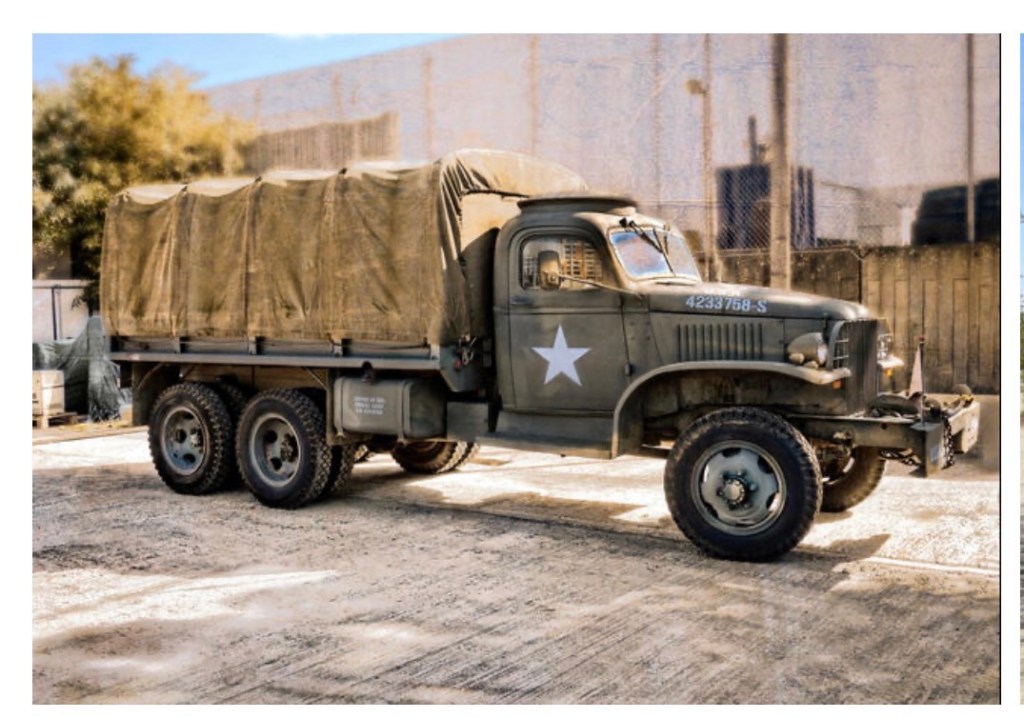
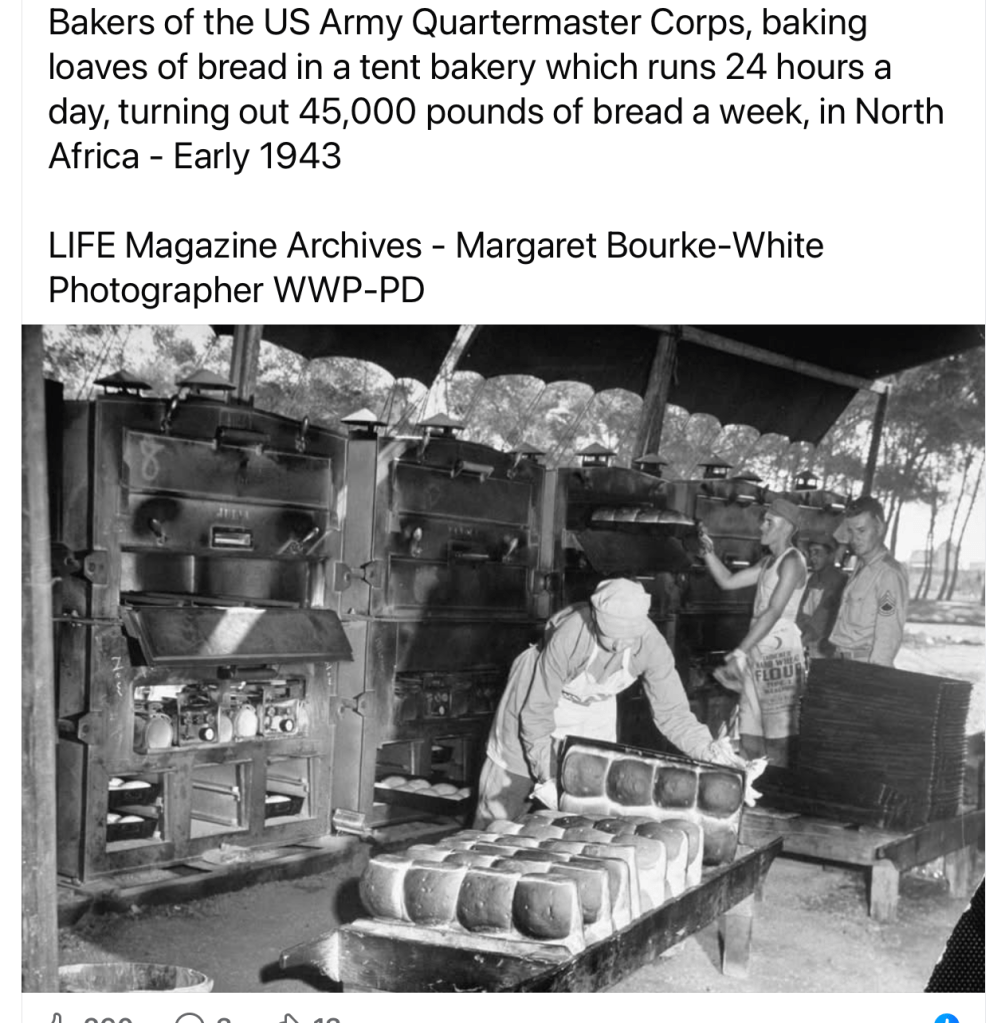
The following information comes from the Facebook Group, WW2 field Kitchen: “Because the Pacific climate was brutal, his platoon operated inside massive, sweltering Quartermaster Blackout Tents. Under strict tactical camouflage, they worked in rotating 24-hour shifts. They would load the gasoline mixers, dump in the flour, monitor the yeast fermentation in the insulated cans, manually punch down and scale the dough into standardized pans, slide them into the lower proofing boxes, and then bake them on the top decks. The resulting fresh, soft loaves were packed into canvas bags and rushed straight to the front lines by jeep, providing a massive, comforting taste of home to combat troops weary of eating cold canned rations.”

Upon Japan’s surrender, the 158th QM was deployed to Tokyo-Kanagawa District, Japan, to set up garrison bakery operations for the incoming U.S. Occupation Forces, and their mailing address changed back to APO 181 with an activity date of November 1, 1945. Nearly three years since being drafted.

Based on his length of service and his overseas time, Connie had a high number of points based on the Army’s “Advanced Evaluation Detachment Points system which allowed him to be relieved of duty in late November or Early December of 1945. He and any other qualifying soldiers boarded a packed troop transit ship and endured a multi-week winter voyage across the Pacific back to a West Coast port. On landing, he was immediately placed on a troop train to the East Coast and sent to a Separation Center close to home. On January 10, 1946, he officially received his Honorable Discharge, final pay, and veterans’ credentials and returned home to Wallingford, Connecticut.
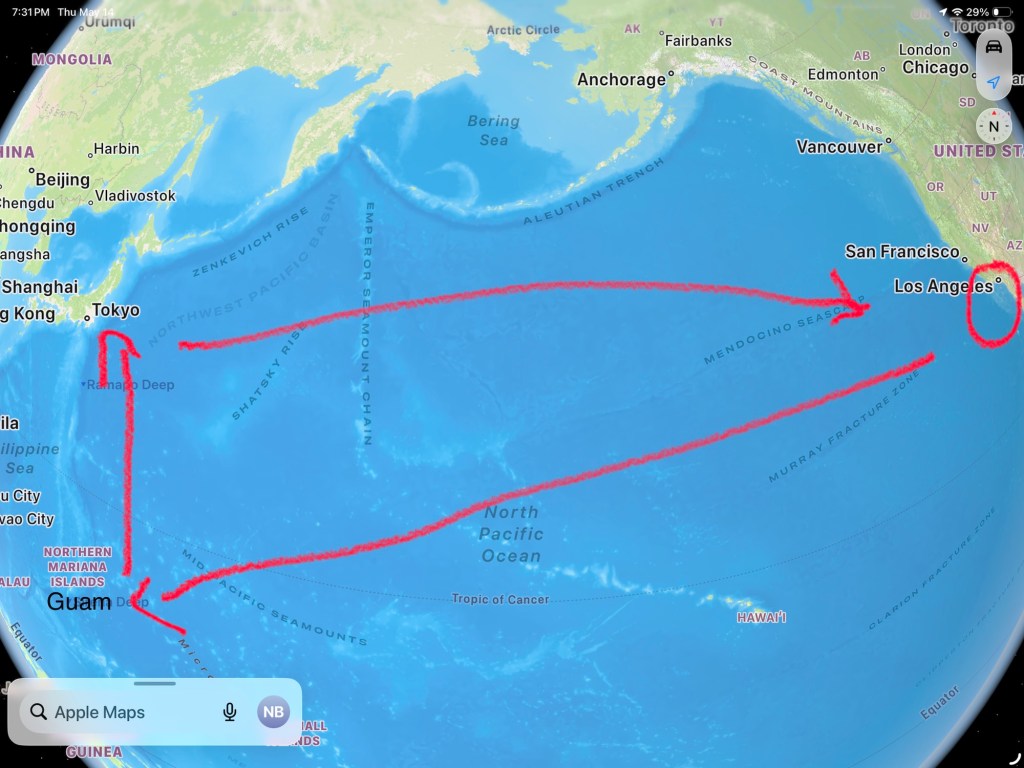
Connie’s overseas stops

Wallingford, Connecticut

Connie went home to Wallingford, Connecticut where he spent the rest of his years baking. He spent a short time working for Choate School, owned his own bakery (Connie’s Bake Shop) for a few years, and in 1959, settled in as the baker for Masonic Home and Hospital. He filled the bellies of family, friends, and co-workers until his death in November of 1981.
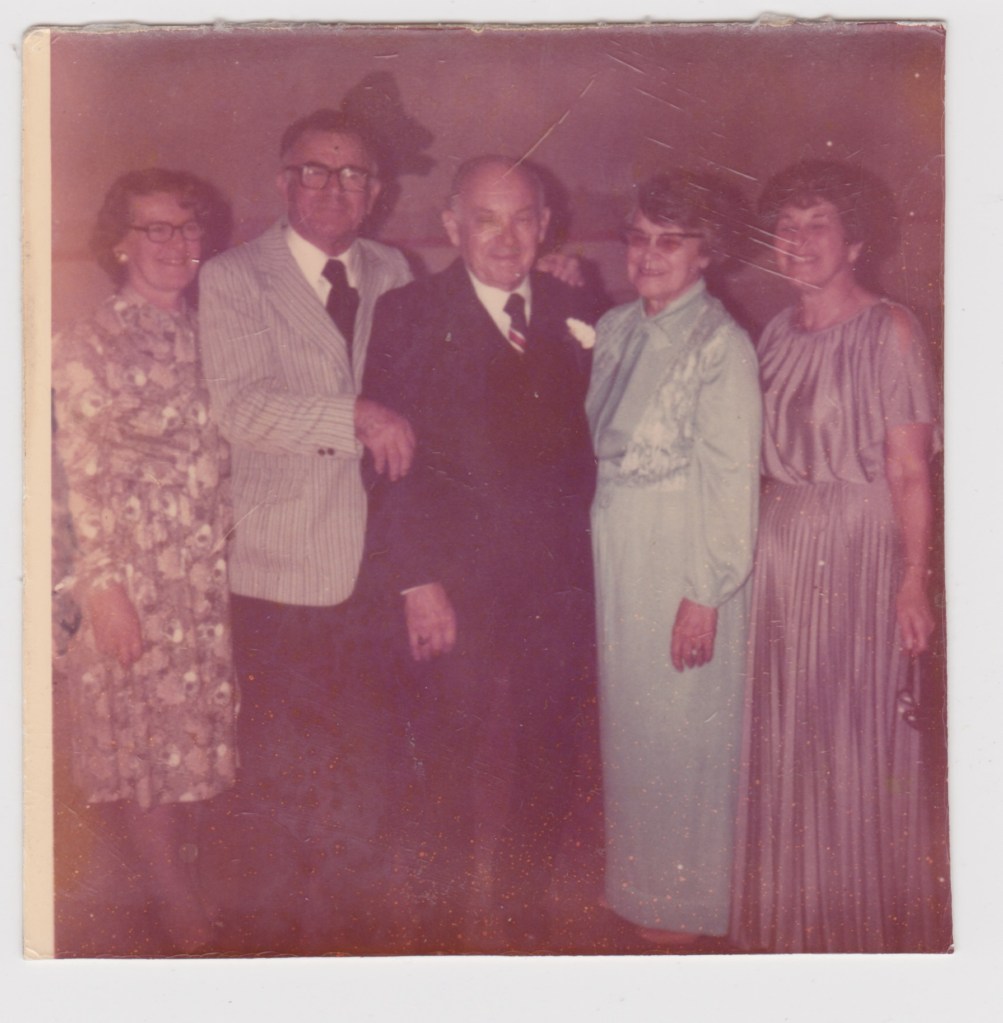
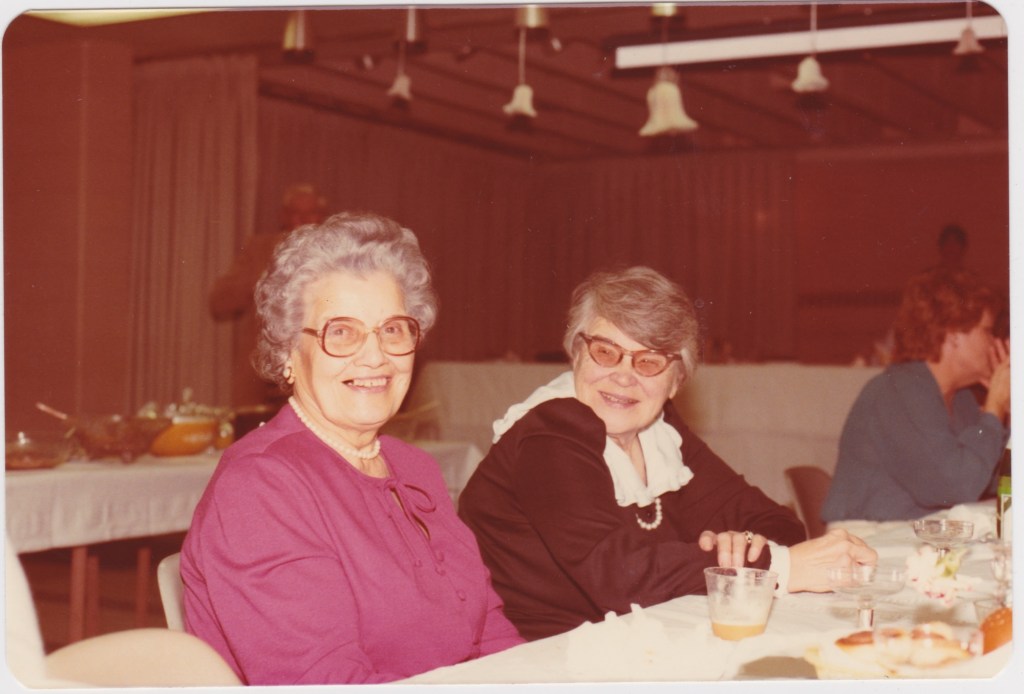
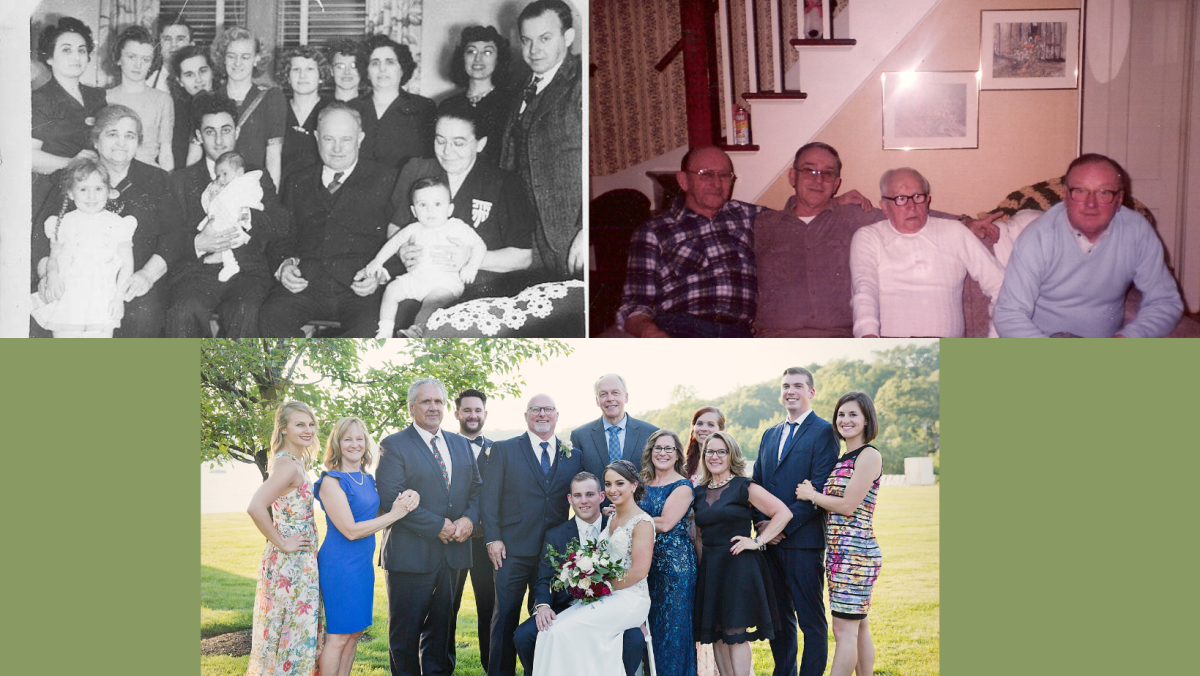
Betty, Lou, Connie, Tootsie, Judy Posluszny 1978

Conrad James Posluszny

My Uncle Connie was the second-born child and first son of my grandparents, Julianna Ingram and Konrad Posluszny. He was born in Yonkers, New York, on November 12, 1910. He was a “junior” but it didn’t show up in official records except for his enlistment paperwork and the 1940 census.

He was 15 years old when the family made their move to 121 Clifton Street in Wallingford, Connecticut. His World War II enlistment record says his level of education was grammar school, which would mean he didn’t continue school when they moved to Wallingford and that is consistent with what I was told by family.

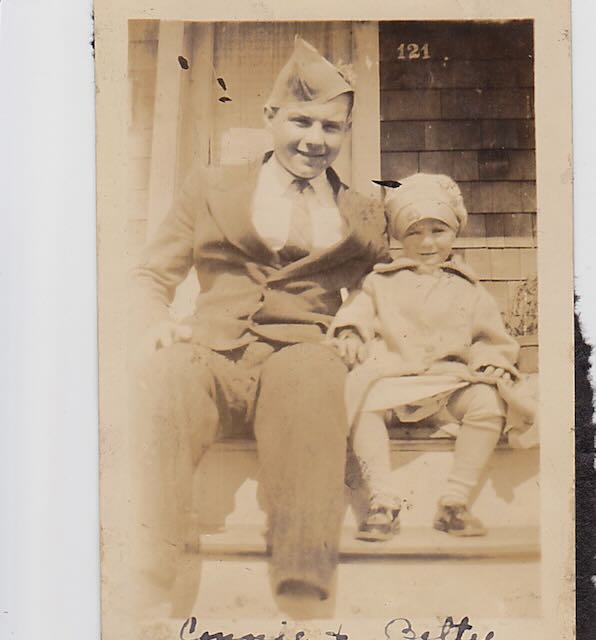
Connie and my mother, Betty He was 12 years older than her

Connie inherited his mother’s baking skills. He may have been working as a baker for a few years but, he first appears in the Wallingford town directory in 1931 at 21 years old, working as a baker for Charles Heilman, who had a shop at 12 Pearl Street. If you’re from Wallingford and never heard of this street, Pearl Street was across from the Stanley Judd Factory, and some time later, it was renamed Judd Square.

He continued working for “Old Man Heilman” for another four years. He briefly worked as a drop operator for the International Silver Company’s factory in 1937, but by 1939, he was baking again with Mr. Heilman at their new location of 363 Center Street.

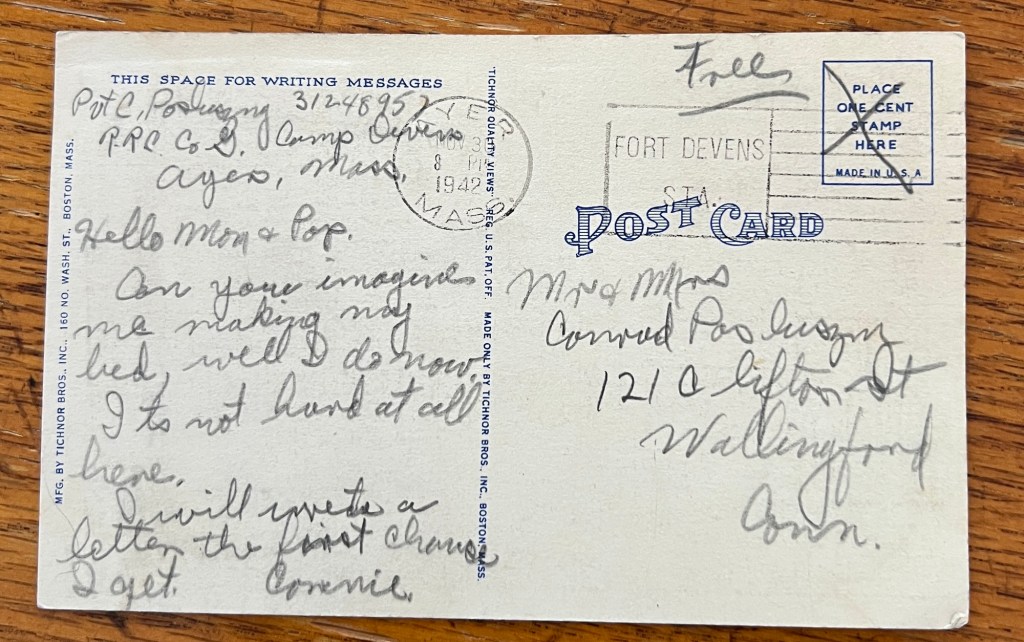
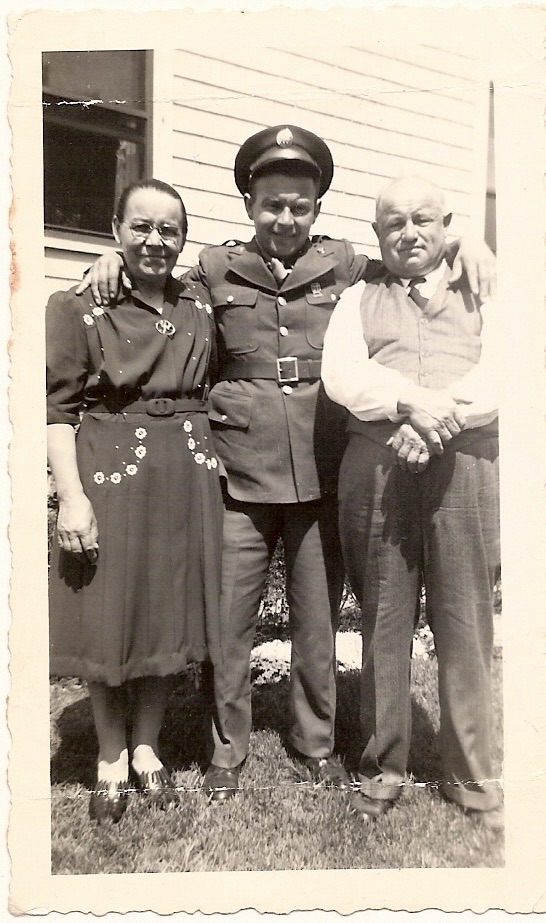
At the age of 29, and while an employee of Heilman’s Bakery, Connie filled out his draft card in October of 1940. His enlistment occurred on his birthday in 1942 and by November 30, 1942, he found himself at Fort Devens in Ayers, Massachusetts. His postcard tells his parents, “Can you imagine me making my bed, well I do now. It’s not to hard at all here. I will write a letter the first chance I get. Connie”

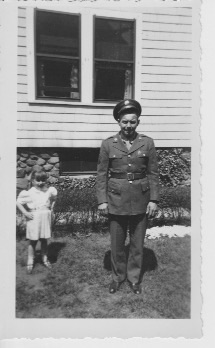
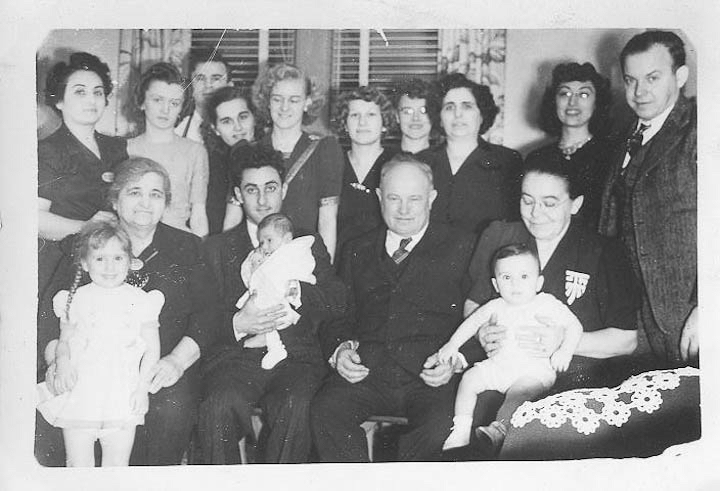
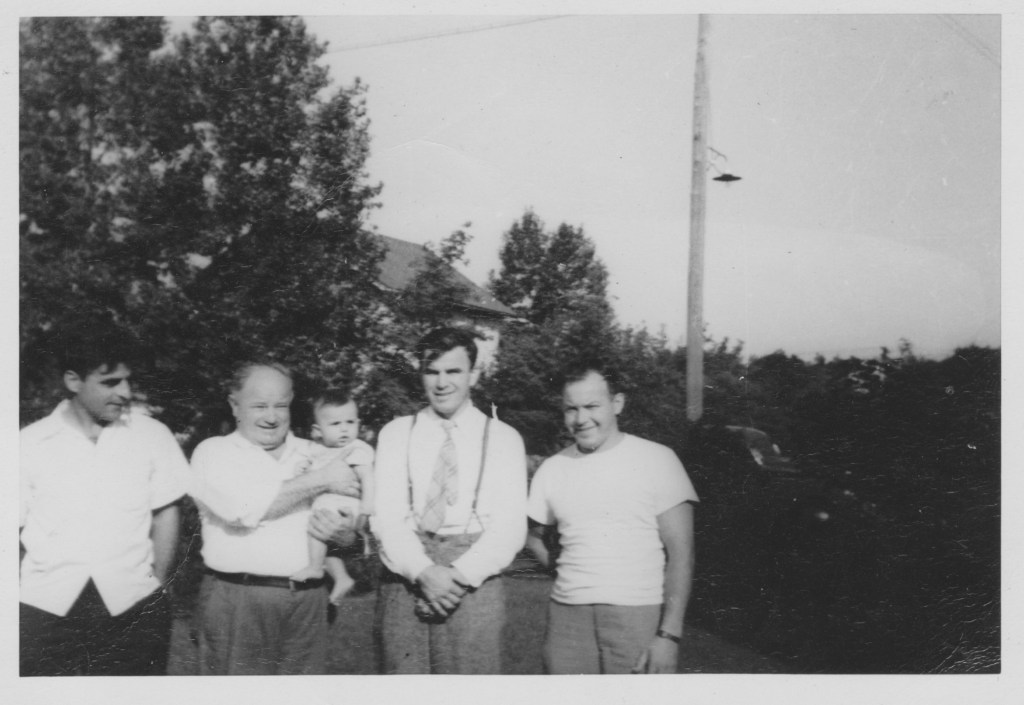
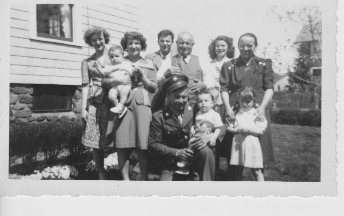
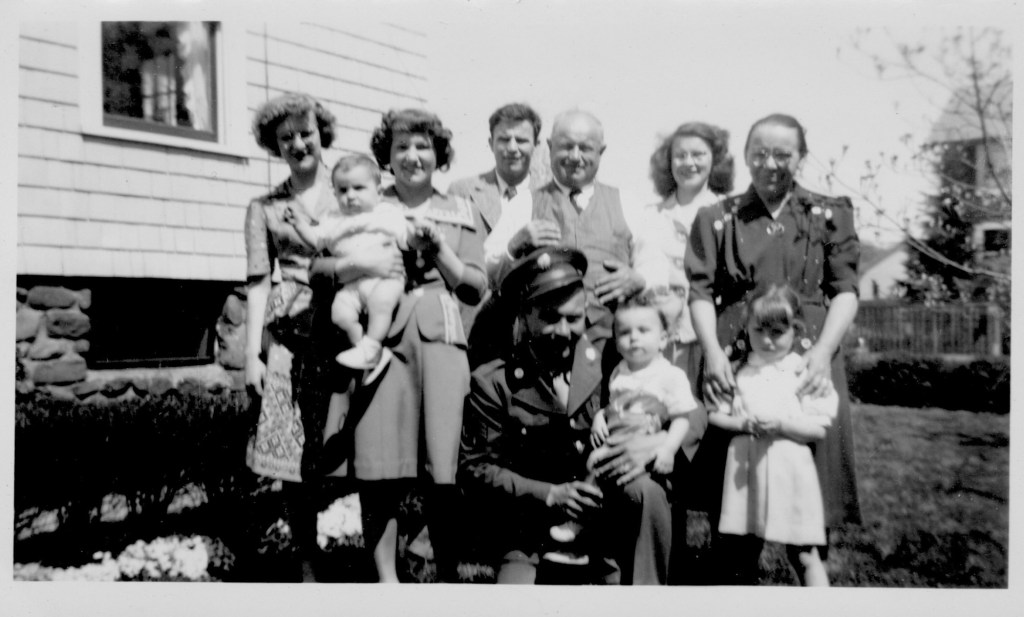
The pictures above were from the time before he left for Fort Devens in 1942 based on the ages of the children in the pictures as Judy was born in 1939.

From Fort Devens, he headed to Camp Swift, outside Austin Texas in early 1943, then to Fort Sam Houston in San Antonio Texas in mid 1943. This is where he was stationed when my mother and Aunt Tootsie went to visit him.

Early June of 1944, found him at Camp Pickett in Virginia. From there, he headed to Camp Young outside of Indio California which was a Desert Training Center. Through a more thorough review of all the postcards he sent home, and with the help of Google AI, I have a good picture of his military service, which I will write about in my next post.

When my grandfather died in December of 1944, the newspaper said Connie had recently been sent to New Guinea. My cousin Judy, my fellow family genealogist, wrote about his time in World War II in her family memories in 1995. She wrote, “During World War II, Uncle Connie cooked in field kitchens all over the European front, serving hot meals to the troops when they could. I remember him talking about setting up and being ready to serve a meal, and they had to pull up stakes because the enemy had moved and were getting too close.” This passage falls into line with my more in-depth research, so I’m glad I went back to Judy’s family memoir.

He was released from service on January 10, 1946 and by 1947, he was back home and once again a baker. However, Judy wrote that, “when he returned from the war, he went back to work for the Heilmans, but after a few years he decided to move on and went to work for some hotels in the Pocono Mountains.” I have postcards in my mother’s collection from him during that time period. I didn’t realize he was working there. The directories for 1947 and 1949 only say “baker”.

In 1951 and 1953, he was working as a baker for Choate School. He tried his hand at owning his own shop, Connie’s Bake Shop at 96 Quinnipiac Street, for a few years from 1955 to 1958. Cousin Judy worked there after school and on weekends. Here is what she had to say about Uncle Connie’s bakery: “he worked so hard and so many long hours a day. On weekends, he went to Sunday noon, many’s the time I have seen him sleeping while he was still standing. He was such a perfectionist that he would train people to work with him and then never be satisfied with what they did. He made the best pastry and breads I have ever eaten (they were divine!) and his hard rolls were unbeatable. In fact, his type of hard rolls is still being made today at New York Bakery in Wallingford and have been acknowledged as the best in New England. He gave up the bakery after a few years because to keep up the pace would have killed him but he did not give up his profession.”

Masonic Home and Hospital hired him as their bread and pastry chef and he spent the rest of his career baking for the 900 or so residents and employees. He worked overnight at the hospital baking whatever needed to be made for the following day as well as making the night staff their 1 am dinner. One Mother’s Day he made and frosted 400 cupcakes, “each one with a single, full-blown confectionary rose that he completed by making them for one hour each of the three nights”, according to a 1977 article about him in the local newspaper. All because “they get ice cream every Sunday and I think Mother’s Day is something special.” He continued to live with his mother and sister, Tootsie at 121 Clifton Street.

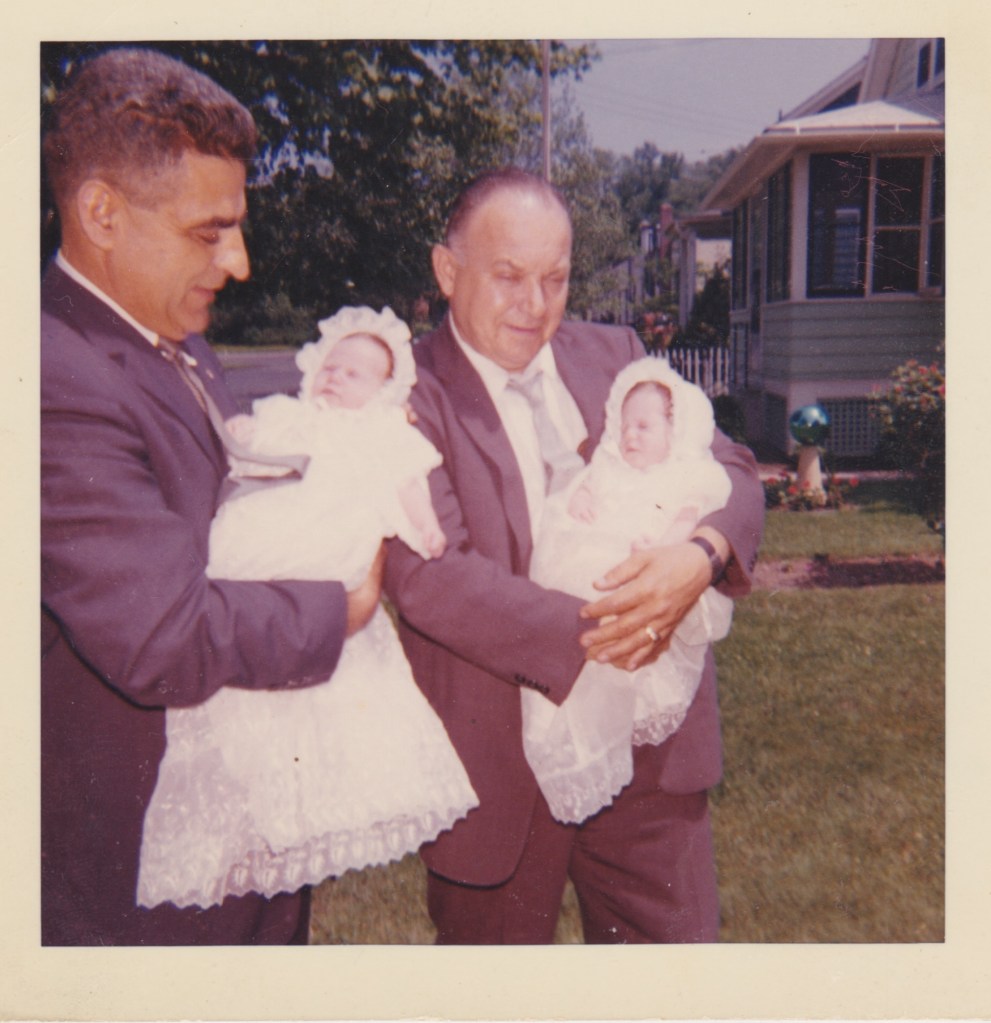
When my twin and I were born in 1960, he was given the honor of being my godfather.

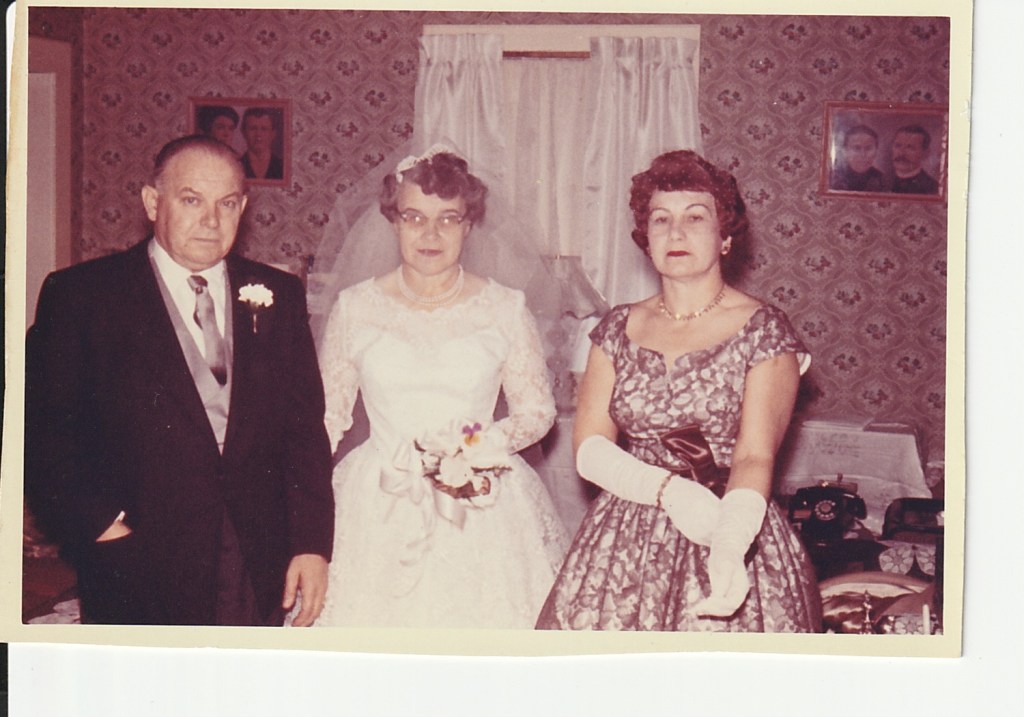
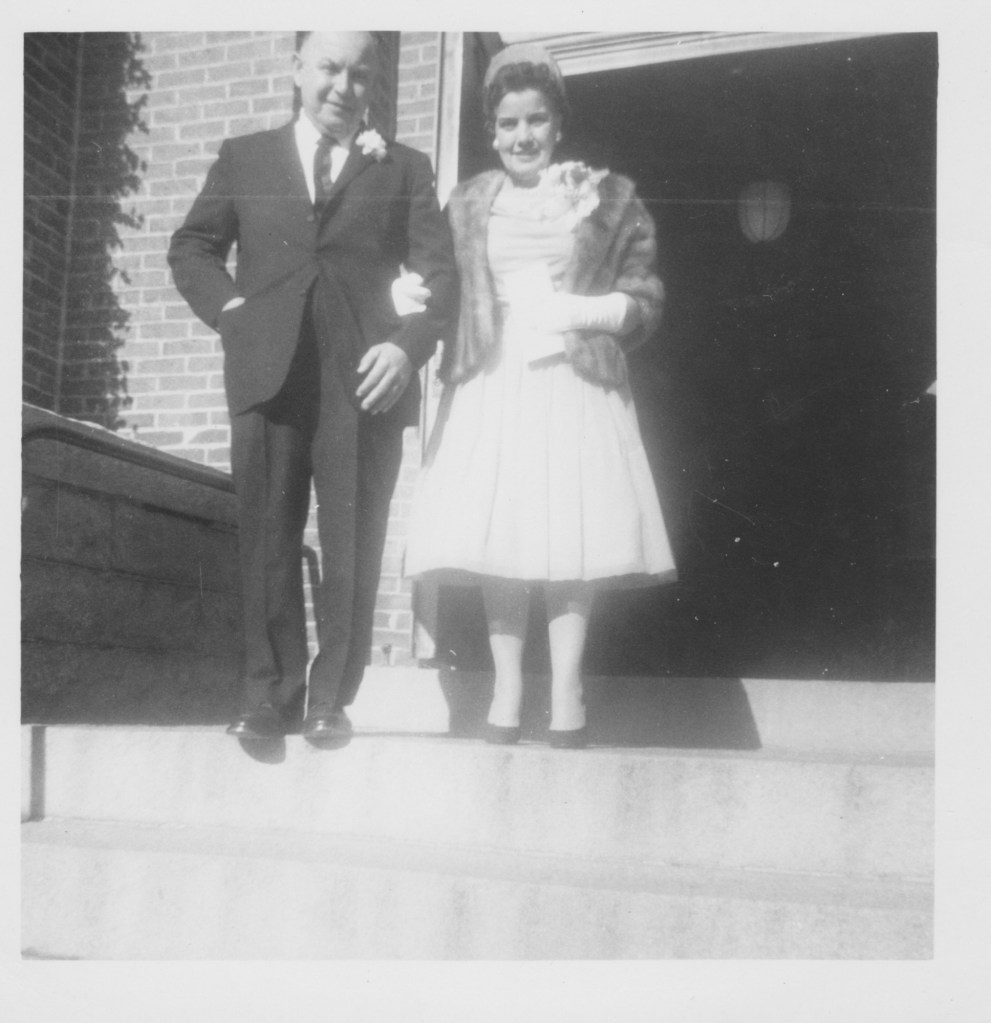
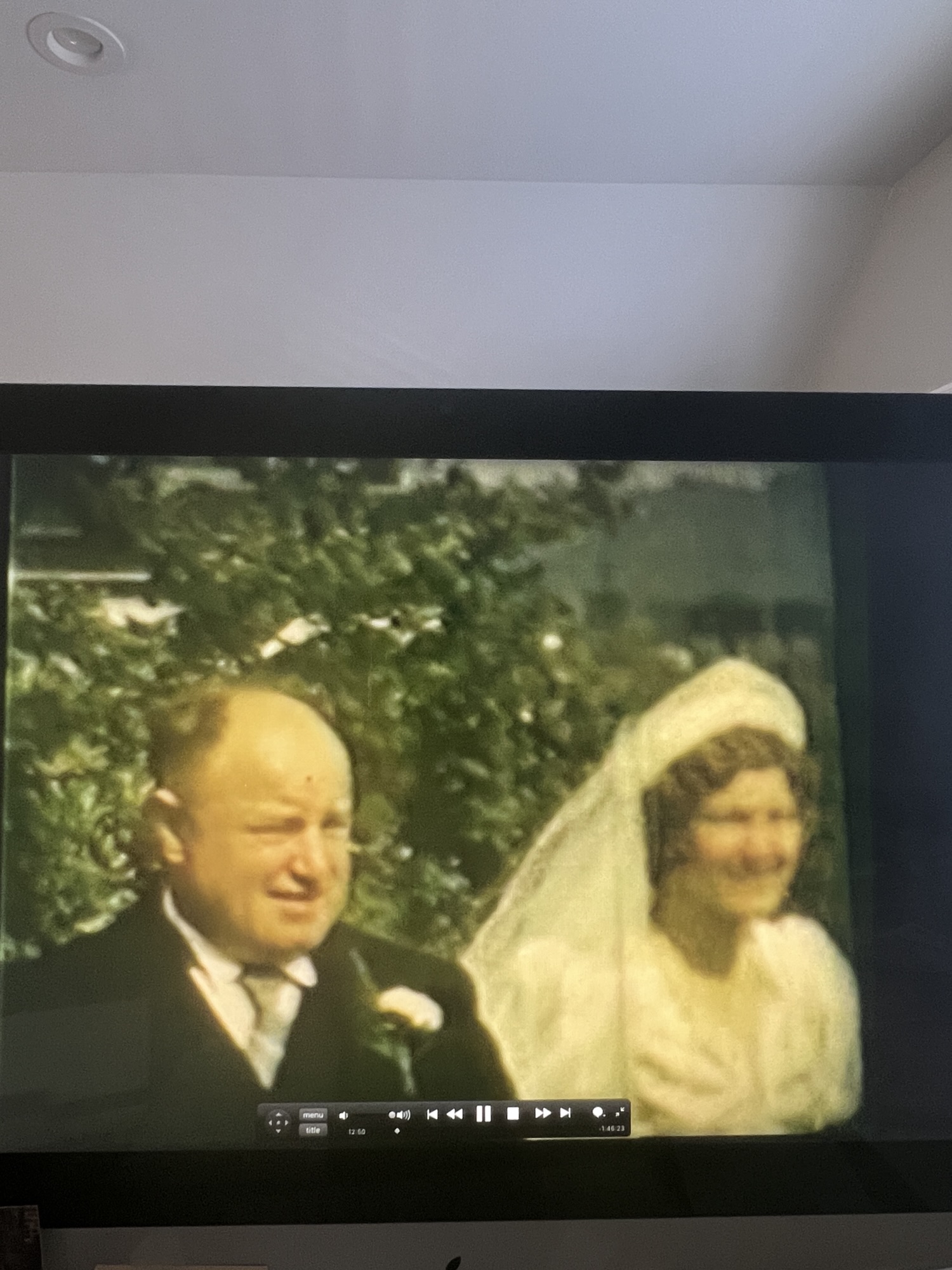
Wedding Day October 1, 1962

In 1962 at the age of 51, he married Ann Martineck Yasensky, a 52 year old widow with two adult children and three grandchildren. She became our Antie Ann (I’ve spelled it this way for phonetic reasons). We loved her very much and we would come to know her children and grandchildren over the years. They met when he had his bake shop as it was only a block or two from her home. After they married, they lived in her house on Bristol Street and on occasion, my sisters and I would stay over their house when my parents had a rare Saturday night out. I can picture us lying on the floor in front of the television watching Davey and Goliath on Sunday morning! By 1969, they were living in their home on Grandview Avenue, in our neighborhood and two houses away from the park we spent all our summer days at in the town Parks Program. Need a bathroom? Go to Antie Ann and Uncle Connie’s. Hungry? Tired? We knew where to go.

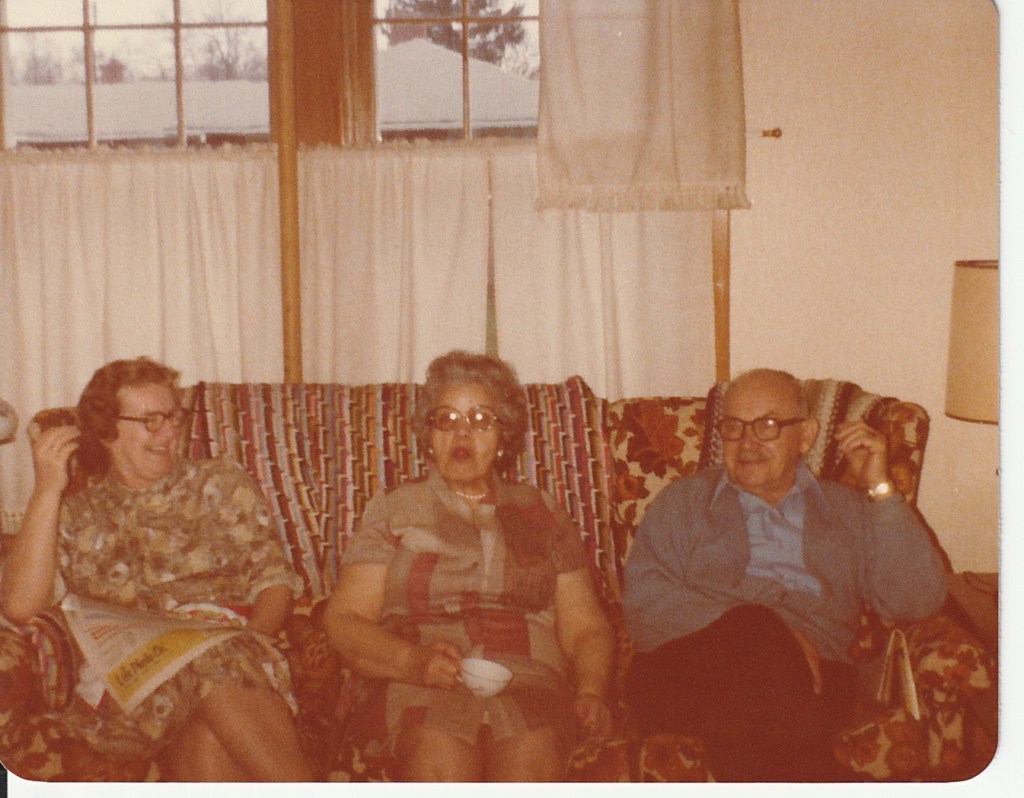
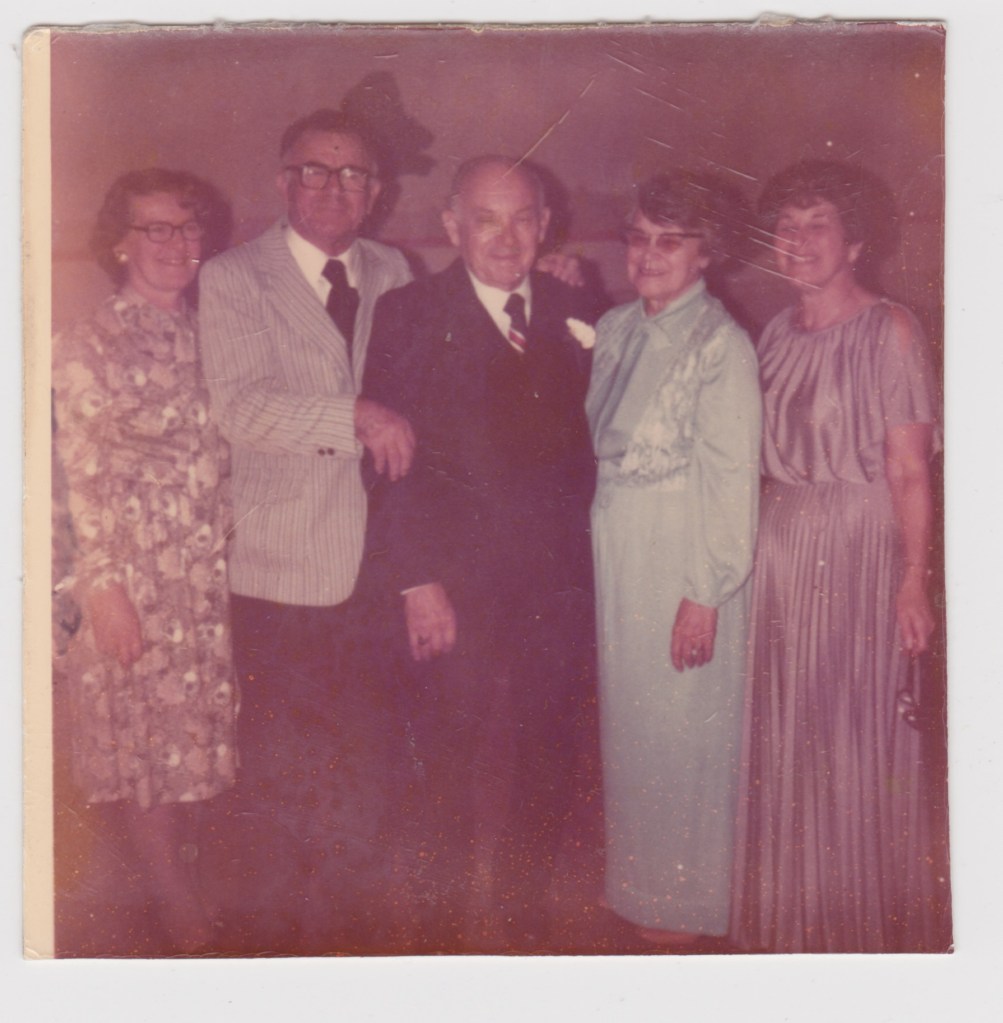
Siblings: Betty, Lou, Connie, Tootsie, Judy November 1978 at Tootsie’s second marriage

They lived happily ever after for 19 years until he died of a heart attack in his kitchen at the Masonic Home November of 1981, just a few days short of his 71st birthday. He was the first of my mother’s siblings to pass away and I felt my mother’s sorrow because I think he was her favorite sibling.

Antie Ann remained in their home on Grandview Avenue. When we moved home in 1995, our walks around the block always included a stop at her home to see if she needed anything or to just visit. Eventually, her chronic heart issues caused her to move to Georgia to her daughter and son in law’s home where she passed away in 2004 at the age of 95.

Antie Ann and Aunt Tootsie 1984

My uncle spent over 50 years of his life baking. His creampuffs, chocolate eclairs, hermit cookies, and previously mentioned hard rolls were out of this world delicious. I can picture them in my head today! He took care of and fed so many people in his lifetime between the bakery, his military service, and in the years following at Choate and Masonic Home. It must be where I developed my sweet tooth. He passed down the love of baking to my cousin Judy who was an amazing cook and baker herself, and to my niece Charlene, with a PhD in Food Science who has been recognized for her USDA-funded research on the sourdough microbiome. Her work focuses on how the unique yeast and bacteria in sourdough starters affect bread quality, digestibility, and health benefits. I can picture Uncle Connie standing over her shoulder as she discusses one component or the other.

Konrad James Posluszny

I was surprised to realize that I haven’t told the story of my grandfather, Konrad James Posluszny. He was the sixth child born to Caroline Straub and Joseph Posluszny on May 3, 1886, in Wildenthal (now Dzikowiec) in the Galicia region of Poland. When he was born, only his older brothers John and Joseph were still alive, two children having died from smallpox and one from dysentery.

Konrad departed Europe through Hamburg on the Blücher on December 6, 1902, and arrived in New York harbor on December 17th. He traveled alone and headed to his brother John on Jefferson Street in Yonkers. Like hundreds of other immigrants, he was listed as a laborer on the ship’s manifest. He was quickly hired at a hat company, which was a booming industry in the early 1900s.

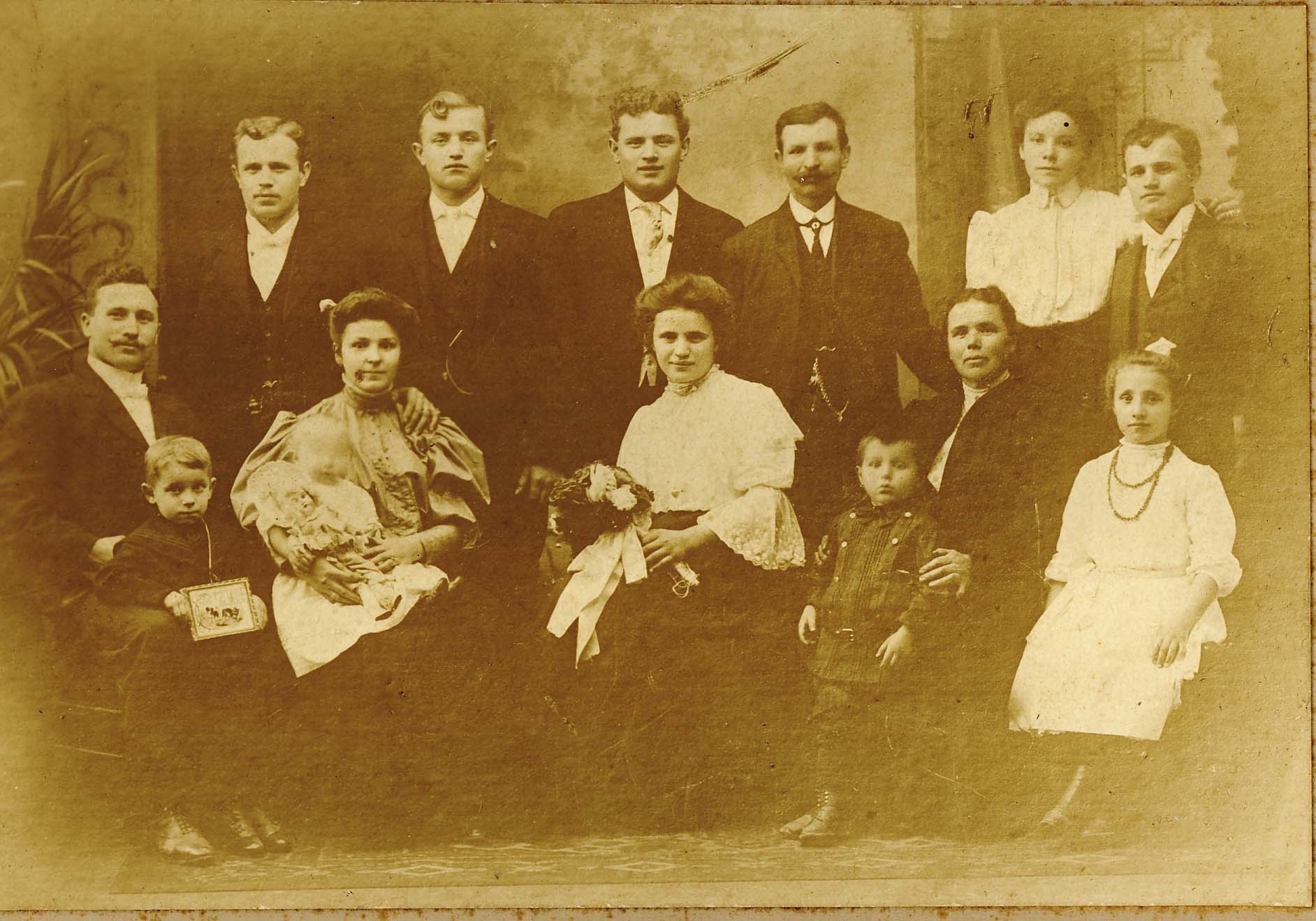
Konrad met and married Julianna Ingram on July 15, 1906, in Yonkers. Time for the family picture! Konrad and Julianna are on the right. I think Konrad is the most handsome of the bunch. But I might just be biased.

Posluszny /Bonk family late 1907/early 1908

Konrad is listed in the Yonkers city directories fairly consistently. In 1905, at 41 Jefferson Street to 50 Jefferson Street, to their final residence of 98 Jefferson Street from 1908 through 1921. This would be the location for the birth of their first four children – Antoinette Gertrude, Conrad, Louis, and Julianna.
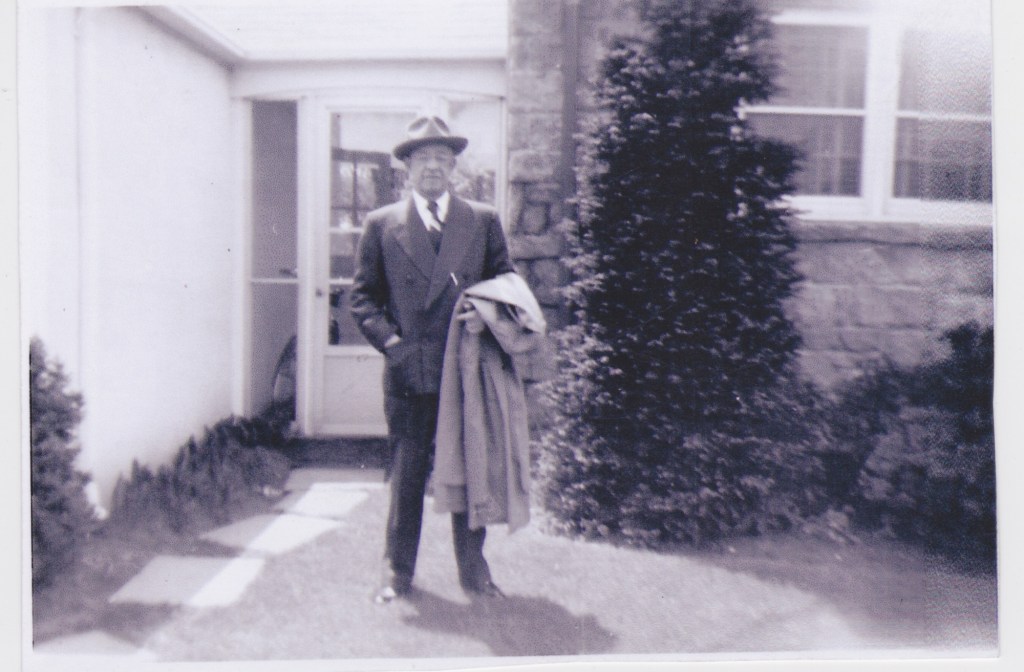
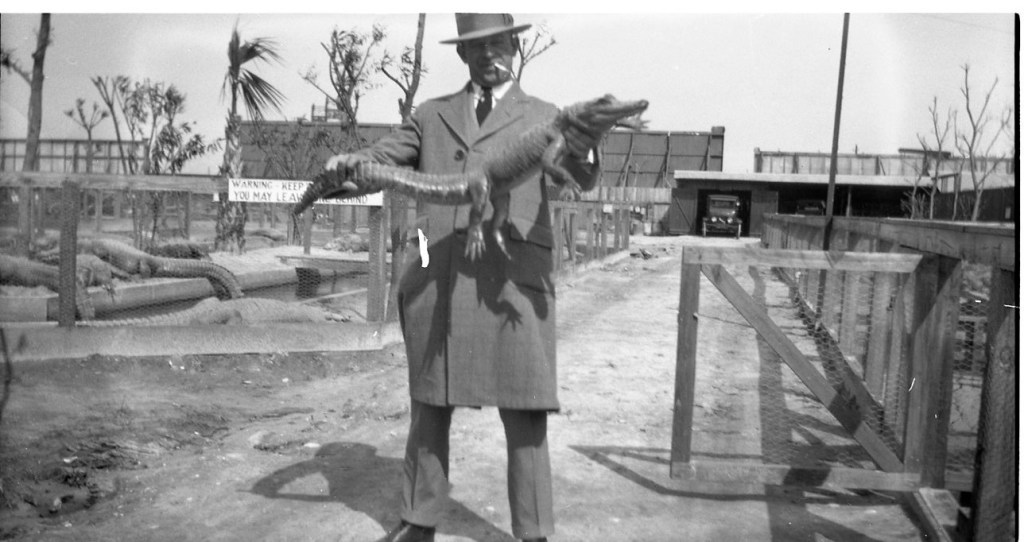
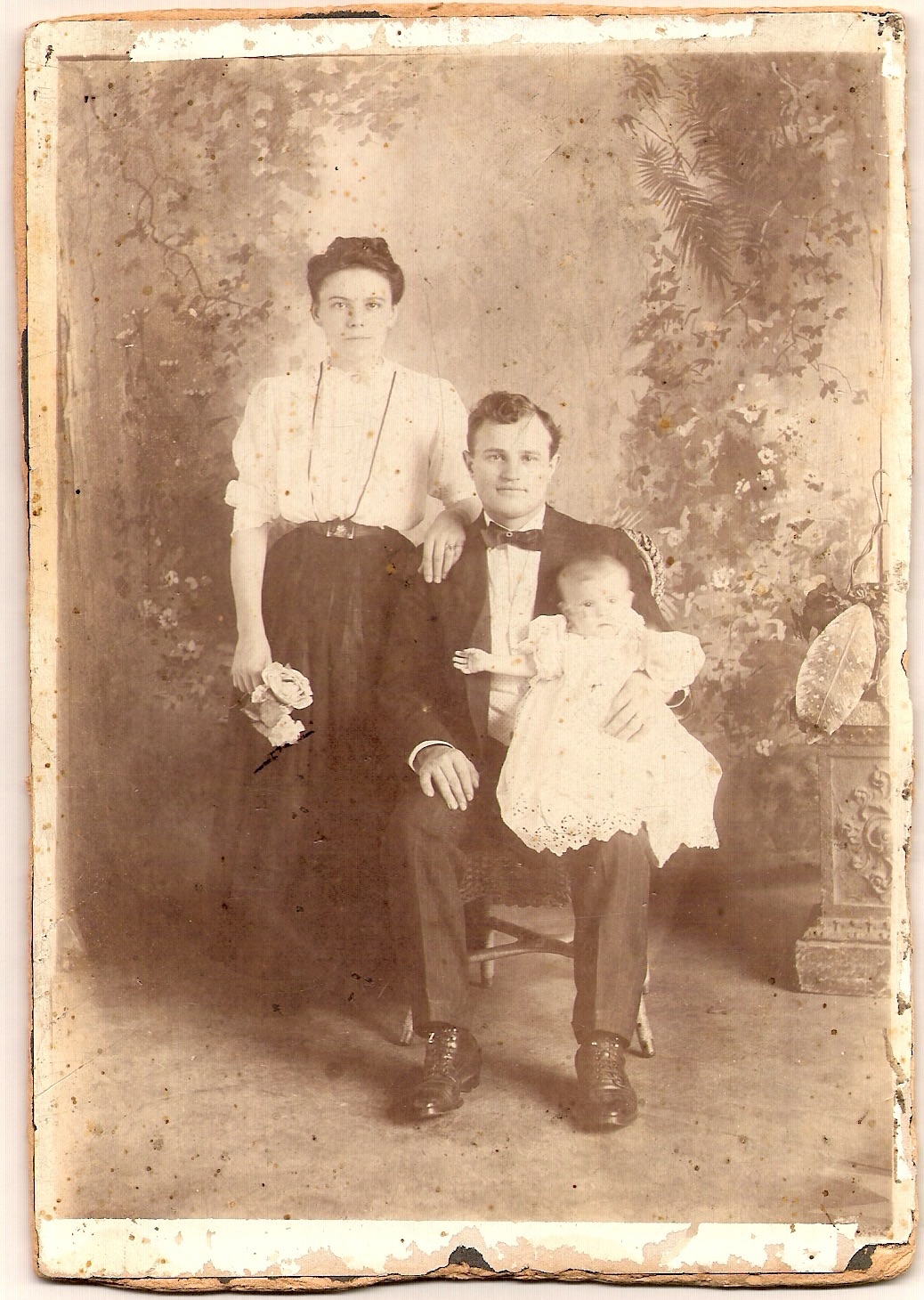
Julianna, Konrad and Antoinette

Antoinette was the firstborn on January 7, 1909, in Yonkers, NY, and this photo is the only one of Konrad and Julianna with any of their children when they were young.

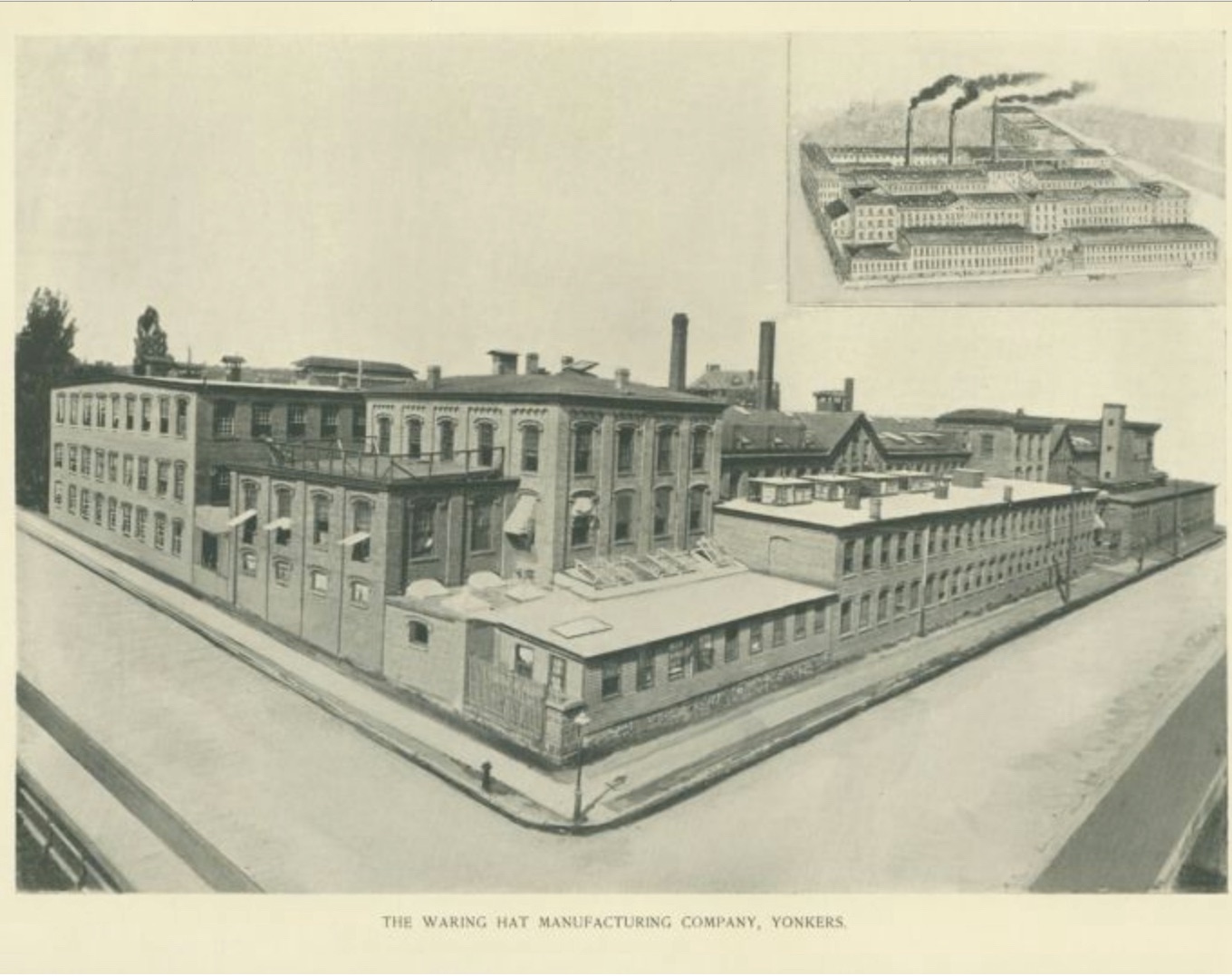
Konrad was an employee of Waring’s, a hatmaker in Yonkers, which was a block and a half from their home on Jefferson Street. In the 1905 directory, he’s listed as a Presser. Pressers worked with steam, heat, and heavy hydraulic machinery to press and shape felt (often made from rabbit or beaver fur) into the final form of a hat. Come to find out, these were the men who worked with toxic mercury nitrate, which could lead to chronic mercury poisoning. In other directories, he’s listed as an employee or a hatter still at Waring’s.

Konrad became a naturalized citizen of the United States on April 29, 1921. It was also in 1921 that something unthinkable happened. Julianna had a relationship with a cousin whose connection to her I still haven’t fully determined, but possibly first or second cousin, and she became pregnant with my mother. Did Konrad know? Was he suspicious? I don’t know. But Konrad, Julianna, and their four children moved north to Easthampton, Massachusetts sometime in mid to late 1921.

From there, they moved to New Britain, Connecticut, where they lived in one of the apartments of Julianna’s relative at 15 Derby Street. My mother, Elizabeth, was born on April 5, 1922.

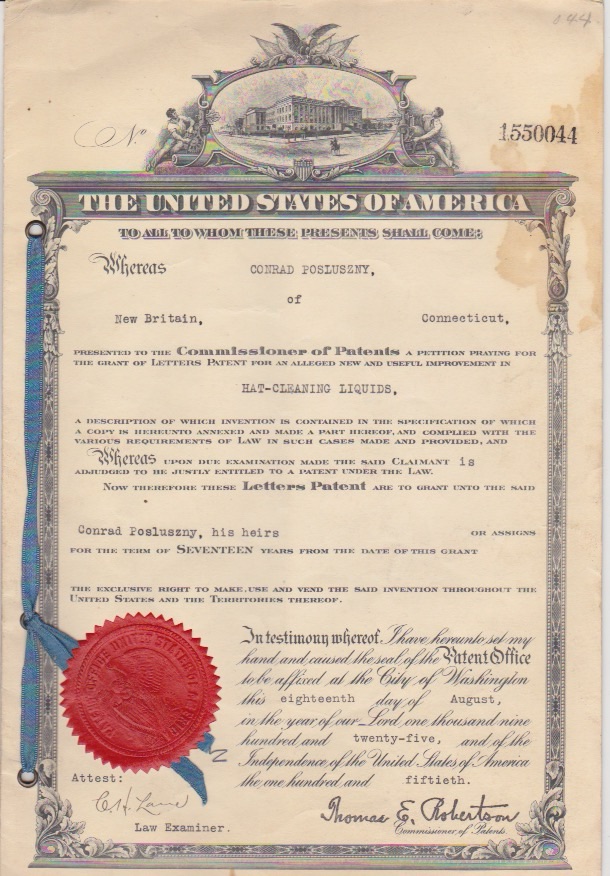
In New Britain, my grandfather opened up a hat store called the Conrad Hat Company, and in 1923, it was at 43-45 Broad Street before moving to 317 Main Street. In 1924, he applied for a patent on a cleaning solution for straw hats and was awarded it in 1925. I don’t know if he ever made any money from it, but he still holds the patent. Unfortunately, in the summer of 1924, in the span of two weeks, there were fires in his store, and that was the end of his hatting career.

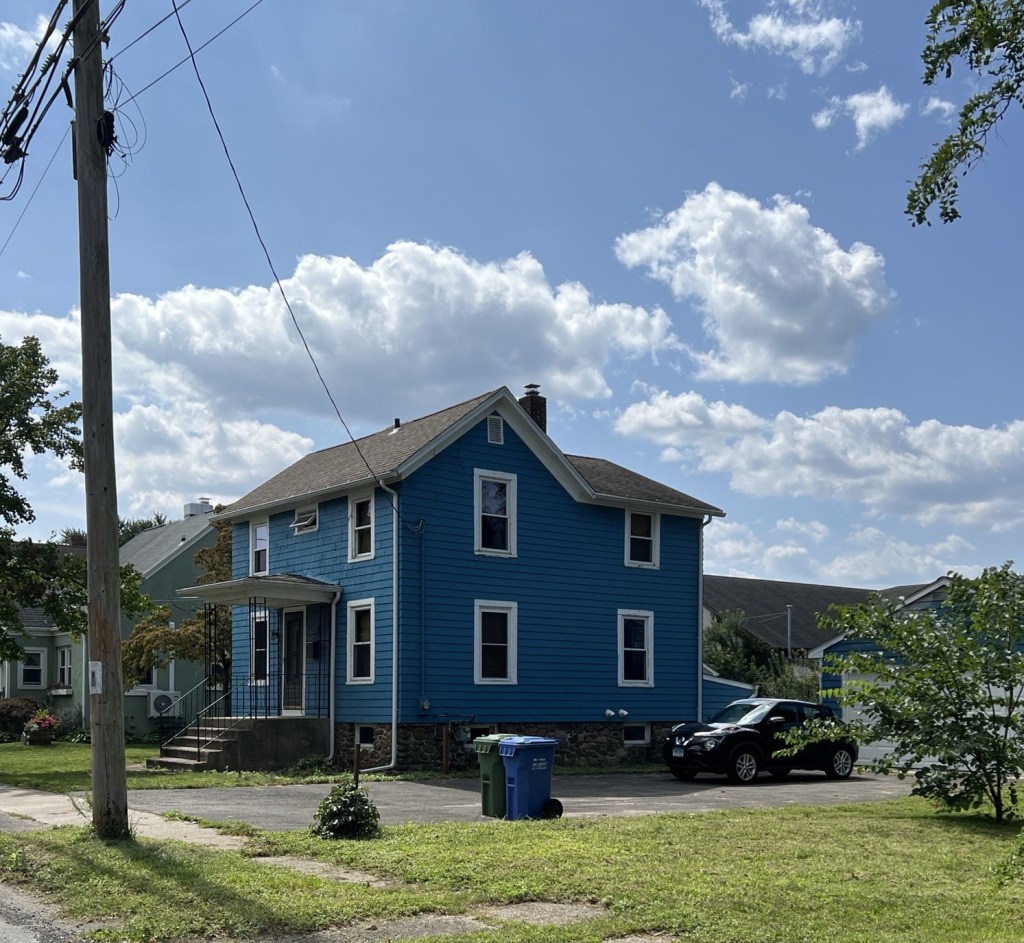
The family moved to Wallingford in 1925, and they purchased a new home at 121 Clifton Street. Konrad was hired at the Wallingford Steel Mill, which was practically in their backyard. The railroad tracks for the cars from the steel mill to meet up with the main tracks ran along the side of their house, and the rumble and shriek of brakes during the night was enough to wake the dead. His job in 1935 was a roller, someone who manually guided the red-hot sheets through the roller with tongs and steel forks. I wonder if it brought back memories of his job as a presser at the hat factory. In the following years, he was a gateman, and in the last directory before he died, a janitor.

121 Clifton Street today

My Aunt Tootsie (Antoinette, the firstborn) told a story about a gypsy who told her father he would die by a gun. “This is why he didn’t allow guns in the house”, she told us. Unfortunately, he got access to a gun in the late night or early morning hours of December 28, 1944, at his job as a janitor at the steel mill. It was a self-inflicted gunshot to the head from a .38 revolver. He was found by the chief guard at 5:30 in the morning. No one in the family could give any reason for this act, but other newspaper articles say he was concerned for his son Conrad’s safety in the Army, having recently been sent to New Guinea. He was given a high funeral mass and buried in the family plot in St. John Cemetery.

Obviously, he didn’t die by a gun because a gypsy said he would! He suffered from severe depression. Aunt Tootsie casually mentioned how he was able to “have beer when he was in the hospital” because the doctor said he needed it. She never mentioned why he was in the hospital, and I never asked, but depression was something that ran in the family and affected a younger brother and a younger sister.

He was gone for 16 years before I was born, and would have only been 74 years old if he had lived. I wish I had met him. We never talked about him or his death with my mother and it wasn’t until the late 1990s that I would sit with Aunt Tootsie and she would share the photos and stories as she remembered them. Such precious time lost.

A conversation with my Aunt Judy about Julianna and Konrad gives some more in-depth stories about them.

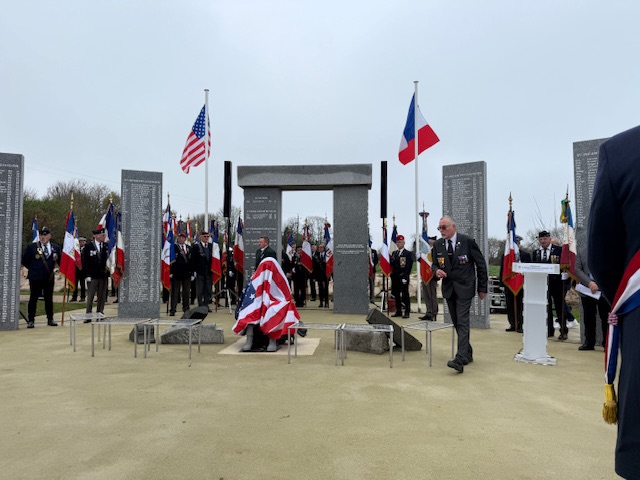
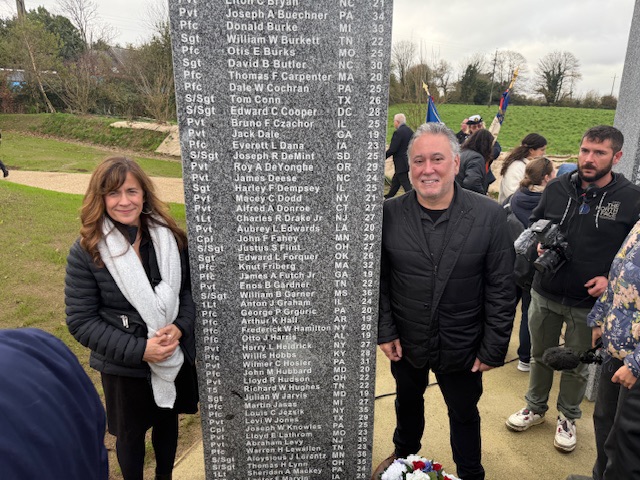
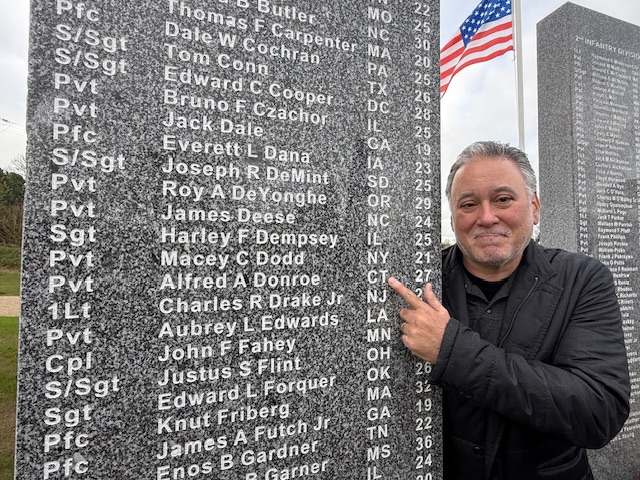
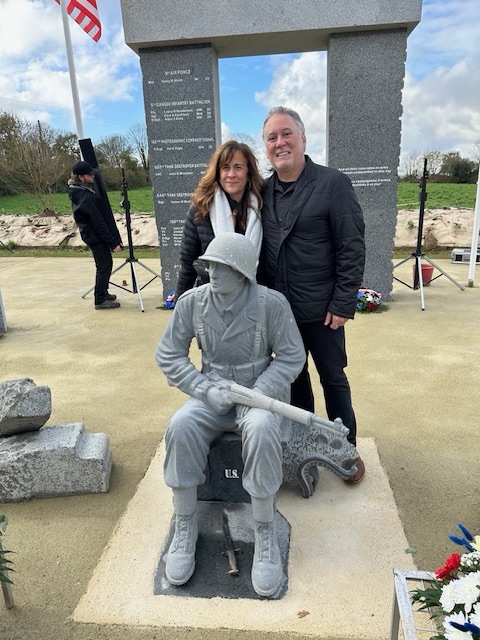
Gouesnou US Memorial Update

In late August of 2025, I wrote about the permanent memorial to US soldiers being planned in Gouesnou France.

One of the soldiers was a cousin’s grandfather. His mother’s father died in Gouesnou during World War II when she was two years old. Because I had her name in my family tree, someone associated with the memorial contacted me, and others, to locate relatives. I’m happy to say my cousin was contacted.

My cousin emailed me this afternoon and sent me pictures from the event. He said it was a very moving ceremony. It is nice to know that soldiers have continued to be honored overseas for over 80 years.

Admirable Ancestor

The Week 1 topic for 52 Ancestors in 52 weeks for 2026 is “an ancestor I admire” and after looking at my family tree, I’ve decided that falls on my great grandmother Carolina Straub Posluszny Bonk. Although, technically, she is not my biological great grandmother, her son, Konrad and my grandmother Julianna Ingram were 2nd or 3rd cousins, so there is Carolina DNA in my body.

Carolina was born on April 12, 1855 in Wildenthal (what is now Dzikowiec) in the Galicia region of Poland. She was part of “an ethnic German population living in the Kingdom of Galicia and Lodomeria in the Austrian Empire established in 1772 as a result of the First Partition of Poland” (Wikipedia). This area was also known as Austrian Galicia or Austrian Poland for my family members asking are we Polish or Austrian or German? The answer would be “all of them”!

If her siblings list is accurate, Carolina was the 11th child born of 15 to her parents. Four of them born prior to her, died at birth or in their infancy. Carolina herself would give birth to 14 children with eight living past five years old.

She married Joseph Posluszny on May 31, 1876 in Wildenthal and she gave birth to her first child in March of 1879 when she was 24 years old.

Seven months following the birth of her daughter Elizabeth Eva in September of 1896, her husband and my great grandfather, Joseph Posluszny passed away. Carolina became a widow at the age of 41 with seven children ranging in age from 16 to 7 months old.

Last September, another of Carolina’s great-granddaughters through her son Joseph contacted me after finding this blog in google. She told me the following: “Pa’s father had been the village blacksmith. Pa’s father had an apprentice. His name was John Bonk. When Pa’s father died, John Bonk took over the blacksmith shop and apparently the family. Pa was not happy with this and it was about that time that he left Austria.”

Carolina and John Bonk were married on May 12, 1898. Carolina gave birth to a daughter who died at birth and in 1903 at the age of 48, gave birth to a son Walter John Bonk.

Her older sons did head to the United States shortly after her marriage to John. Her son John left in 1899, Konrad in 1900, and Joseph in 1901.

Carolina, John, daughters Mary and Elizabeth, and their son Walter immigrated in July of 1907 and resided in Perth Amboy New Jersey until their final destination of Wallingford Connecticut.

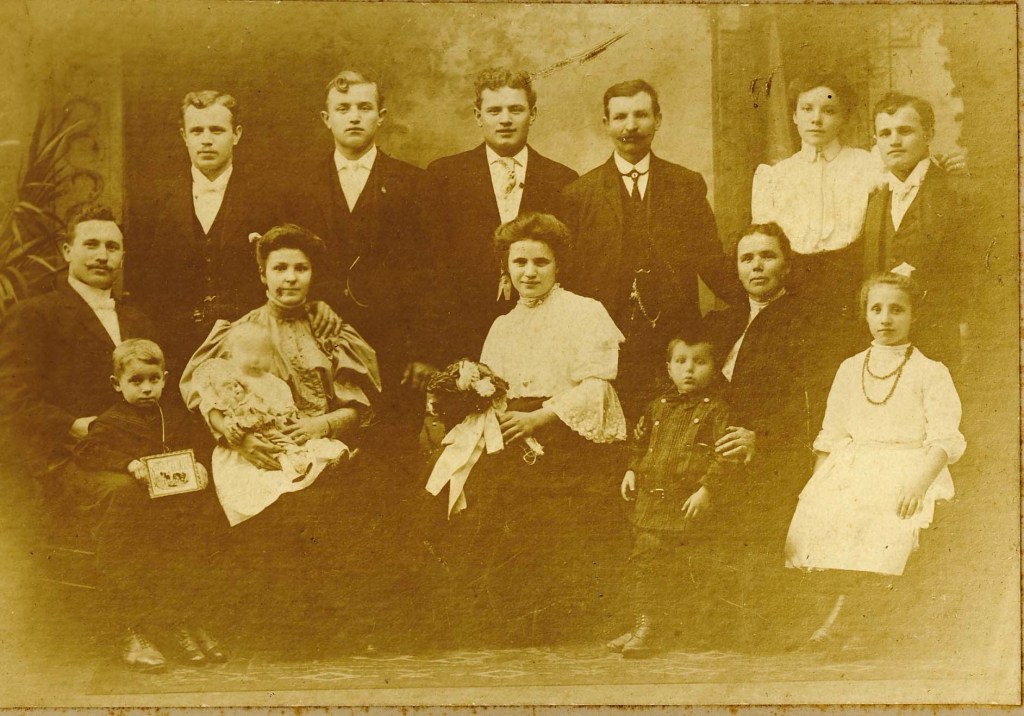
The Posluszny/Bonk Family about mid/late 1907

This photo ends up in nearly every Posluszny post. Carolina is seated on the right, with her son Walter in front of her. She is 52 years old at the time of this photo in 1907.

Frank and Josephine Posluszny wedding 8/1909 – Carolina front left, husband John Bonk behind her

She, along with her daughter Mary, was an active member in the local Polish National Catholic Church in Wallingford, St. Casimir’s Church.

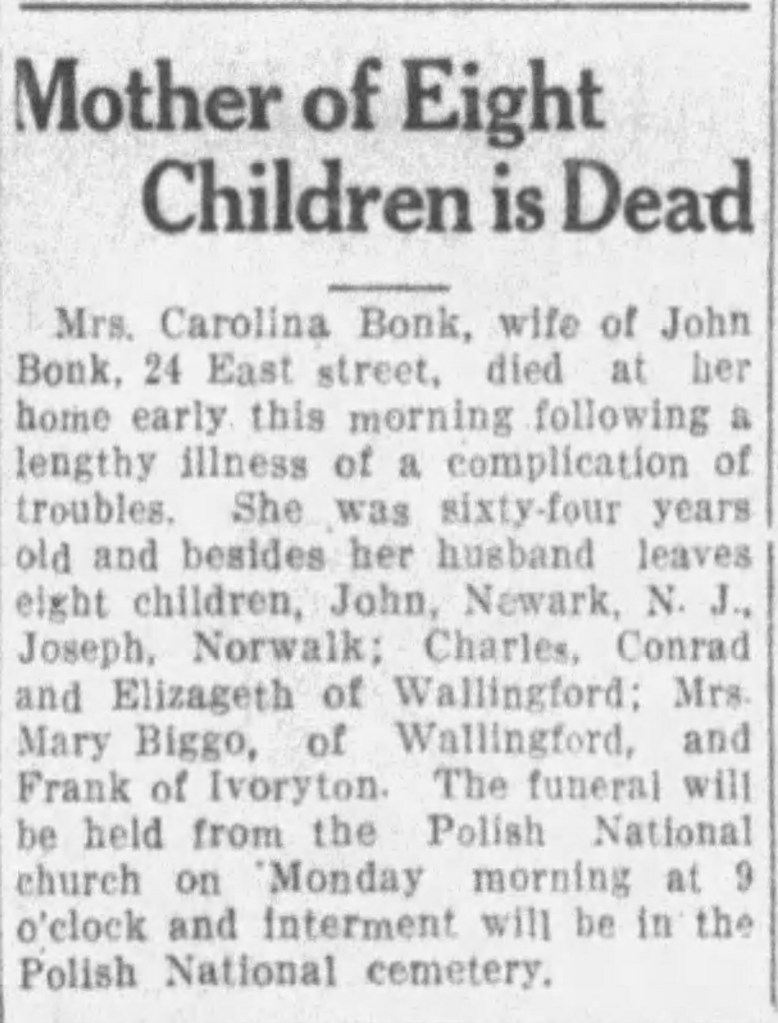
Carolina died at the age of 70 (not 64 as the newspaper article said) after suffering from stomach cancer. My Aunt Judy told me in a conversation years ago, that she and her mother, my grandmother Julianna, would go to Carolina’s house a few blocks away to take care of her when she was ill. Also, that my grandfather Konrad and Julianna were kind to her second husband. Carolina and John gave my grandparents the downpayment for their home in Wallingford on Clifton Street. I found it touching that my grandmother did the same for my parents when they purchased our home here on Atkinson Lane.

Carolina’s obituary 3/14/1925

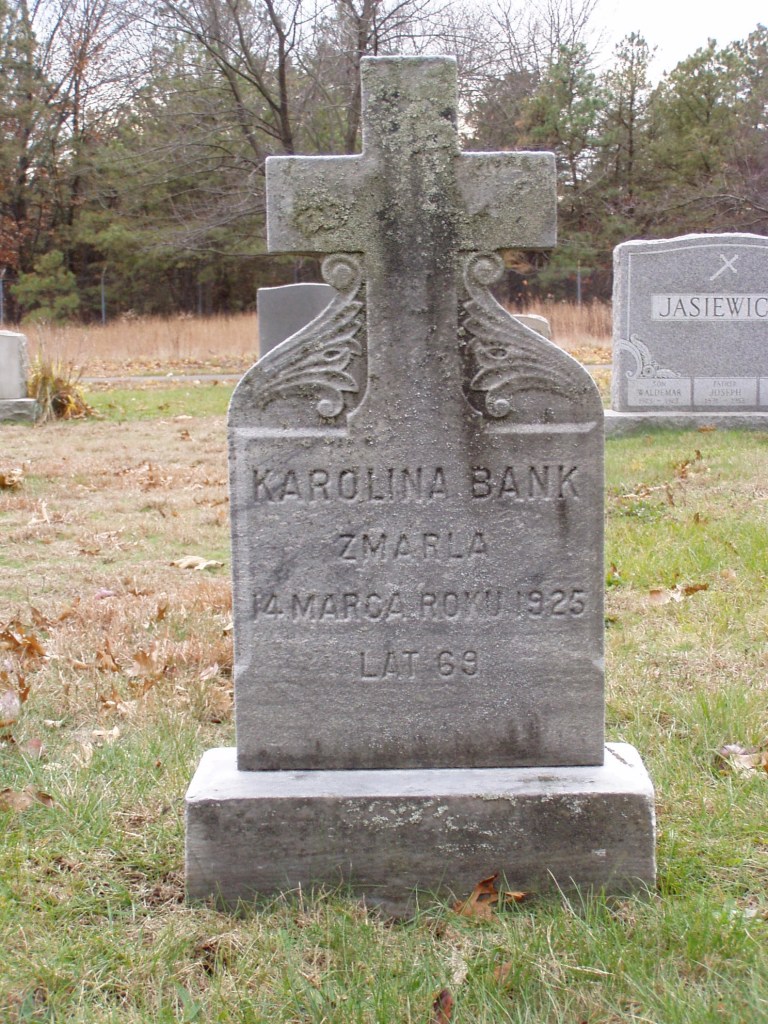
She is buried in the Polish National cemetery in Wallingford.

Carolina Bonk – St. Casimir’s cemetery

I can’t imagine a life with 14 siblings, or to give birth to 14 children only to have 3 die in the same year from smallpox. I don’t know the cause of her husband’s death at the age of 43, but with young children still at home and a business to run, the best option was to married the hired help. She did what she had to, to survive. She was well-respected in her church and community at their death and that makes me proud of her.

Looking Back at 2025

Yesterday, I took a trip down memory lane of the people I researched and wrote about this past year. I’m proud of the information I found, stories I wrote, and living relatives I uncovered during my search. Here’s a review month by month….

January

I started the year with a couple of posts from the 52 Ancestors in 52 Weeks Challenge by Amy Johnson Crow. The first topic was “In the Beginning,” and I chose to write about my parents’ courtship and wedding. I had fun going through old photos of them from their wedding and trips with my aunt and uncle. Ancestry provided the high school yearbook pages and my mom’s collection of postcards showed us the sweetness in their relationship.

The second post was “Favorite Photo.” My favorite photo will always be the Posluszny Family photo that started this crazy research journey! I think it is in every post I wrote about the family this year. It’s probably time to frame it and put it on a wall.

The third post in January told the story of my great-uncle John Posluszny. At the end of December 2024, I wrote about solving the “mystery” of his death in 1942, so I really wanted to start my Posluszny series with his story. I connected with his granddaughter, Janine, in 2012, and she shared the photos of her father, Stanley with me. I enjoyed finding and sharing the newspaper articles with her. I currently have a message out to a great-granddaughter of John and hope I hear from her to make another family connection.

February

On the 1st of February, I wrote about my mother’s diagnosis of brain cancer. Even 38 years later, memories were fresh.

Next up was a little break from family with a post about a sampler completed in 1817 and found by my father in the attic of his paint store in the early 1980s. He held on to it always curious about where it came from. Unfortunately, I didn’t think about researching it until after he passed away in 2010. I still haven’t delivered it to the Portland Historical Society!

Another great uncle, Joseph Posluszny, was my next subject. I can hear to this day my Aunt Judy saying, “Uncle Joe Post”. I’ve worked with his great granddaughter on Ancestry for many years and the majority of pictures I have came from her. In September, I was contacted by one of Joseph’s granddaughters who lives in Connecticut about 45 minutes away. I look forward to getting to know her better and hearing her stories!

This post was born during my Posluszny research when I noticed, after 15 years of research, that my great grandmother, Caroline Straub is listed on the 1910 census as having given birth to 14 children with 8 of them at the time still living! I headed over to the amazing Geneteka website, started searching, and managed to find the records for five children who died either at birth or a very young age.

March

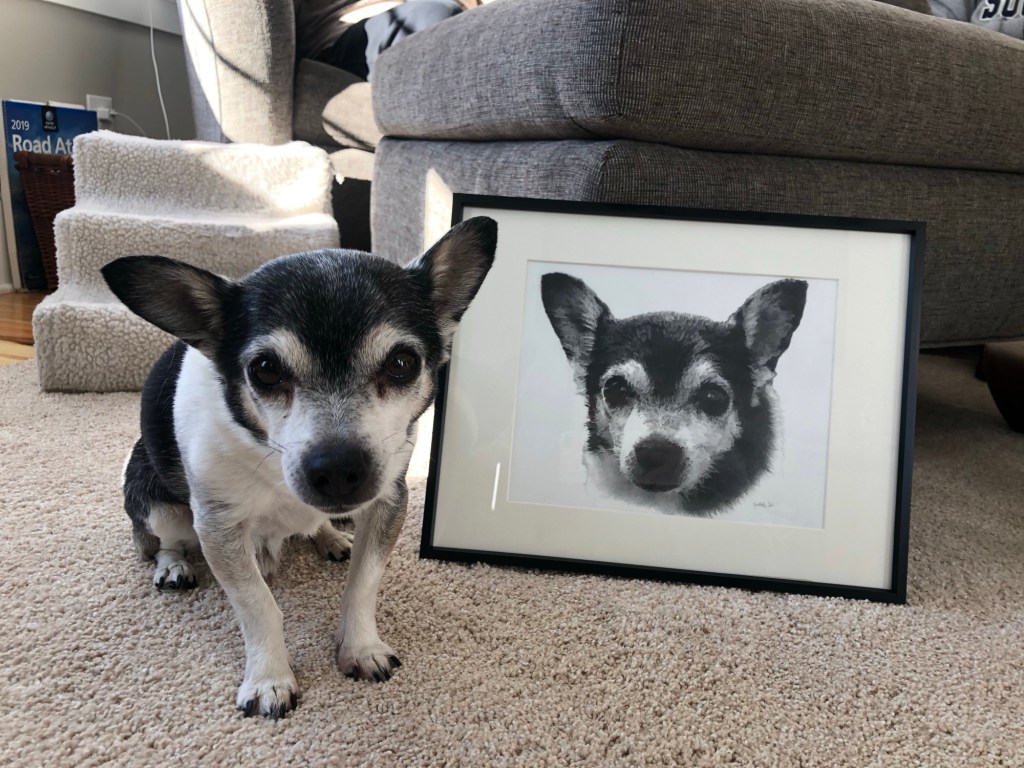
Early in March we said goodbye to our sweet chihuahua, Wally and late in March was the anniversary of my dad’s passing.

Wally with his portrait

April

The 98th anniversary of my grandmother’s passing was in early April and if you don’t know her story, you can read it here.

I wrote about my great uncle Frank Posluszny. He was a tough one over the years to find anything about because he was in a mental institution from the 1930 federal census to the 1940 census. I had very little information on the family and wasn’t sure where to look. But as the years go by, more information becomes available and I was able to find his great-granddaughter! We emailed back and forth and she actually knew him! She sent pictures which I included in his story.

Josephine, Frank, and Mildred Poslushny

May

I spent May working on my great uncle Charles Posluszny’s story. I posted once to check in to say I was working on him and at the end of the month, completed it. Once again, there are grandchildren and great grandchildren alive, but in this case, I don’t have a way to contact them.

June

June was busy with visiting relatives and a trip to Chicago so there were no posts in June.

July

In July I wrote about the sisters in the Posluszny family, Mary Posluszny Biega, and Elizabeth Posluszny Laçź. One who was well known and the other who disappeared without a trace.

August

I finally made it to the last of the Posluszny children, Walter Bonk, son of Caroline Straub and her second husband John Bonk. I knew all of his children and his grandchildren.

My second post was the result of a stranger’s request on Ancestry looking for “living relatives of Alfred Donroe”. He was my cousin in law’s father and he died in World War II. This person in France is working with citizens of Gouesnou France to create a permanent memorial to the soldiers and civilians who died there. I received a comment on there from my younger cousin, and we had a nice email conversation. He and his wife plan to go to France to see the monument.

September

The last quarter of the year I focused on my maternal grandfather and his family. Their lives were so entwined for many so years, that the first story takes you from Jacob and Katherine’s arrival in the United States through 1916. This was Part 1.

October

Engram Family Part 2 took place from 1916 through the 1930s. I became acquainted with a second cousin a few years ago and he sent a slew of family pictures. I also began searching on Newspapers(dot)com using family member’s names where I found Kitty and Louise playing basketball!

Later in the month, I wrote about Theresa, Katherine, and Louise from the 1930s through their lives. My half aunt Joanne shared photos with me as well as few letters Katherine wrote to Theresa’s daughter Irene. I’m grateful to Joanne for the information and the years of emails back and forth. I saved them all and finally printed them out and put them in order. I was overwhelmed by the amount of information that suddenly made sense!

November

Five posts in November! First up was the lives of Elizabeth and Hannah. Elizabeth had an interesting situation which deserved a post to explain it. It’s amazing what a person can find when they look hard enough, and have help from strangers on Ancestry! Thanks to Newspaper(dot)com again, I discovered a third cousin living about 20 minutes away!

Elizabeth, Hannah, and Louise 1940s

In time for Veterans Day, I shared a post from June 2024 called The Effects of War about my grandfathers in World War I, and uncles in World War II.

Then it was back to the Engram Family with Jacob Sr.’s story. I wish I knew more about him!

My cousin, Brian, messaged me pictures of a letter Jacob Jr. wrote to his sister Theresa. The war was over and he was waiting to go home. When Brian and I got together during Thanksgiving week, we sifted through all the Engram pictures and letters and there were more letters from Jacob to his sisters. They were very interesting to read.

December

I wrapped the year up with a re-post of December 7, 1941, the story of my Uncle Walt during the attack on Pearl Harbor.

I rounded out the Engram family with the final story of my grandfather Jacob Jr. I learned so much about him from my Aunt Joanne’s emails that again, didn’t make sense until it was time to write his story.

Jacob Jr. early 1940s

And here we are – the end of the year! I’ve signed up again for the 52 Ancestors in 52 Weeks challenge and I will be looking through my family tree for new ancestors to tell you about!

Happy New Year!

Engram Family Part 4 – Jacob Jr.

We are now at the end of the Engram Family stories, and I’ve saved my grandfather for last. His relationship with my grandmother is included here.

As I mentioned in my post about his father, Jacob Sr., Jacob Jr. made sure his father was cared for throughout his life. I think the same applies to his relationship with his sisters.

On December 16, 1934, Jacob, at the age of 39, married Anna Marie Winner of Vleigh Road, Queens, NY. She was the 24-year-old daughter of Henry and Joanna Winner. She had a brother who was six years older. They lived on a farm, which was close to Jacob’s farm in Queens in the 1930 census. Her father and brother were farmers, and in their household were three male boarders who worked on the farm, and a 44-year-old woman who was listed as a servant.

Jacob, Anna, Henry, and Joanna December 16, 1934

In the 1940 census, Jacob and Anna were renting at 136 Catskill Avenue in Yonkers, and Jacob was a partner with his childhood friend, Morris (Mo) Sherman, at Sherman Chevrolet, at 561 Central Park, Yonkers, NY.. In addition to the dealership, they owned a parking lot directly across from the main entrance to Yonkers Raceway, which now includes Empire City Casino. During racing season, they took turns working the lot with the help of a crew of his sister Elizabeth’s relatives.

Jacob Jr. early 1940s

Jacob and Anna’s daughter Joanne was born on March 11, 1945. She has the same birthday as my husband. This was 10 years into their marriage, and Jacob was approaching 50 years old.

When Joanne was 7, Jacob and Mo sold the dealership, but became partners in the business of second mortgages and, of course, the parking lot. Joanne says, “he was an ‘at-home’ Dad for most of my life…”

Jacob’s education ended at 7th grade, but he was born with a love for reading, history, and travel. Every day, he went out for the Daily News and the Daily Mirror, and the local Yonkers paper was delivered to the house. On weekends, he picked up the New York Times. Multiple magazines were delivered to the house each month. He loved reading biographies of famous men, plus subjects related to history.

The love of reading, the books, magazines, and newspapers are identical to my mother and to our house growing up!

He loved to travel. I found a ship manifest from his return passage to the United States from Havana, Cuba, in April of 1928. One of his favorite locations was Florida. Joanne says that when she was very young, they spent parts of winter in Miami, visiting Aunt Joan (formerly Hannah). When Joanne was nine, the family traveled on the Queen Mary out of New York and spent seven weeks traveling through France and into Germany to visit her mother’s relative in northern Germany. After she graduated from high school, they traveled back to Europe, visiting England and the northern countries.

Travel didn’t have to be something grand, though. Jacob found enjoyment in “going for a ride”. It could be an evening ride through the back roads of Westchester, or weekend trips “out on the island” (Long Island), sometimes to New Jersey or up the coast to Connecticut and beyond.

Unfortunately, drinking was a problem in their home, on a “cyclical basis”. He drank, and her mother would join him. He would go from very quiet to loud and angry. This was something Joanne talked about in our correspondence: of her being the sober one in the house and seeing and hearing a lot of “not for children” content growing up. Perhaps his drinking led to his estrangement from his sister Kitty in the early 1950s.

But because it was cyclical, for most of the year she was able to see another side of Jacob. She saw what a generous, quiet man he was, who loved to read the papers, tend to his flowers, and visit historical sites. A man who was as comfortable with bums in the Bowery as he was in First Class on the Queen Mary.

Jacob suffered a heart attack in 1966 when he was 71 years old and became ill in late 1973. Joanne was living in Pennsylvania, and by the time she came home, he was in the hospital, where he died on January 24, 1974.

Twenty-seven years later, my cousin Judy received an email from Joanne in response to a card Judy sent to Joanne’s (now deceased) mother informing her that our Aunt Tootsie was in a nursing home. Ann Engram must have been on Aunt Tootsie’s Christmas Card list. As they say, “the rest is history!”

Thoughts From France

While I work on the final post for the Engram Family which will be my grandfather, Jacob Jr., I wanted to share something I received from my new second cousin, Brian.

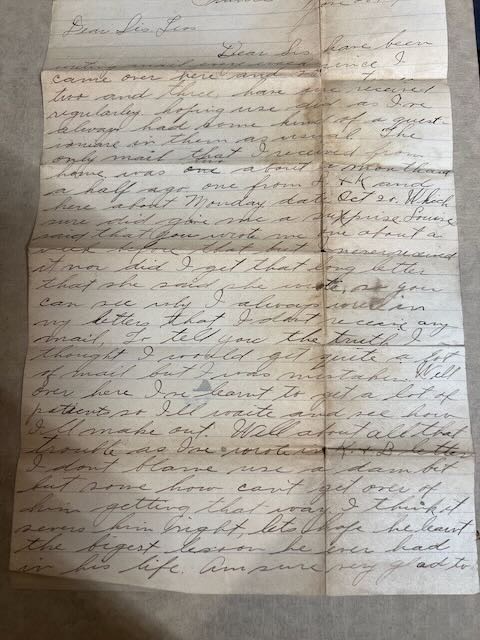
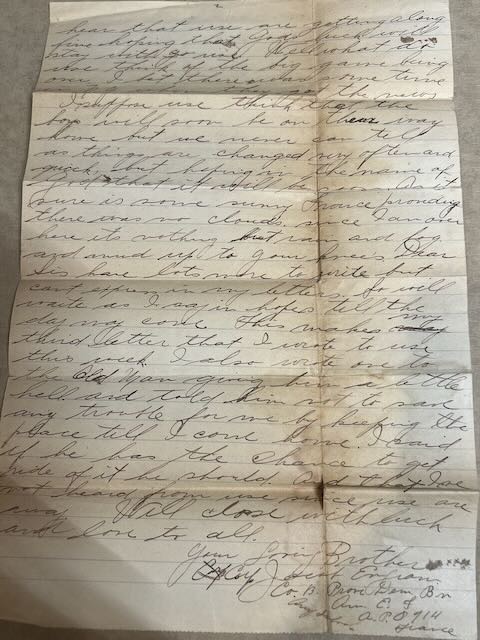
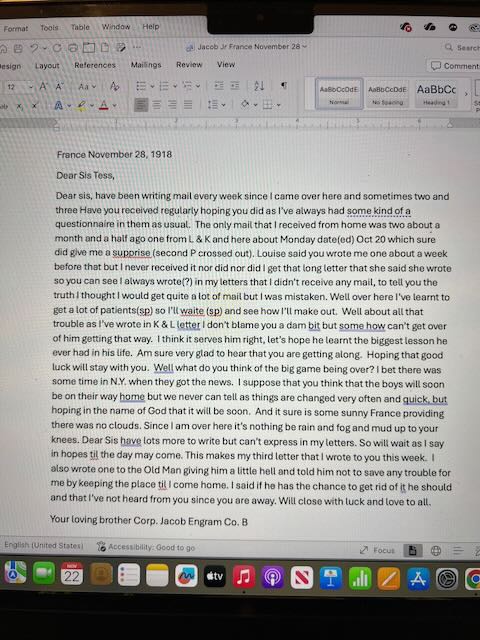
This is a letter from my grandfather Jacob, Jr to his sister, Brian’s grandmother, Tess. He is in France at the end of World War I. The war ended on November 11, 1918 and now he is writing on November 18, 1918. He talks of writing letters every week, sometimes two and three, but not receiving any letters. He thought he’d receive more. He says they’re told they’ll be home soon, but things keep changing, and he hopes it will be soon. I’ve roughly transcribed the letter but it’s fun reading the original.

Brian is the grandson of Barbara Theresa Engram Murphy, oldest child of Jacob Sr, and Katherine (Duy) Engram. Since his mother, Irene, was also the oldest of her family and cousins and lived in the same home for many years, she was the keeper of the family memories.

A few years ago, Brian shared many photos with my Aunt Joanne and me. A lot of them are from the Murphy side, but there were also many Engram family photos and newspaper clippings.

Brian is visiting Connecticut from his home in Florida is going through the family photo bin and I am planning on meeting with him to sort through it and help put names to faces if I can!

My Veterans

In honor of Veterans Day, I’m sharing the story I wrote in June of 2024 for the 52 Ancestors in 52 Weeks challenge. It’s called, The Effects of War. There are links within that story that share the details of their time served.

Beginning with World War I, there was my biological maternal grandfather, Jacob Engram and my paternal grandfather, Charles Jakiela.

My Great Uncle Bronislaw Liro went back to Poland before World War I broke out, fought for the Austrian Army, was captured, and escaped from Siberia.

World War II saw my Uncle Connie and my dad enlist in the Army Air Force and my Uncle Walt and Uncle Mal in the Navy. My Uncle Walt lived through the horror of Pearl Harbor 3 weeks fresh out of Navy radio school.

While cleaning out my aunt’s home, I found a letter from my Great Uncle Antoni written in 1947 describing the aftermath of World War II.

My father in law Harold served in the Korean War as a cook, his brother Ronald as an infantry tank driver, and my step father in law Paul was in the motor pool.

It’s an honor to have these brave men in my family.

Engram Family Part 2

I told you the story of the Ingram/Engram family beginning with Jacob Sr and his wife Katherine Duy until her death in 1916. She left behind her husband and five children ages 22 through 10. Part 2 covers the family through the 1930s.

Jacob Jr. and World War I

In between 1916 and 1920, Jacob Jr., 22 years old, registered for the armed services in June of 1917. He began his military service on April 1, 1918 with Company C of the 312th Infantry, part of the 78th Division. This was a unit known as the “Black Cat Division” which participated in combat during the final weeks of the war in November 1918 engaging in the offensive known as the Pursuit Toward Sedan (Google AI). They shipped out of Brooklyn New York on May 20, 1918 on the Port Melbourne. However, Jacob was NOT on that ship. The passenger list indicates that he and 4 other soldiers were AWOL and 4 others were in the base hospital.

Jacob prior to shipping out to France 1918

He was then attached to the 153rd Infantry Regiment which was activated for the war as part of the 39th Division. The soldiers in this regiment were used as replacements for soldiers in other units. These units were known as “Depot Brigades” and were established to receive, equip, and train new recruits for service before they were sent to the front lines. This lasted from May 19th through July 13th when he was transferred to Company I of the 49th Infantry and he shipped out of Brooklyn NY on the Regina D’Italia on July 18, 1918.

The primary purpose of 49th Infantry Regiment was to provide replacement troops for front-line combat units.

Jacob Military Service WWI

I don’t know whether Jacob endured any front line action while in France but it’s interesting to me that both he and my paternal grandfather, Charles Jakiela, both served in France in waning months of World War I.

Jacob Engram, France 1918-1919

He sailed home on the Imperator, a German ocean liner that had been seized after Germany’s surrender and used as a troop transport ship over three voyages returning over 25,000 troops, nurses and civilians to the United States. They landed in Hoboken New Jersey on July 13, 1919 and from there he traveled to Camp Merritt in New Jersey for his Honorable Discharge on July 23, 1919.

I’ve shared the family story, confirmed by my Aunt Judy, of my grandmother keeping the family Christmas tree up from December 1918 until his return. Was their affair going on during this time period? I don’t know and the discovery of Jacob as my biological grandfather wasn’t made until after she passed away. But I think if she or my Aunt Tootsie had an inkling of it, they would have spilled the beans!

Jacob went back home to the farm on the Pelham Parkway/Williamsbridge Road in the Bronx where we find them in the 1920 census. Jacob Sr is 57 and Jacob Jr is 24 and single. They are farming on leased land.

This is the point of his life, my grandmother’s life, really coincide because Jacob Jr. is my mother’s biological father. My grandparents and their 4 children were living in Yonkers NY according to the 1921 directory. At some point in 1921, they moved briefly to East Hampden Massachusetts, and then to New Britain Connecticut, where my mother was born on April 5, 1922. I will never know the circumstances surrounding this, but perhaps she found she was pregnant and decided it was time to get out of New York. The home where the family lived in New Britain was owned by one of her Ingram uncles and I’m still working on the concrete connection of Jacob Sr to this family.

By 1930, Jacob Jr is living in Flushing in Queens County New York. He is 34 years old, single and renting the home. Also living there is his sister, Elizabeth, her husband Albert Klein and their two children, Adeline, 8, and Robert, 3. His occupation is as a farmer of a “truck farm” and Albert is his assistant.

Location of 6919 Kisseana Blvd Flushing NY

It is possible that Jacob Sr was involved in this farm as Aunt Joanne, my mother’s half sister, told me the following –
“My father made sure his father was cared for throughout his life. When my dad had his own farm in the late 20s…early 30s, his dad was involved. For a time my Grandpa was employed as a groundskeeper at Woodlawn Cemetery on the border of Bronx and Westchester. I’d say through the influence of my Dad.

It is also through this farm that Jacob Jr. met his wife, Anna Maria Augusta Winner. The Winner farm was adjacent to Jacob’s farm. Jacob and Anna were married on December 16, 1934 when Jacob was 39 and Anna was 24.

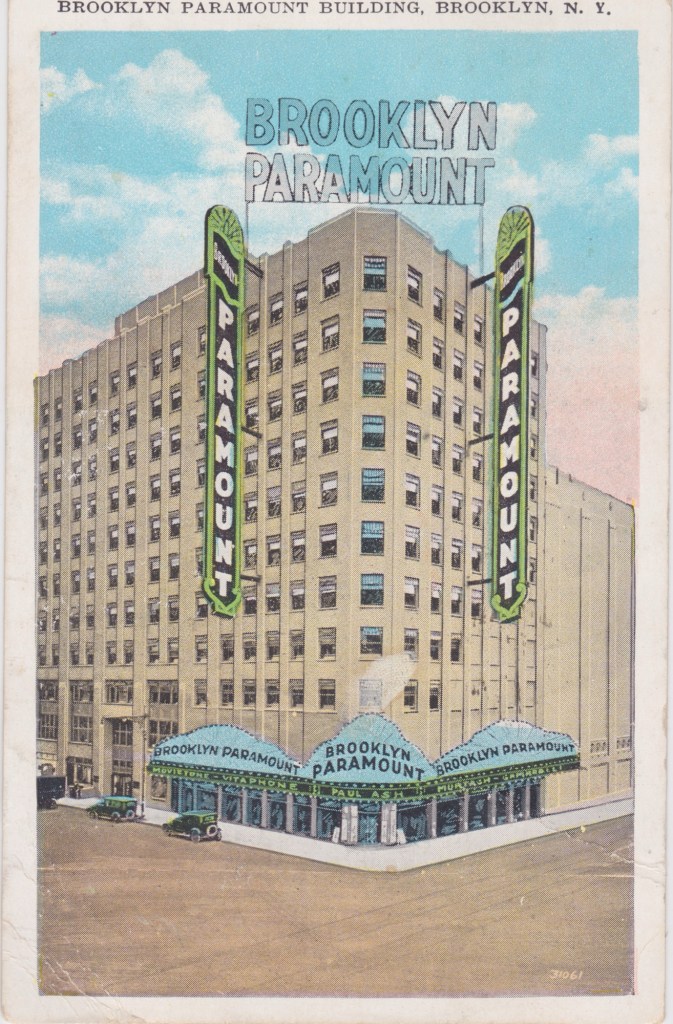
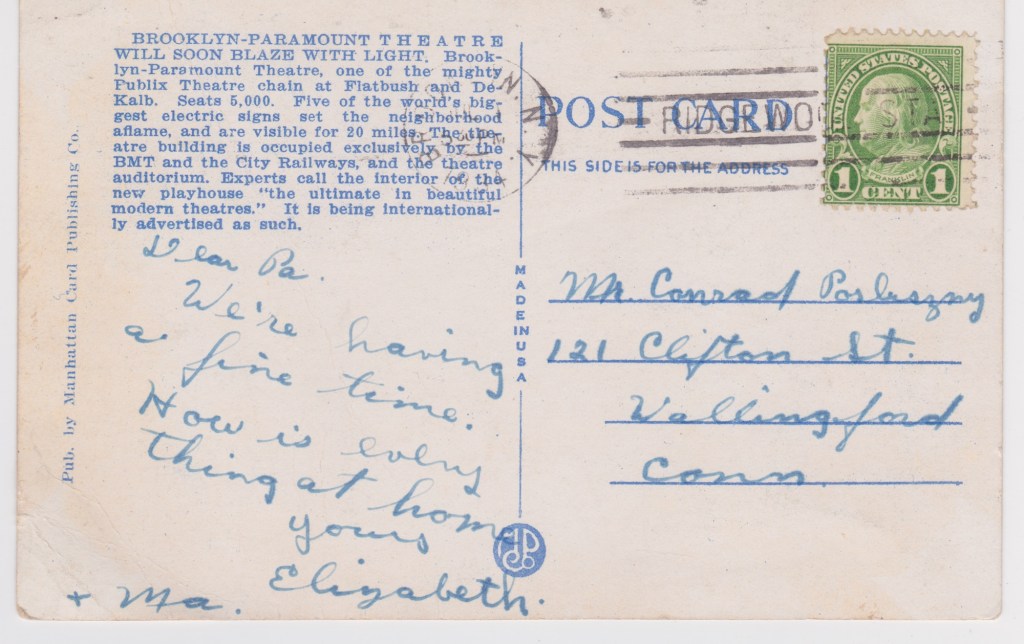
Something interesting – I have a postcard from, what looks like a postmark of 1934 sent from my mother when she would be 12 years old, to her “father” Konrad Posluszny, with a picture of the Paramount Theater in Brooklyn. She is with her mother. As hard as I try I can’t see the full date but I wonder if they were visiting Jacob and the family or would they have gone to Jacob and Anna’s wedding? Another thing we’ll never know.

The Sisters

Shortly after Katherine passed away, Theresa, Katherine, Elizabeth, Louise, and Hannah left their father, and brother Jacob, and moved to New York City. They show up in the 1920 Federal census living at 123 West 128th Street. Theresa is 26, a registered nurse, Katherine, 21, a sales lady, Elizabeth, 20, a telephone operator, Louise 12, a stenographer, and Hannah, 13 in school. I wonder what contact the daughters had with their father in the time after they left and during the time their brother was gone. According to Google AI, the approximate distance between the two locations is 9-10 miles. Factors affecting distance and travel would be the limited road network, paved versus unpaved roads, and mode of transportation.

Barbara Theresa / Tessa

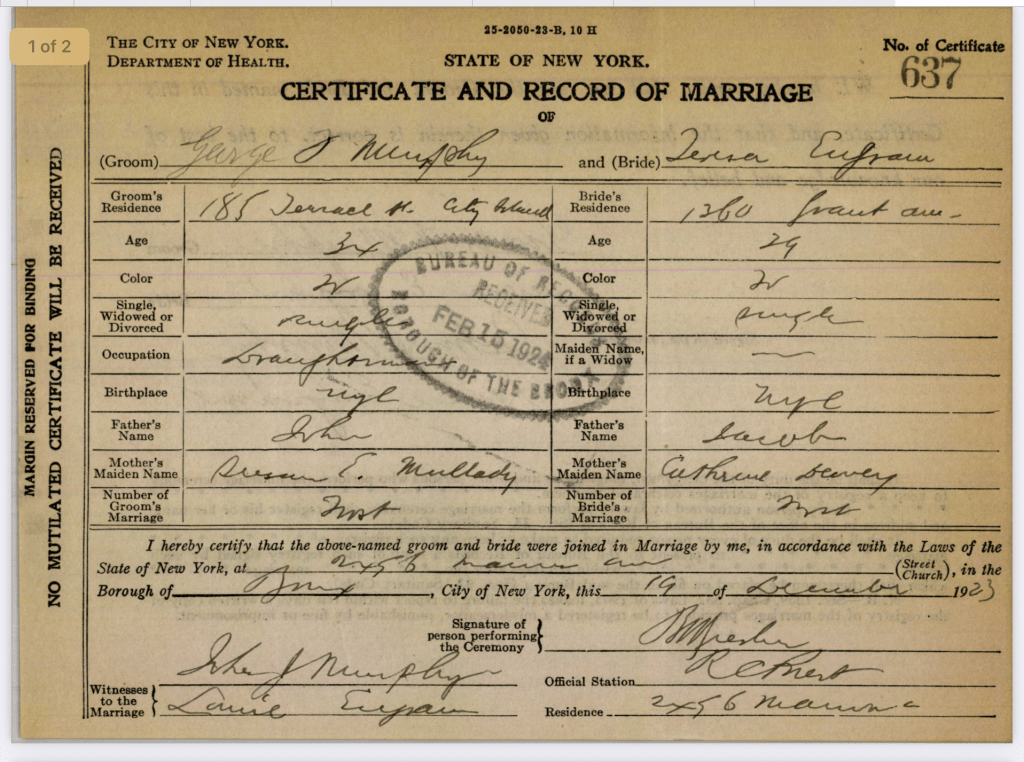
On December 18, 1923, in Bronx NY, Theresa, 29, known as Tessa, marries George Francis Murphy, 34 born in New York City NY. He is one of five sons of John Murphy and Susan McAliney of New York City and is a longshoreman.

Barbara/Teresa and George Murphy marriage license 1923

Louise is a witness to their marriage along with George’s brother John Jr. It’s fairly impossible to decipher the residence address but they did get married in the Bronx.

Theresa gives birth to a daughter Irene Theresa in May of 1927 and a daughter Rita Louise in April of 1931.

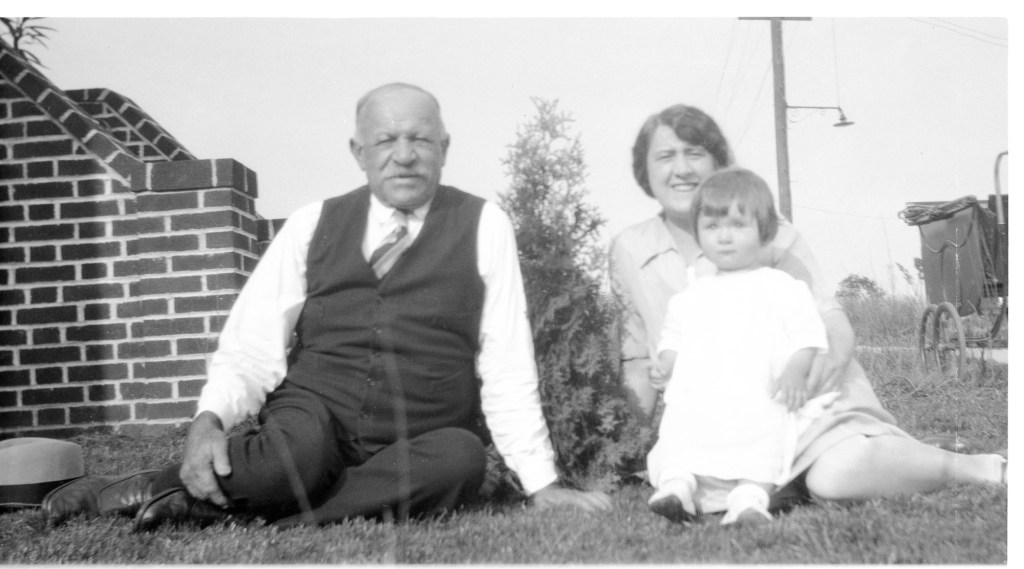
Jacob Sr with Theresa and Irene (abt 1929)

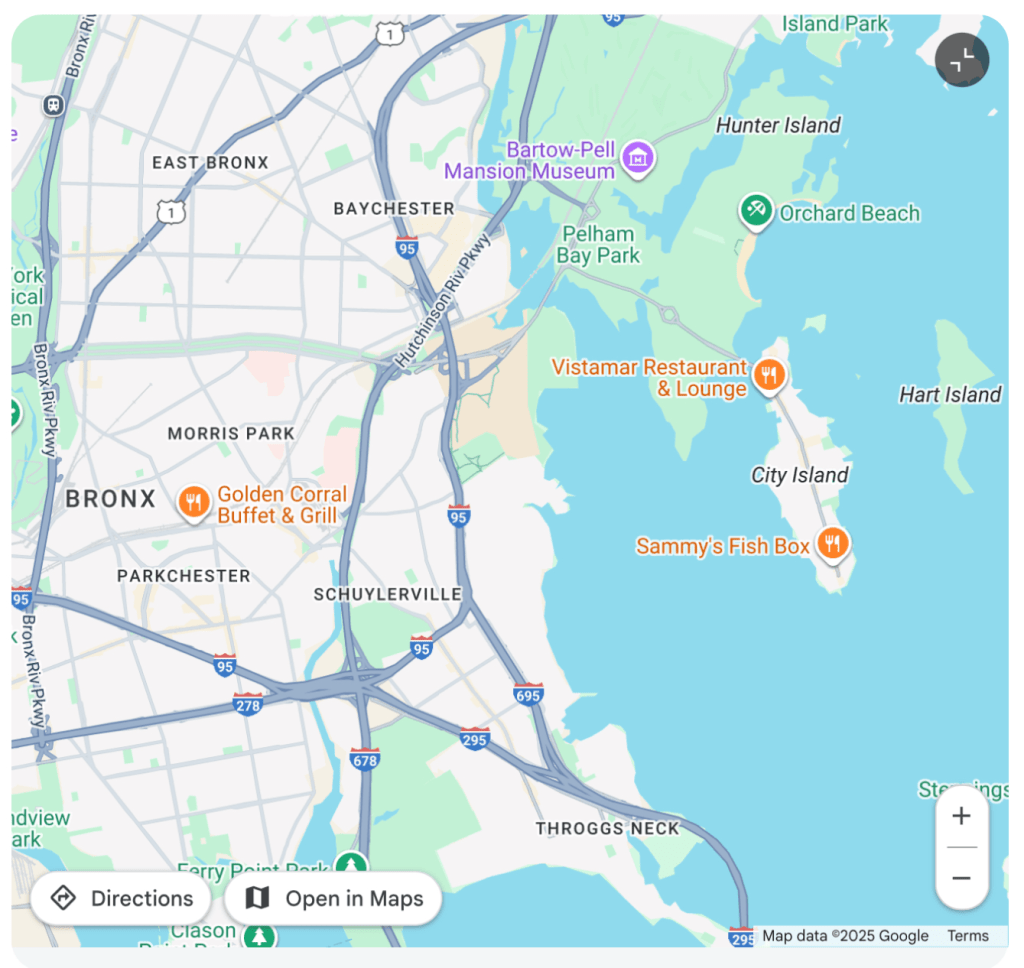
In the 1930 federal census, George, Theresa, and Irene, 3 years old are living at 59 Early Street in the Bronx and George is now a Draftsman for an electric company. Theresa is now “at home” and is no longer nursing. Although it’s listed “the Bronx”, they actually live on City Island. Mark and I were there for a wedding years ago!

City Island and The Bronx

Katherine and Louise

While Theresa was dating George Murphy and planning her wedding, Katherine and Louise were playing basketball! According to the Evening World on January 29, 1921, it was “a newly organized quintet composed of former high school girls” and was “desirous of booking games with any female team.”

February 23, 1922 Trenton Times

The team was the Manhattan A.C. Lassies and they played their games at the Manhattan Casino at 155th Street and 8th Avenue. I cannot find any information by Googling the name of this team, the information is from Newspapers(dot)com. They also played at the Central Casino at 154th and Macombe place. They were so popular they played a championship game at Madison Square Garden!

Unfortunately, the roster was never listed and the articles faded out by November of 1923.

Katherine/Kathryn/Kitty and Louise continued to live together and in the 1930 federal census they are on Walton Avenue in the Bronx. They are 32 and 28 and both stenographers. Katherine for the Aviation industry, and Louise in insurance. The family story is Katherine worked as a secretary for Charles Lindbergh. Google says he didn’t have a business or an office so perhaps it was through the aviation company she worked for that she met him.

Elizabeth

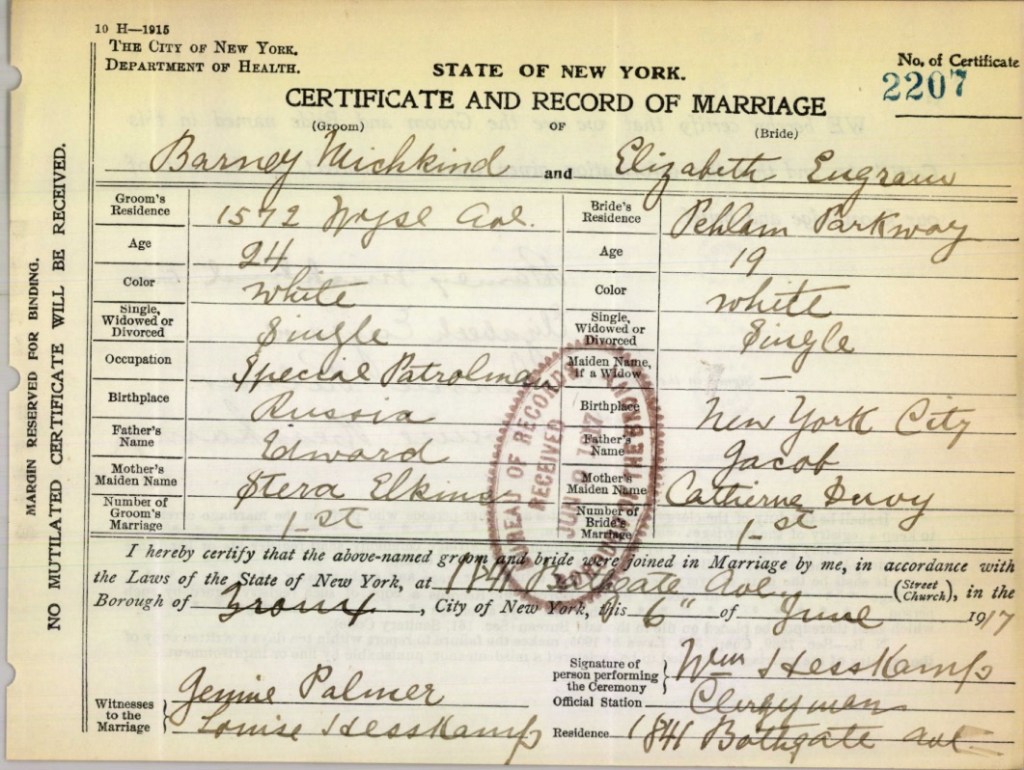
Elizabeth has an interesting story….She got married on June 6, 1917 at the age of 19 to Barney Michkind, 24 years old. But, she’s in the 1920 federal census with the rest of her sisters and listed as single.

Elizabeth and Barney’s marriage license 1917

In 1922, she has a daughter Adeline with husband Albert Klein and a son Robert, in 1927.

The 1930 federal census, they are living on Kisseana Boulevard in Flushing New York and they are living with Jacob Jr. He is 34 and single, and Albert works with him as an assistant. It says Jacob has a “truck farm” in which he produced a variety of perishable fruits and vegetables and transported them to urban centers. The census says both Elizabeth and Albert were 21 when they got married. More on that story in the next post.

Hannah/Johanna/Joan

I’m going to assume that Katherine, Louise, and Hannah were all living together in the 1920s.

On June 1, 1927, Hannah, one month away from her 21st birthday, and listed as Johanna on the marriage license index, married Anton Zeiss Jr. who is 24 years old.

Hannah/Johanna and Anton Zeiss marriage license 1927

In the 1930 federal census, she and Anton are living in Pennsauken Township New Jersey which is outside of Philadelphia and by today’s traffic, 2 hours on the interstate. He is a draftsman for a radio company.

Recap –

In the 20 years after Katherine died, Jacob Jr was overseas in World War 1 and had a child (my mother). Barbara/Tessa got married and had 2 children. Katherine and Louise lived together, worked as stenographers and played basketball for a few years. Elizabeth got married, divorced and married(?) again and had 2 children. Hannah got married and moved to New Jersey.

More to come!