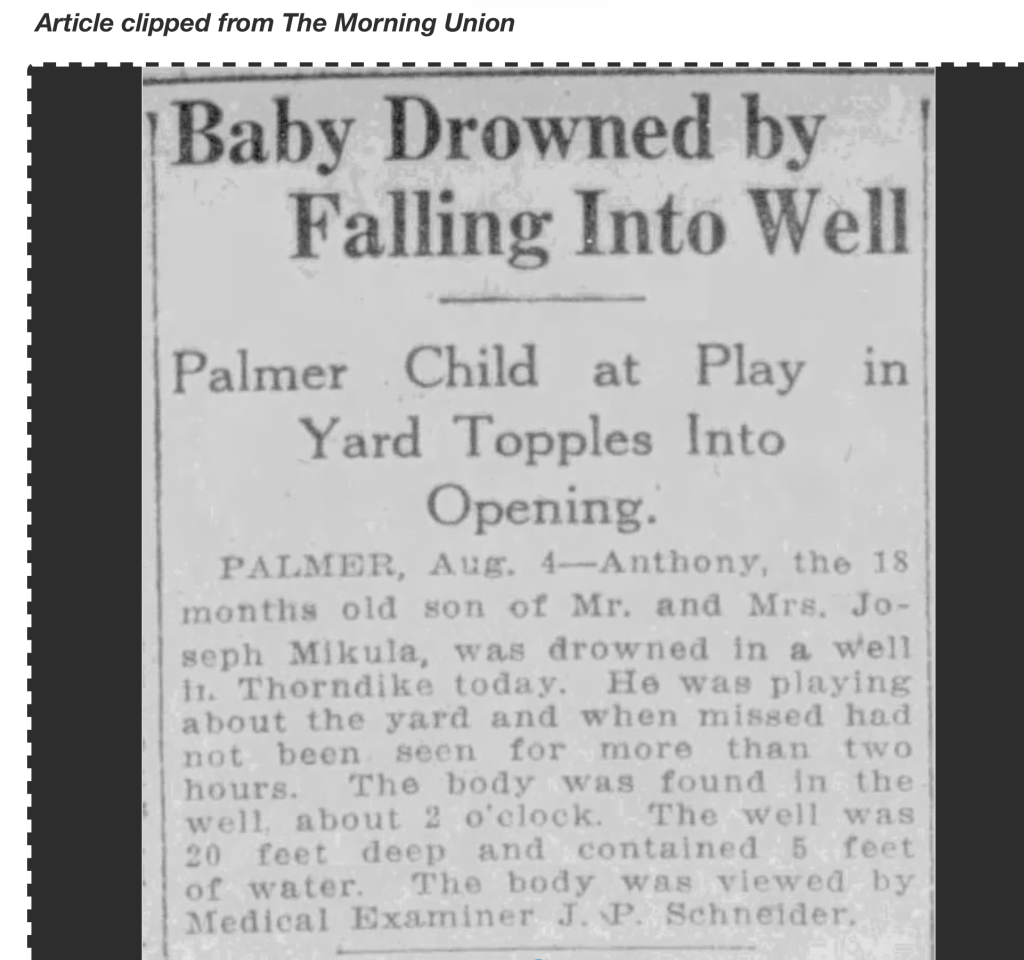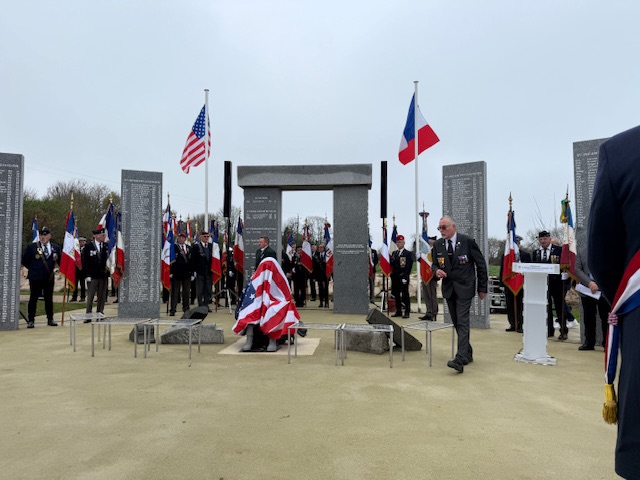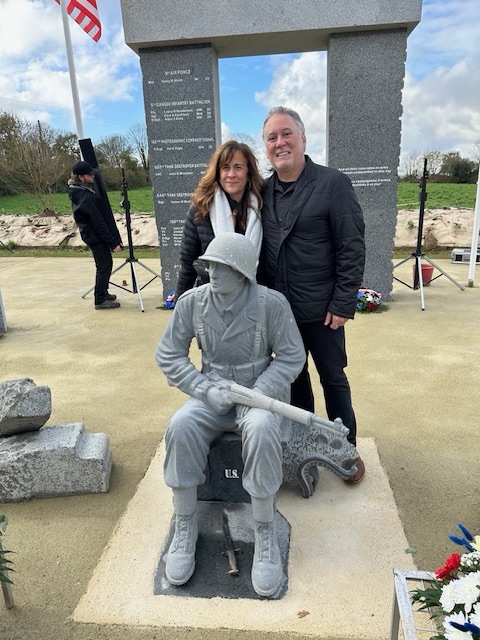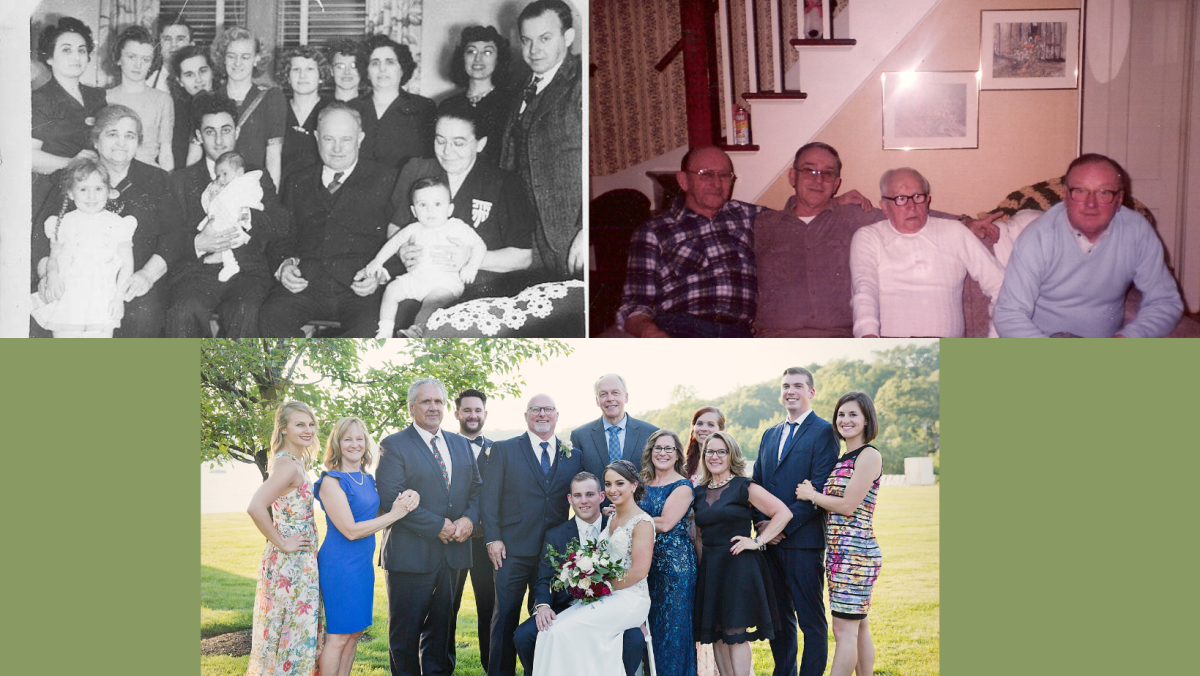
In late August of 2025, I wrote about the permanent memorial to US soldiers being planned in Gouesnou France.
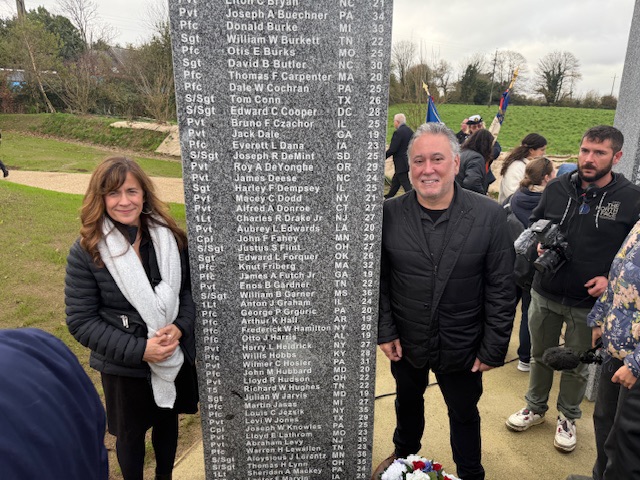
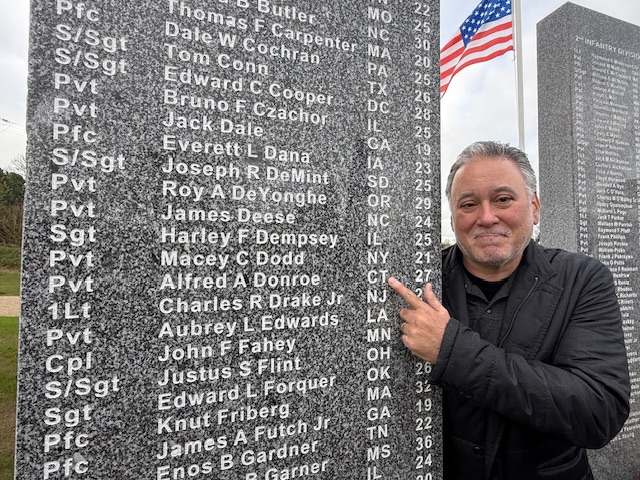
One of the soldiers was a cousin’s grandfather. His mother’s father died in Gouesnou during World War II when she was two years old. Because I had her name in my family tree, someone associated with the memorial contacted me, and others, to locate relatives. I’m happy to say my cousin was contacted.
My cousin emailed me this afternoon and sent me pictures from the event. He said it was a very moving ceremony. It is nice to know that soldiers have continued to be honored overseas for over 80 years.
The memorial waiting to be unveiledMy cousin Eric and his wife Maria.Eric pointing out his grandfatherGouesnou Memorial for World War II soldiers
My great uncle Antoni Jakiela was born in Lubatowa, Poland. Lubatowa is located in southeastern Poland, and from 1772 to 1918 was part of Austrian Galicia. Antoni is my grandfather Charles Jakiela’s younger brother.
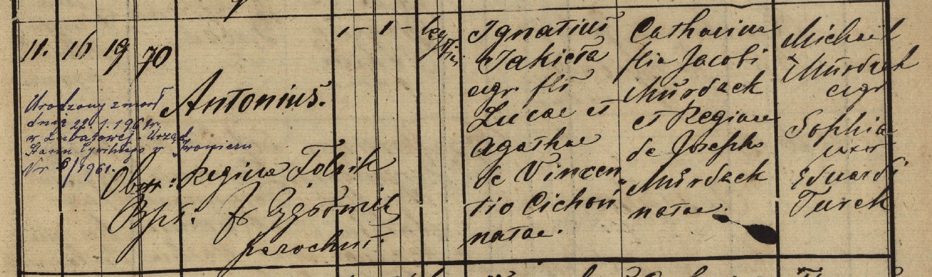
Antoni was born on January 17, 1893, to Ignacy and Catherine Murdzek. Charles was three years old when he was born. Their sister Agnieszka was born a year later.
Antoni Birth record
Their mother died in June of 1894, the same year Agnieszka was born. Trying to raise three young children, Ignacy, at only 39, quickly remarried. On October 11, 1894, he married Victoria Borek. There is no record of any children from that marriage, but I continue to scour records.
When his brother Charles left for the United States in 1906 at the age of 16, Antoni was 13.
Both brothers served in World War 1. Charles served for the United States from Southington, Connecticut, through Camp Devens at Ayer, Massachusetts, as part of the 301 Trench Mortar Battery and the 302 Field Artillery.
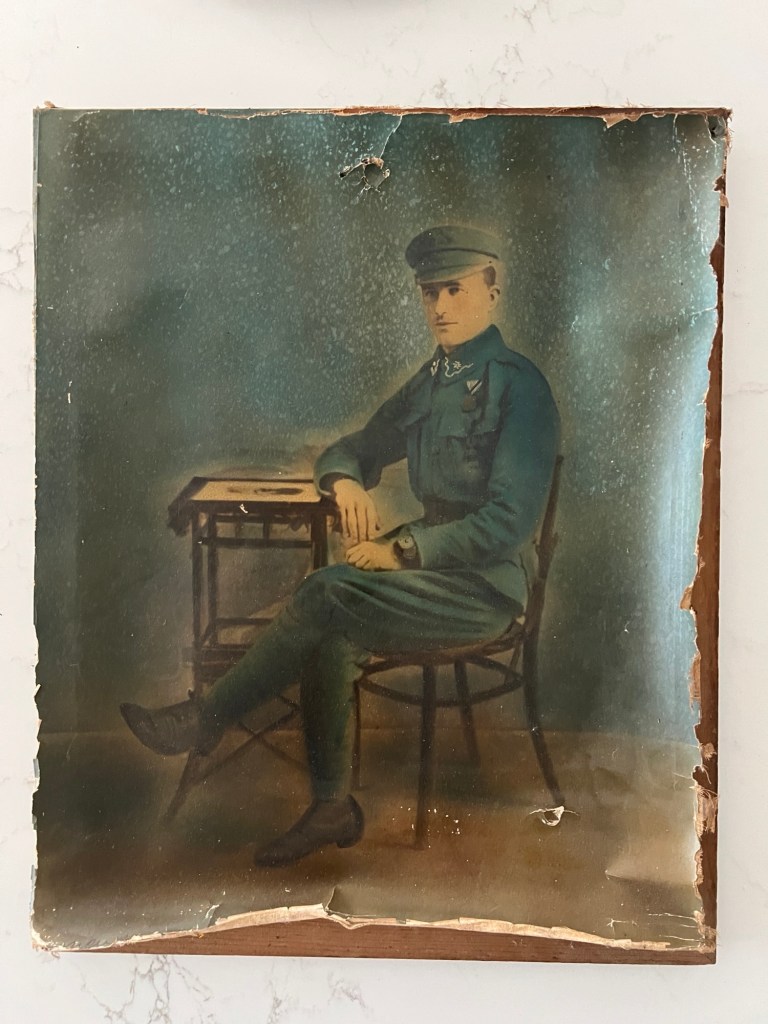
Antoni served in World War 1 with the Polish Legion based on this picture that has been in the family for many years. I shared the picture with a few Polish Heritage/Genealogy groups on Facebook and was told that it is a uniform for the Polish Legion based on the “maciejówka” cap and the zig-zag design on his collar. The one silver star on the collar is for the rank of lance corporal. The Polish Legion fought alongside Austria-Hungary troops against Russia. The cap was part of traditional folk attire in many regions of Poland and became part of the Polish Legion uniform. After Poland won its independence in 1918, the cap was thought to look too much like the German WW1 garrison hat, so the Polish army moved to a peaked 4 cornered cap.
Antoni Jakiela World War I
This is a 12×14 canvas portrait. Portions of the canvas are still attached to the wooden frame but one corner is secured with a nail. There is a piece of cardboard on the back attached to the frame, and two nails with a heavy string between them for hanging.
How and when was it sent to the United States? Was it received when Charles and his family were still living in Southington after the war? If so, where did it hang in their home? Charles died in May of 1935, and the children, ranging in age from 22 to 10, remained in their Wallingford home until Steve married Bertha Liedke in 1937. The family moved to Ward Street and finally to the Liedke family home. At some point, the portrait ended up in the back of the garage. When I began my ancestry work on the family, my cousin passed the portrait on to me.
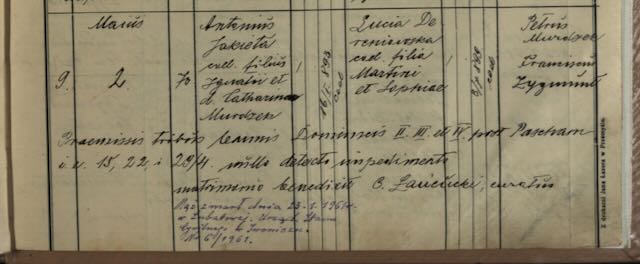
The next information I found for Antoni was his marriage to Lucia Dereniovoska (sp) on March 2, 1923. I haven’t been able to find any birth records for Lucia in the Lubatowa area with any similar spelling.
Antoni Jakiela and Lucia Dereniovoska marriage on March 2, 1923
This marriage record gives me both of their birth dates, and the #70 house number tells me Antoni is still living in the house his family lived in when he was born in 1893. The bottom of the form, in blue writing, says “husband died 23 January 1961, Lubatowa”. I don’t have any information on Lucia’s death.
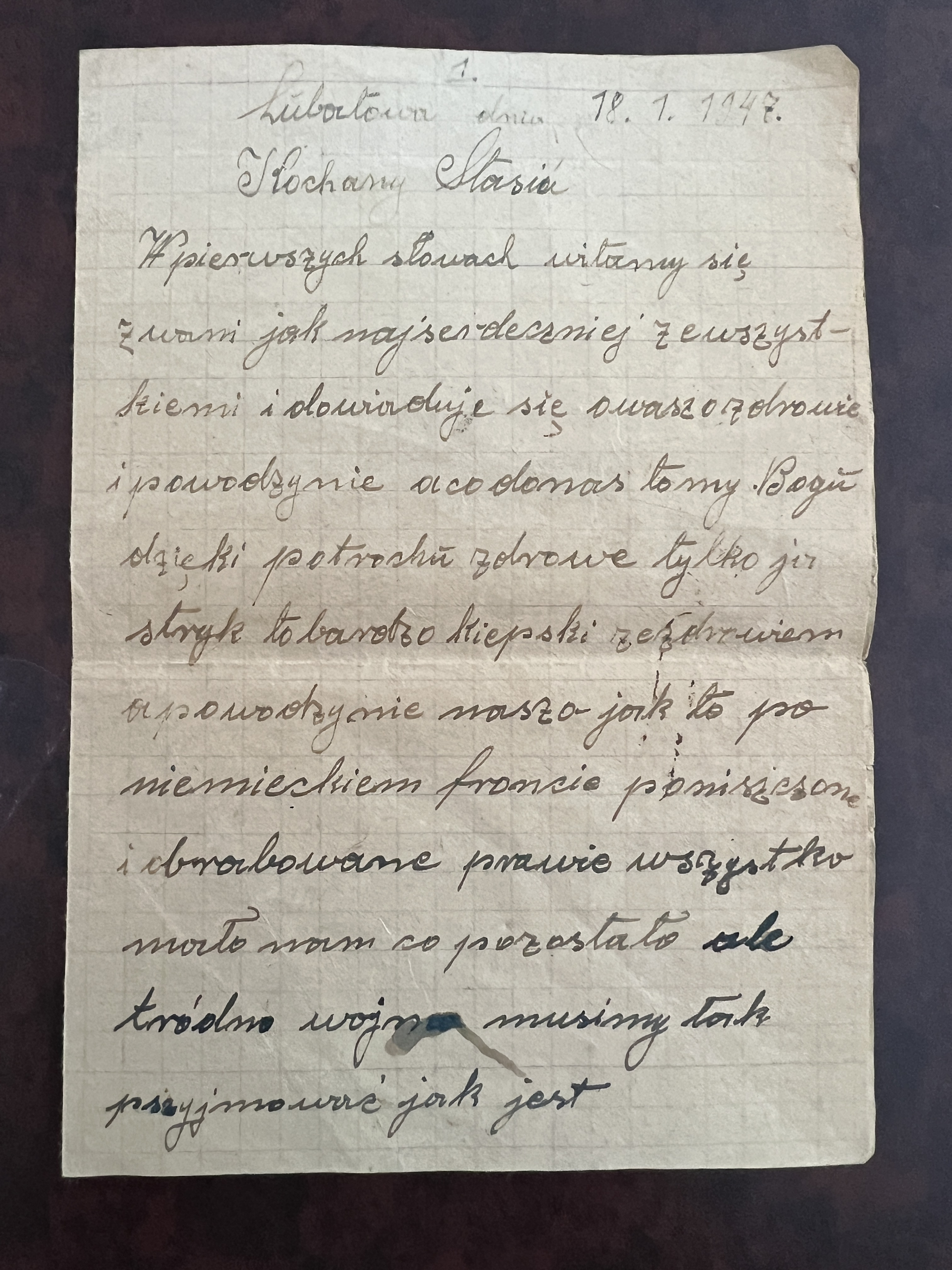
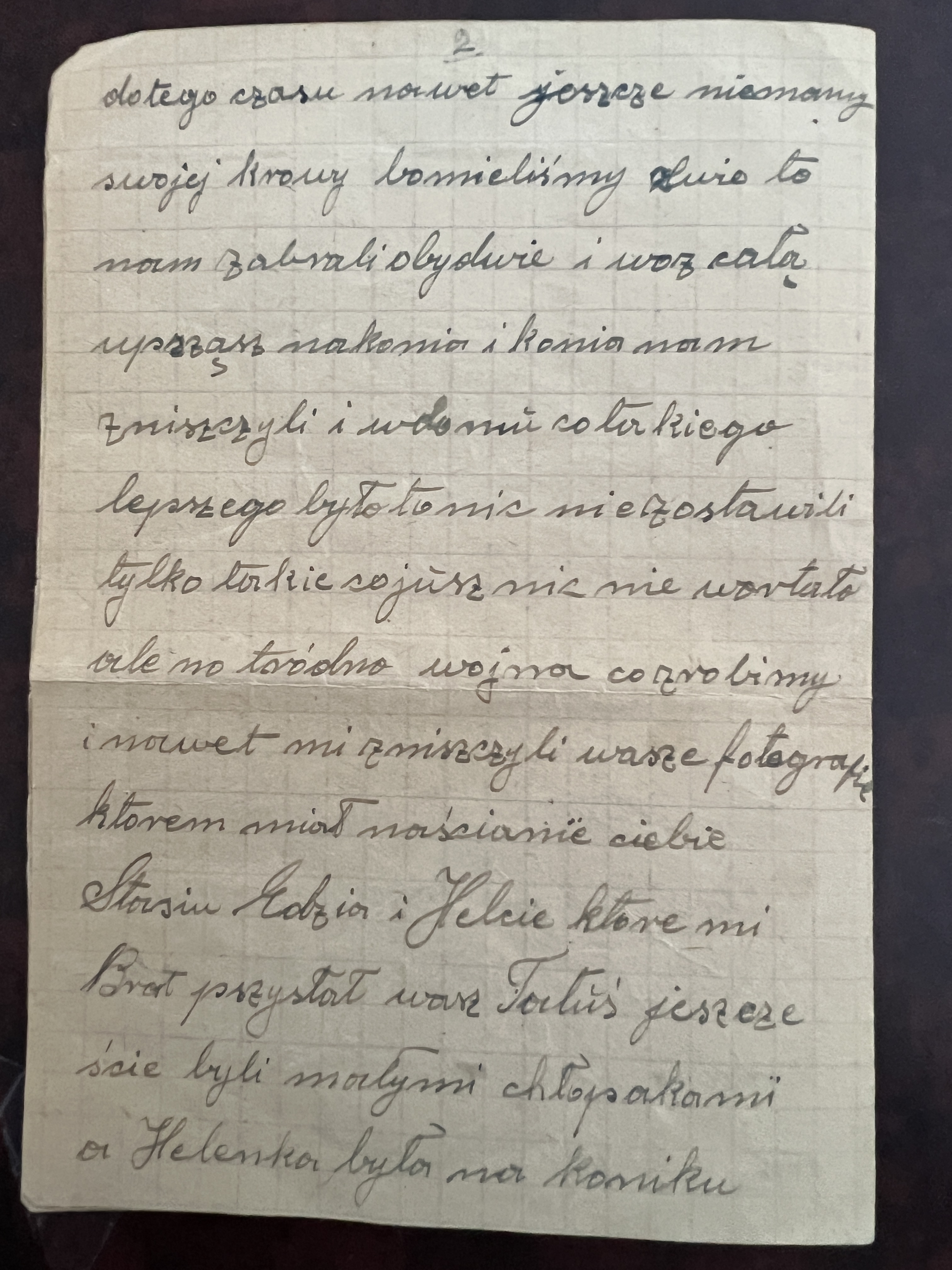
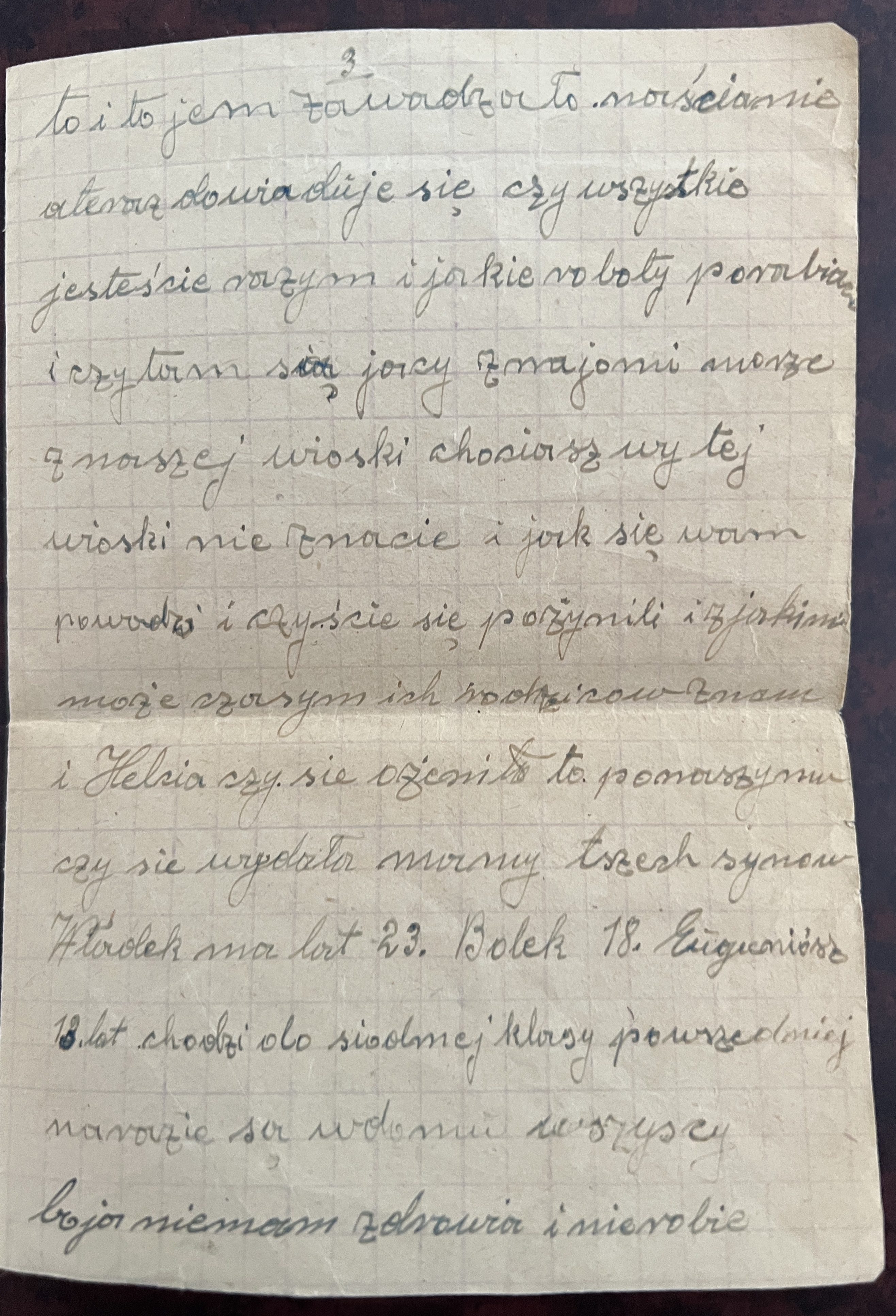
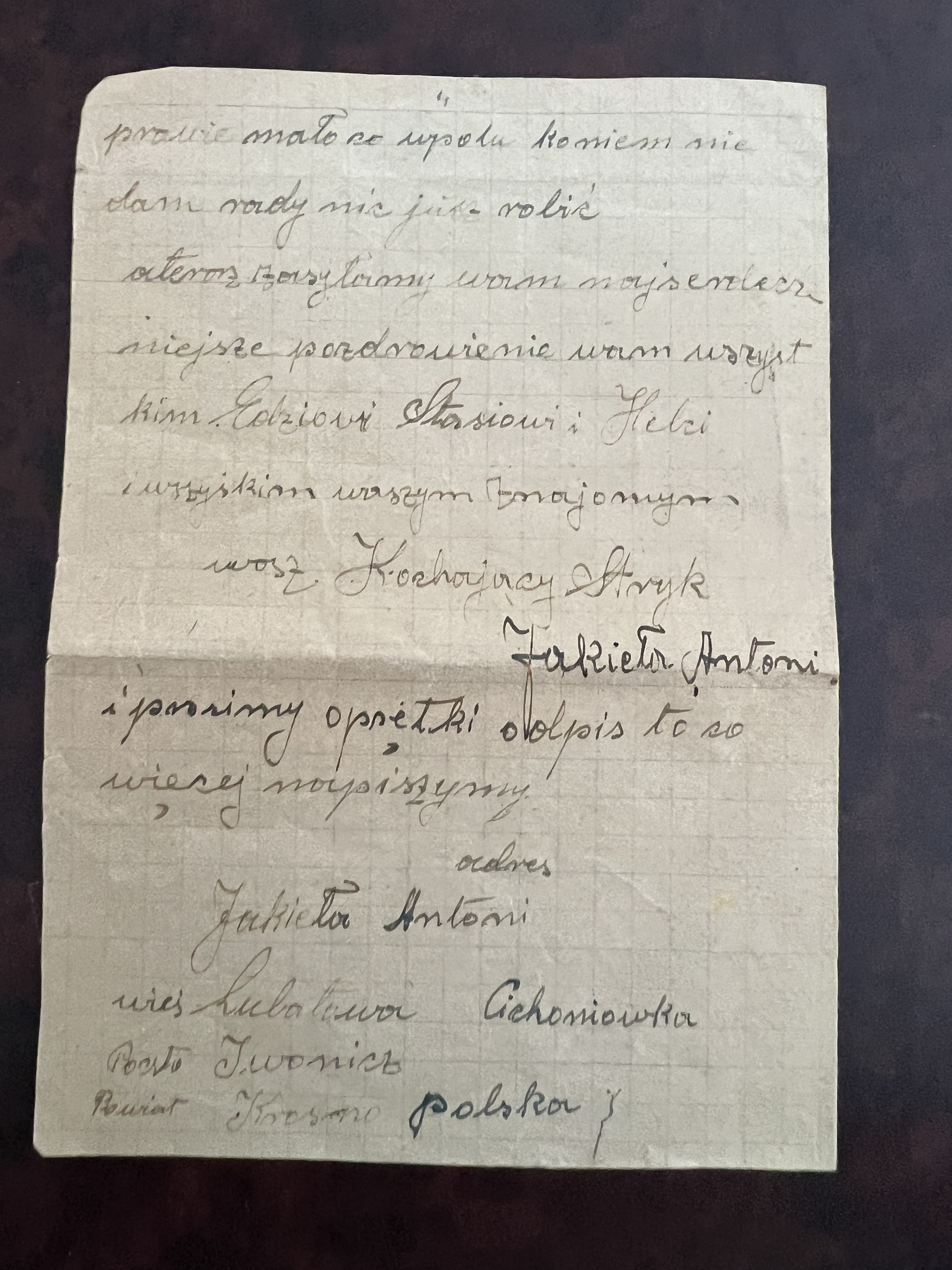
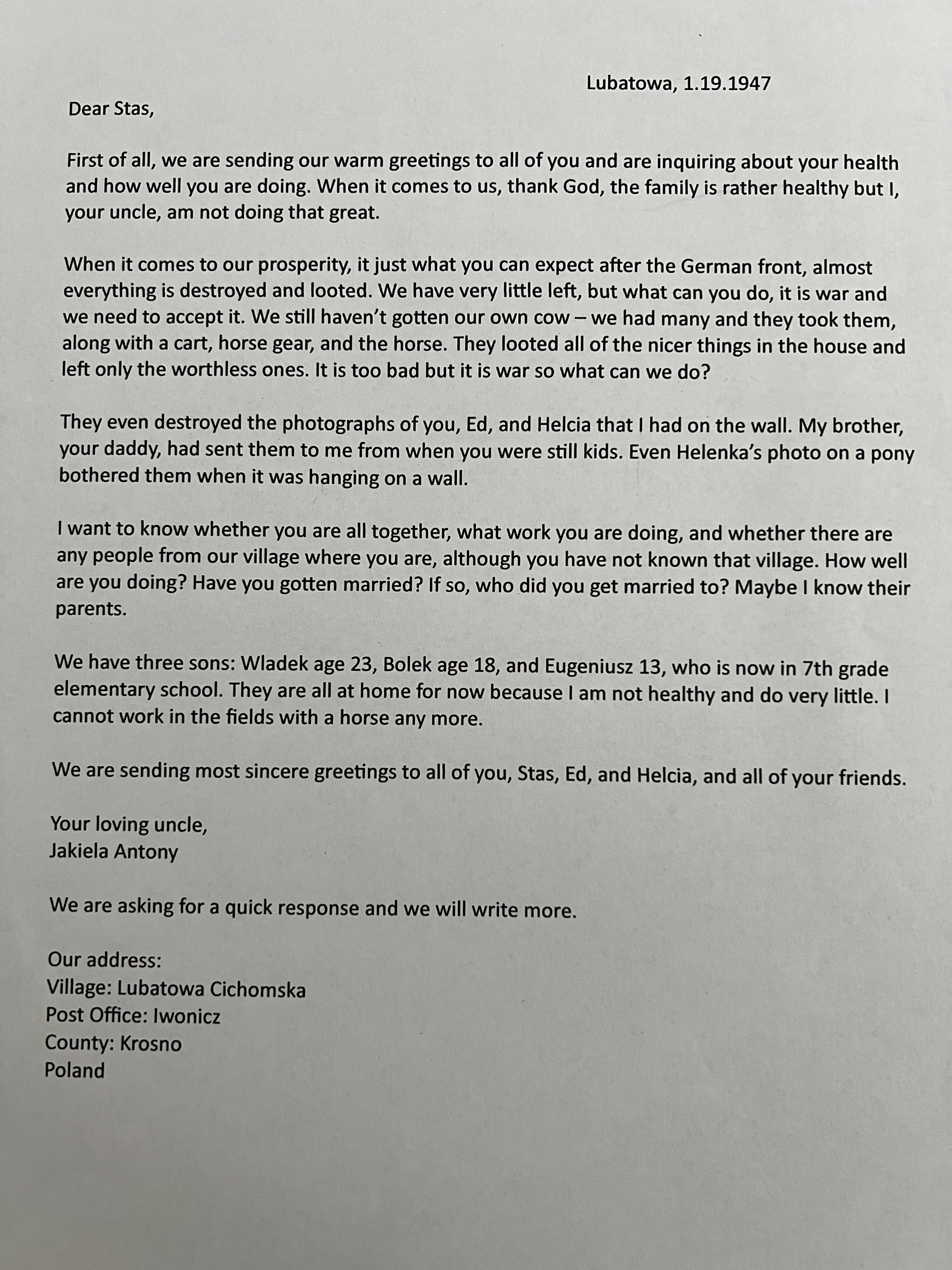
An amazing treasure that provided information on Antoni and his family was found while cleaning out my Auntie Helen’s apartment after she passed away in February of 2015. It was a letter from Antoni to Steve, Helen’s oldest brother. The information and questions in the letter indicate that there had been little communication between them. The letter was dated January 19, 1947, almost 12 years after their father and Antoni’s brother Charles had passed away. Of course, the letter was in Polish, and evidently, “old style” Polish, which was difficult for a fluent speaker to translate!
I don’t know if anyone ever responded to Antoni, but without this letter, I never would have known of their three children and their ages.
Antoni was 68 years old when he passed away in January 1961. I don’t know if life got any better in the town of Lubatowa. I hope so.
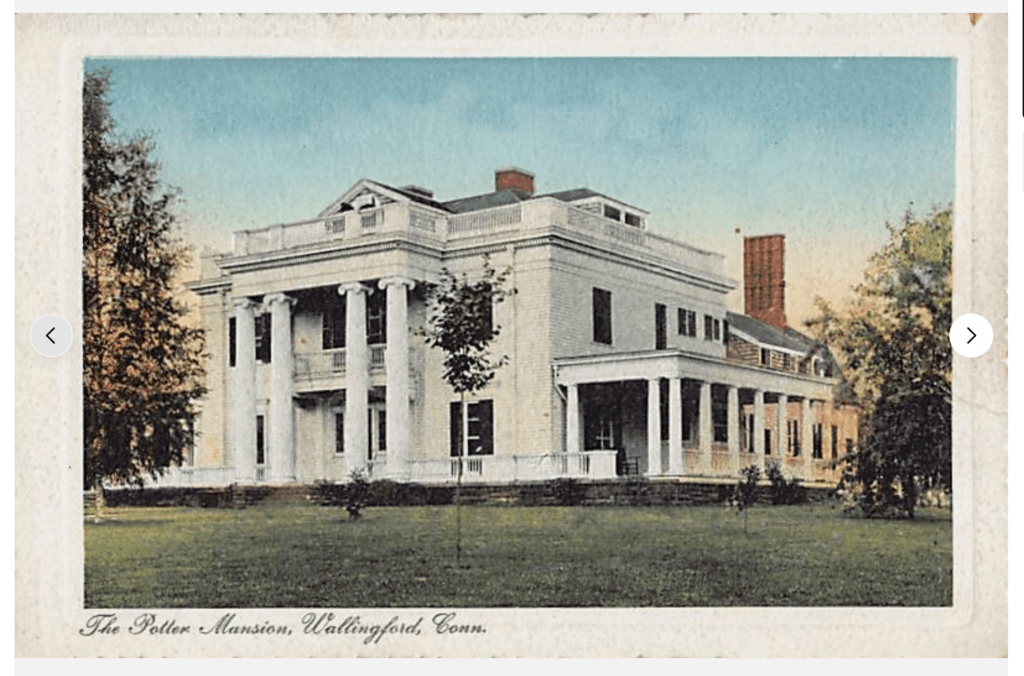
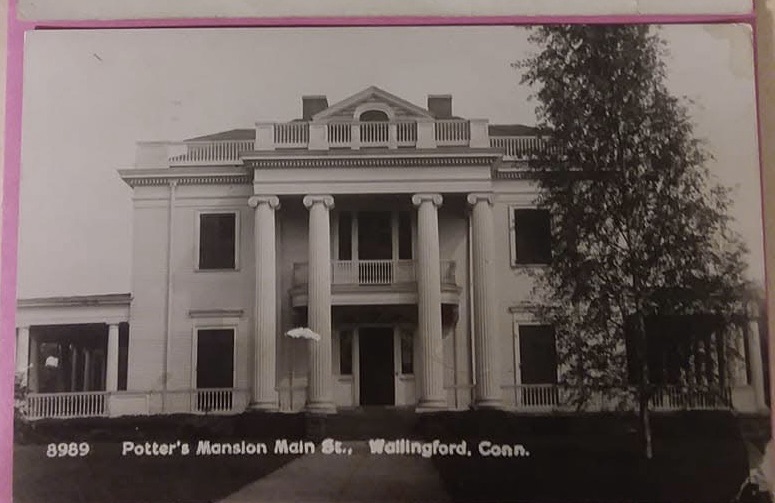
From approximately 1901 to late 1936, this home sat at the corner of present day South Main Street and Cedar Street (heading towards Grandview Avenue) in Wallingford, Connecticut.
The Potter Mansion 1901 – 1936 postcard I’m not sure what the building in the back is
The home was built for Mary Kate Linsly Potter. Mary Kate was born in 1848 to Dr. Jared Linsly and his wife, Catherine, and raised in New York City. She married Orlando Brunson Potter in 1880 after the death of his first wife. Potter was a millionaire who owned many properties in the city, a lawyer, and an ex-congressman, as well as a prominent figure in the business and political life of New York. He died on January 2, 1894, 14 years into their marriage. He also left four children, ages 16 through 25, from his first marriage.
Mary Kate’s sister Sophia Linsly was married to Noah Linsley and they lived in Wallingford at 353 South Main Street on the corner of Pine Street. The home was built in 1880 and still stands today. Some residents may recognize it as Dr. Lawrence’s dental office and home for many years.
Home of Noah and Sophia Linsley
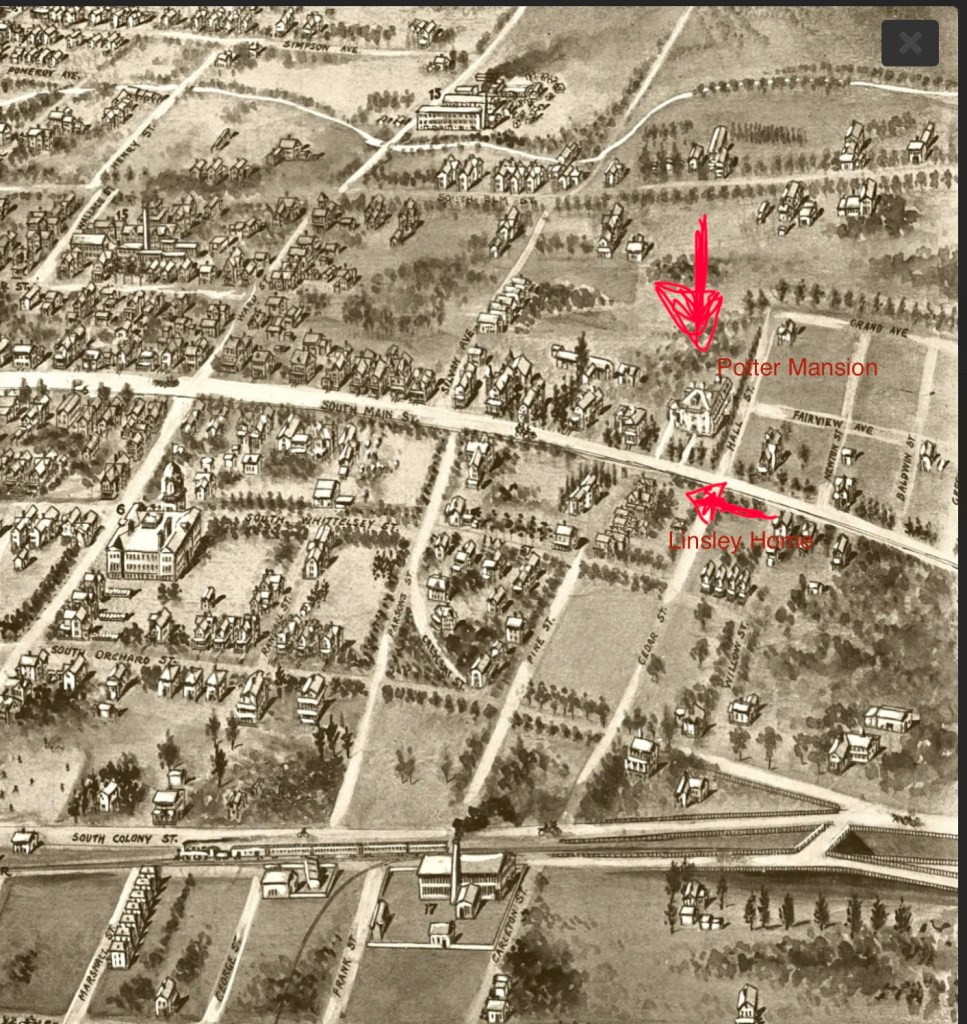
Sophia encouraged Mary Kate to come to Wallingford and she had the perfect location. The corner of South Main and Hall Street as it was known at the time. Perfect because Sophia owned the land! Sale records from the town clerk’s office listed it as 214 feet front and rear and 330 feet deep.
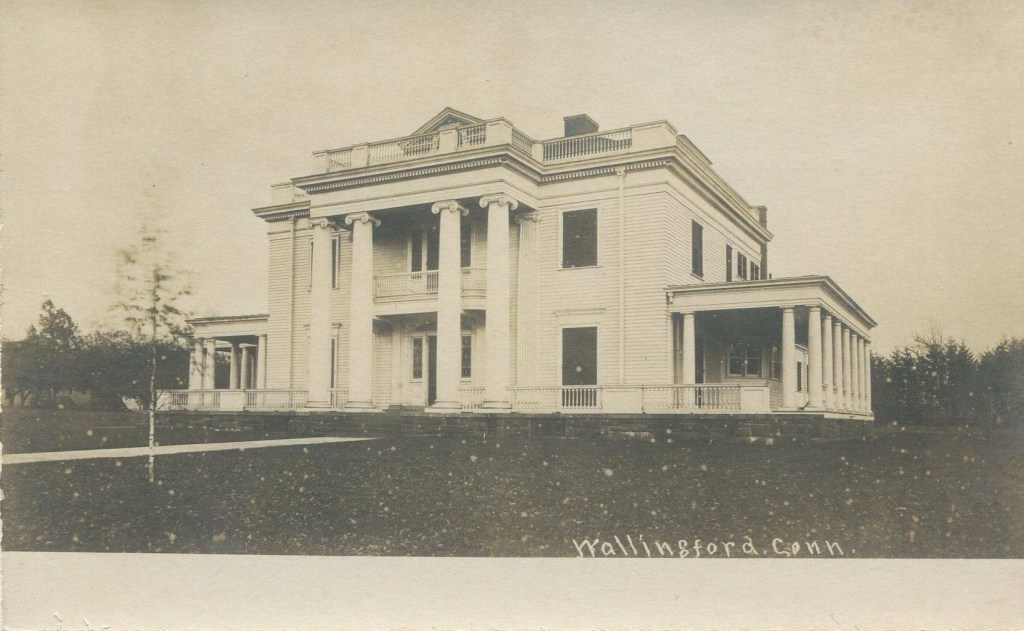
The Potter Mansion early yearsorigin of picture unknown
Mrs. Potter hired the C.F. Wooding Company to build her home. It had 10 rooms, three bathrooms, five fireplaces with attractive mantlepieces and a staircase of unusual beauty. The rooms were very large and the paneling denoted excellent workmanship. It stood on a large tract of land beautifully situated upon which a large number of fine stately trees added to the beauty of the place. (Record Journal 9/2/1936).
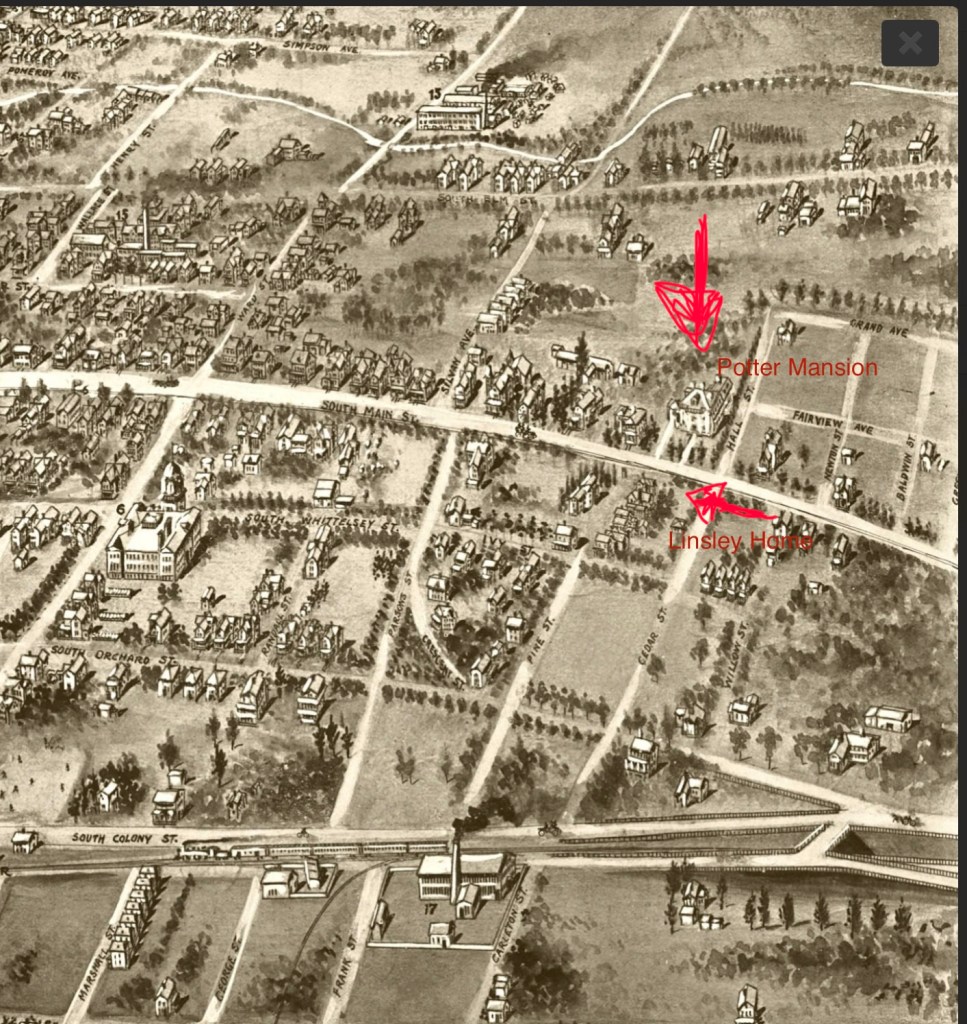
1905 Wallingford map showing location of Potter Mansion and the Linsley Home
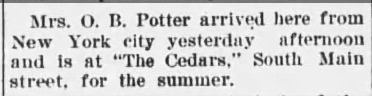
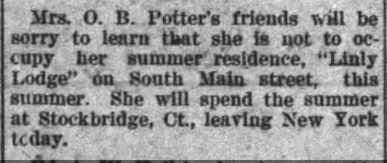
Mary Kate, or Mrs. O.B. Potter as she was known in the newspapers, used her Wallingford home each year from late May/Early June until mid-November. It was known as “The Cedars” (Record Journal 6/12/1908) and “Linsly Lodge” (Record Journal 6/28/1911) during her use and her arrivals and departures were noted throughout her time here.
The summer comings and goings of Mrs. Potter
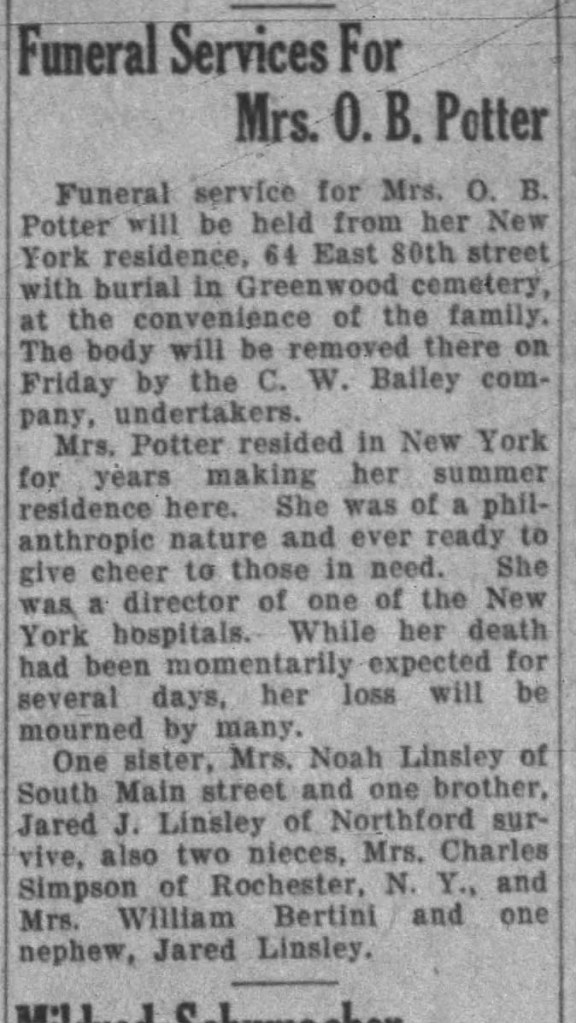
In the winter, she lived on East 80th Street in New York City with three servants.
During the time period Mrs. Potter owned her home, there was one home built in the vicinity of it. The newspaper reported in December of 1924 that a permit for a home for Emil Schmidt was submitted. The property was located “rear of Potter Mansion” and it would be a one story, six room bungalow western design with a sleeping porch and breakfast room.
In early September of 1925, the newspaper reported that Mrs. Potter was in critical condition and in the care of two nurses. She passed away at her South Main Street home on September 16, 1925 at the age of 77. Her body was removed to New York for her funeral and she is buried in Green-Wood Cemetery in Brooklyn alongside her husband Orlando Brunson Potter and other family members.
Mary Kate Potter Obituary
After her death, Sophia and Noah Linsley maintained the home and allowed it to be used for various events. The Congregational Church held a Benefit Bridge-Whist (card games) fundraiser for their Christmas Fund and a flower show hosted by the Wallingford Garden Club brought over 500 visitors, many from out of town. (Record Journal 9/16/1930)
Unfortunately, as time passed with no one living there or maintaining it, the home fell into a state of disrepair, and was finally boarded up to prevent continued vandalism.
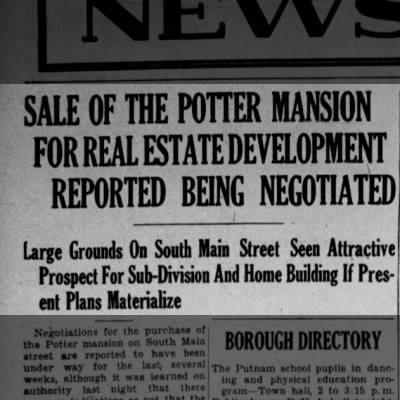
For the next few years, there were negotiations for the sale of the home and property but nothing came to fruition. Finally, in June of 1936 the property was sold to Joseph Busa/Buza who intended to tear down the mansion and convert it into building lots for real estate development (Record Journal 6/3/1936)
Finally the Potter Mansion is sold!
The dismantling began in late August of 1936 and half of it was removed to be used for other construction projects. Buza’s plan was to place 4 homes on South Main Street, 3 on Hall (Cedar) Street, and one “in the rear”. Construction for two homes on Hall Street were completed in the last 3 months of 1936 for Captain J. Orten Gadd and Frank Ollayos. (Record Journal 9/2/1936).
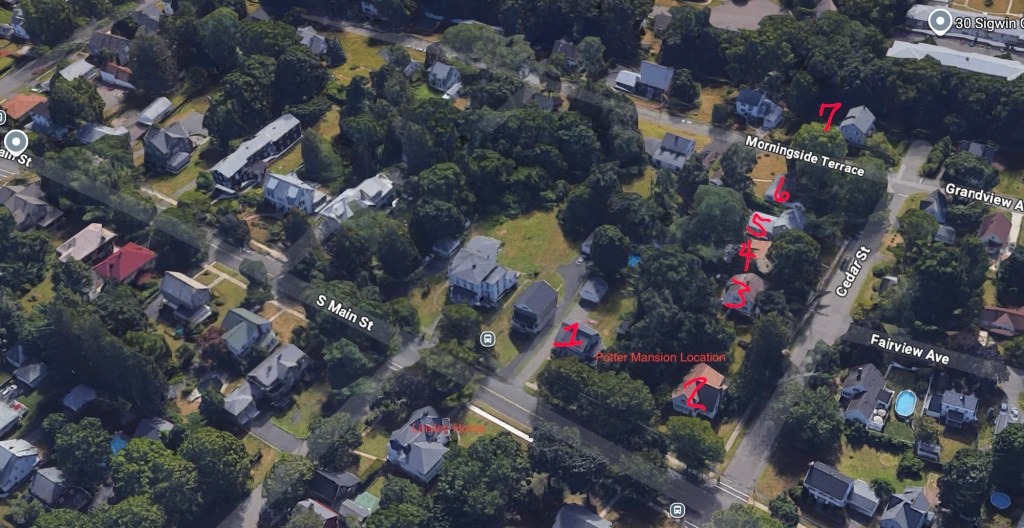
In early 1937, a home was completed on South Main Street for Robbins A. Hall. It was a 7 room colonial and contained a tile bath and a 2 car garage. (Record Journal 1/30/1937). # 1 on map below.
Maltby Stevens awarded a building contract to Joseph Buza for his home on the corner of South Main Street and Hall Avenue. It was to be an “English style cottage” and would cost approximately $9,000. In the same article Joseph Buza is building a home for his family. (Record Journal 2/13/37 and 3/3/1937) # 2 on map below.
Once the seven homes were completed, there was another development in the works. This development contained 14 building lots and would be known as Morningside Terrace. The property was sold to Joseph F. Buza, a relative of the Potter Mansion development by Emil Schmidt. “The land affords an excellent view of Long Hill and beyond that to the eastern mountain range for miles in both directions.” Emil and his wife lived at the end of Hall Street and their home sits at the corner with Morningside Terrace. (The Journal 9/21/1937).
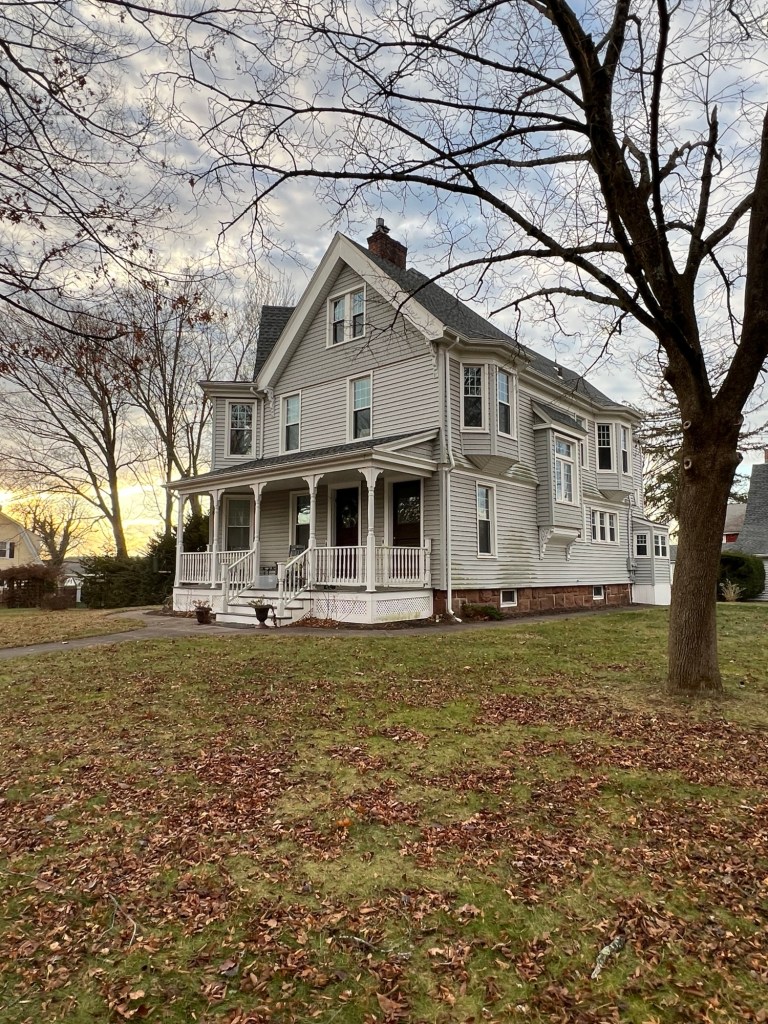
Between 1951 and 1955, Hall Street became Cedar Street. Cedar now runs from South Orchard Street east to a dead end just past Morningside Terrace. All the homes built in 1937 on Hall Street and Morningside Terrace still stand today.
2025 view of South Main Street and Hall/Cedar Street
Reviewing town directories for the 1937 time period I matched up the names to the homes: #1 – Robbins A. Hall #2 – Maltby Stevens #3 – Herbert Crump (not mentioned) #4 – Frank Ollayos #5 – Captain J. Orten Gadd #6 – Emil Schmidt – built in 1924 #7 – Edward Clark (not mentioned)
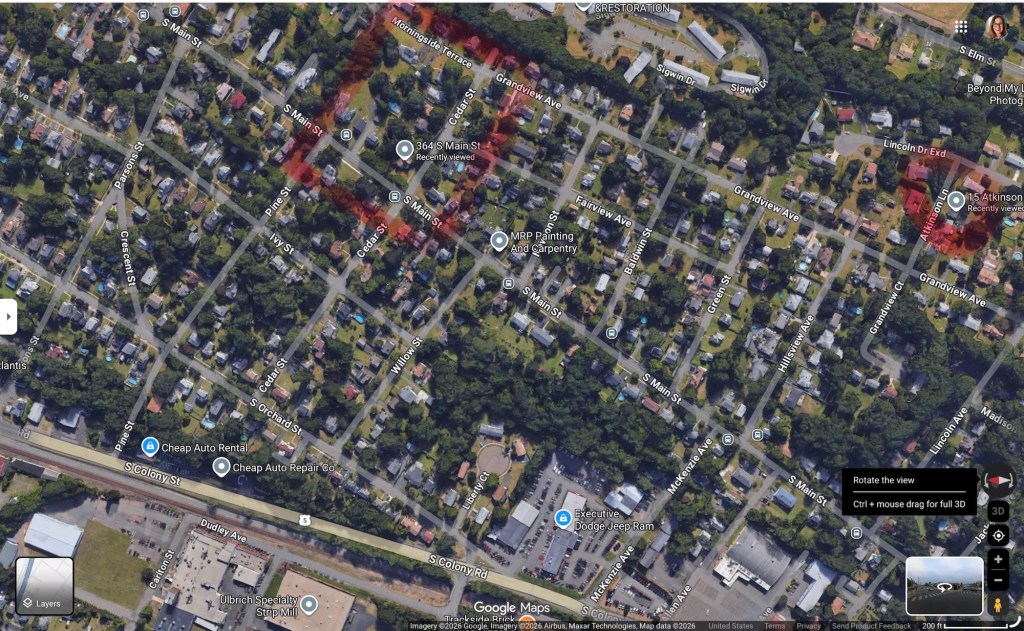
I thought it might be fun to look at a side by side of this area between 1905 and 2025
1905(not to scale)2025the Potter Mansion area to the left and my home circle on the right
I’m not sure exactly when I heard about the Potter Mansion. We walked or drove down South Main Street and Hall Street every day growing up in 1960s and 1970s, and I wonder if one of my parents ever mentioned it. In 2014, a picture showed up in a Facebook group about old homes but no one had any information. The idea that a house of this size was on that corner for a relatively short period of time has always astounded me and I just wanted to tell its story.
A later picture based on the size of the tree in front
The Week 2 topic for 52 Ancestors in 52 Weeks is “A Record That Adds Color”.
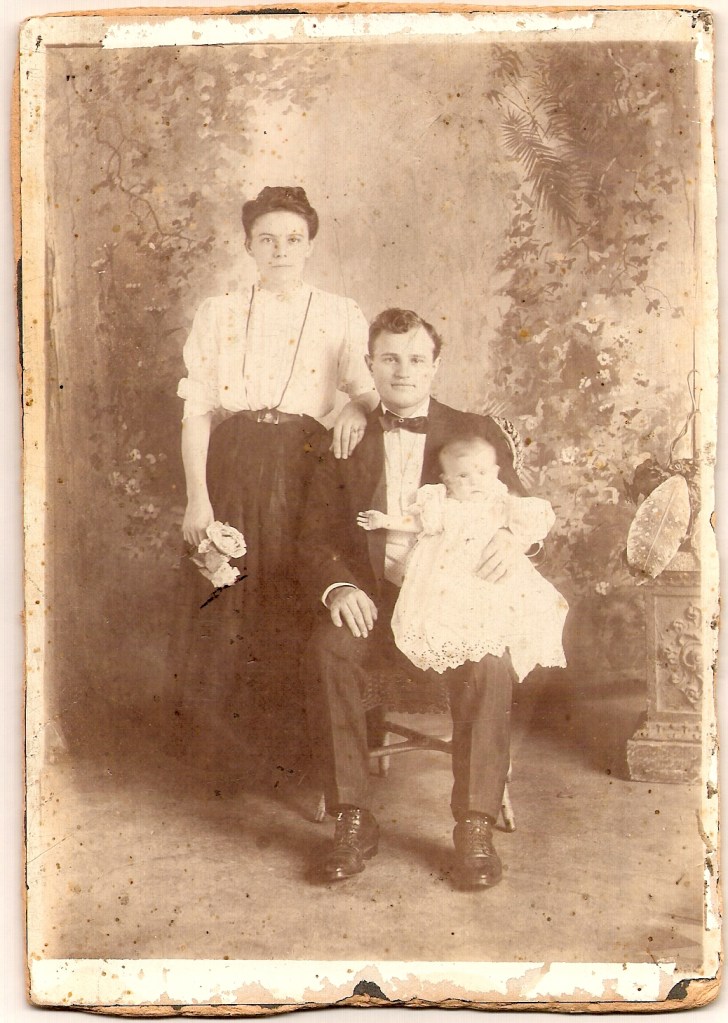
In 1912, my grandmother, Julianna Ingram Posluszny was 24 years old with a husband, a daughter Antoinette, born in January 1909, and a son, Conrad, born in November 1910.
Julianna, Konrad and Antoinette (late 1909)
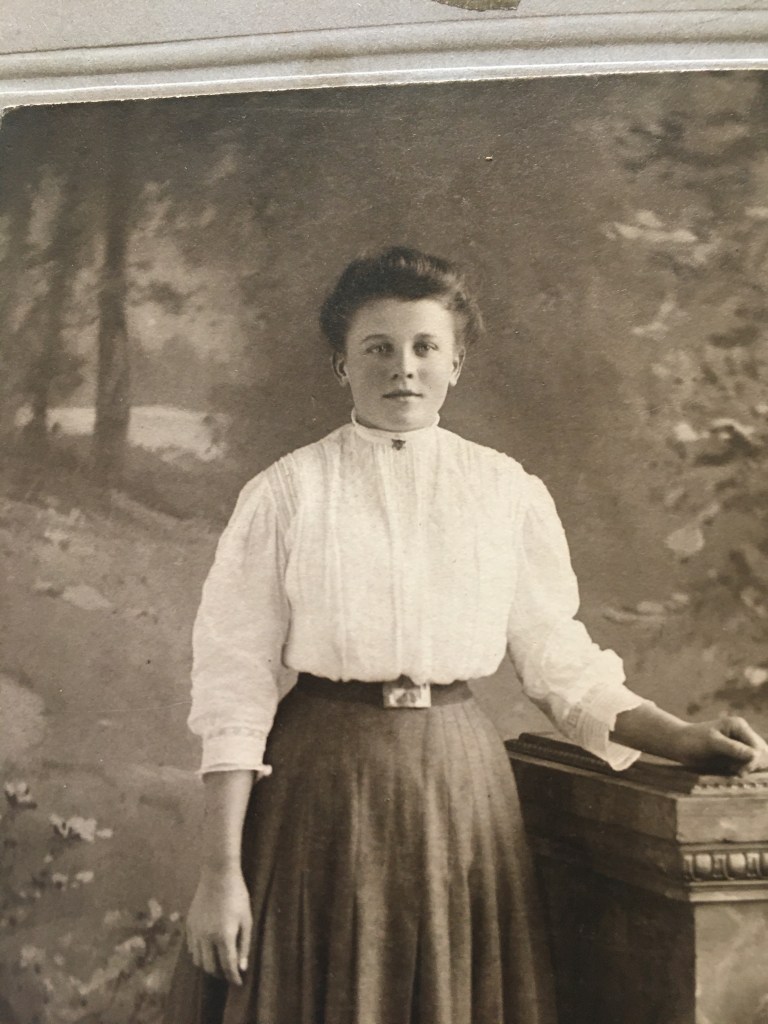
Her cousin, Mary Kukulska Juszczak came to the United States with Julianna’s sister, Marianna in 1907. Mary’s daughter Mary was born in 1910. Sadly, some time in the same year, Mary’s husband died in a work accident at the sugar refinery. But the following year she met and married Michael Zupko.
Mary Kukulska Jaszczak date unknown
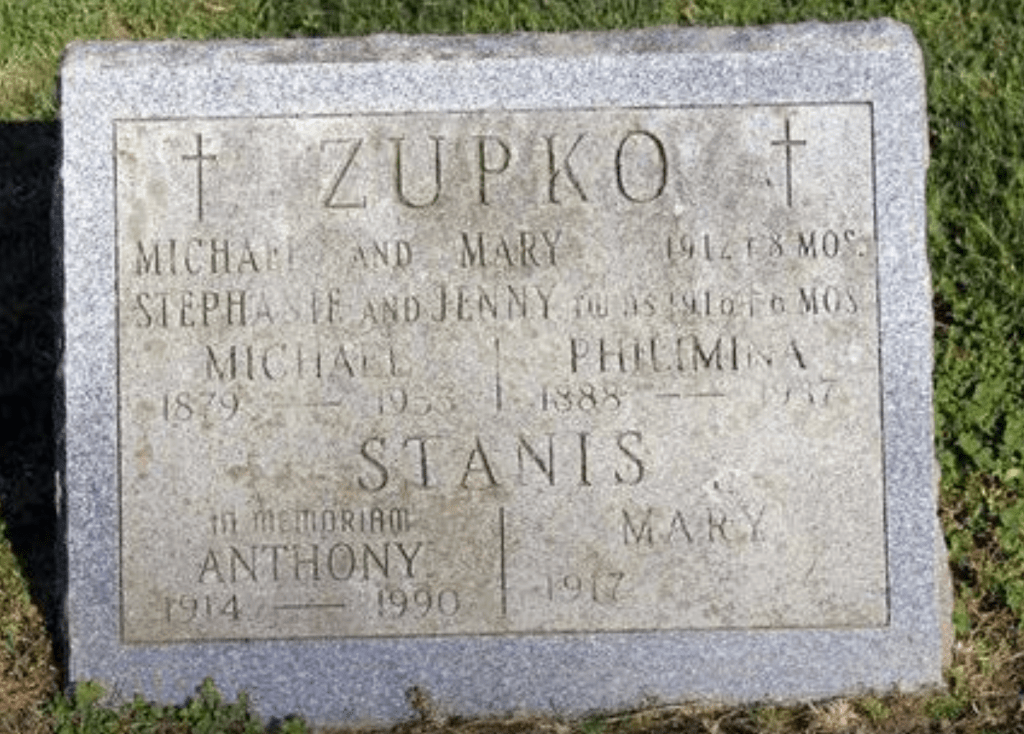
It was in April of 1912 that Mary gave birth to a son Michael Zupko. The only record to be found is their headstone with the year, 1912.
Mary and Michael Zupko 1912
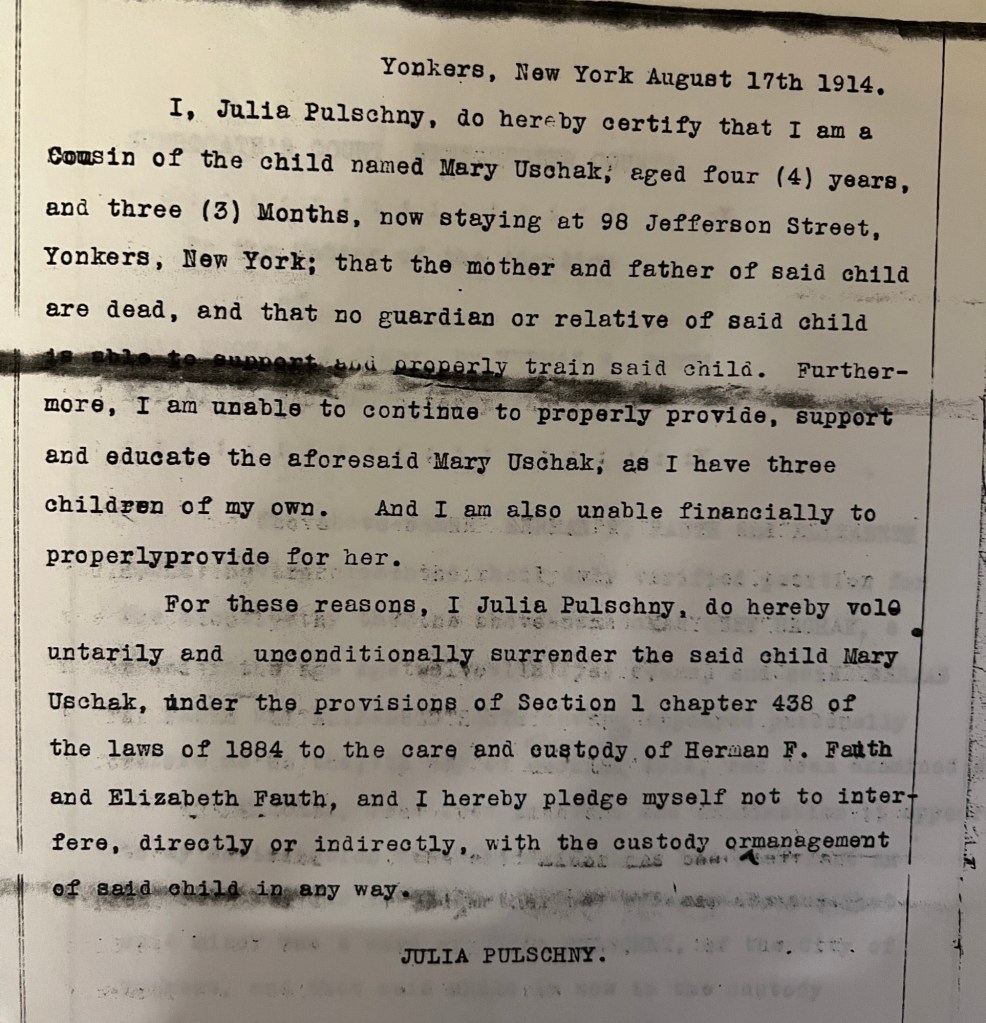
Suddenly Julianna found herself as little Mary’s guardian. Her stepfather didn’t want to take care of her and asked my grandmother with a 3 year old, a 2 year old, and a baby on the way to take her. How could she refuse? She now had 3 children under the age of 4.
Her son, Louis, was born in February of 1913. She and her husband, Konrad, hung in there as long as they could but in 1914 they realized they had to give Mary up for adoption.
Julianna’s testimony August 1914
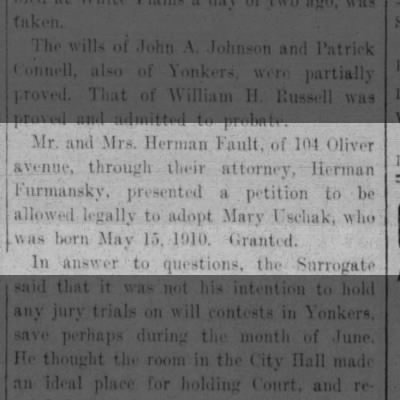
Fortunately, Herman and Elizabeth Fauth, German Methodists who had recently lost a daughter, heard of Mary through their church and petitioned to adopt her. Mary never had to go to an orphanage.
The adoption was final in October of 1914. My grandparents would go on to have a daughter Julia in 1917, and my mother Elizabeth in 1922.
Adoption notice October 1914
What a loving thing my grandmother did! Two children of her own and one on the way, and she takes in, I’m sure without hesitation, another 2 year old. She was always a very giving person but this information helped me see her in such a different light.
I wrote about this in January of 2020 when I was contacted by Mary’s granddaughter and 2 years later when “who died when” was determined by an ancestry relative.
The Week 1 topic for 52 Ancestors in 52 weeks for 2026 is “an ancestor I admire” and after looking at my family tree, I’ve decided that falls on my great grandmother Carolina Straub Posluszny Bonk. Although, technically, she is not my biological great grandmother, her son, Konrad and my grandmother Julianna Ingram were 2nd or 3rd cousins, so there is Carolina DNA in my body.
Carolina was born on April 12, 1855 in Wildenthal (what is now Dzikowiec) in the Galicia region of Poland. She was part of “an ethnic German population living in the Kingdom of Galicia and Lodomeria in the Austrian Empire established in 1772 as a result of the First Partition of Poland” (Wikipedia). This area was also known as Austrian Galicia or Austrian Poland for my family members asking are we Polish or Austrian or German? The answer would be “all of them”!
If her siblings list is accurate, Carolina was the 11th child born of 15 to her parents. Four of them born prior to her, died at birth or in their infancy. Carolina herself would give birth to 14 children with eight living past five years old.
She married Joseph Posluszny on May 31, 1876 in Wildenthal and she gave birth to her first child in March of 1879 when she was 24 years old.
Seven months following the birth of her daughter Elizabeth Eva in September of 1896, her husband and my great grandfather, Joseph Posluszny passed away. Carolina became a widow at the age of 41 with seven children ranging in age from 16 to 7 months old.
Last September, another of Carolina’s great-granddaughters through her son Joseph contacted me after finding this blog in google. She told me the following: “Pa’s father had been the village blacksmith. Pa’s father had an apprentice. His name was John Bonk. WhenPa’s father died, John Bonk took over the blacksmith shop and apparently the family. Pa was not happy with this and it was about that time that he left Austria.”
Carolina and John Bonk were married on May 12, 1898. Carolina gave birth to a daughter who died at birth and in 1903 at the age of 48, gave birth to a son Walter John Bonk.
Her older sons did head to the United States shortly after her marriage to John. Her son John left in 1899, Konrad in 1900, and Joseph in 1901.
Carolina, John, daughters Mary and Elizabeth, and their son Walter immigrated in July of 1907 and resided in Perth Amboy New Jersey until their final destination of Wallingford Connecticut.
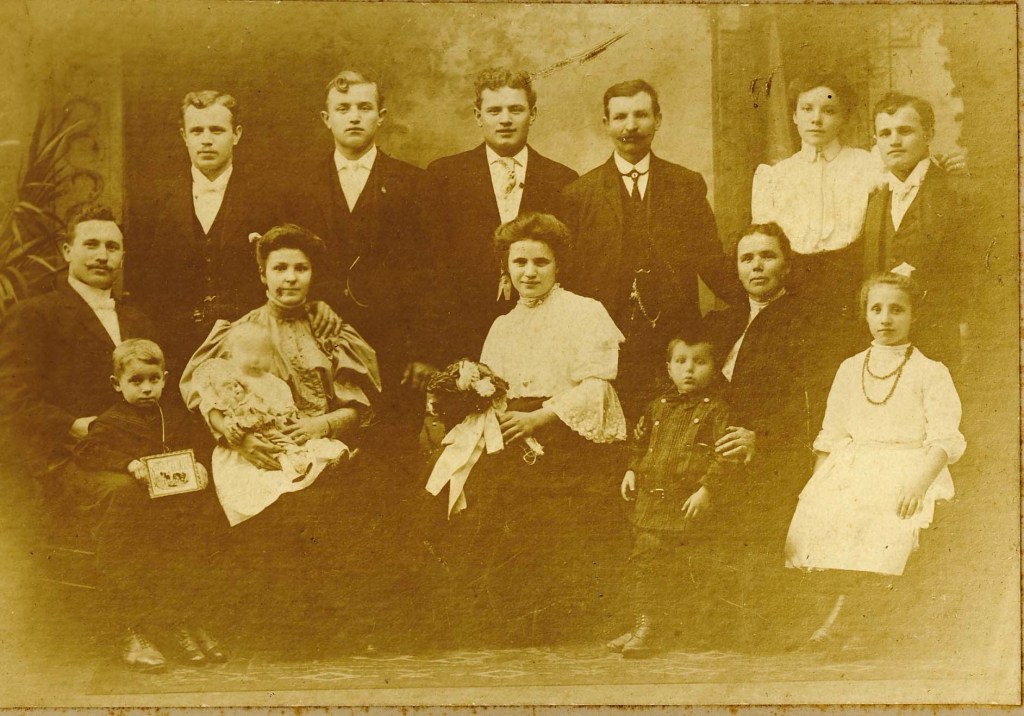
The Posluszny/Bonk Family about mid/late 1907
This photo ends up in nearly every Posluszny post. Carolina is seated on the right, with her son Walter in front of her. She is 52 years old at the time of this photo in 1907.
Frank and Josephine Posluszny wedding 8/1909 – Carolina front left, husband John Bonk behind her
She, along with her daughter Mary, was an active member in the local Polish National Catholic Church in Wallingford, St. Casimir’s Church.
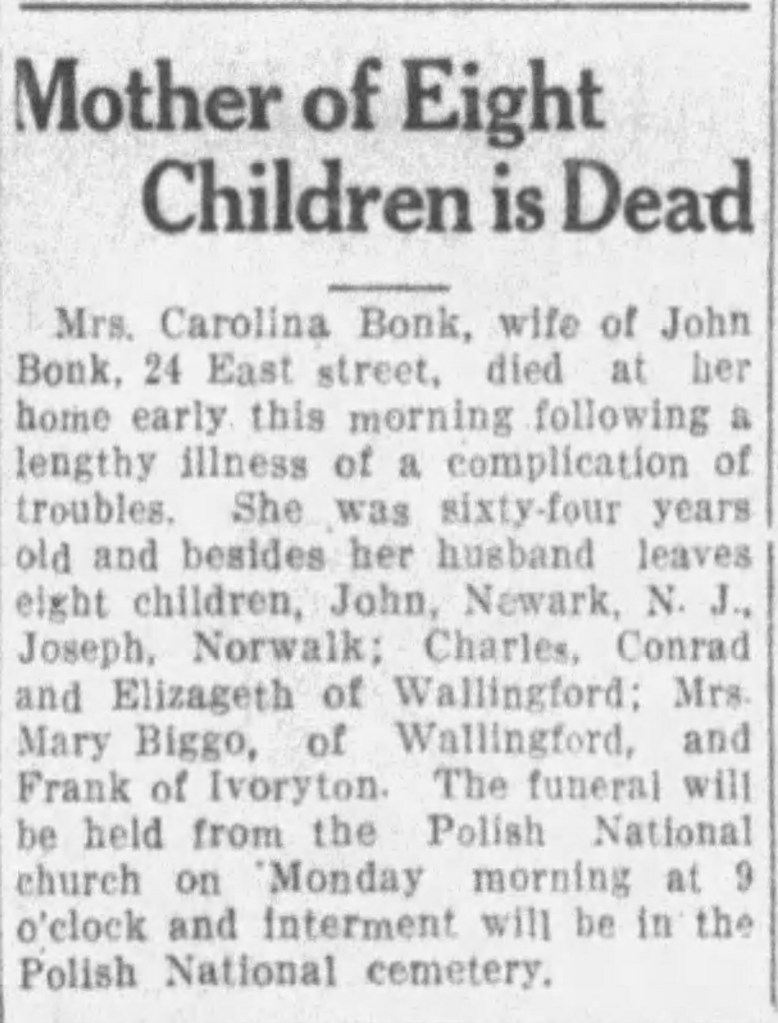
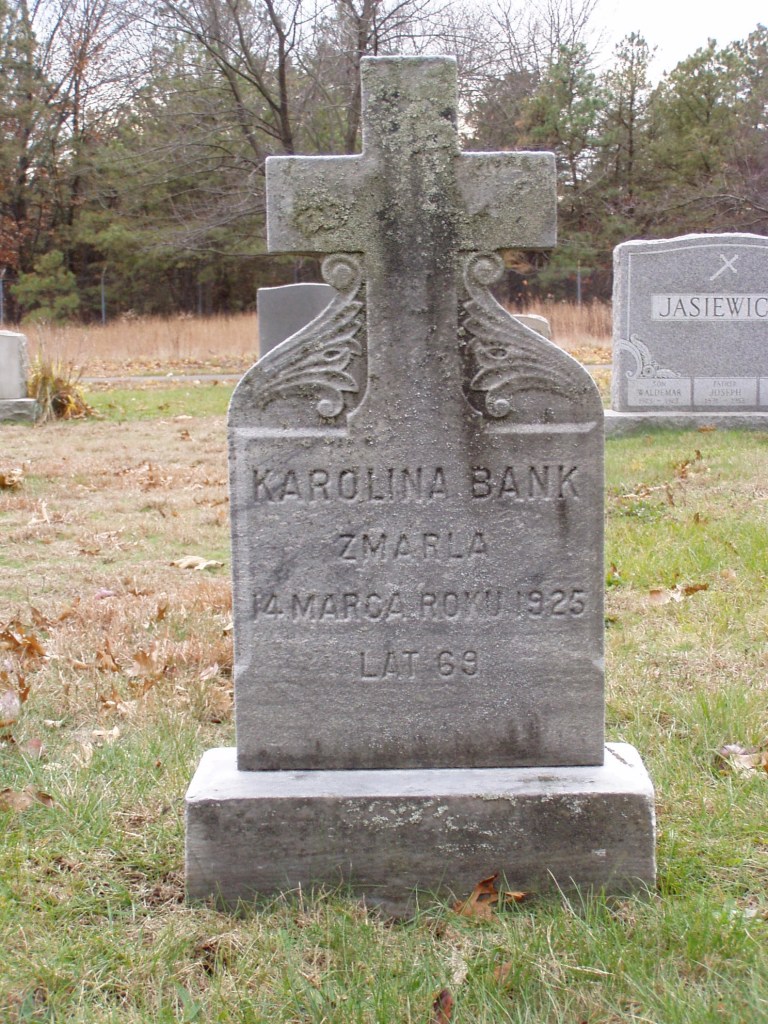
Carolina died at the age of 70 (not 64 as the newspaper article said) after suffering from stomach cancer. My Aunt Judy told me in a conversation years ago, that she and her mother, my grandmother Julianna, would go to Carolina’s house a few blocks away to take care of her when she was ill. Also, that my grandfather Konrad and Julianna were kind to her second husband. Carolina and John gave my grandparents the downpayment for their home in Wallingford on Clifton Street. I found it touching that my grandmother did the same for my parents when they purchased our home here on Atkinson Lane.
Carolina’s obituary 3/14/1925
She is buried in the Polish National cemetery in Wallingford.
Carolina Bonk – St. Casimir’s cemetery
I can’t imagine a life with 14 siblings, or to give birth to 14 children only to have 3 die in the same year from smallpox. I don’t know the cause of her husband’s death at the age of 43, but with young children still at home and a business to run, the best option was to married the hired help. She did what she had to, to survive. She was well-respected in her church and community at their death and that makes me proud of her.