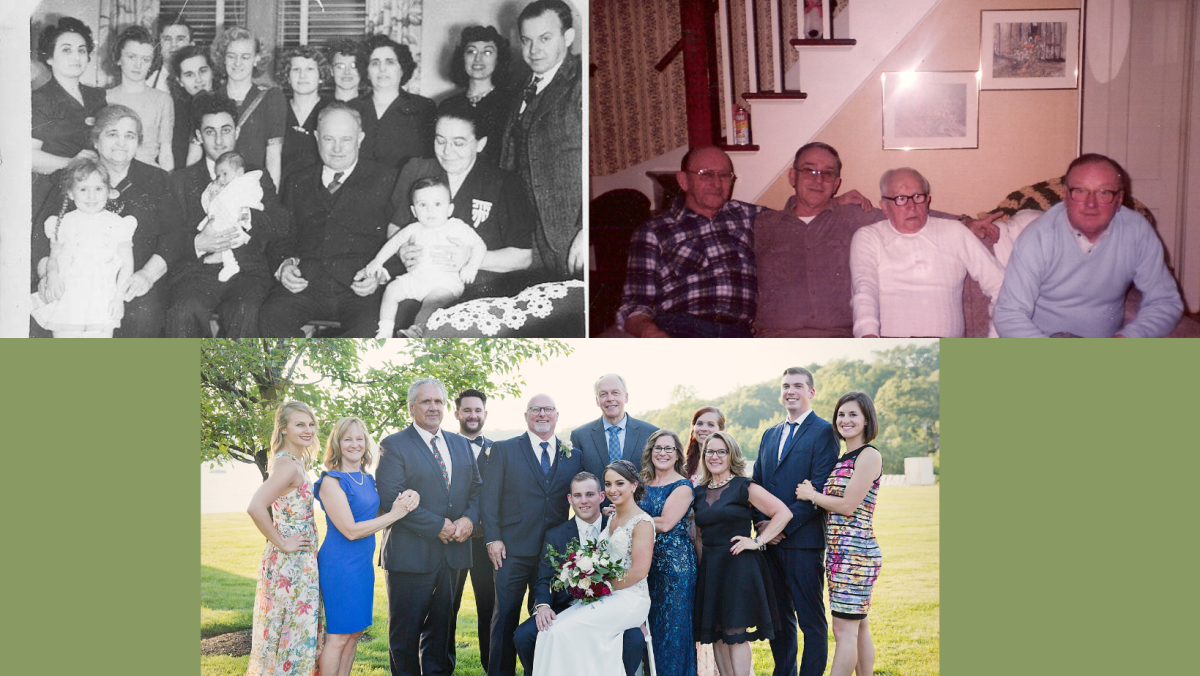
Engram Family Part 4 – Jacob Jr.

We are now at the end of the Engram Family stories, and I’ve saved my grandfather for last. His relationship with my grandmother is included here.

As I mentioned in my post about his father, Jacob Sr., Jacob Jr. made sure his father was cared for throughout his life. I think the same applies to his relationship with his sisters.

On December 16, 1934, Jacob, at the age of 39, married Anna Marie Winner of Vleigh Road, Queens, NY. She was the 24-year-old daughter of Henry and Joanna Winner. She had a brother who was six years older. They lived on a farm, which was close to Jacob’s farm in Queens in the 1930 census. Her father and brother were farmers, and in their household were three male boarders who worked on the farm, and a 44-year-old woman who was listed as a servant.
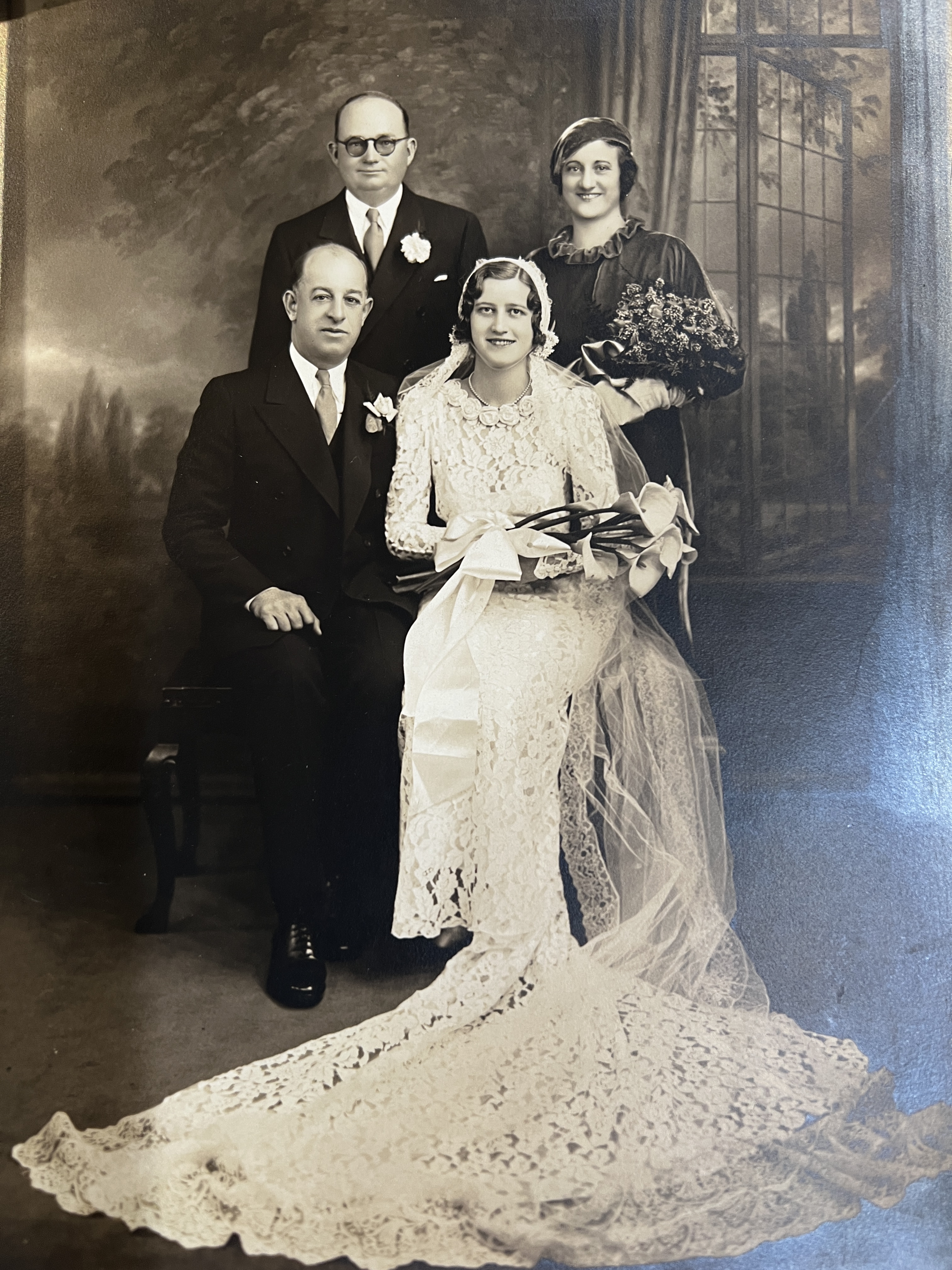
Jacob, Anna, Henry, and Joanna December 16, 1934

In the 1940 census, Jacob and Anna were renting at 136 Catskill Avenue in Yonkers, and Jacob was a partner with his childhood friend, Morris (Mo) Sherman, at Sherman Chevrolet, at 561 Central Park, Yonkers, NY.. In addition to the dealership, they owned a parking lot directly across from the main entrance to Yonkers Raceway, which now includes Empire City Casino. During racing season, they took turns working the lot with the help of a crew of his sister Elizabeth’s relatives.
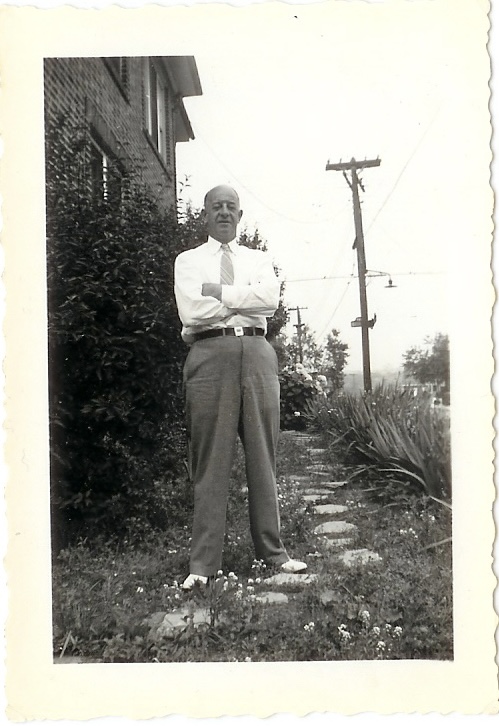
Jacob Jr. early 1940s

Jacob and Anna’s daughter Joanne was born on March 11, 1945. She has the same birthday as my husband. This was 10 years into their marriage, and Jacob was approaching 50 years old.

When Joanne was 7, Jacob and Mo sold the dealership, but became partners in the business of second mortgages and, of course, the parking lot. Joanne says, “he was an ‘at-home’ Dad for most of my life…”

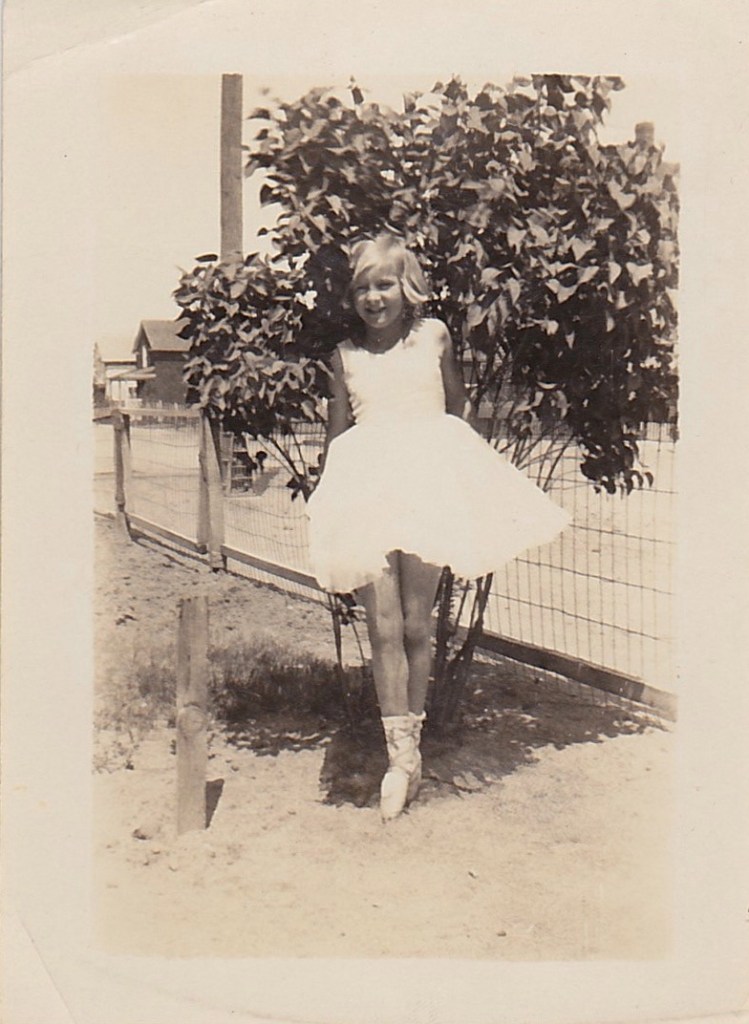
Jacob’s education ended at 7th grade, but he was born with a love for reading, history, and travel. Every day, he went out for the Daily News and the Daily Mirror, and the local Yonkers paper was delivered to the house. On weekends, he picked up the New York Times. Multiple magazines were delivered to the house each month. He loved reading biographies of famous men, plus subjects related to history.

The love of reading, the books, magazines, and newspapers are identical to my mother and to our house growing up!

He loved to travel. I found a ship manifest from his return passage to the United States from Havana, Cuba, in April of 1928. One of his favorite locations was Florida. Joanne says that when she was very young, they spent parts of winter in Miami, visiting Aunt Joan (formerly Hannah). When Joanne was nine, the family traveled on the Queen Mary out of New York and spent seven weeks traveling through France and into Germany to visit her mother’s relative in northern Germany. After she graduated from high school, they traveled back to Europe, visiting England and the northern countries.
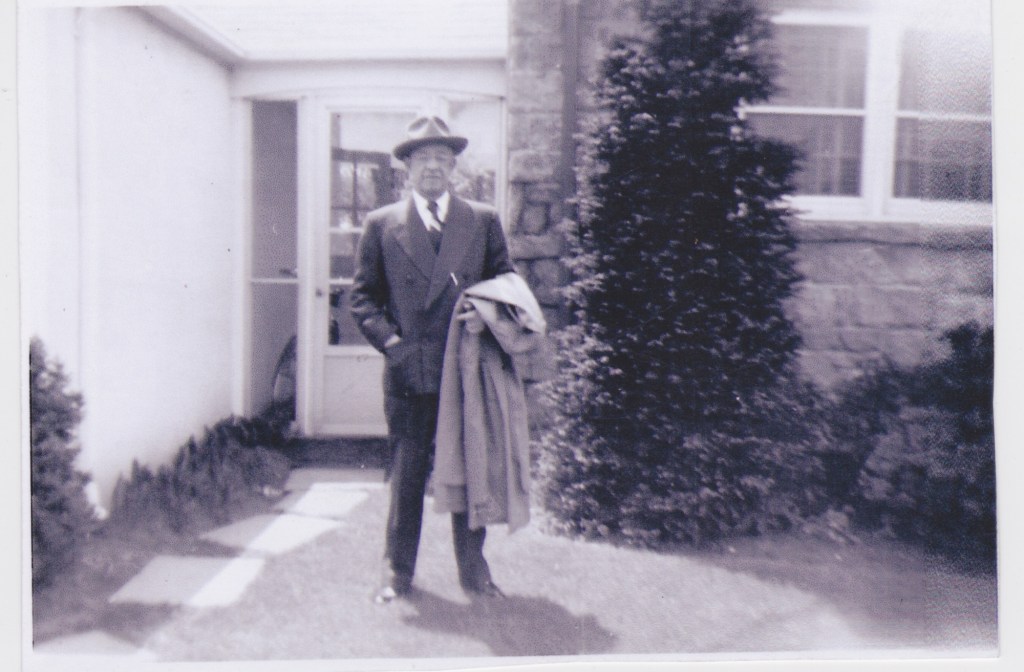
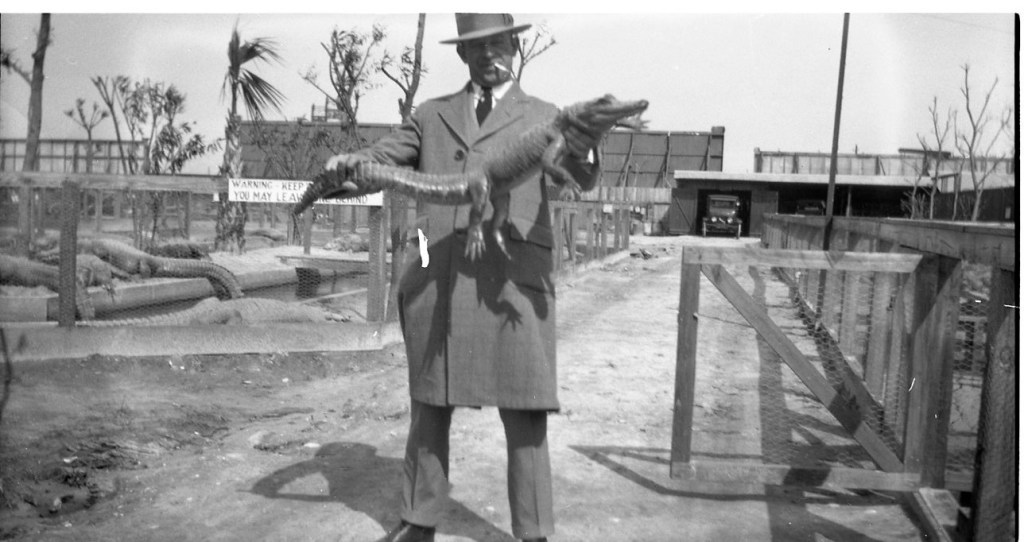
Travel didn’t have to be something grand, though. Jacob found enjoyment in “going for a ride”. It could be an evening ride through the back roads of Westchester, or weekend trips “out on the island” (Long Island), sometimes to New Jersey or up the coast to Connecticut and beyond.

Unfortunately, drinking was a problem in their home, on a “cyclical basis”. He drank, and her mother would join him. He would go from very quiet to loud and angry. This was something Joanne talked about in our correspondence: of her being the sober one in the house and seeing and hearing a lot of “not for children” content growing up. Perhaps his drinking led to his estrangement from his sister Kitty in the early 1950s.

But because it was cyclical, for most of the year she was able to see another side of Jacob. She saw what a generous, quiet man he was, who loved to read the papers, tend to his flowers, and visit historical sites. A man who was as comfortable with bums in the Bowery as he was in First Class on the Queen Mary.

Jacob suffered a heart attack in 1966 when he was 71 years old and became ill in late 1973. Joanne was living in Pennsylvania, and by the time she came home, he was in the hospital, where he died on January 24, 1974.

Twenty-seven years later, my cousin Judy received an email from Joanne in response to a card Judy sent to Joanne’s (now deceased) mother informing her that our Aunt Tootsie was in a nursing home. Ann Engram must have been on Aunt Tootsie’s Christmas Card list. As they say, “the rest is history!”

The Mishkind-Engram Annullment

In my last post, I told you about the short marriage of Elizabeth Engram to Barney Mishkind. It lasted less than a year and then she went on to marry Alfred Klein, except she didn’t marry him until they were approaching their “25th wedding anniversary”.

Someone with Barney in his family tree alerted me to court documents under Elizabeth Mishkind. I was surprised to see that the information matched court documents under her father’s name. Because they are over 100 years old, I was able to download them through the Bronx Court Records website.

Court documents

They were the court proceedings for Elizabeth to receive an annulment from her marriage to Barney and contained interesting information.

Her grounds for an annulment were that she was not yet 18 when she got married, that she didn’t voluntarily cohabitate with him after she turned 18 years old, and she married without the knowledge of her parents.

The first step was on April 8, 1918, her father, Jacob Engram was appointed her legal guardian, because she was not 21. (I continue to go back and forth with “Ingram or Engram” because the documents and even their own signatures use both!).

Elizabeth’s sister, Kathryn, served Barney with the summons and complaint on April 9, 1918 when she met him at 25 Lenox Avenue in New York. Although he had 30 days to respond, he never did.

Exhibits in the online file included:

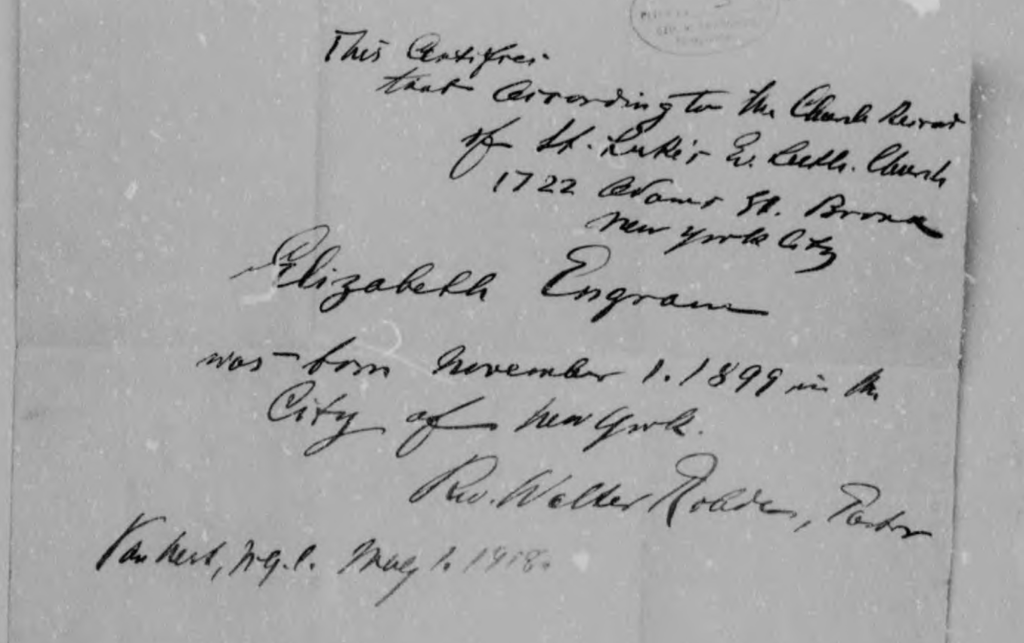
  • a note from the reverend of St. Luke’s Evangelical Lutheran Church in the Bronx confirming that Elizabeth was born on November 1, 1899 in New York. This lists her name as Catherine Elizabeth Engram.
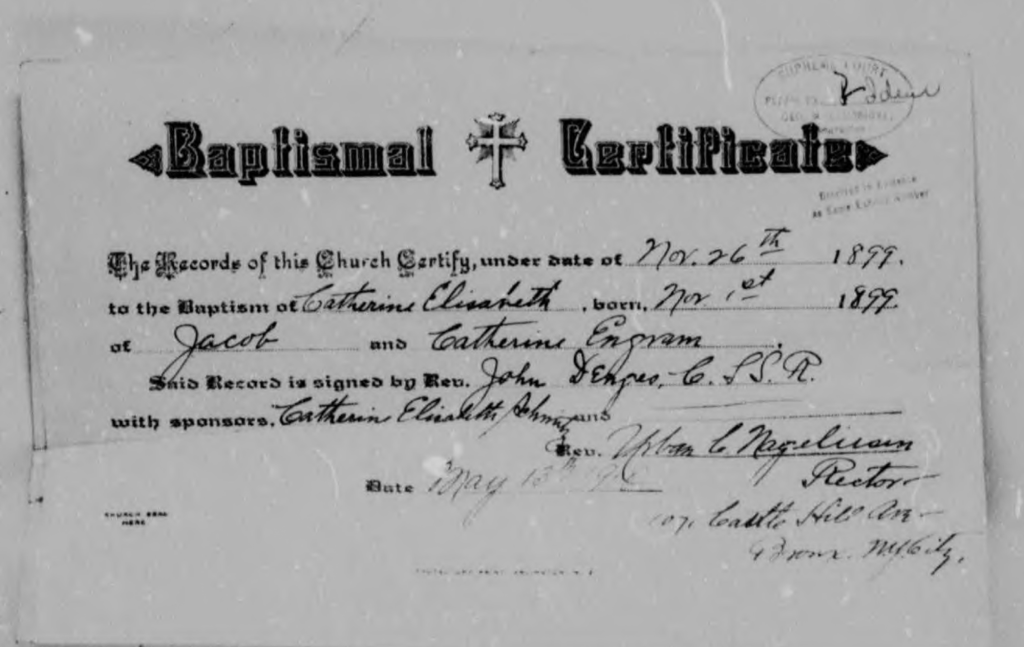
  • Her baptism certificate from Holy Family Church in the Bronx
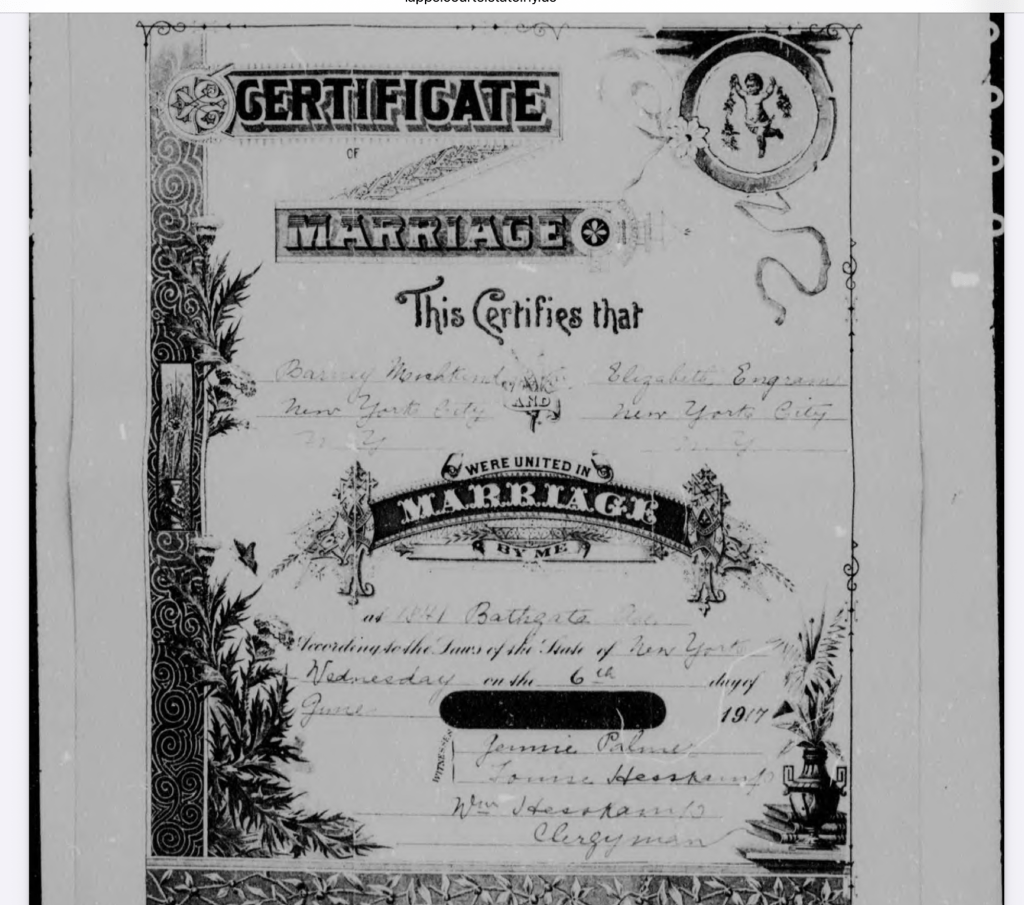
  • The marriage license from Wednesday, June 6, 1917 for a service performed by rev. William Hesskamp of the Methodist Episcopal Church in New York

In late June of 1918, Elizabeth sat for testimony in court. She said after they were married, he brought her back to the hospital where she worked and lived, and he went home to his people. Whenever he came back to New York, they hired a furnished room. But, she claimed, after she turned 18, she didn’t “voluntarily cohabitate” with him. “He treated me brutally”, she said. Q: what did he do? A: Why he beat me.

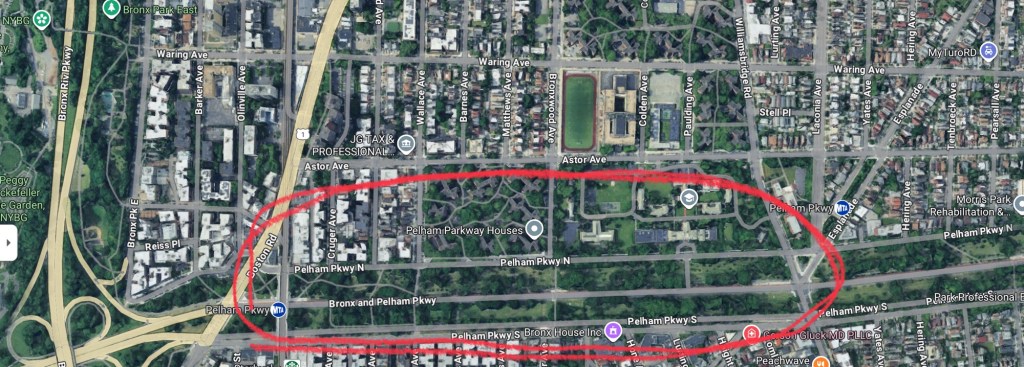
Next on the stand was her father Jacob. He lists his residence as Pelham Parkway between White Plains and Williamsbridge Road, which is more defined than at any other information I’ve found. His testimony was limited to her date of birth and when he found out she was married, which he said was March of 1918.

Engram Farm in 1918 somewhere within this area between White Plains Road and Williamsbridge Road

Kathryn had the most information. She said she knew Barney for a little over a year and met him a week or two before he and Elizabeth were married. They met when the three of them went to the cemetery to Kathryn and Elizabeth’s mother’s grave. The conversation of marriage must have come up because Elizabeth said they had no intention of marrying, but later Barney told Kathryn he did have the intention of it. When Kathryn found out a week of two later that they were married, she didn’t tell her father because her mother had only been gone five months and “it would only make him feel very bad at the time”. (Don’t forget, Kathryn was the sister who stayed home and took care of Elizabeth, Louise, and Hannah under unbearable, alcoholic conditions).

She continued her testimony telling the court that she told Jacob in March of 1918 because Barney was treating Elizabeth “brutally” and “I could not stand for it anymore.” At the time, Barney was back in New York and they were living in a furnished room on Corlear Avenue. Kathryn said Elizabeth was there against her will. “He compelled her by death”, “he said he would kill her if she didn’t go with him”.

Elizabeth got back on the stand and said while Barney was in New York for 2 weeks, she gave up her employment at the hospital (never named) and he threatened her. The court asked her in a variety of ways whether, after her 18th birthday, they lived “as husband and wife”. She claimed no, and that she was there because he said he’d beat her, and he did during that time.

I just have to interject here that she grew up in a family with an alcoholic father who beat her mother and here she is in the same situation. It’s no wonder Kathryn and Louise never got married and Hannah had two short marriages.

At the end of this, Elizabeth’s lawyer states that Barney has never responded to the summons and complaint and so an attorney is appointed to represent him.

The files include a deposition from Elizabeth’s attorney Barney Levy, who says he was informed that Barney is in the military as a private in the 105th field Artillery and is stationed at Camp Stewart in Newport News Virginia and he does not intent to object or contest and is willing for the marriage to be annulled.

Barney’s military record – furloughed February 19 to March 1, 1918 (the 2 weeks he was in New York forcing Elizabeth to live with him)

Back in court, the lawyer assigned to Barney is deposed and says he mailed him a letter asking for information as to whether he objected but received no response. The lawyer spoke with Barney’s mother who said both she and her son had no objection to the annulment. The lawyer spoke with Barney’s father on July 21, 1918, who said “the facts alleged are perfectly true” and he had a serious conversation with his son and know there are no objections and in fact, Barney though the annulment was already done.

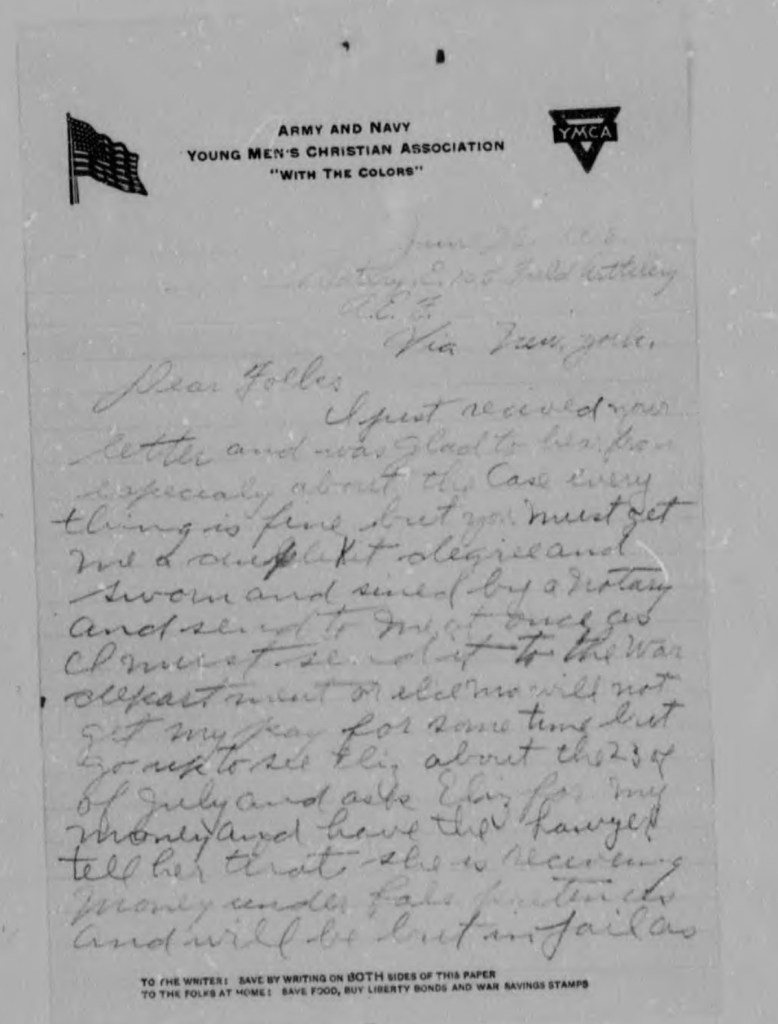
The lawyer presents a letter he was handed from Barney’s father, allegedly from Barney that acknowledges the facts and has no objection whatsoever to the granting of the decree for annulment. Probably because Elizabeth has been receiving his service pay as his wife!

The letter says:
Dear Folks,
I just received your letter and was glad to hear from you especially about the case. Everything is fine, but you must get me a duplicate degree (decree) and sworn and signed by a notary and send to me at once as I must send it to the War Department or else Ma will not get my pay for some time. But go up to see Eliz about the 23 of July and ask Eliz for my money and have the lawyer tell her that she is receiving money under false pretenses and will be put (?) in Jail (?) as…
that is the extent of the letter copied.

On July 26, 1918 the judge rules that Elizabeth is entitled to a judgement of annulment and “after three months a final judgement may be entered”.

November 12, 1918, the final judgement is granted and Elizabeth Mishkind is once again Elizabeth Engram.

Annulment finalized November 12, 1918