Monday, April 22nd, my twin sister Gail and I have turned another year older. There has to be some significance being born in the 4th month on the 22nd day. I think it makes us extra special.
I was born at 4:33 in the morning and Gail was born 5 minutes later at 4:38 am. We joke as to who is really the elder – me who greeted the world first, or her by being the elder, pushed me out. I think people who know us, think she’s probably the elder!
There is so much we don’t know about my mother’s pregnancy aside from the family story that she cried and wouldn’t tell my dad why she was crying. When she told him she was carrying twins, with a one year old at home, he was thrilled and told her not to be sad. Over the years he took so much off her shoulders on the weekends, taking us out for walks and rides to let her have some alone time.
It would not be a complete birthday unless I took the time to acknowledge “the other”, our older sister Janice who went from only child to oldest of 3 by the time she was 18 months old. She’s been there through the thick and thin of it, hugs and hair pulling included. Our lives wouldn’t be complete without her.
When I first started my family research in the early 2000s, Ancestry(.)com was in its infancy and information was not as readily available as it is now. Research involved either visiting town clerks office to requests copies of birth, death, and marriage certificates or mailing a request and waiting for a response.
One of the mysteries of my paternal side was my grandmother’s sister Aniela (also known as Nellie) and her husband Joseph Mikula of Palmer Massachusetts.
One of the crazy family stories was that she and my grandmother were twins but that was far from the truth as she was born in 1871 and my grandmother was born in 1891.
What little I know of them is they were married in Poland and Joseph arrived in the fall of 1902. I don’t have his ship passage record but Aniela arrived in December of 1902 and she was heading to Windsor Locks Connecticut where he was living. Since Walter was born May 30 1903, counting on my fingers, she would have been pregnant with him when she arrived. From there, or at some point in time, they moved to Palmer, Massachusetts.
Besides the “Aniela and Antonia were twins” story, I only knew they took in my father, aunt, and uncle when their mother died in 1927 and they had two sons, Stanley and Walter and one daughter, Catherine who were older than the Jakiela siblings.
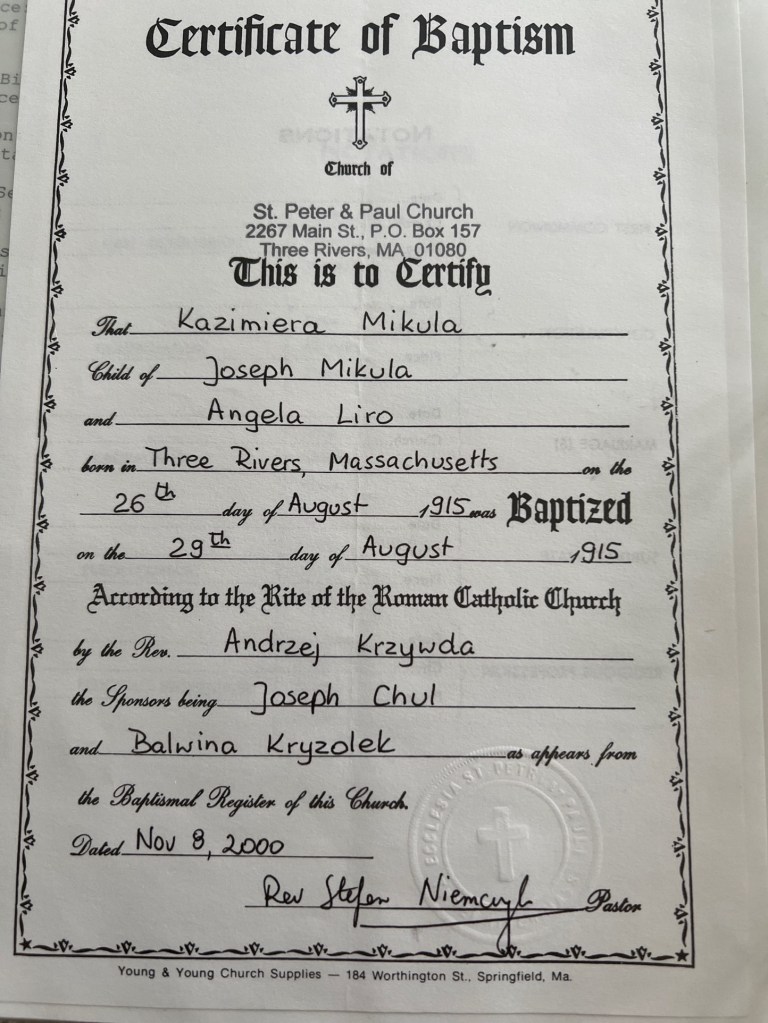
I sent a letter to the two Catholic Churches in town and received a response along with four Certificates of Baptism for Mikula children – none of them named Walter or Stanley or Catherine. In hindsight, knowing Joseph and Aniela lived for a time in Windsor Locks, Ct, I might be looking in the wrong state for their birth records.
My past research told me that Walter was born in May of 1903, Stanley in November of 1904, and Catherine in 1908. The “new” siblings included: Bronislaw born 1909, Genowefa born in 1911, Zofia born in 1913, Kazimiera born in 1915, Antoni born in 1917, and Mieczyslaw born in 1918.
Just to put this in perspective my dad and his siblings were born in 1913, 1915, 1920, 1922, and 1924.
Joseph, worked in the cotton mills throughout his life and it’s likely they lived in millworkers housing in Palmer. What I found out about the family was either sad, or non-existent.
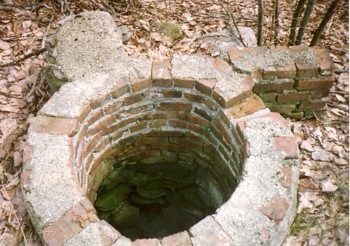
Antoni died by accidental drowning when he was 1-1/2 years old in August of 1918. He fell into a well.
Example of an open well
Mieczyslaw (Martin) died just short of 6 months old in September of 1918 from Infant Cholera “a disease of poverty”.
Through this all, their mother Aniela, was suffering from tuberculosis which eventually made its way into her bones. She died in May of 1919 from Tuberculosis of the Bone. Would she have been home with her children around her with this terrible disease?
Catherine died in 1934 at 26 years old of tuberculosis and was in the 1930 census as an inmate at the Hampden County Sanatorium.
Bronislaw is in the 1910 census at 1 years old and was not listed in the 1920 or 1930 census.
Genowefa, later known as Genevieve, married, had a child and lived her life in Vermont until her death in 1987. Besides Stanley, she is the only I found to have a family.
Kazimiera is on the 1920 and 1930 census at ages 5 and 15, but disappears after that.
Zofia is not in the 1920 or 1930 census when she would be 7 and 17 years old. However, my Auntie Helen recalled in one of our conversations that “Tootie” committed suicide but I don’t know when that would be as I’ve never found any information about her.
I would think something was amiss with these people and lack of information if I didn’t have actual church raised seal certificates.
One of the Mikula children birth certificates
What I realized after all this, was that Uncle Joe remarried after Aniela died and it was actually he and his second wife and Genevieve and Kazimiera that likely took care of my aunt and uncle in 1927. My dad was in Southington with his god mother (he was only 2-1/2 years old).
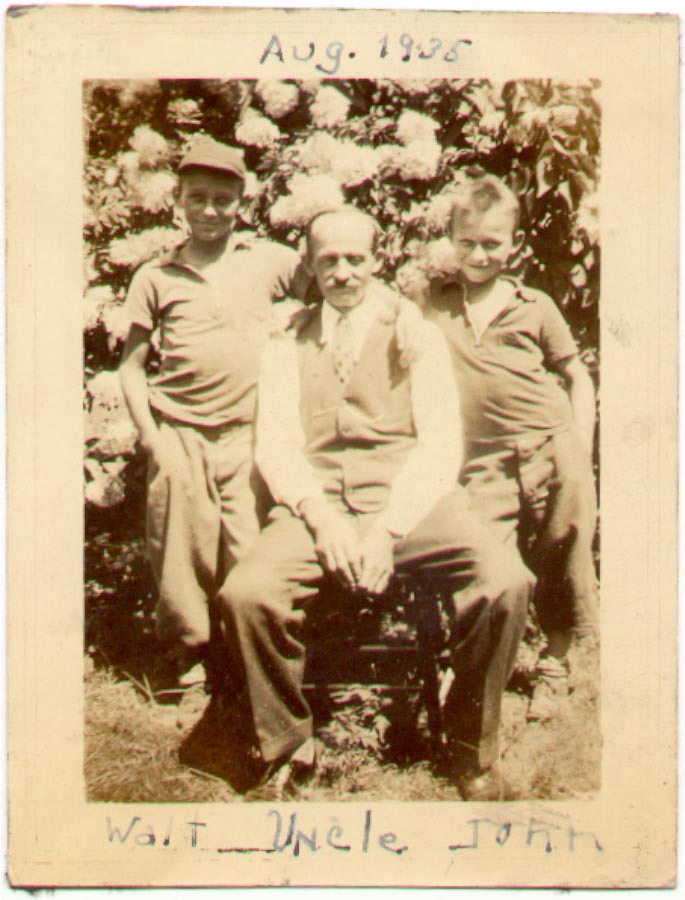
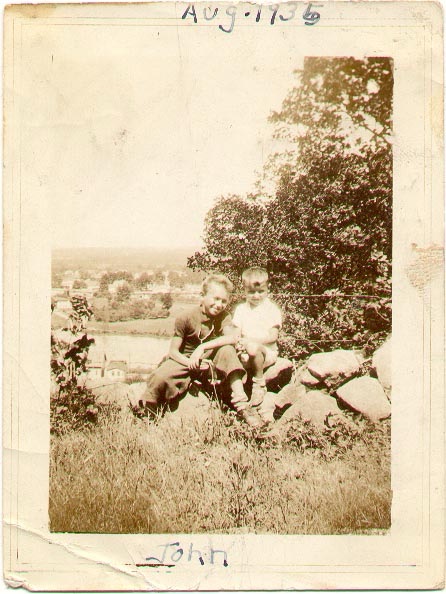
Walt, Uncle Joe and JohnJohn and ?
Walt and John were also brought to Uncle Joe’s after their father died in May of 1935. These pictures are from August of 1935. I can’t recall my dad ever speaking of being there but I bet it is where he discovered his love of the outdoors!
Uncle Joe outlived his second wife Anna and he died at the age of 67 from a cerebral embolism in 1945 while living in Worcester Massachusetts.
You might be wondering about Stanley and Walter? I actually have some information on them from family members and another interesting source. I’ll share that in another post.
The topic for week 8 of 52 Ancestors in 52 Weeks is – Heirlooms.
The definition of a Heirloom is a valuable object that has belonged to a family for several generations. Since my great-grandmother was the farthest back generation to immigrate in the early 1900s, I’ll have to go with what I have, but I still think they are pretty important!
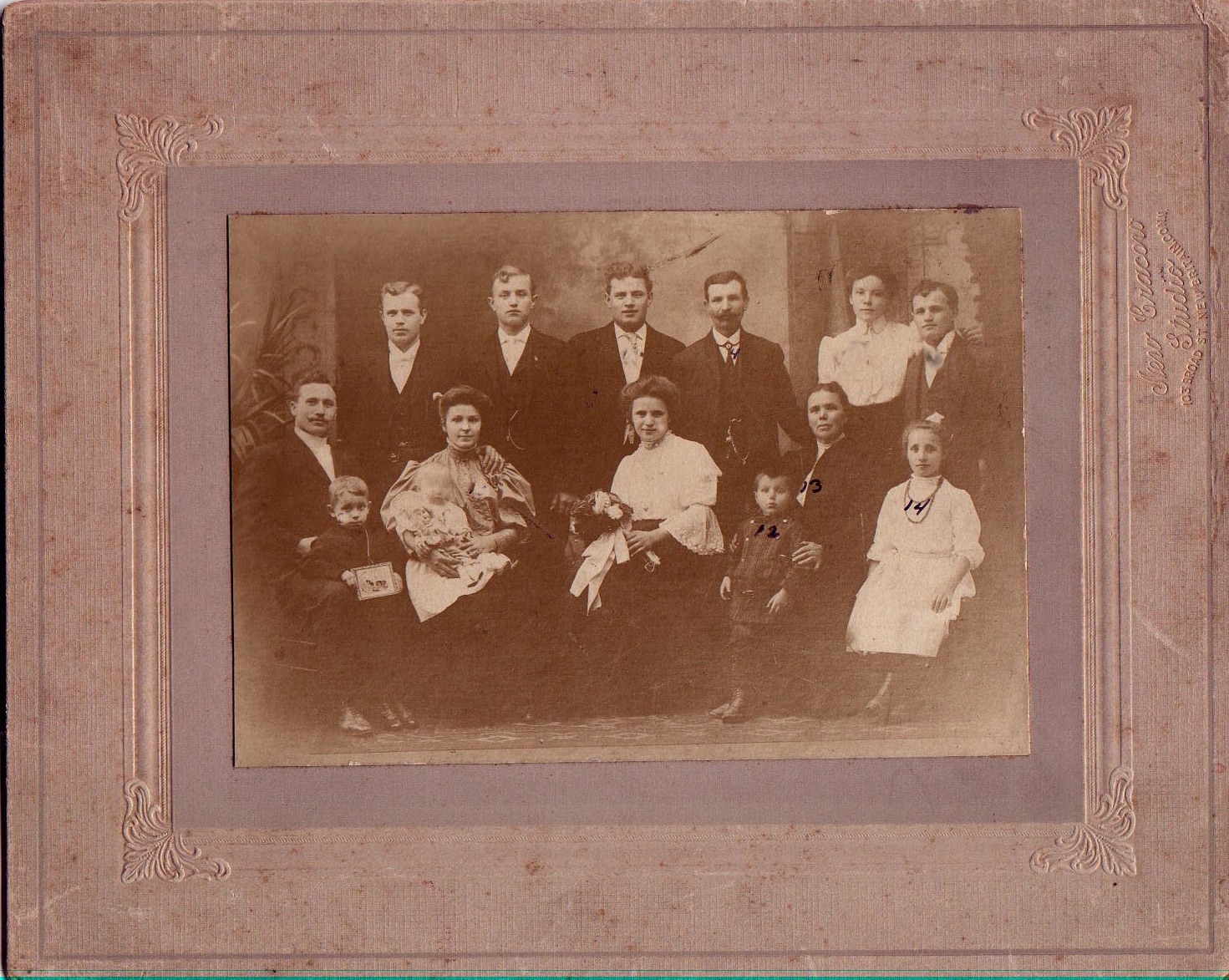
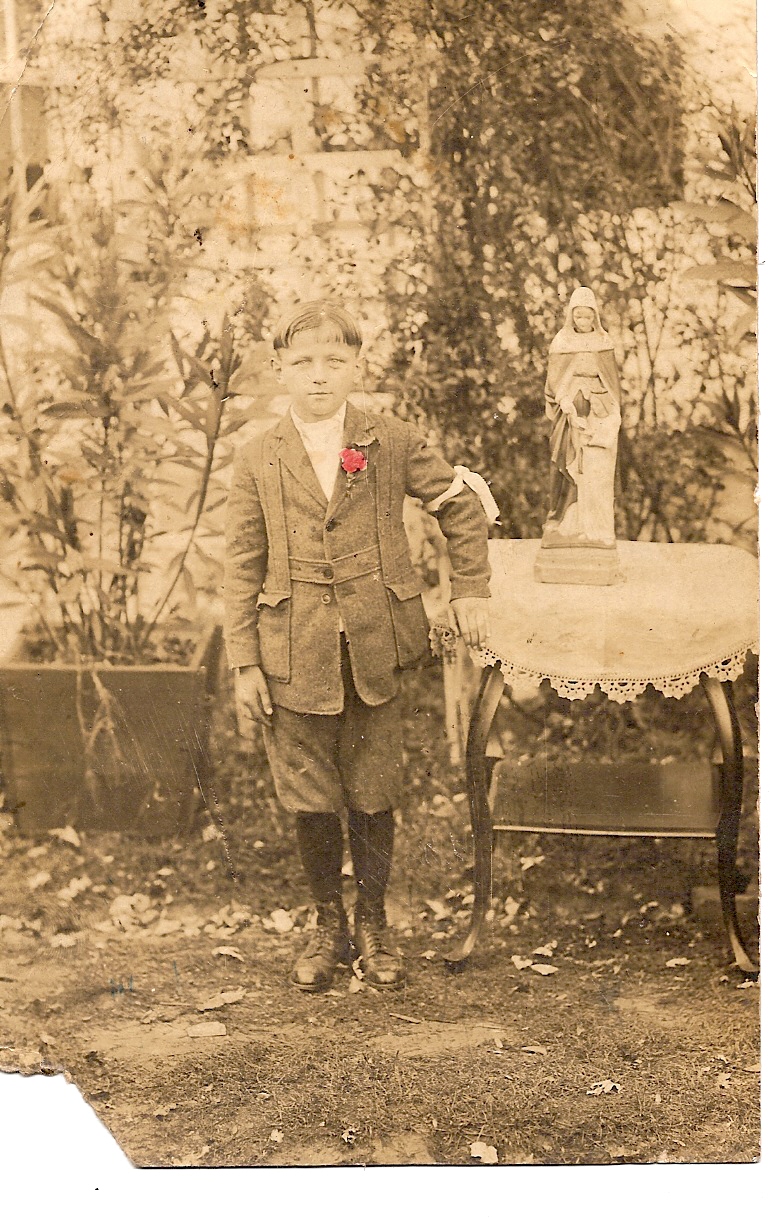
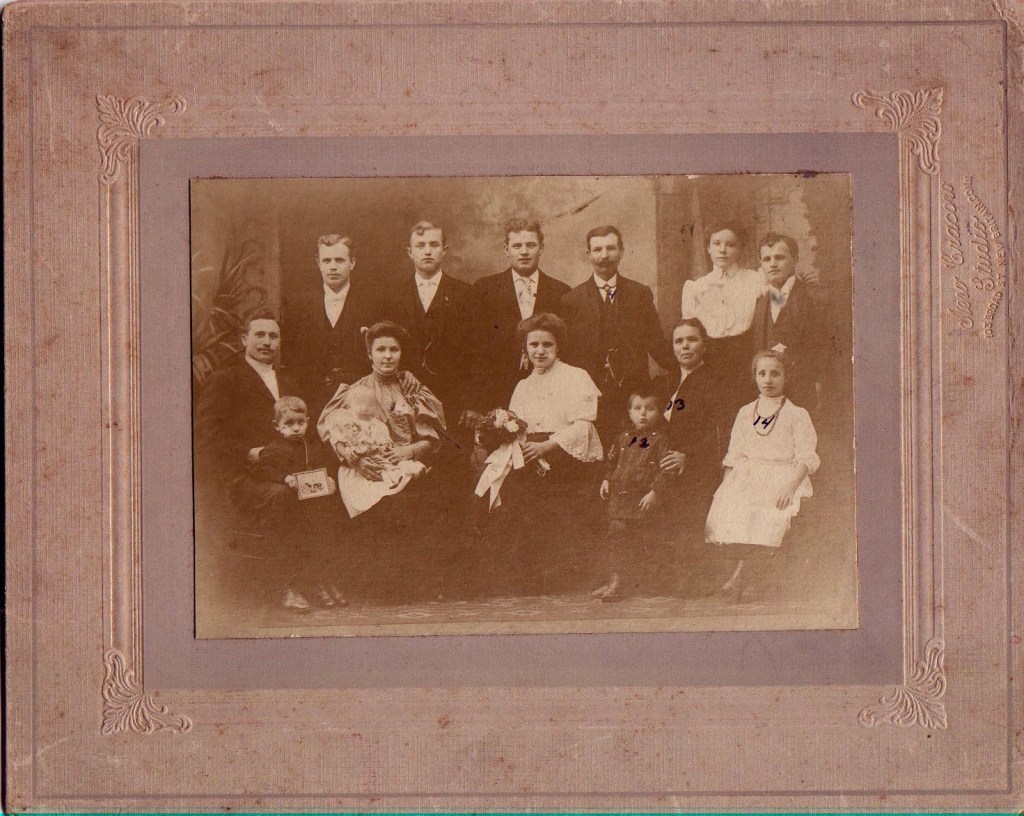
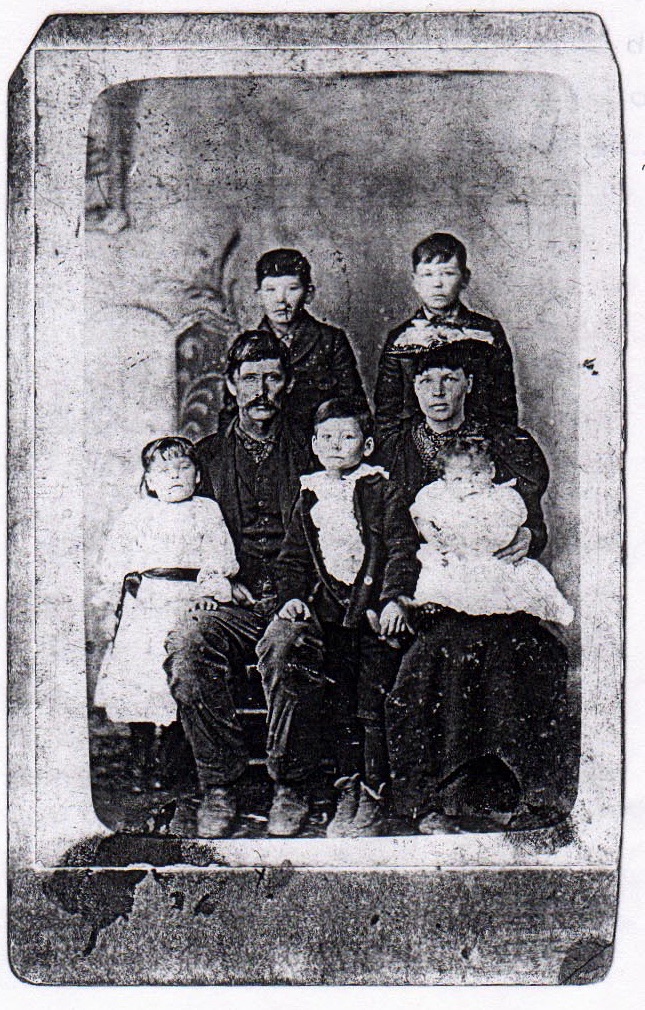
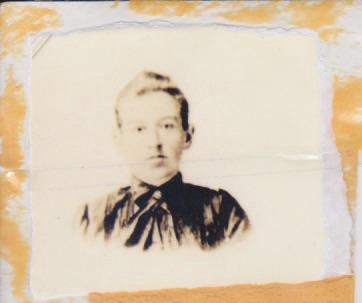
Pictures. I have a lot of pictures! Professionally taken including family groupings from the early 1910s, first communions from the early 1920s, weddings, and family photos collected in multiple albums by my mother growing up in the mid-1920s and early 1930s, and beyond. In addition to those, I have videos from the early 1930s through the 1970s which I wrote about in an earlier post here.
Posluszny Family abt.1910Connie and Betty abt. 1927Eddie Jakiela abt. 1920Ingram Family date unknownJulianna, Konrad, Antoinette abt. 1910
When I started research in 2000, my Aunt Tootsie (Antoinette) was the Family Historian. She was the oldest Posluszny sibling and lived in the family home on Clifton Street from the purchase in 1925 until she moved to a Judd Square apartment in 1989. I often sat with her to discuss the family and the people in the pictures. Dates and seeing how far your lineage stretches back are fun, but my interest has always been the stories and photos. Who they were as people and as a family. Who we most resemble. I try to imagine what life was like in Yonkers and Connecticut in that time frame. I guess that’s why I love where I live so much because this is where they lived their lives.
I’m grateful over the years to acquire more photos from my Jakiela cousins, through my ancestry contacts, and through unexpected DNA matches! I’ll continue to share more pictures and stories as I create some order to my accumulated files and notebooks.
Week 7 of 52 Ancestors in 52 Weeks is all about Immigration.
It’s impossible to focus on just one ancestor because they all left the same region between the ages of 4 and 51 between 1899 and 1912.
My maternal grandmother, Julianna Ingram in 1903 at 16 years old followed by one sister 4 years later and another sister 8 years after that.
My paternal grandfather Charles Jakiela in 1905 at 15 years old without any siblings ever following him. Traveling to Southington Connecticut and shortly after to Palmer Massachusetts to work in the textile mills.
Imagine sending your child, first on a (present day) 14 hour overland trip to get to the port of Bremen Germany. From there, they would board a steam ship to travel to New York and start a new life – without you. Neither Julianna or Charles ever returned.
You couldn’t just pick up a phone a find out how their trip was or are they getting enough sleep, and have they found a job yet?
My maternal grandfather Konrad Posluszny immigrated in 1900 at 16 years old. He had the benefit of uncles already in Yonkers, New York and all his brothers arrives in the next five years. His mother, step father, 2 sisters, and a half brother, arrive 7 years after he did. They were lucky to all be together in the “new country”.
My grandmother Julianna left behind her parents, and 2 sisters and a brother, one or two were born after she left. I wonder how affect they were by the first and second word wars because we do know how Charles’s family fared.
The theme for week 5 of 52 Ancestors in 52 Weeks is “Influencer”.
The definition of Influencer is “a person or thing that influences another”. That person could be none other than my mother, Elizabeth Posluszny Jakiela.
She was born in 1922, the youngest of five children with an age gap of five years between her and her sister.
After high school she went to a business school and learned bookkeeping and worked at one of the several silver factories in the area. She got married while working there and continued to work until pregnant with my older sister. Eighteen months later, she had me and my twin sister.
When I started fourth grade, she went back to work, first for a temp agency and then a permanent job so she juggled family and work.
When my dad purchased the paint store he had worked at for years, she jumped right in to take care of the bookkeeping, heading to the store after her day was done at her paying job.
Even with this, she found time to volunteer at school events, participated in women’s church groups, school groups, and was an assistant troop leader for our Girl Scout troops.
When our church began running a carnival in the early 1970s, she jumped right in to volunteer wherever she was needed. Only a few years went by before she was selected to be the chairman of the event. She never backed down from a challenge and she loved being a part of it and continued to volunteer up until she passed away.
My sisters and I all got married and raised our children, found the time to volunteer in their schools and in our community.
Personally, I went to school to be an administrative assistant and have worked with my husband for 25 years in his remodeling business as his bookkeeper and office manager. I definitely inherited that from her!
My mother will be gone 37 years on April 4th and I know she would be proud of the influence she had on her three girls, and her grandchildren in turn.
The topic for week 4 of 52 Ancestors in 52 Weeks, is “Witness to History” and for this there was no other story to tell but this one.
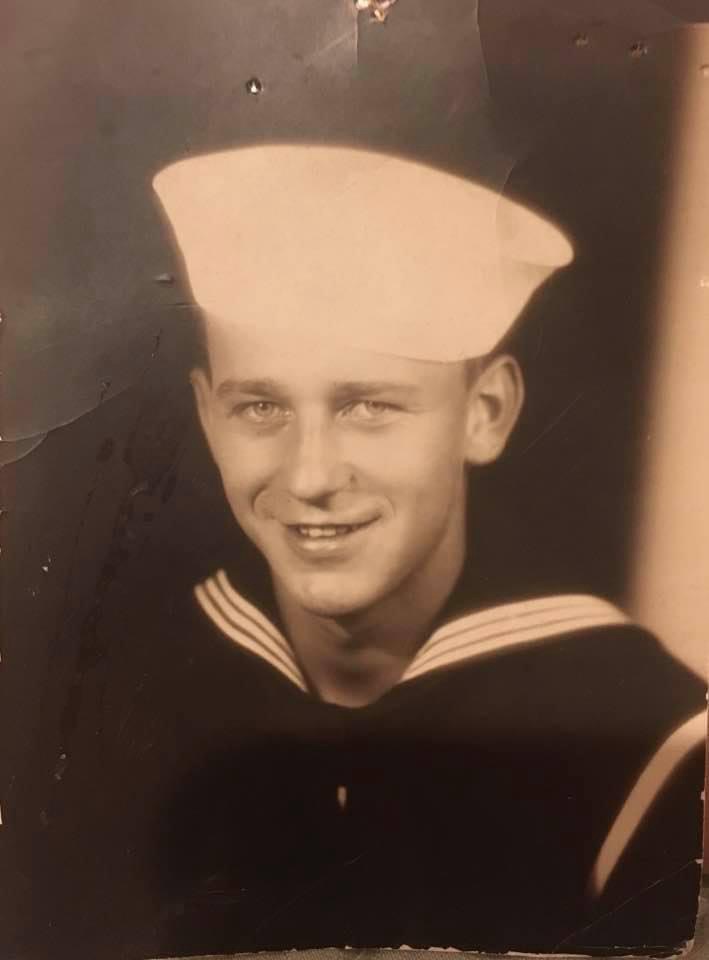
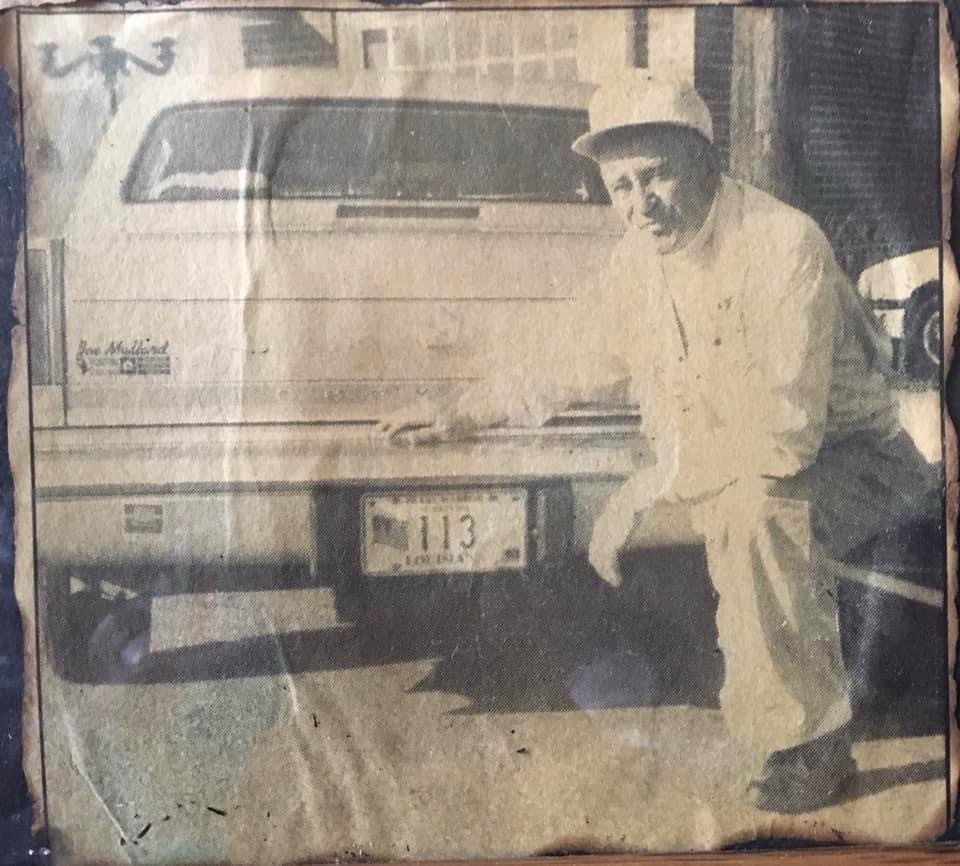
My uncle, Walt Jakiela was 19 years old, fresh out of Navy radio school as a seaman second class, and in Hawaii for only three weeks on the morning of December 7, 1941.
Walter Edward Jakiela 1941
As Walt walked out of the barracks, he noticed smoke billowing from burning sugar cane fields. He didn’t think much of it, and headed into the hanger.
Not long after that, the hanger began to shake and there were muffled sounds of exploding bombs as the Japanese bombers struck the ships in the harbor. He and his mates rushed out of the hanger to see the bombs and torpedoes dropping on the ships, which were like sitting ducks on the water. Fighters strafed the decks of the ships, and sailors were mowed down from above. At first, he thought the planes were Russian and then he saw the rising sun emblem of Japan.
There was a lull in the attack and he said that’s when he really became scared.
When the second wave hit, some of the soldiers had the presence of mind to set up machine gun batteries to shoot at the planes. Walt shot at quite a few but he didn’t think he shot any down.
He said the second wave was more like a clean up and the Japanese were picking off the targets that weren’t destroyed with the first wave. Planes which never got off the ground, barracks, ships, boats, and servicemen were shot at by planes flying through the thick smoke which Walt said made it feel like a tunnel, not knowing which way was which. All around were bodies of his fellow servicemen, injured or killed in the attack.
After the second attack, Walt helped with the treatment of the injured soldiers. He went along and marked the boots of the soldiers who had been given morphine injections. He and the rest of the survivors were asked to volunteer for mortuary duty but he chose instead to volunteer for the dangerous duty of flying out in search of Japanese planes. He just couldn’t handle seeing all the death.
“It changed my whole life” he said when speaking about his experience 50 years later.
When he spoke about the attack, he said it wasn’t exactly a surprise to the higher ups. They knew something was coming, they just didn’t know when.
He was a radio/gunner for U.S. Navy Patrol Squadron 23, which was made up of 12 patrol bomber seaplanes called “Catalinas”. They were used primarily for attacking submarines. His squadron was assigned to 12 hour daily search missions for over a week, but the men were never informed what they were searching for and the missions ended on December 6th.
Walt had joined the Navy in February of 1941 rather than be drafted into the Army and he stayed in the Navy for another 20 years. He saw the entirety of World War II as well as the Korean Conflict from various bases around the world.
Pearl Harbor wasn’t the only time he was a witness to history. In 1945, he was stationed at Saipan air base when the Enola Gay delivered the first atomic bomb on Hiroshima on August 6th. He said when the crew of the Enola Gay landed, its crew members said, “you can go home now.”
He earned two air medals with gold stars for his 50-plus missions throughout World War II, as well as the rank of chief petty officer, before his retirement in 1960.
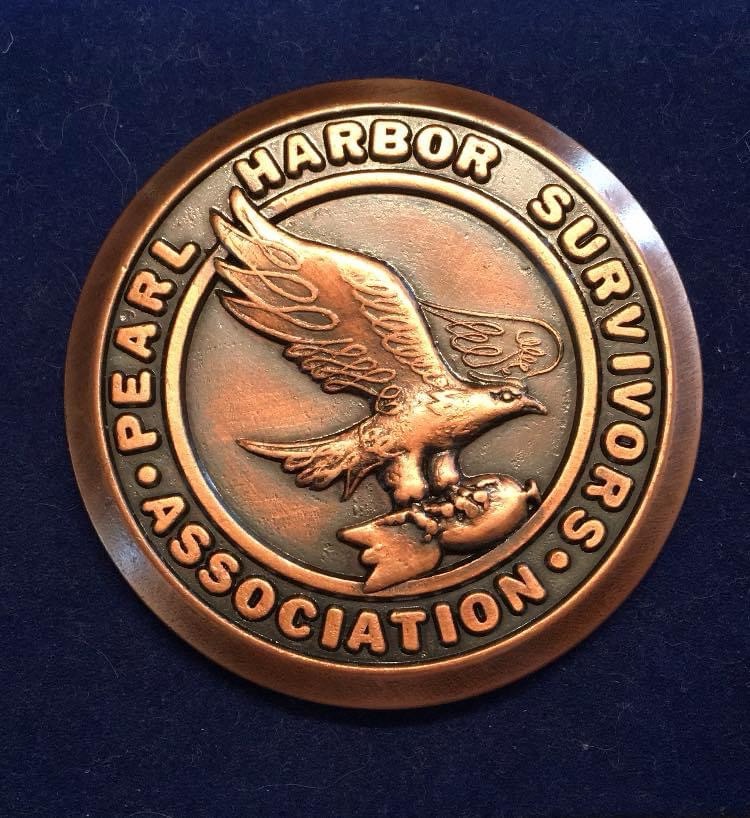
Walt and his survivor license plateA special group of people
After he retired from the Navy, he went to work for Grumman Aircraft company. He started as a field service representative, then a worker with the space program, and then a part of the program which developed the F-14 Tomcat fighter jet.
This information came from a newspaper article he sat for in 1991.
My Uncle Walt retired from Grumman in 1980 and he and my Aunt Eleanor moved to Ruston Louisiana to be near his older son. He died in 1997 at the age of 75.
I likely only met him a few times, but I wish I had known him. He was so young to experience what he did and I’m sure it did change his whole life. He’s a hero to me.
This subject is number 3 on the list of “52 Ancestors in 52 weeks for 2024” created by Amy Johnson Crow. Week wise, I’m a little late to the party, but who cares – as long as I show up!
So my favorite photo is this one:
John and Steve at Baldwin Pond
This is a photo of my dad, John, and his oldest brother, Steve. It was taken approximately 1936 when my dad was 12 and Steve was 23. Look at the smiles, look at Steve’s arms over my dad’s shoulders holding him close, and look at my dad’s hands reaching back to hold his brother’s legs.
If my timing is correct, this was about a year after their father was killed in a hit and run accident not far from home. Eight years previous to that, in 1927, their mother died from pregnancy complications when my dad was not quite 3.
That hit and run left 5 children, ages 23, 21, 15, 14, and 12 orphans. Life was definitely not easy for them before their father died, but it got worse the night the policeman banged on their door to tell them their father was dead.
Steve, at 23, became their guardian. Family stories say the priest at the church they attended, St. Peter and Paul’s Catholic Church, offered to be their guardian (in name) in the event there was an attempt to break them up. John and his brother Walt were alter boys and Helen cleaned the alter during the week so he knew them well. I don’t think it ever came to that.
They continued to live in the little brown house on Prince Street in Wallingford and Steve had a job as a meat cutter nearby. In 1937, Steve married Florence whose family lived on the corner and he brought them into the marriage.
Steve was a father to all of them and I’m sure it was difficult as a newly married couple to have teenagers in the house so soon! Life wasn’t always easy but he and Florence made a home for them.
I see such true affection in their expressions and that’s what makes this my favorite photo.
Week 2 of the 52 Ancestors challenge is about Origins.
I didn’t know a lot of my family’s origins growing up. I knew my maternal side was German and my paternal side was Polish. My mom’s mom spoke German, and my dad took us to the local PNA for polish lessons for a few years. It wasn’t until I started my ancestry work that I realized how convoluted it all was!
My paternal side was definitely Polish, but it was in the Galicia region which was like the shifting sands of time. Were they Polish? Maybe Austrian? If they were Austrian isn’t that sort of German? Evidently, who ever conquered them at the time, that’s what they were.
My maternal side was “German”, but they were also in the Galicia region. And why did my Aunt Tootsie say “dumb Polaks” if they lived in the same area?
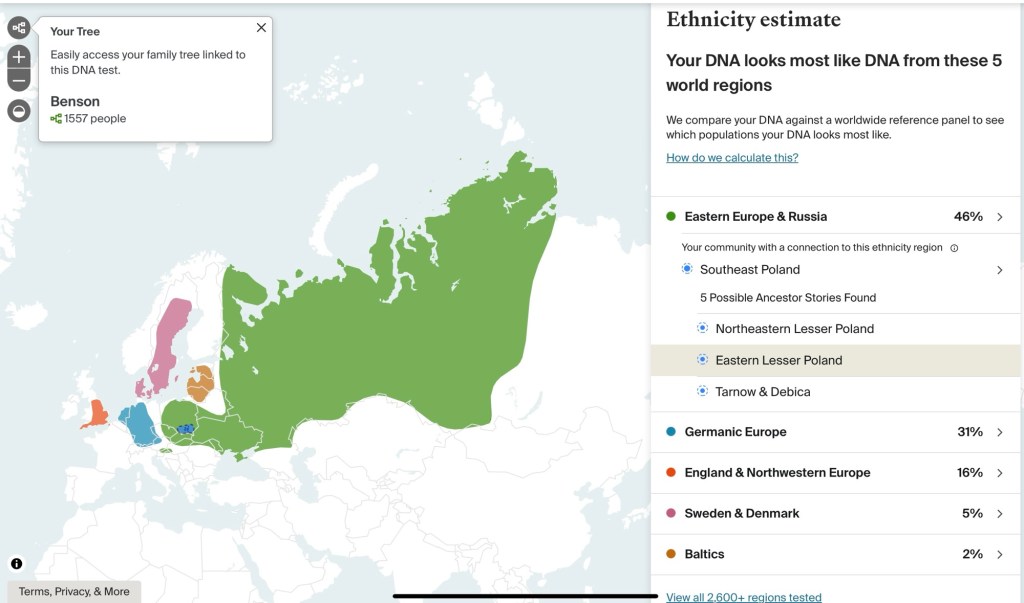
I had my DNA tested and here are the results:
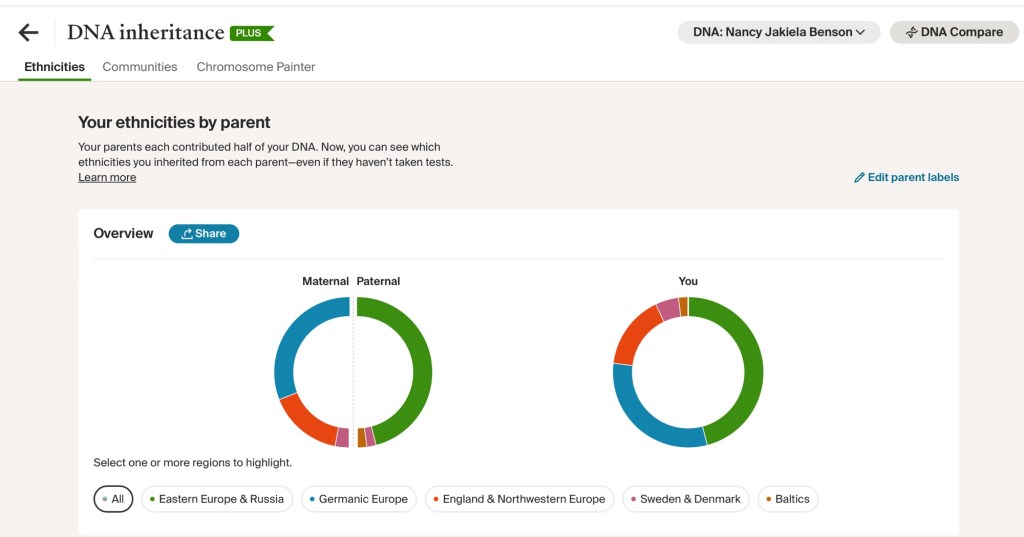
Ancestry DNA ResultsMy ethnicities per parent
I was fascinated to see that my material side had NO Eastern European, so yes, my material side was mostly Germanic Europe. Both sides had a bit of Sweden and Denmark which makes me think of the Danes and Vikings!
Possibly the stories I’ve read of German being paid to go to the Galicia region “to teach” the Polish how to farm has some weight behind it. After all, my maternal side were farmers.
Something interesting on my maternal side was the England and Northwestern Europe. Mostly the England because as you might remember, and if you don’t, I talked about the discovery of my biological grandfather here .
With new family, there is always new information to share and what this cousin shared was quite a shock – my 35th great grandfather is King Alfred the Great! He was the most famous of the Anglo-Saxon kings. He prevented England from falling to the Danes and he promoted literacy and learning. Fierce and educated – it certainly carried down the line!
It’s fun to take a dive into the DNA results looking the results and thinking about my origins.
This is the first of my posts for 52 Ancestors and the topic is Family Lore. The moment I read it, my mind went back to the year 2000 when I started my journey to research my Jakiela, Liro, Posluszny, and Ingram family history.
The definition of Lore is: “a body of traditions and knowledge on a subject or held by a particular group, typically passed from person to person by word of mouth.” I don’t think that rings any truer than for my Jakiela side of my family.
Charles and Antonia, my grandparents married in June of 1912. They had two children, Steven in 1913 and Edward in 1915 by the time Charles headed off for World War I in 1917. When he returned, they had three more children, Helen in 1920, Walter in 1922, and John (my dad) in 1924.
The short version: in 1927, Antonia died from a miscarriage and after a move from Southington to Wallingford, CT, Charles died in 1935 in a hit and run accident as he walked along the side of a road at night. That second family tragedy made 22 year old Steven and four siblings orphans. What would they remember of family stories and traditions? What would they pass down to their children?
Charles and Antonia JakielaAntonia Jakiela with John
The children of my Uncle Steve have give me the most information. As the oldest, Steve would have been “the keeper of family possessions”. My Uncle Eddie and my Auntie Helen both gave me information in sit-down interviews I did with them and I would ask my Auntie Helen all sorts of questions to get her talking when I would take her to the grocery store or a doctor’s visit.
Here is some of that family lore:
My grandmother Antonia and her sister Aniela in Massachusetts were twins.They were NOT twins, in fact, Aniela was born in 1871 and Antonia was born in 1890.
Charles had been a writer for a Polish newspaper in Chicago before moving to Southington. No, Charles’s destination from Poland was Southington but there’s no record he settled there before heading to Palmer, Massachusetts to work in the textile mill where he met Antonia. Now, he might not have been a newspaper writer but according to Auntie Helen, on a regular basis he would write to the government asking for his pension from WWI to be increased.
Charles was injured in WWI when a forgotten ammunition exploded under their train as they were heading home from France and he had a scar on his head from front to back. I don’t know the truth of this, but it was relayed to me by Auntie Helen. He was flung into the river and would have drowned but he was saved by fellow soldiers.
Steven left school after his grammar school graduation, after his siblings had been scattered among relatives, and gathered them together to live as a family again. Very “Party of Five”-ish but no. The story might be mistaken for what happened when their mother died in 1927. Steve and Eddie stayed with their father. Helen and Walt went to Uncle Joe Mikula who was the widower of Antonia’s sister in Palmer Mass. John was not yet 3, and he went to the home of his godmother, Amelia Marcieniec in Southington. Once Charles, Steve, and Eddie got settled in Wallingford, Charles went and brought the younger siblings back home.
Steve, at 22, kept the family together. The priest at St. Peter’s and Paul Church in Wallingford said he would sponsor them if anyone tried to break the family up. The first is very true. Eddie was 20, Helen 15, Walt 13, and John turning 11. The family remained together. John and Walt did spend time in Palmer Massachusetts with their Uncle John in the summer, and their cousins Walt and Stanley Mikula were known to have spent time in Wallingford. Eddie got married in 1936 and left the family to live in Meriden. Steve and Florence Liedke who lived on the corner of their street, got married in 1937 and Helen, Walt, and John moved in with them.
Walt, Uncle Joe Mikula, JohnAntonina’s grave in Southington
Steve “fibbed” his way into a job as a meat cutter at a market. The 1930 census when he was 16 says that he was not attending school and was working as a salesman at a meat market, so there might be truth to the story he left school after 8th grade. Very possible, as his father had trouble keeping his jobs. It’s likely that’s how he got the job and he went on to become the premier meat cutter at Caplan’s Market in Wallingford until he retired. The man knew his cuts of meat!
Cousin Steve’s Liberty Deli in Southington was in the same location that the family lived at in 1918. Oh yeah, that’s true! Not really family lore, more of a Fun Family Fact. 31 Liberty Street.
We are of Polish royalty. Well, I can’t deny that all we Jakiela girls are Queens, and Jakiela in Polish is Jagiello (Ya-GAY-wah), and The Jagiellon dynasty, family of monarchs of Poland-Lithuania, Bohemia, and Hungary became one of the most powerful in east central Europe in the 15th and 16th centuries. It was ruled by King Wladislaw II Jagiello and Queen Jadwiga. So maybe there is some truth to that tale.
This is some of the family lore that has been accumulated over the 23 years since I first started researching my family. It’s been fun putting it all in one place and I hope you enjoy it!
I’m starting, and hopefully I will complete, a “challenge” called 52 Ancestors in 52 Weeks #52Ancestors.
I’ve been spending more time on my other site Thoughts From the Passenger Seat writing about thoughts that pop into my head, or answering the daily prompts. It’s easier! I don’t have to dig through the paperwork or get frustrated searching on Ancestry.
But I miss it….and I bet you do too!
Starting this week I’ll be writing one story a week based on the prompt provided. It won’t always be dates and facts and it could be about any one in my family – maybe even you!
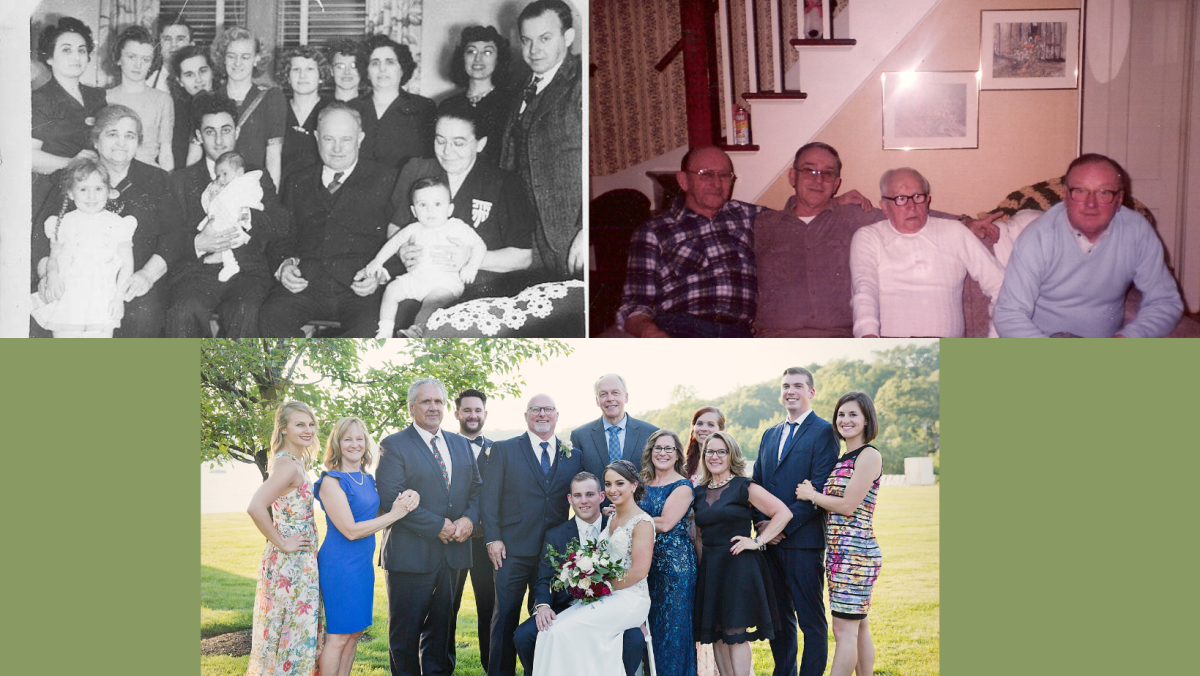
Posluzny family c. 1909Joe Mikula with Walt and John JakielaGalloway Family c. 1910Katherine Duy EngramJulia, Konrad, and Antoinette Posluszny c. 1909John, Walt, Steve, Ed Jakiela











 It's All About Family