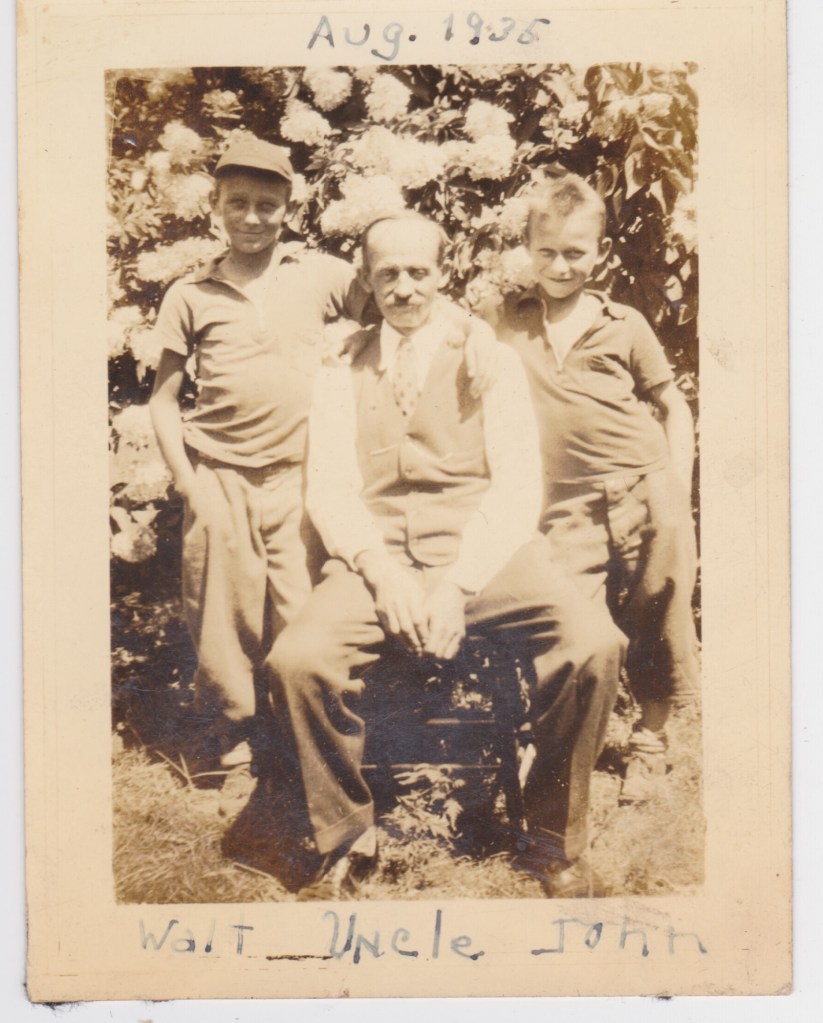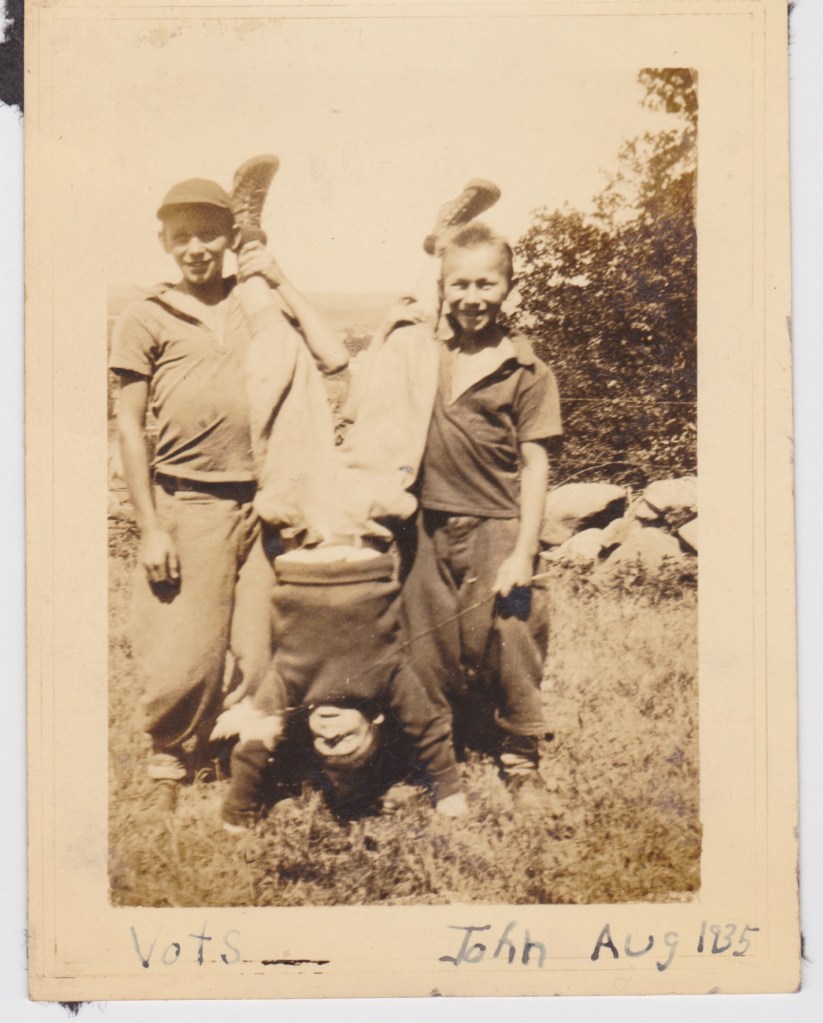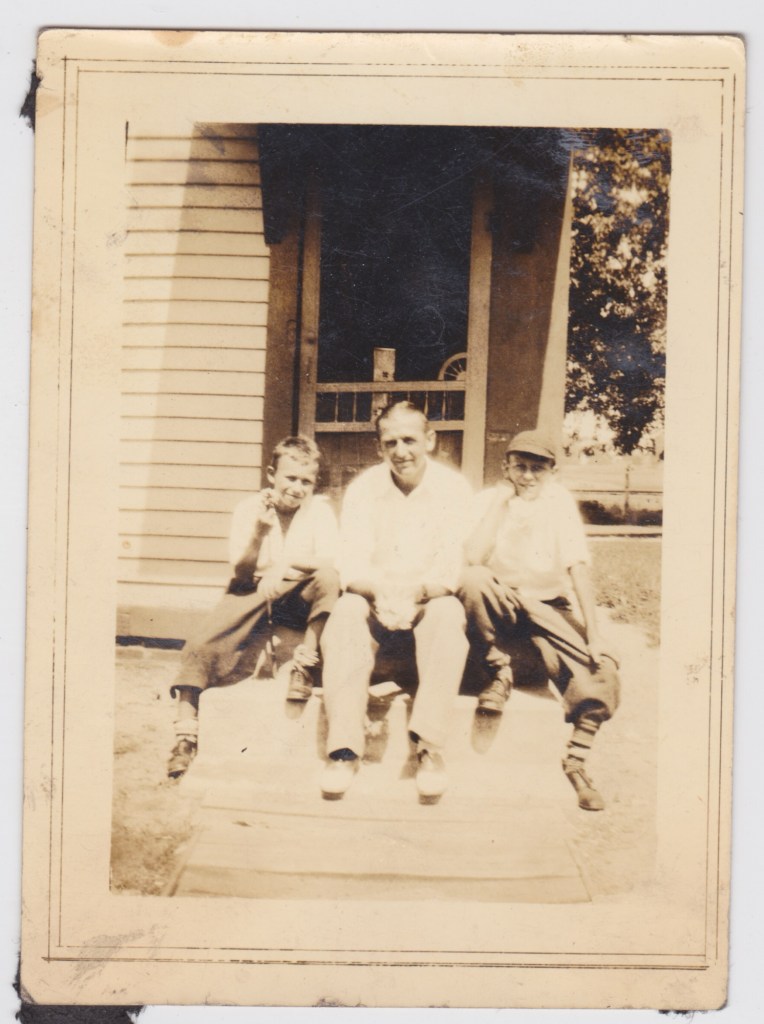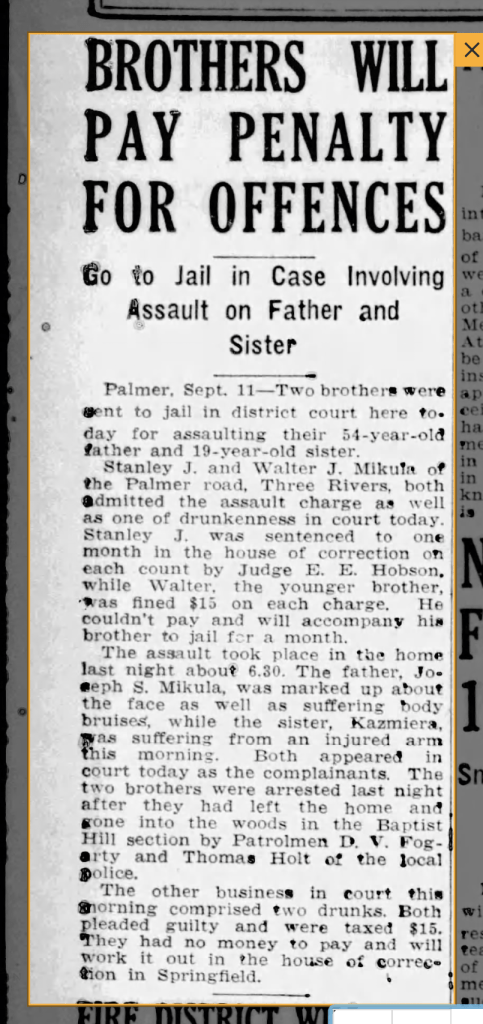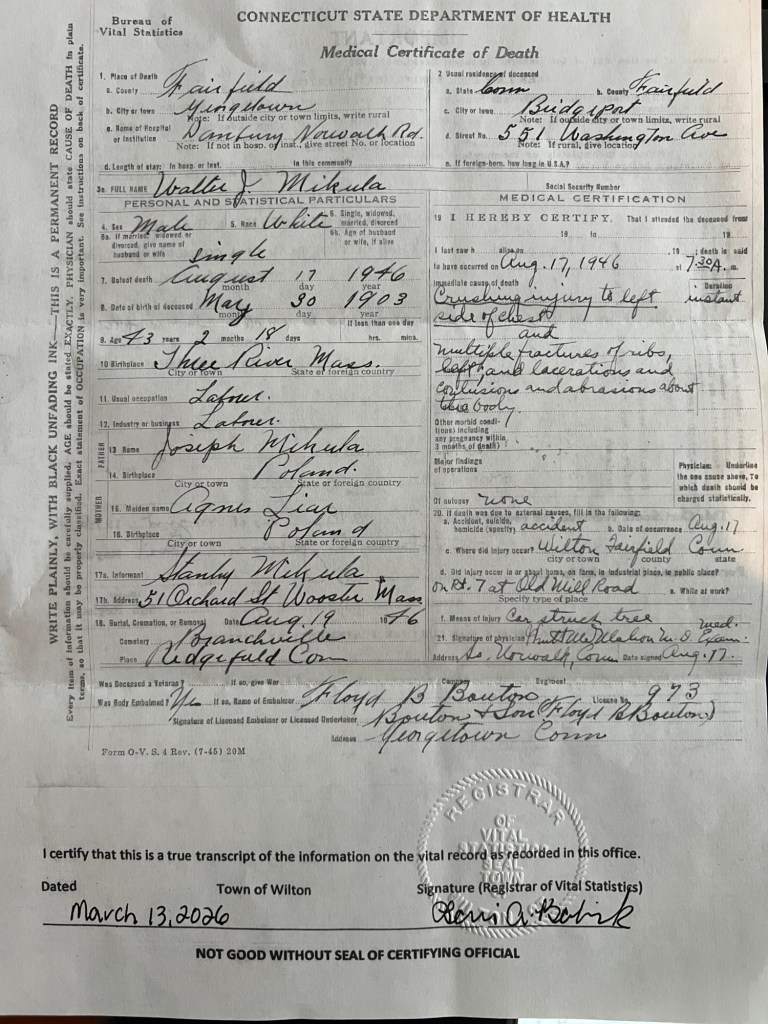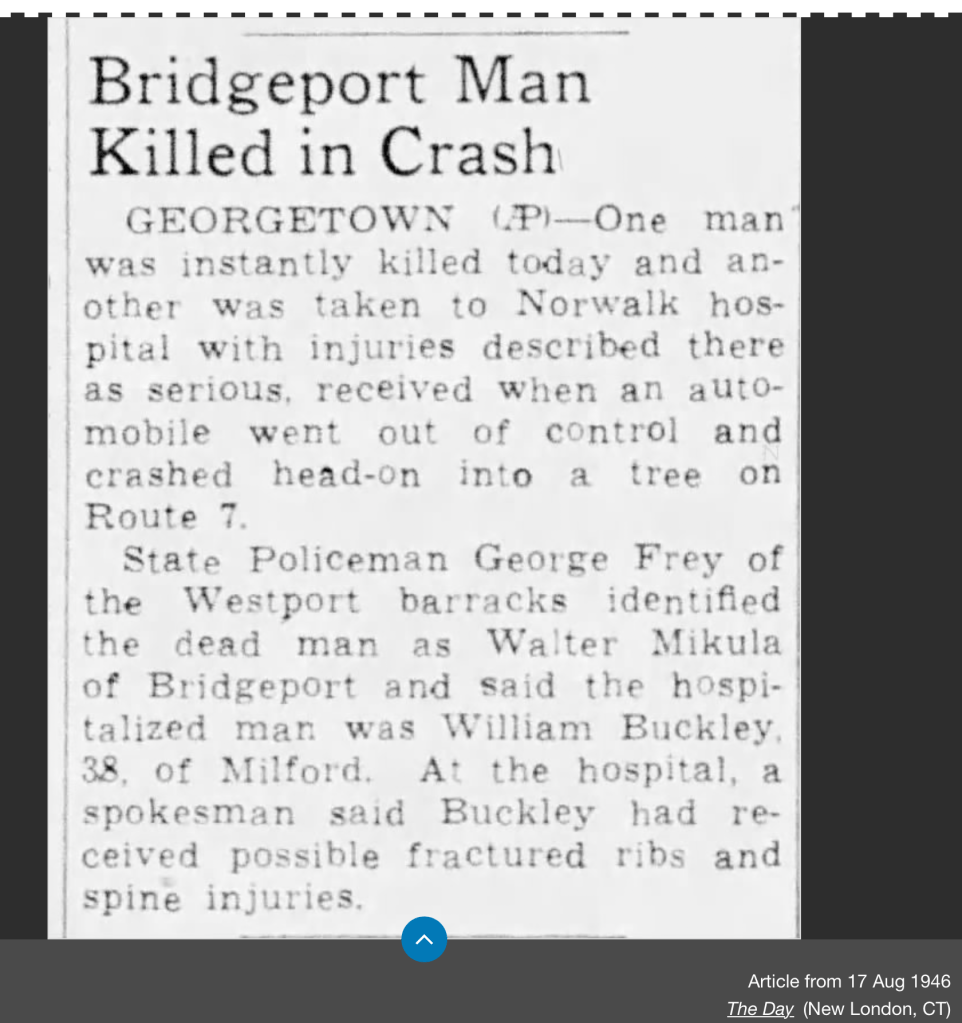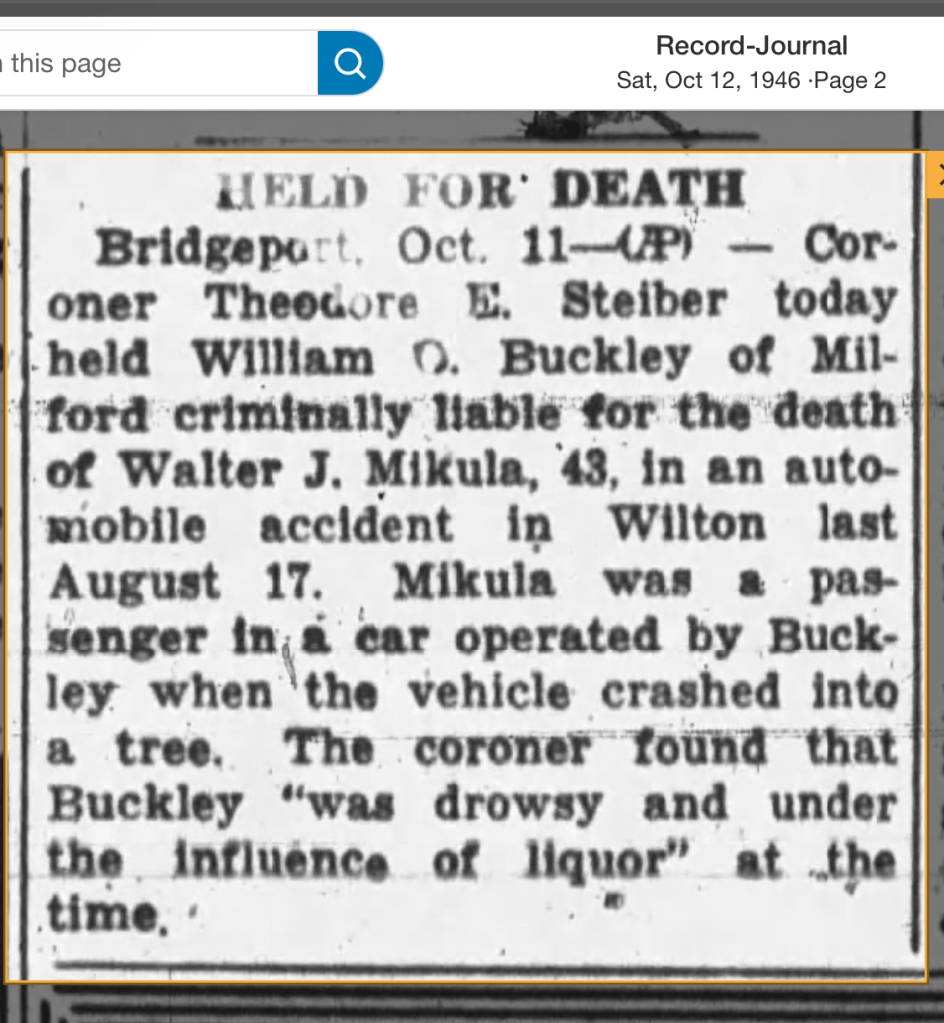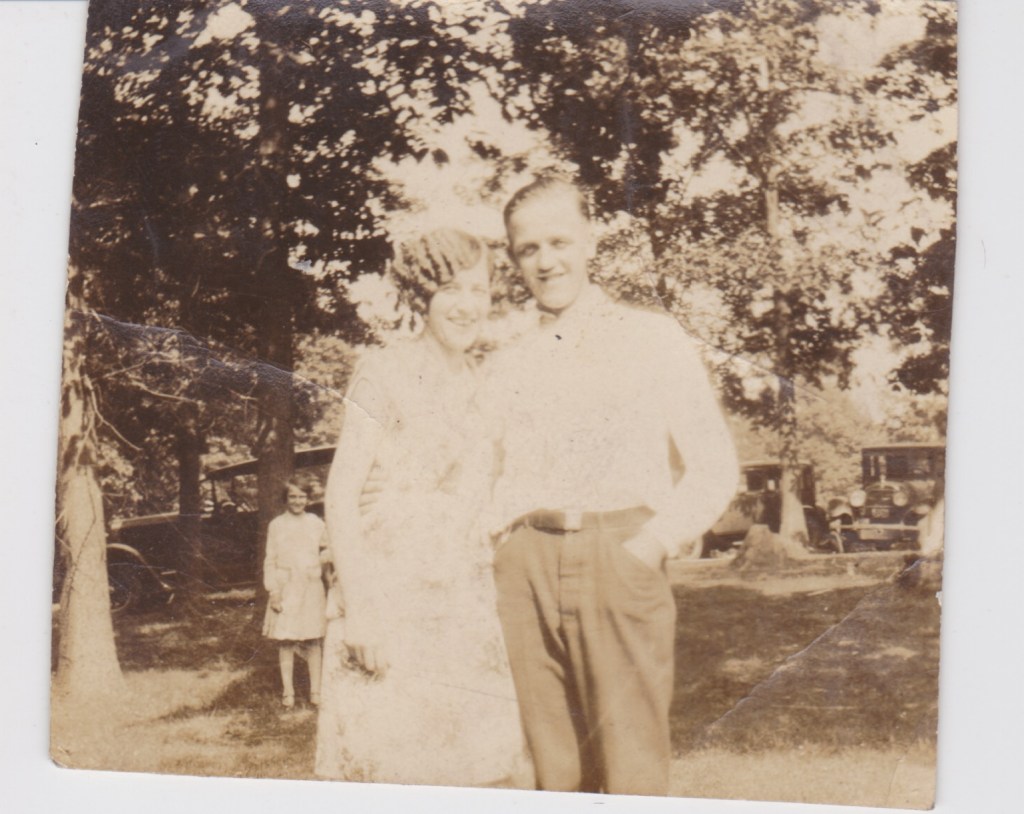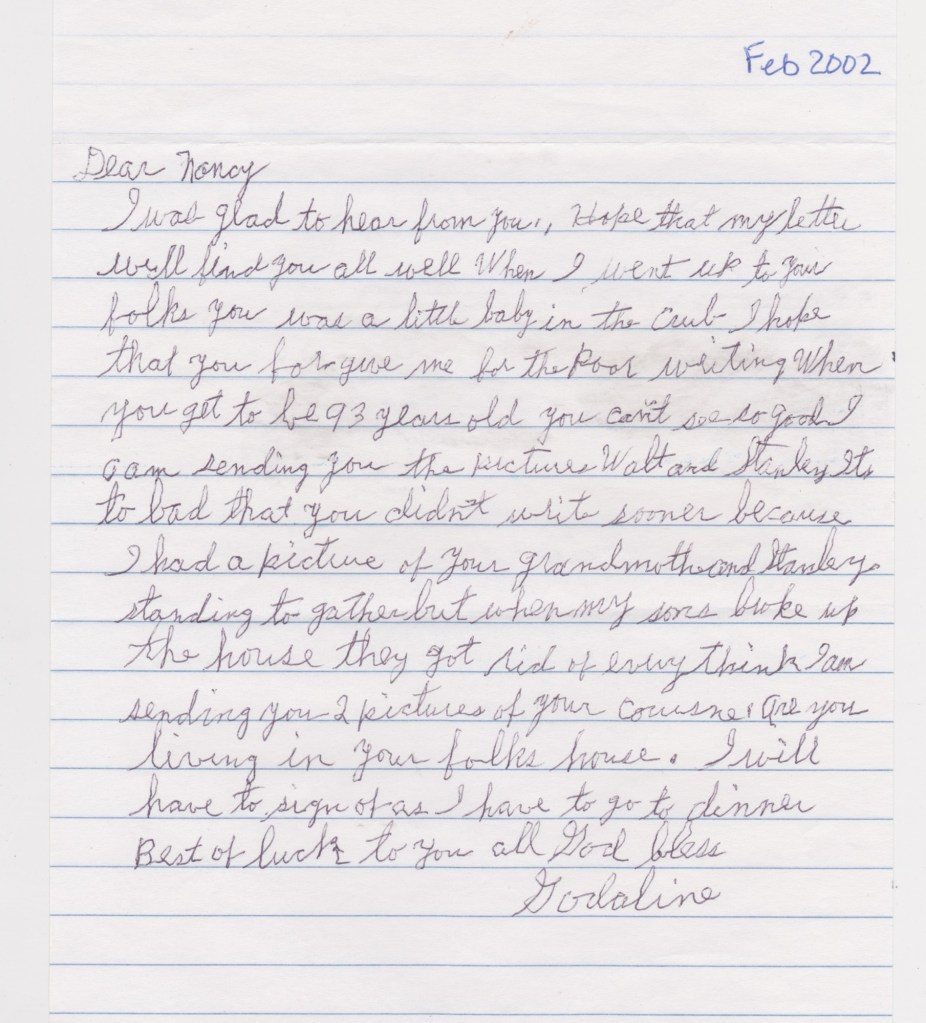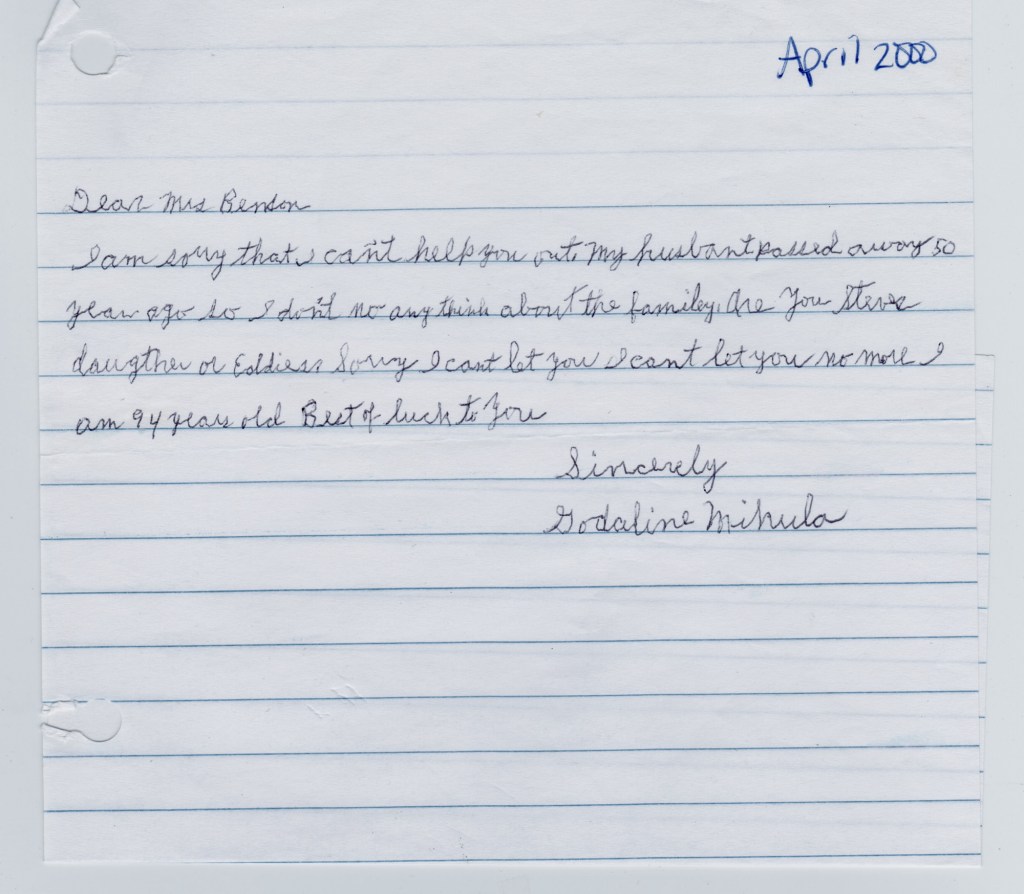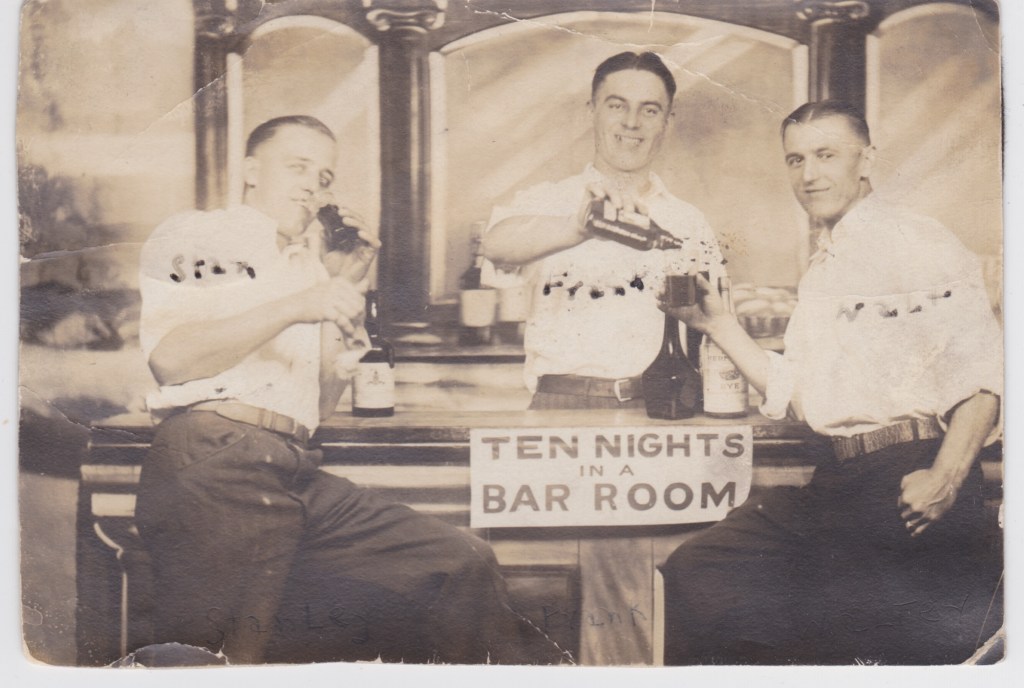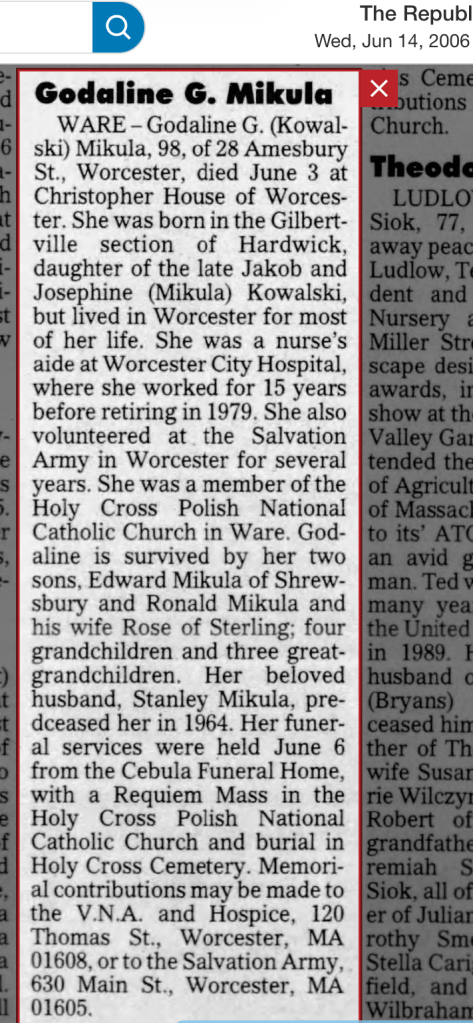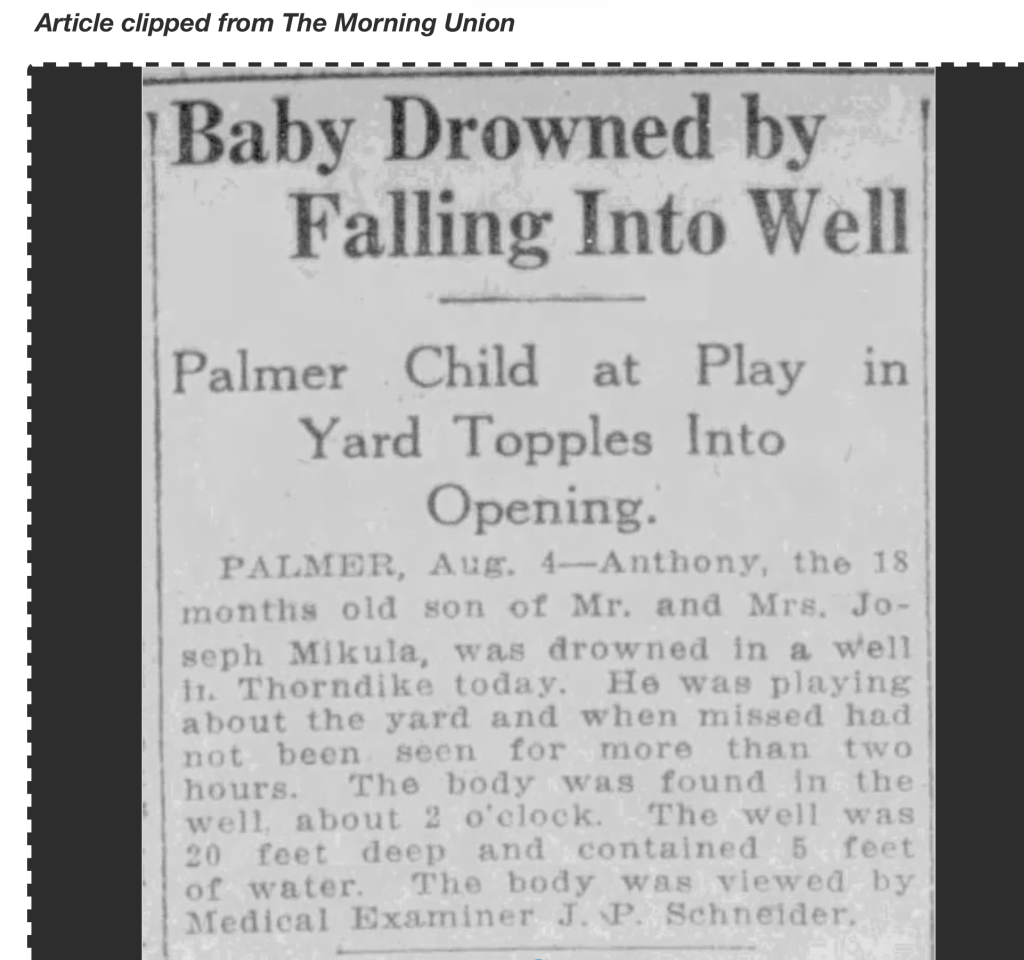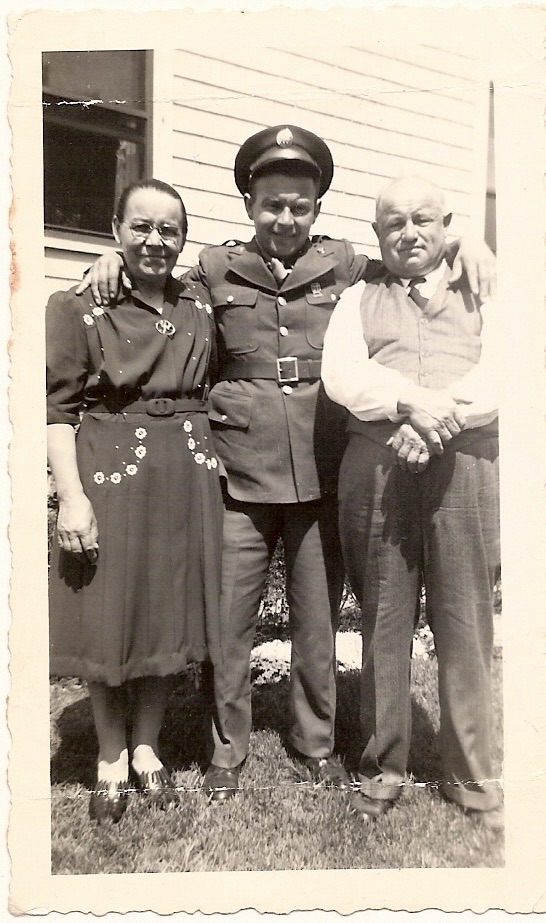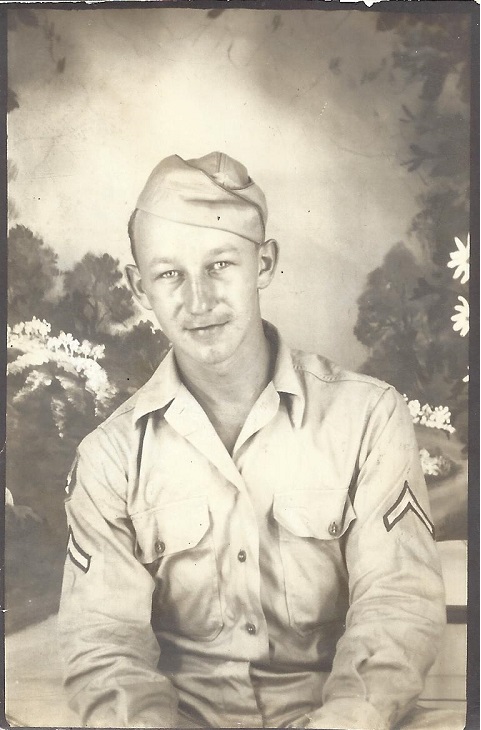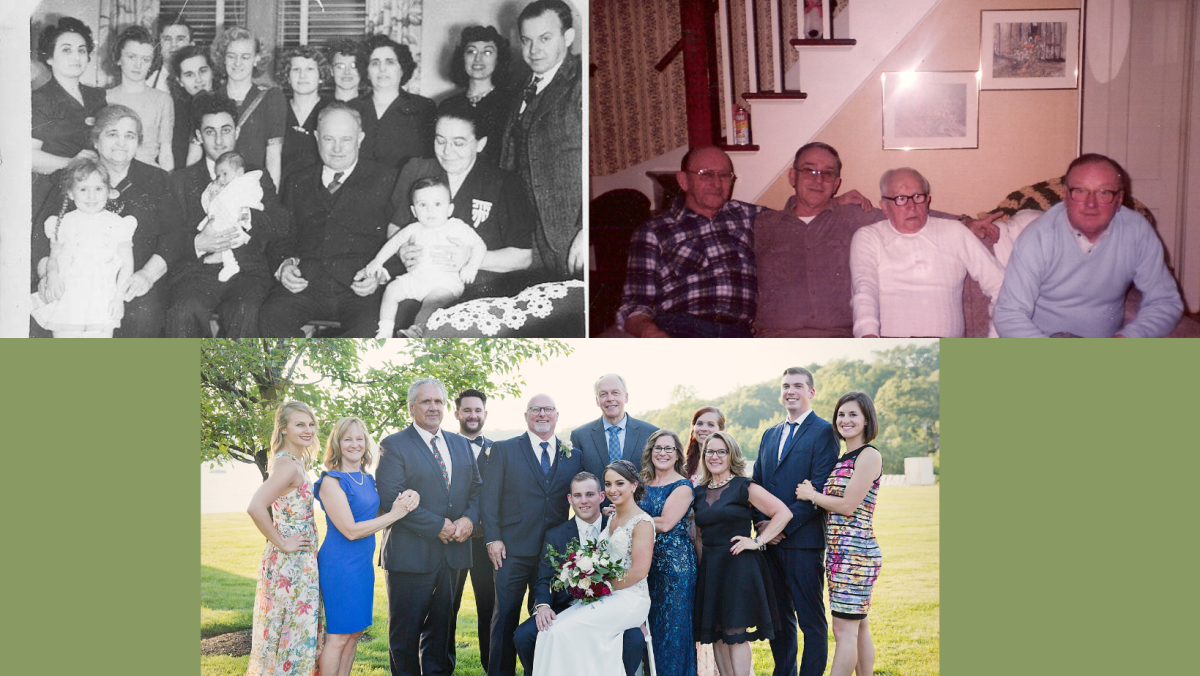
She died in the early morning hours of April 2, 1927. Alone in her hospital room while her husband and five children slept in their nearby apartment.
She knew something was wrong the previous afternoon. She sent her 12 year old son for the midwife and then went to the hospital.
“She’ll be fine” is what they told her husband when he left the hospital that evening, only to be alerted by the grocer with the neighborhood telephone.
Her obituary said, “She was very well and favorably known to a large circle of friends among the Polish residents of the town”. Small comfort for her family.
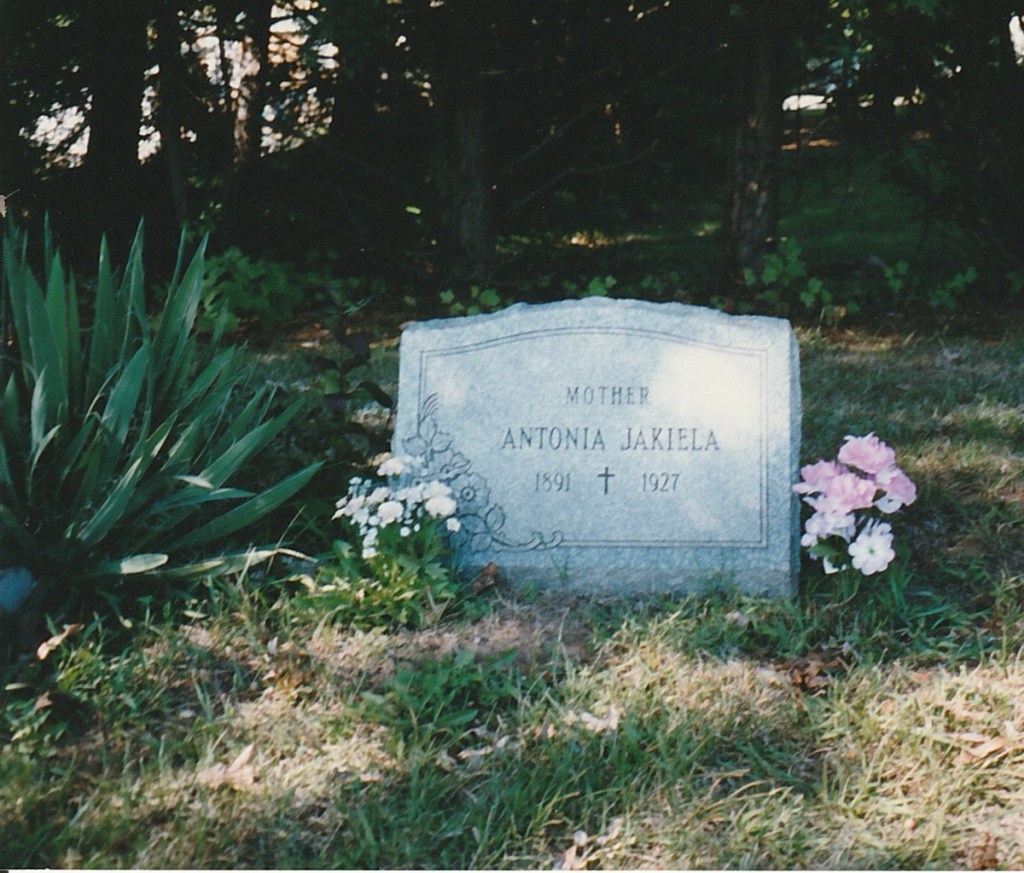
She was buried in St. Thomas Cemetery in Southington on April 4th. Her husband carved a wooden cross for her grave and mourned her death until his in 1935.
Years later, her son, Edward, who, at her request, stayed home from school that day, had a headstone made for his mother.
St. Thomas Cemetery, Southington CT, Section 12
Her husband was never the same. Two of the younger children went to an uncle in Massachusetts and the youngest, to his godmother in town. When he and his older sons found a permanent place to live in Wallingford, he brought everyone back together. But how many months had gone by suddenly without a mother and then a father?
I try to imagine what their lives, and ours, would have been like if she lived long enough to watch her children grow up and to know her grandchildren. Would we call her Babcia? Would she teach us to speak Polish? Would we tease her about being so short and would my boy cousins rest their arms on the top of her head trying to be funny. Who would be her favorite child? Who would be her favorite grandchild?
The week 31 topic for 52 Ancestors in 52 Weeks is End of the Line. This story will not go in the direction you automatically think of when hearing “end of the line”.
If my teacher was putting the class in order of height, “Nancy, you go to the end of the line” would not come out of her mouth ever in 8 years at Holy Trinity School. Only if I was being separated from my sister or friends because I couldn’t stop talking!
My ancestors did NOT bring the height to my family. At the time of their ocean voyages, my grandfather Charles Jakiela, at 17 was 4’9”. My grandmother Antonia Liro, at 21 was also 4’9”. I have no ship manifest for my grandmother, Julianna Ingram, but her sister Mary’s record says she was 4’8”. My biological grandfather, Jacob Engram Jr, is listed as 5’9” on his WWII draft registration card. He’s a jolly green giant compared to the others.
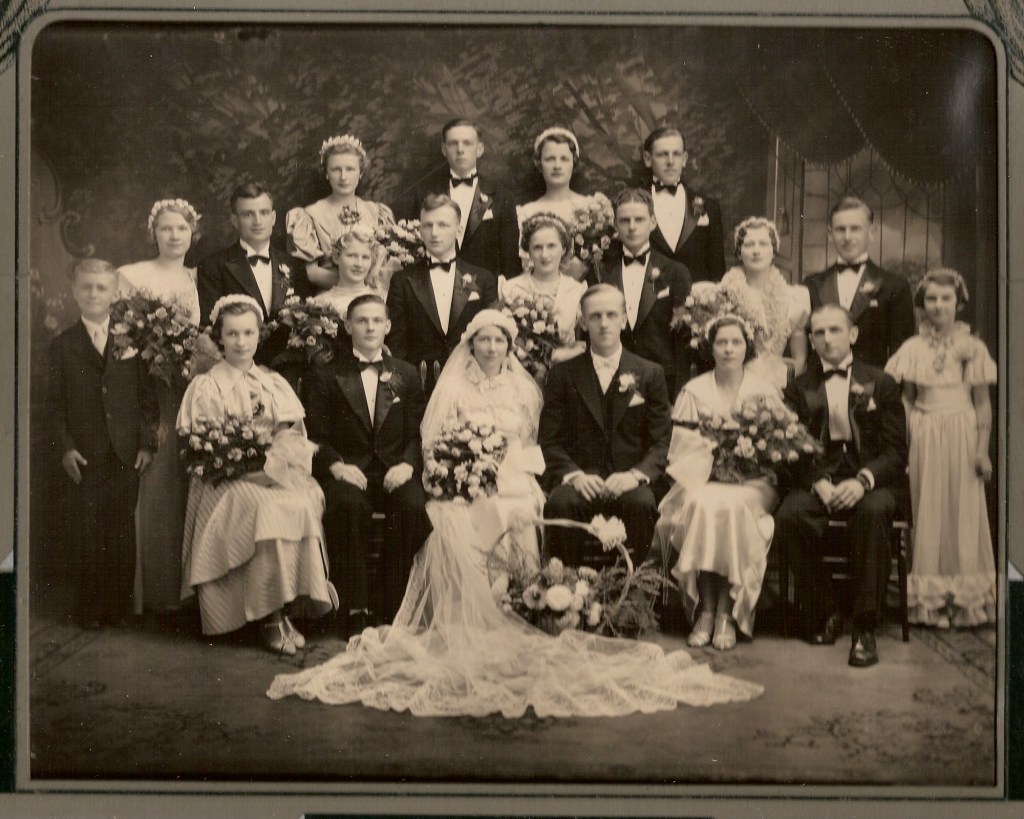
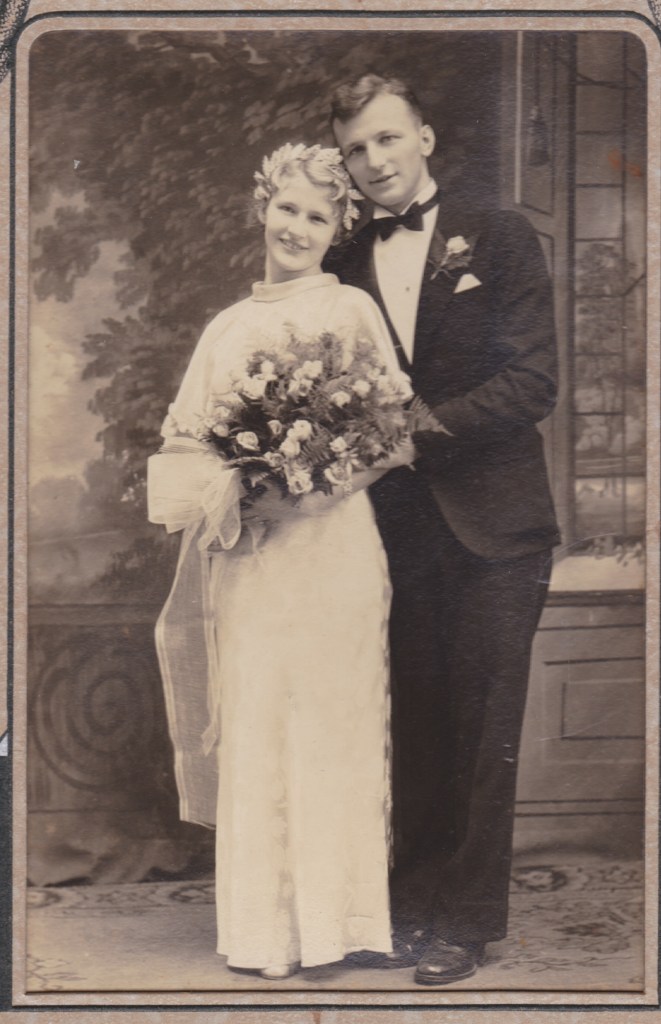
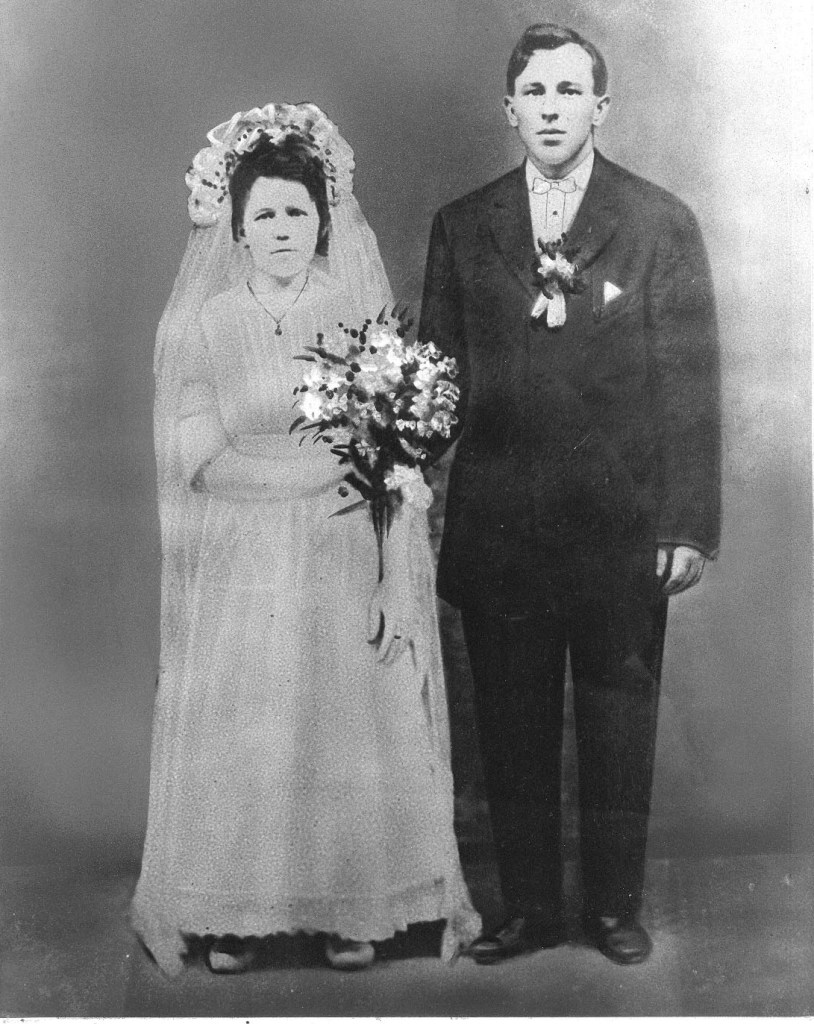
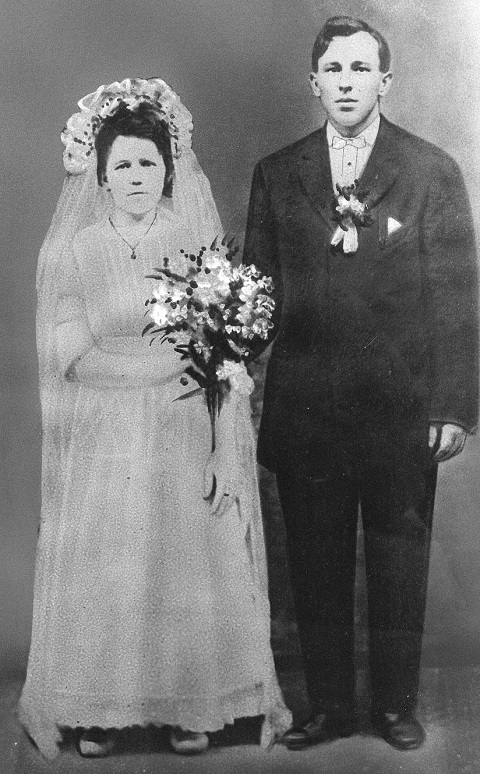
The height issue is evident in Charles and Antonia’s 1912 wedding photo which looks like they put their heads into cardboard cut outs of a bride and groom.
Charles and Antonia Jakiela June 24, 1912
Their four male children ended up between Steve at 5’5” and Walt who reached 5’9”. If his parents had been alive when he registered for the draft, he would have towered over them by a foot!
My dad, John Jakiela, was 5’6” and my mother was 5’3”. I always say, “if I wasn’t born a twin I bet I would have been taller!” But, in all seriousness, I’ll take my twin over the height.
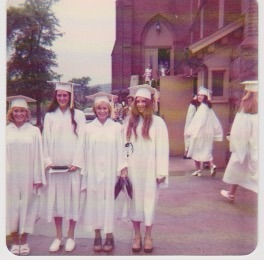
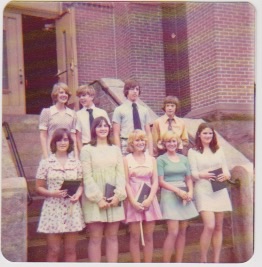
2nd and 3rd in line (Dana Smith leading the way)Gail, Anne, Nancy, MargaretNancy, Janice, Gail, Mom and Dad8th grade graduation – Bernadette (also height challenged), Carol, Gail, Nancy, Ruth, Maureen, Michael, Jim, Ralph
Janice, at 18 months older, always had 2-3 inches on us. Just enough to not have to hem every pair of pants she got! Gail and I had a 4” growth spurt in 6th grade and except for a few more inches between then and 18, we were done at 4’11”. In standing in a line by height, we’re forever in the front and the shortest of all the relatives.
It pays to marry up! All five of the next generation are over 5 feet and the two of the next generation look like they will be able to take their place at… the end of the line.
The week 30 topic for 52 Ancestors in 52 Weeks is Boats. I’m a week late, will try to get back on track!
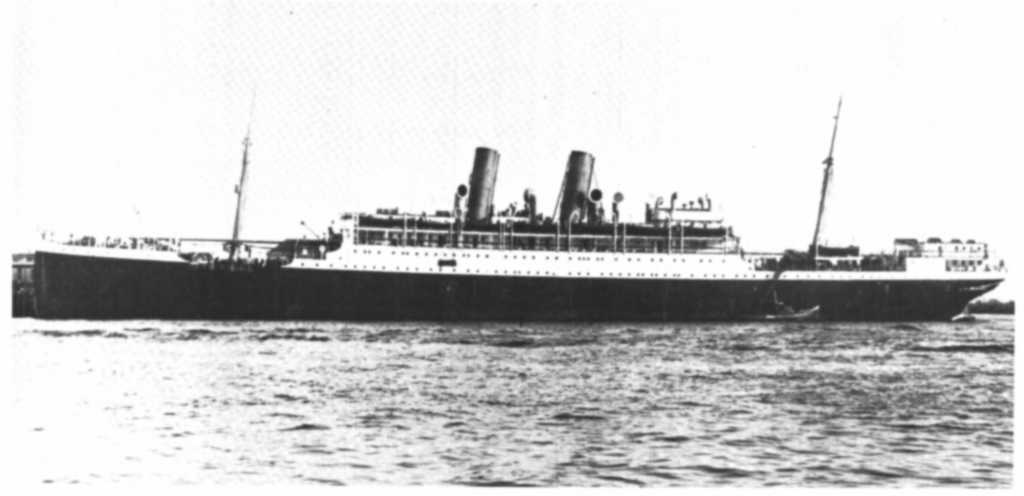
SS Blücher from Hamburg Germany to New York. It carried 2,102 passengers; 333 first class, 169 second class, and 1,600 third class. My material grandfather, Konrad Posluszny, arrived on this ship on December 5, 1902.
SS Blücher from Hamburg, Germany
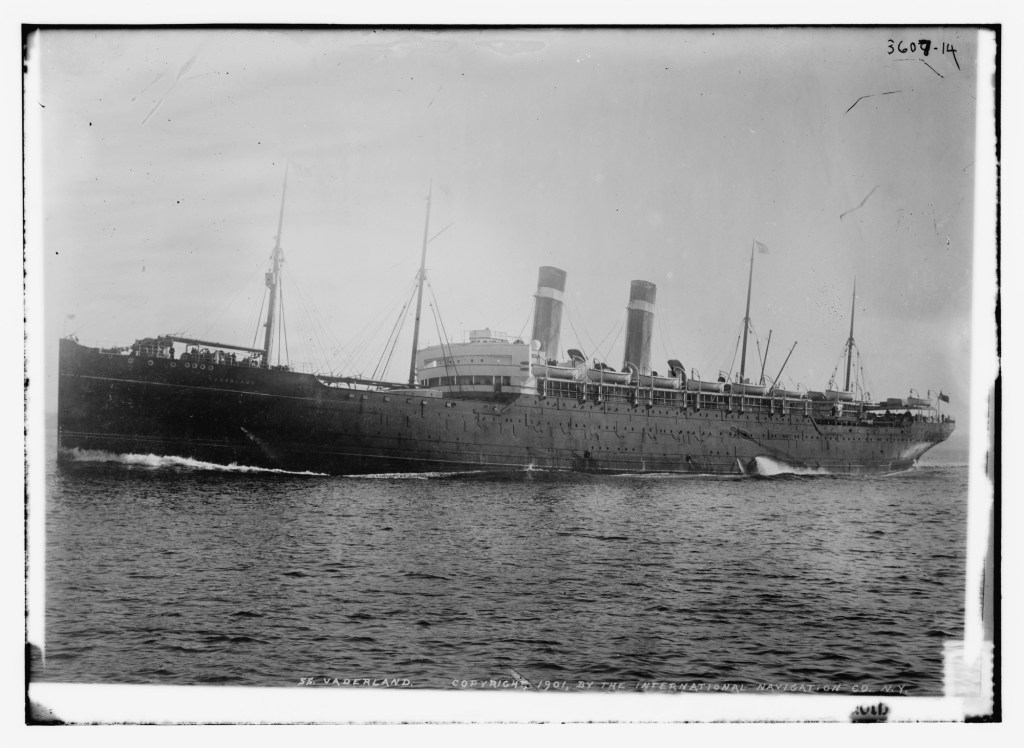
SS Vaderland in 1906 from Antwerp Belgium. It was part of the Red Star Line. It carried 342 first class, 194 second class, and 626 third class passengers. My paternal grandfather, Charles Jakiela, arrived on this ship on November 17, 1906.
SS Vaderland from Antwerp Belgium
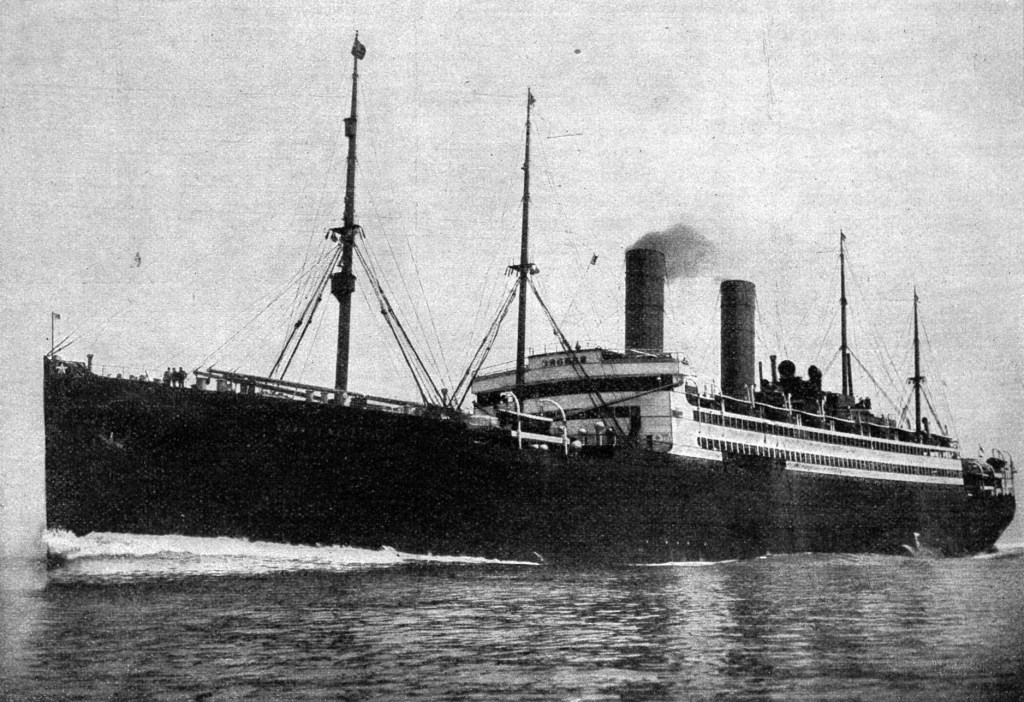
SS George Washington in 1910 from Bremen Germany. When it launched in 1908 it was the largest German built steam ship and third largest in the world and could carry 2,900 passengers. My paternal grandmother, Antonia Liro arrived on this ship in September of 1910.
SS. George Washington from Bremen Germany
These are just a few of the ships my ancestors sailed on during their immigration from the German-Austrian region called Galicia.
Second and third class passengers were divided into “messes” and cooked their own food and cleaned their own berths. These trips took approximately 11-15 days. They would usually bring a trunk of belongings which went in the hold for the duration of the trip and they would bring a bag with the essentials for their travel. I found this information here .
My grandfather Posluszny was traveling with $3 in his possession. Based on a conversation website, that is the equivalent of $109.72. Imagine traveling somewhere today with not $109.72 on you with no other options to pay for anything!
The all passed through Ellis Island on their way to New York, Connecticut, and Massachusetts where they settled into their new lives.
The topic for Week 24 of 52 Ancestors in 52 Weeks, is Hard Times.
This is the story about my dad’s family, The Jakiela Family.
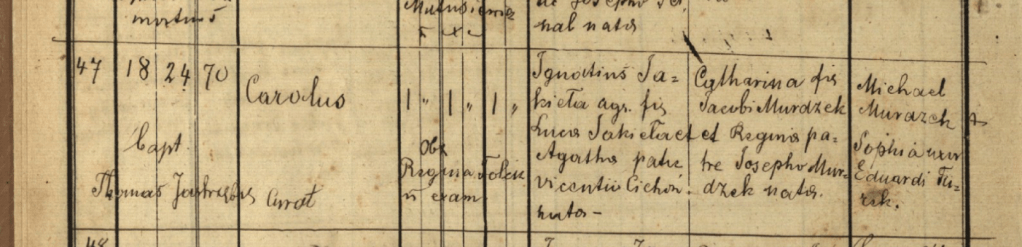
Their story, as I know it, begins with my grandfather, Charles, born in August of 1890 to Ignacy and Catharina (Murdzck) Jakiela. He would have a brother born in 1893 and a sister in 1894.
Charles’ birth record 1890
His mother died in 1894, the same year his sister was born, which makes me think her death might have been related. Charles was not yet 3 years old.
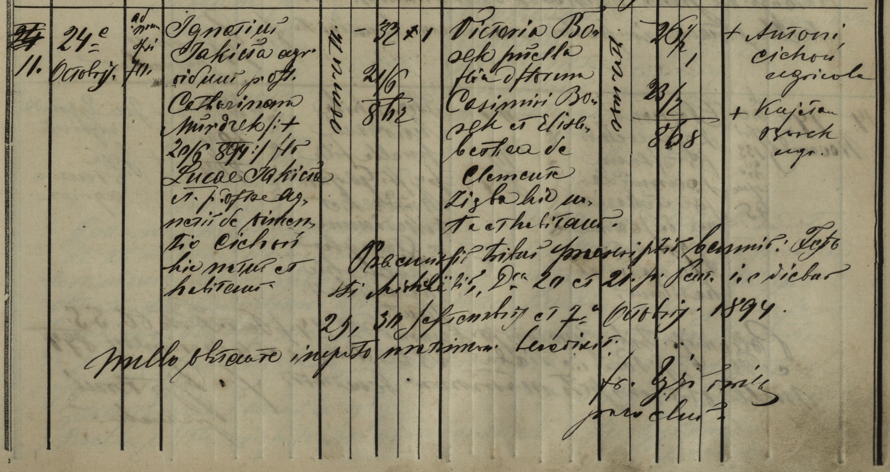
His father married Victoria Borek in October of 1894.
Marriage record for Ignacy and Victoria
Charles left for the United States in November of 1906 when he was 16 years old. He traveled with a cousin, Pawel Murdzck with Charles heading to Southington Connecticut and Pawel to Braddock Pennsylvania. I don’t know if they ever saw each other again.
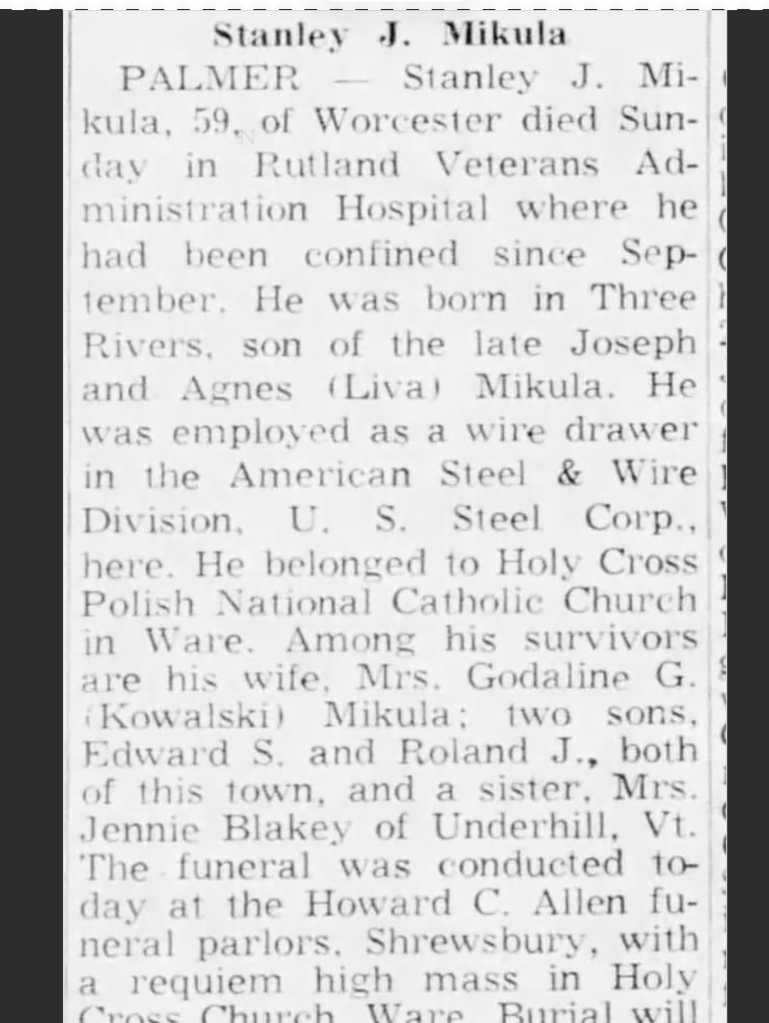
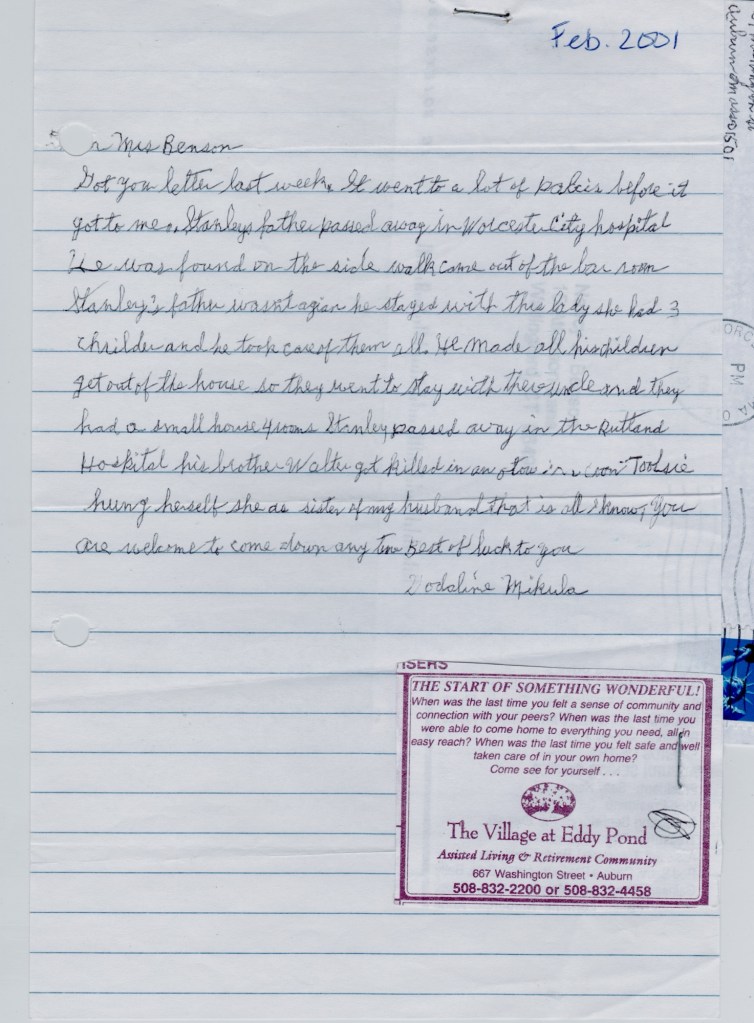
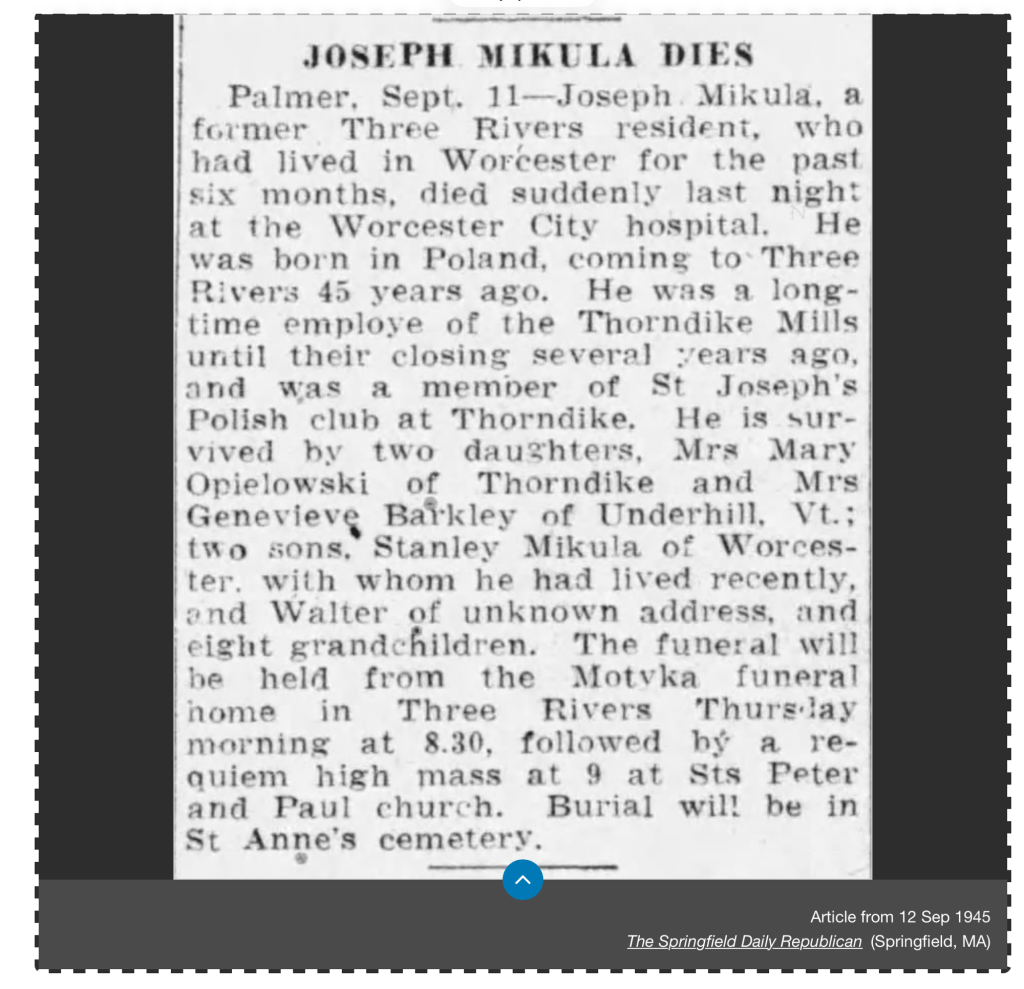
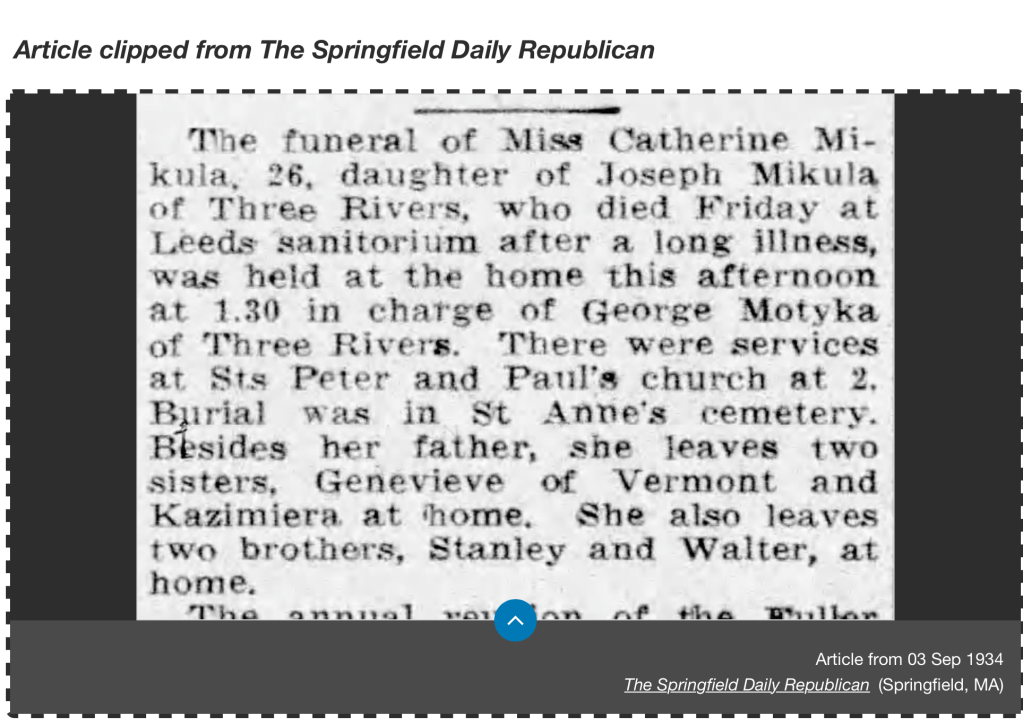
Charles made his way to Palmer Massachusetts and the fabric mills. There he met his wife, Antonia Liro who immigrated in 1910 and had headed north to live with her sister Aniela and her husband Joseph Mikula and their children.
They were married in 1912 and made their way back to Southington where she gave birth to Steven in 1913 and Edward in 1915, and Charles worked for a Peck, Stowe, and Wilcox which manufactured tools and was the largest employer in Southington.
Antonia and Charles June 1912
Life might have been good for a time, Charles continued to work at PS&W, and Antonia took care of their 2 young sons but then World War I came along.
Charles completed his draft registration card and family lore says he wanted to go to warbecause he “of his love for the country that took him in”. After hearing about some of the anti-immigrant sentiment, I wonder if he felt like he had no choice. Whatever the reason, he headed to Camp Devens in Ayers Massachusetts in May of 1917. He became a citizen of the United States June 26, 1918 under the May 9, 1918 while at Camp Devens.
Charles’ naturalization certificate – years later, cousin Steve had a deli in the same location at 31 Liberty Street Southington!
He headed sailed out of Boston on the September 4, 1918 along with the 301 Trench Mortar Battery of the 76th Division. Just in time for the Meuse-Argonne Campaign in France which would lead to the end of the war.
I don’t know how he fared in the trenches, but on the way back to port and the transport ship to take him home, his train ran over an unexploded munitions over a trestle. The bomb went off and he ended up in the river. This is another family story. A friend from home who was also on the train, saved his life. He came home with a scar running from his forehead to the back of his head. But he came home!
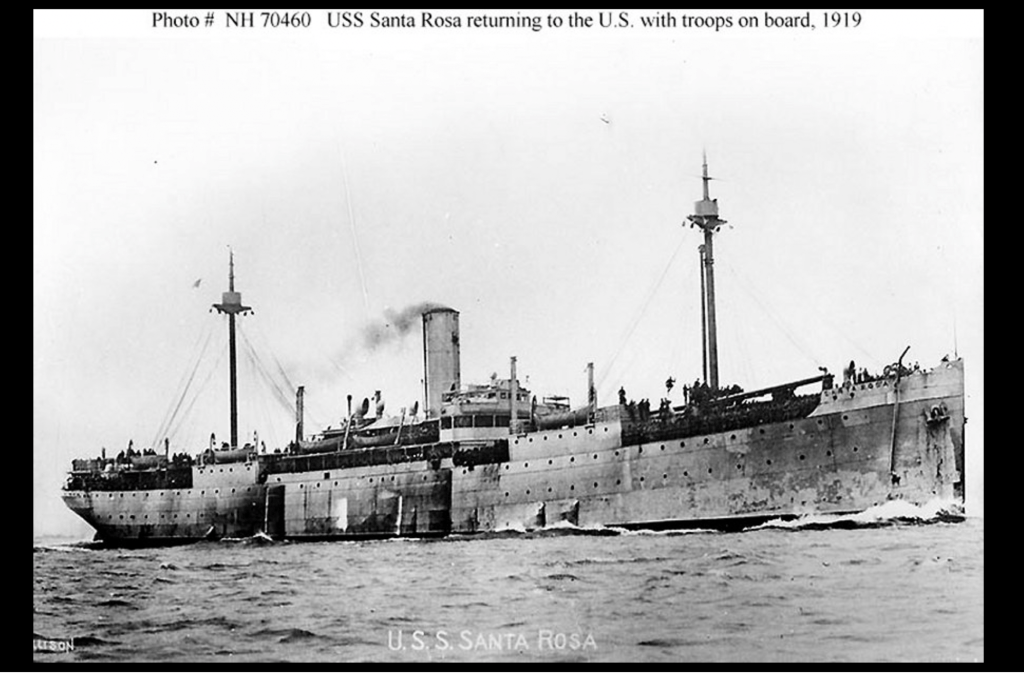
He arrived back in Boston Massachusetts on April 26, 1919 aboard the SS Santa Rosa from Pauillac France.
Charles’ return transportation
Charles and Antonia wasted no time in restarting their family and Helen was born in March of 1920! Followed by Walter in November 1921 and my dad, John, in June 1924.
Antonia Jakiela with Johnpaternal grandfather Charles Jakiela
The town directory shows Charles went back to Peck, Stowe & Wilcox and they lived in a variety of rentals in the area of the factory.
Everything came to a halt in the early morning of April 1, 1927 when Antonia died from pregnancy complications and Charles was left with five children, the youngest not quite 3 years old. Sound familiar?
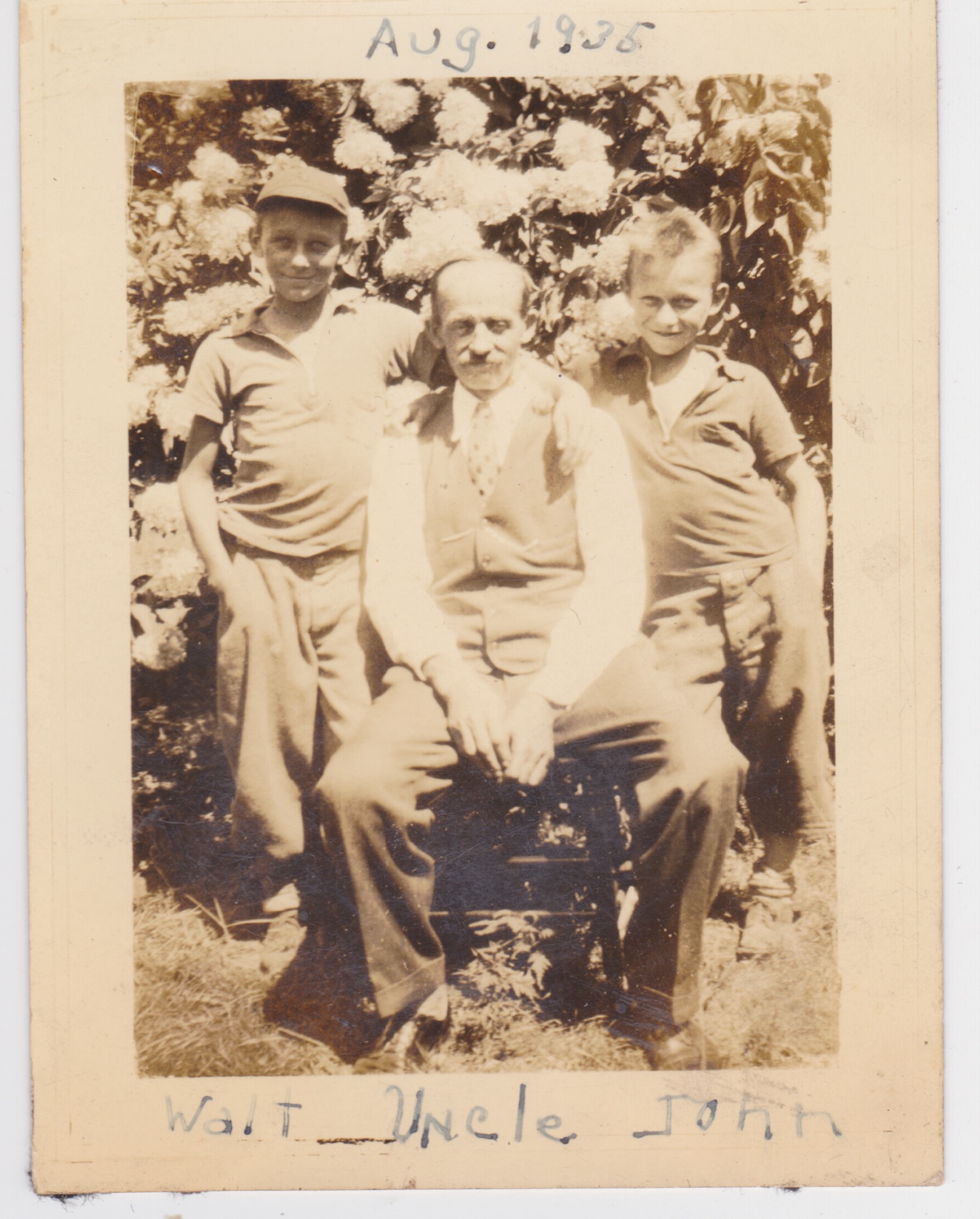
I’ve told this part of the story a few times. Charles was devastated. He gave my dad to his godmother, and brought Walt and Helen up to Massachusetts to be taken care of by their Uncle Joe. Steve and Eddie stayed with him in Southington. When they moved to Wallingford in February of the following year, the family was brought back together again. I think that’s where the story I heard comes from, that the kids ran away from him, and he realized it was time to bring them back.
Charles drank, had a hard time holding a job, and wrote many letters to the Veterans Administration asking for more money. When they moved to their last rental on Prince Street, Eddie, now a teenager worked for the baker next door. After a few weeks of not getting paid, he asked the baker for his pay. The baker informed him he had a deal with his father that Eddie was working for their rent.
I was told he was a talented craftsman and that he made a beautiful wooden cross for Antonia’s grave. Uncle Joe would send him fabric from the mills and he would sew pillow cases for the house, and one time he made a wardrobe in the basement. The only problem was it was too big to get upstairs. So he took it apart and remade it. That’s where my dad got his talent.
My Auntie Helen told me they attended Whittlesey Avenue School, but when it got crowded, they were sent to Colony Street School. She liked Colony better because at Whittlesey the children from the fancy homes on Main Street were snobs. The kids in the Colony Street area were on a more economic level with her family.
They were fortunate to have St. Peter and Paul’s church to go to. Walt and John were altar boys and Helen cleaned the church. Did Charles ever attend? I don’t know but Charles got angry when my dad couldn’t say his prayers in Polish.
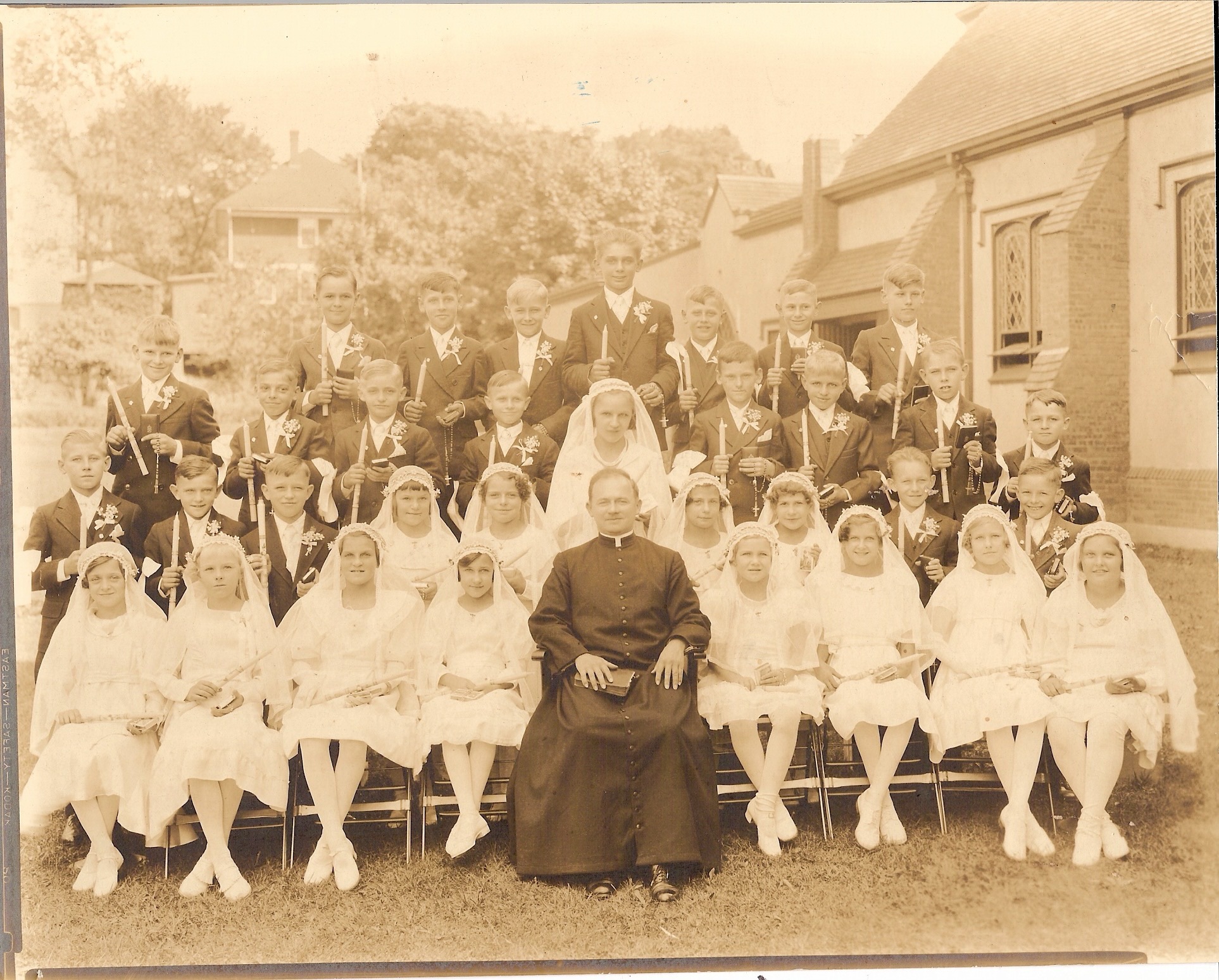
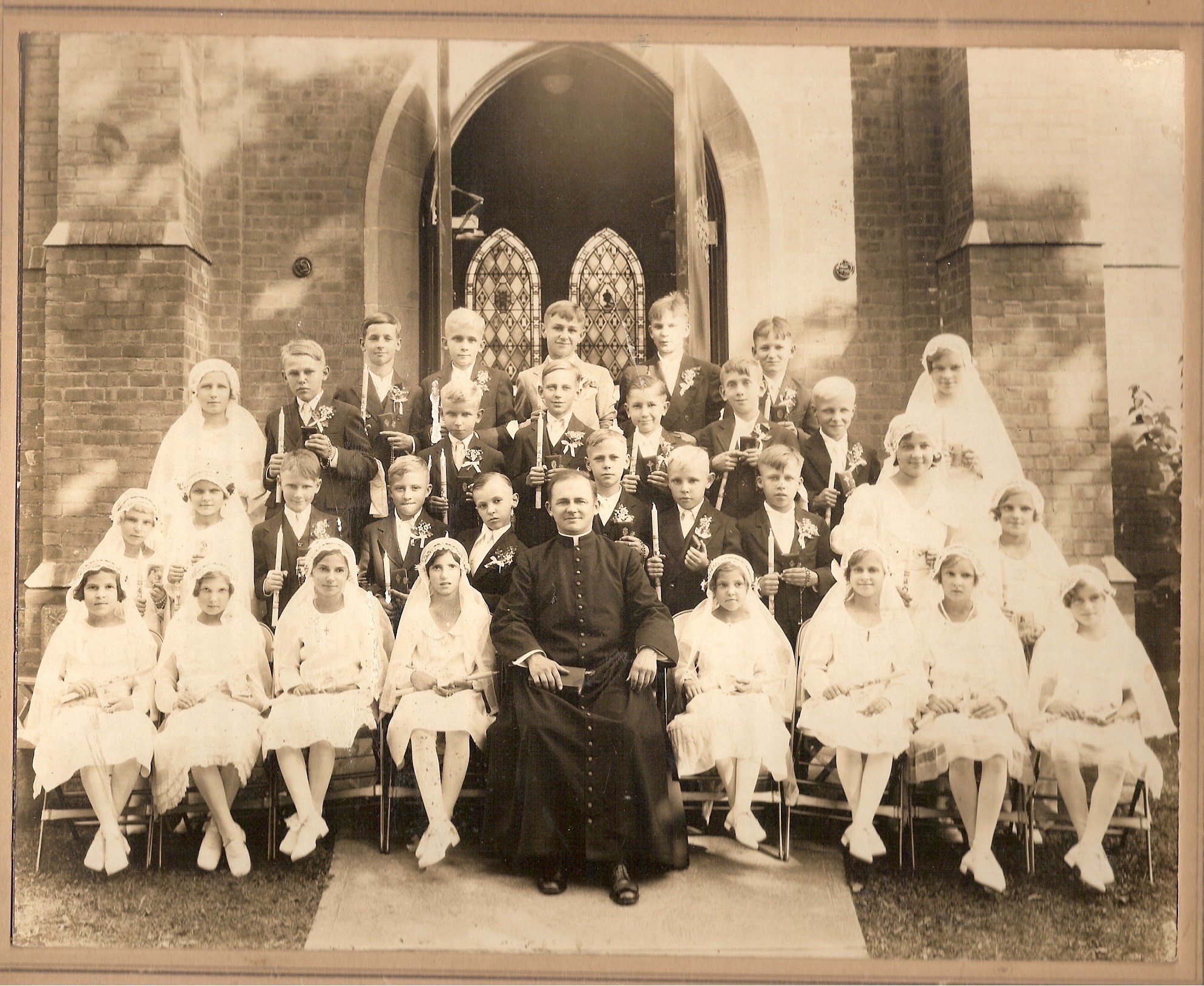
John’s first communionWalter’s first communion
Charles died in May of 1935 in a hit and run accident while walking home one night. He was identified by the letter in his pocket from Stanley Judd of New Britain offering him a job that he would have started the following week. My father was not yet 11 years old.
Life might have been good before Charles went off to war but I think he came home, obviously injured, but also suffering from PTSD. Poor Antonia, how did she survive financially during the year and a half he was gone? How did Charles survive with five children to take care of, and have to work?
All five siblings grew up to have families and were successful in their lives. They persevered through the hard times and were always there for each other.
Thinking of them, I think of our professions and jobs that my sisters and I have had. Janice is a retired pediatric ICU nurse, Gail worked for years as a paraprofessional in elementary school following the same child from first grade through fifth grade and then would start all over again with a new child, I worked in an elementary school library, in the cafeteria, and then became a big sister to a first grader being raised by his grandmother. We all saw children and parents going through hard times and we all rose to the challenge to make their lives a little better while in our care.
The topic for Week 17 of 52 Ancestors in 52 Weeks is WAR.
Over the life of this blog, I’ve talked about family members who have been in World War I like my paternal grandfather Charles Jakiela, and my Uncle Walt in World War II.
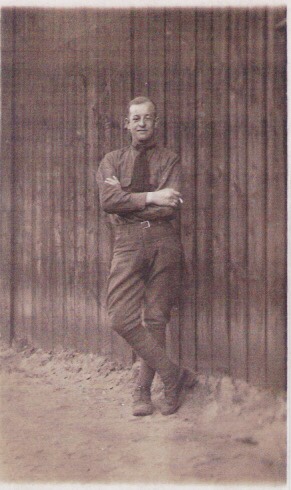
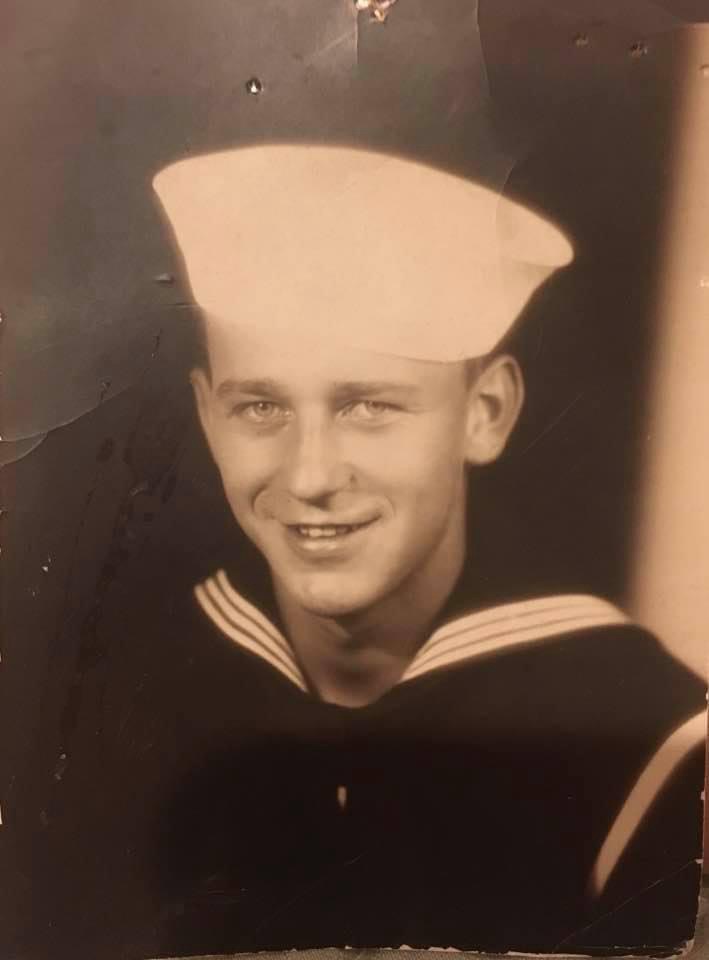
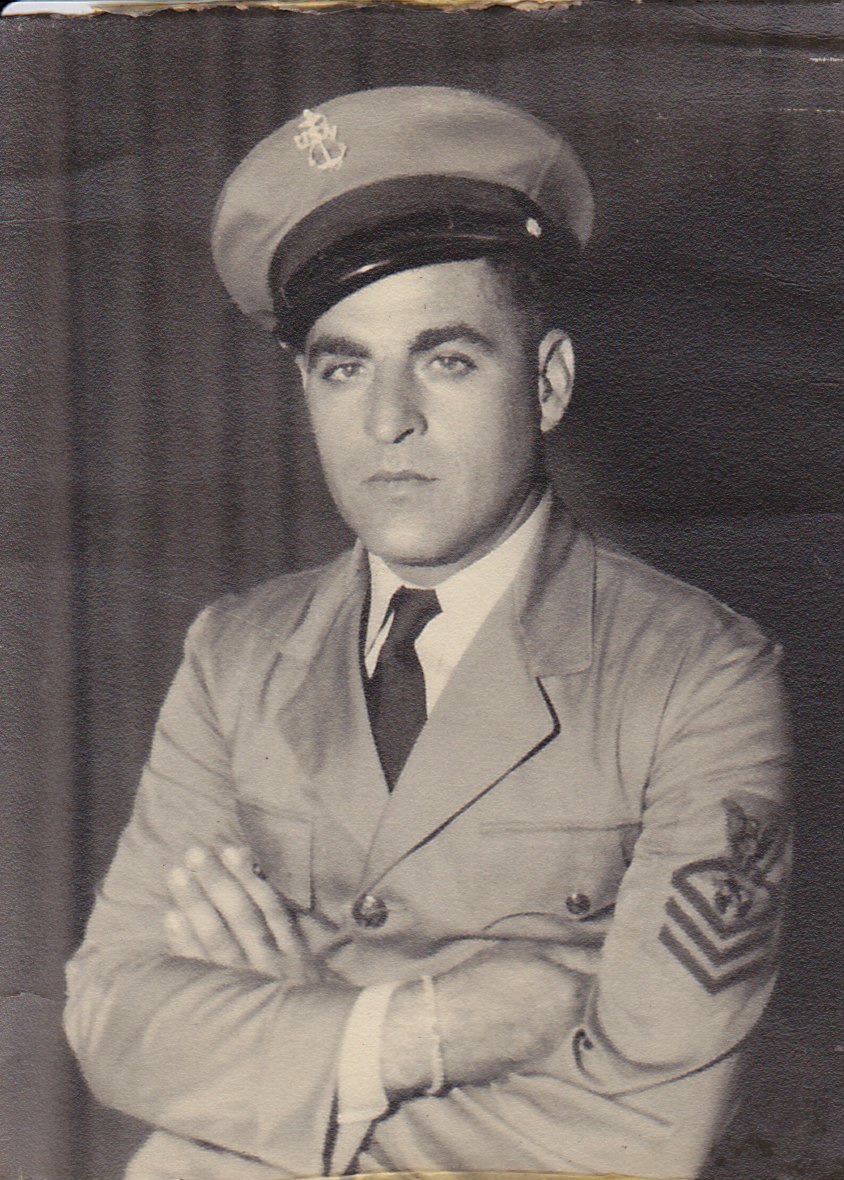
paternal grandfather Charles Jakiela abt. 1923maternal grandfather, Jacob Engram abt. 1918Uncle Walt abt. 1941
My grandmother’s brother Bronislaw Liro went BACK to Poland only a year or two before World War I broke out and managed to escape from Siberia!
My biological maternal grandfather, Jacob Engram, was in World War I as a member of the 49th Infantry out of New York. My lifelong maternal grandfather, Konrad Posluszny, didn’t serve in the war but he had four young children at home when the First World War broke out.
There was the aftermath of World War II as described by my grandfather’s brother Antoni in his letter to my dad and his siblings in the United States. “Even Helenka’s photo on a pony bothered them hanging on a wall.”
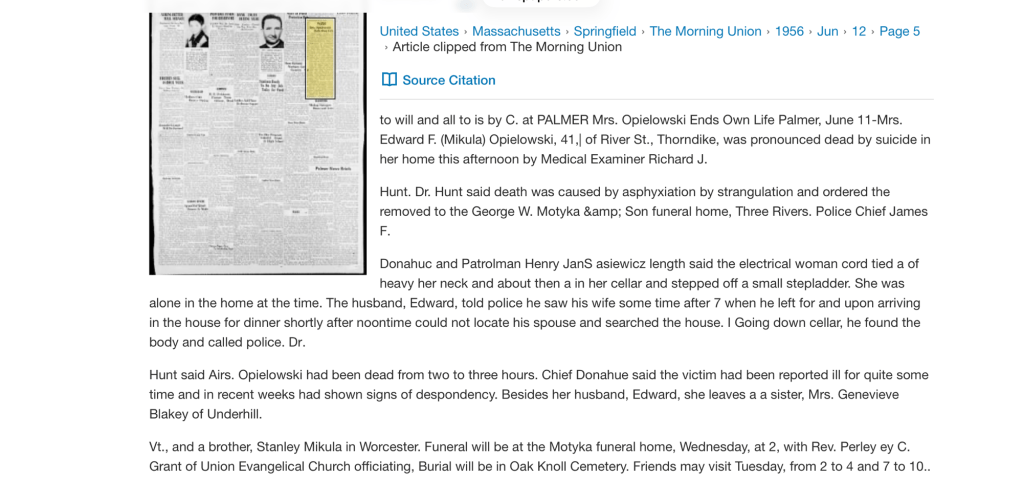
My mother’s brother, Connie, and her brother-in-law Mal both served in World War II. Connie was a cook in a San Antonio training camp. I have no records of him anywhere on the Fold3 website but in the videos from conversations with Aunt Judy, she said he was a cook and they had to pack up the kitchen when the fighting got close. The possibility of Connie going overseas was the family’s explanation when his father Konrad committed suicide in late December of 1944.
Uncle MalGram, Connie, Gramps
My husband’s dad Harold, uncle Ronald, and his step-dad Paul were all in the Korean War. Harold was a cook and Paul was in the motor pool in Korea. Ronald was in a tank during his time in Korea and it was a time that had a lifelong effect on him.
My dad, John, enjoyed his time overseas. He enlisted in February of 1943 in the Army/Air Force and headed overseas to Suffolk England. He talked very fondly of his time there at an airfield base and I think it was because he could leave home. He was living with his oldest brother, Steve, Steve’s wife, their two young sons, and John’s sister, Helen. I know he was grateful that he had a home, but I think it was a little crowded! He recalled to my sisters and me that when it was time to board the train to head off, parents and sons were crying. His only thought was, “This is an adventure!”. He volunteered for hatchman duty on the transport ship to England because it gave him privacy. At Great Ashfield Airforce Base near Stowmarket England, the location of the 385th Bombardment Group of the USAAF, he was a Corporal of the MPs on the base. He was back in the United States by September of 1945.
John Jakiela, Corporal Army Air Force Word War II
He had a picture of his squadron framed and hanging in his basement work area. We loved to take it from its spot and listen to his stories of the men in the picture.
He kept his address book of local friends and their war addresses along with the addresses of people he met while in the service. I have it now and like to flip through it to look at the various names.
He had a few Suffolk locals listed in there. One is Joyce Filby of Finningham England, who I think was his girlfriend while he was there. Another is the Hammond Family of Wetherden. I have a letter they wrote in November of 1947. Although the war was over for two years, they were still having difficulty getting food and were being strictly rationed for bread and potatoes. “Things are getting worse instead of better.” That sounds similar to Great Uncle Antoni’s letter from Poland in January of 1947!
Although some of the men had difficulties once they came back to the United States and their families, I’m grateful they all came back.
This subject is number 3 on the list of “52 Ancestors in 52 weeks for 2024” created by Amy Johnson Crow. Week wise, I’m a little late to the party, but who cares – as long as I show up!
So my favorite photo is this one:
John and Steve at Baldwin Pond
This is a photo of my dad, John, and his oldest brother, Steve. It was taken approximately 1936 when my dad was 12 and Steve was 23. Look at the smiles, look at Steve’s arms over my dad’s shoulders holding him close, and look at my dad’s hands reaching back to hold his brother’s legs.
If my timing is correct, this was about a year after their father was killed in a hit and run accident not far from home. Eight years previous to that, in 1927, their mother died from pregnancy complications when my dad was not quite 3.
That hit and run left 5 children, ages 23, 21, 15, 14, and 12 orphans. Life was definitely not easy for them before their father died, but it got worse the night the policeman banged on their door to tell them their father was dead.
Steve, at 23, became their guardian. Family stories say the priest at the church they attended, St. Peter and Paul’s Catholic Church, offered to be their guardian (in name) in the event there was an attempt to break them up. John and his brother Walt were alter boys and Helen cleaned the alter during the week so he knew them well. I don’t think it ever came to that.
They continued to live in the little brown house on Prince Street in Wallingford and Steve had a job as a meat cutter nearby. In 1937, Steve married Florence whose family lived on the corner and he brought them into the marriage.
Steve was a father to all of them and I’m sure it was difficult as a newly married couple to have teenagers in the house so soon! Life wasn’t always easy but he and Florence made a home for them.
I see such true affection in their expressions and that’s what makes this my favorite photo.
I’m sucked back into my family search on Ancestry.com
Poor great-uncle Bronislaw Liro and his wife Mary. They became a reality last night when their marriage record popped up – but nothing else.
Then a quick google search of his name gave me two deaths – one for their son at 8 days old of infant cholera, and another for their daughter at 8 months old (4 years later) of Infant Cholera.
And not a trace of them anywhere else going forward. It’s always 1 step forward and 2 steps back.
This post written in 2014 popped up for me the other day on Facebook. I’d forgotten all about it posting it and want to share what I found out a few years later.
Just some background – I had the names of Louis, Joseph, and Mitchell Liro floating around in my research notebooks because their Massachusetts locations fit with what I knew about Bronislaw. I might have sent a letter to one of them with no response.
“Joseph Liro” popped up as a DNA match in 2017 and I sent him a message through Ancestry. Sadly, not many people respond to messages! But I got lucky this time.
Joseph is the grandson of Bronislaw and Maria! Here’s a refresher on Bronislaw and Maria:
Bronislaw was born in 1881 and immigrated to the US in 1905, and headed to Three Rivers, Mass his older sister Aniela and her husband Josef Mikula.
Maria came to the US expecting to be joined by her sweetheart but she never heard from him, met Bronislaw and married him. Then oops! Turns out the sweetheart had trouble raising the money for his passage and when he finally made it to the U.S. Maria was already married to Bronislaw.
They were married sometime prior to 1908. They had a son John who died at 6 days old in August of 1908 of Infant Cholera. Joseph’s father Louis was born in 1909. A daughter Katy in 1911 was 6 months old in July of 1912 when she died of Infant Cholera. Following that, Mitchell Stanley was born in 1913.
So right there, Joseph brought together the names that have been circling around each other all these years!
Two to three years later (1915 or 16), Bronislaw and Maria (unlike my grandparents and great aunt and uncle) have a little nest egg from working in the textile mills and decide to GO BACK TO POLAND.
We all know what happened shortly after that – World War I broke out. Bronislaw fought in the Austrian Army and the “victorious Soviets” took him prisoner and sent him to Siberia.
As the war raged on, Maria was afraid that her sons, Louis and Mitchell would be called up to fight in the Polish Civil War even though they were American citizens, so she sent them back to the United States to live with a friend of hers.
In the late 1920s/early 1930s, Bronislaw escaped Siberia where he tended the horses at the camp. He appeared at the family farm in the village of Turza in southeastern Poland saying “I escaped and have come home”. Life went on and they had more children.
What happened to Louis and Mitchell? It sounds like Louis never saw his father again because he never went back to Poland. Mitchell fought in Italy during WWII and traveled through Poland but I don’t know if Bronislaw was still alive or if he went to their home.
After WWII, Maria came to the United States for a short visit, lived with Louis and his family but she returned to Poland in 1962 “to die”. Louis traveled to Poland often in the 80s and 90s and met his Aunt Katarzyna and her children and visited his grandparents’ graves.
Based on their birthdates and the dates of WWI, Louis and Mitchell would have been young when the war broke out! Louis said, “my father and his brother were so grateful to this woman (who took them in) that they had her buried in our family plot in Indian Orchard, Mass. which is a neighborhood in Springfield. I think it’s sort of a Yalesville to our Wallingford.
So that’s the story of Bronislaw and Maria. They all lived years longer than Aniela and Antonia but it was still fraught with heartache.