Konrad James Posluszny

I was surprised to realize that I haven’t told the story of my grandfather, Konrad James Posluszny. He was the sixth child born to Caroline Straub and Joseph Posluszny on May 3, 1886, in Wildenthal (now Dzikowiec) in the Galicia region of Poland. When he was born, only his older brothers John and Joseph were still alive, two children having died from smallpox and one from dysentery.

Konrad departed Europe through Hamburg on the Blücher on December 6, 1902, and arrived in New York harbor on December 17th. He traveled alone and headed to his brother John on Jefferson Street in Yonkers. Like hundreds of other immigrants, he was listed as a laborer on the ship’s manifest. He was quickly hired at a hat company, which was a booming industry in the early 1900s.

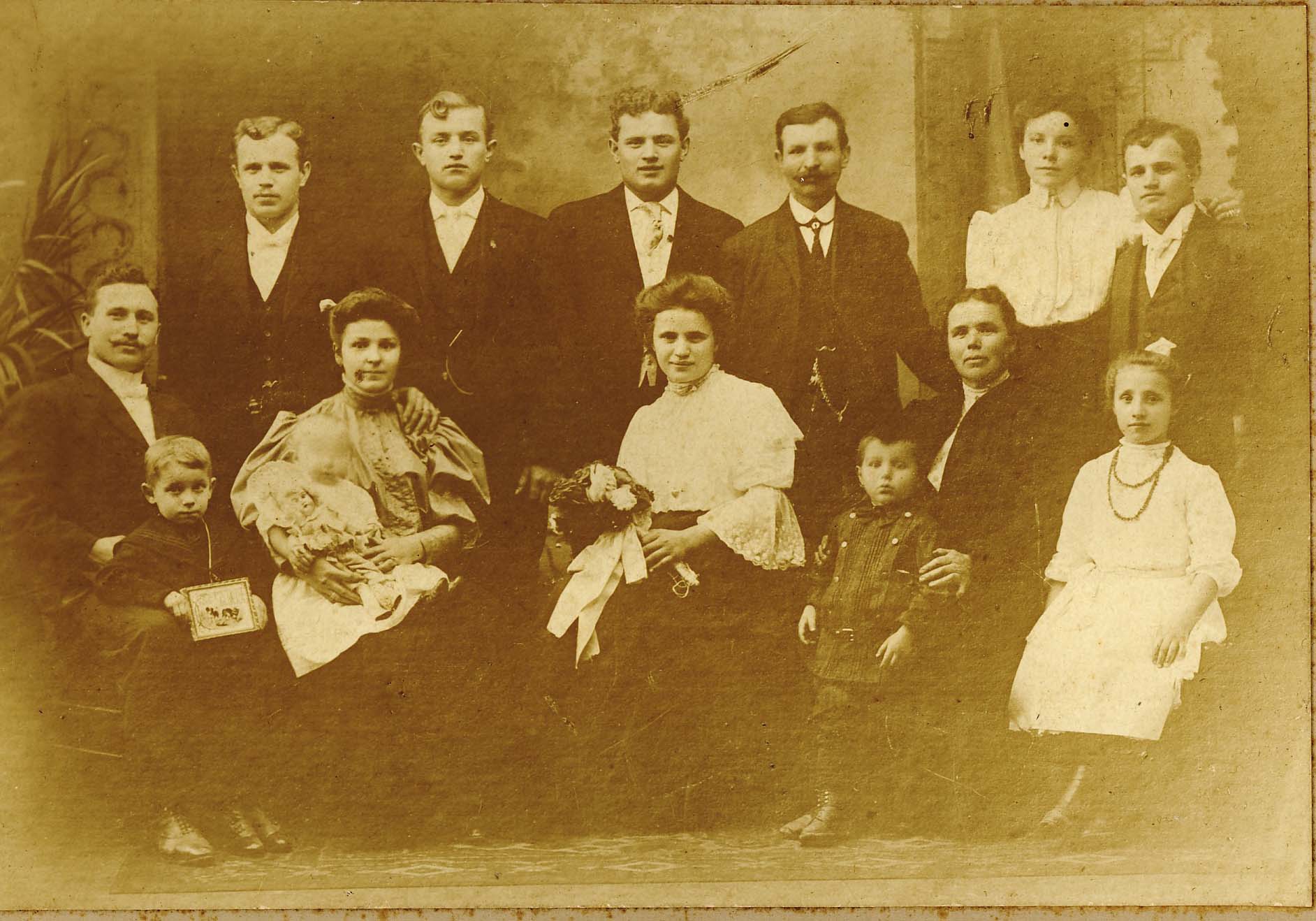
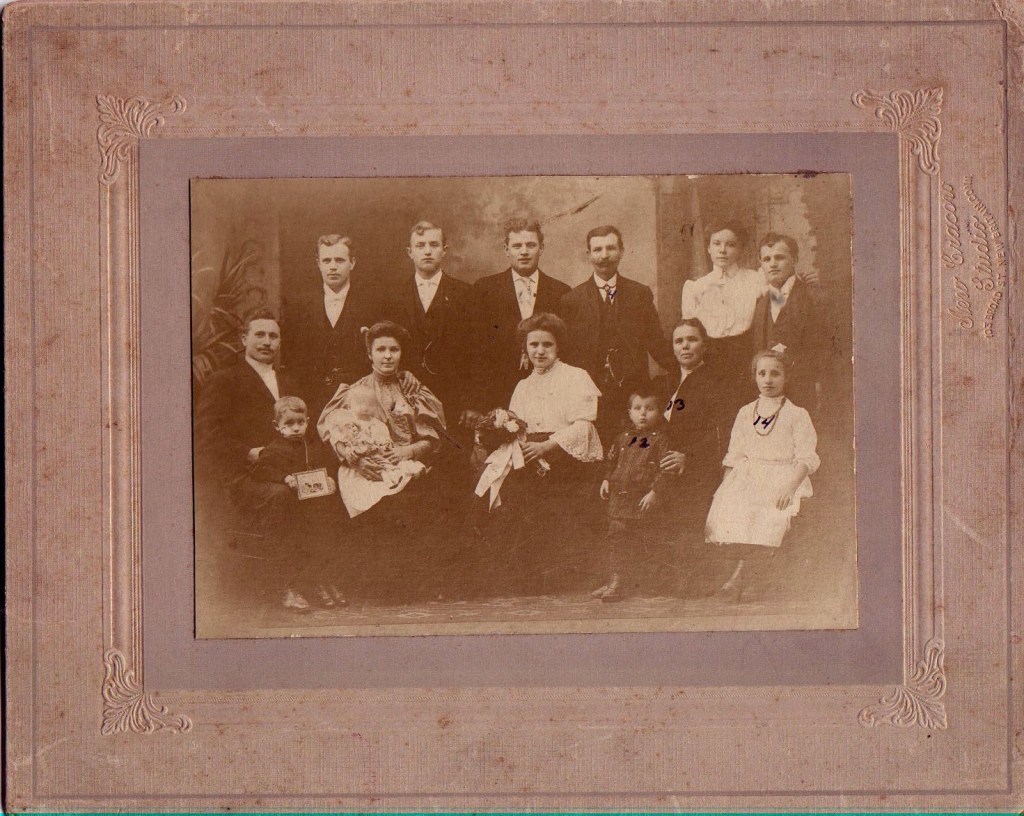
Konrad met and married Julianna Ingram on July 15, 1906, in Yonkers. Time for the family picture! Konrad and Julianna are on the right. I think Konrad is the most handsome of the bunch. But I might just be biased.
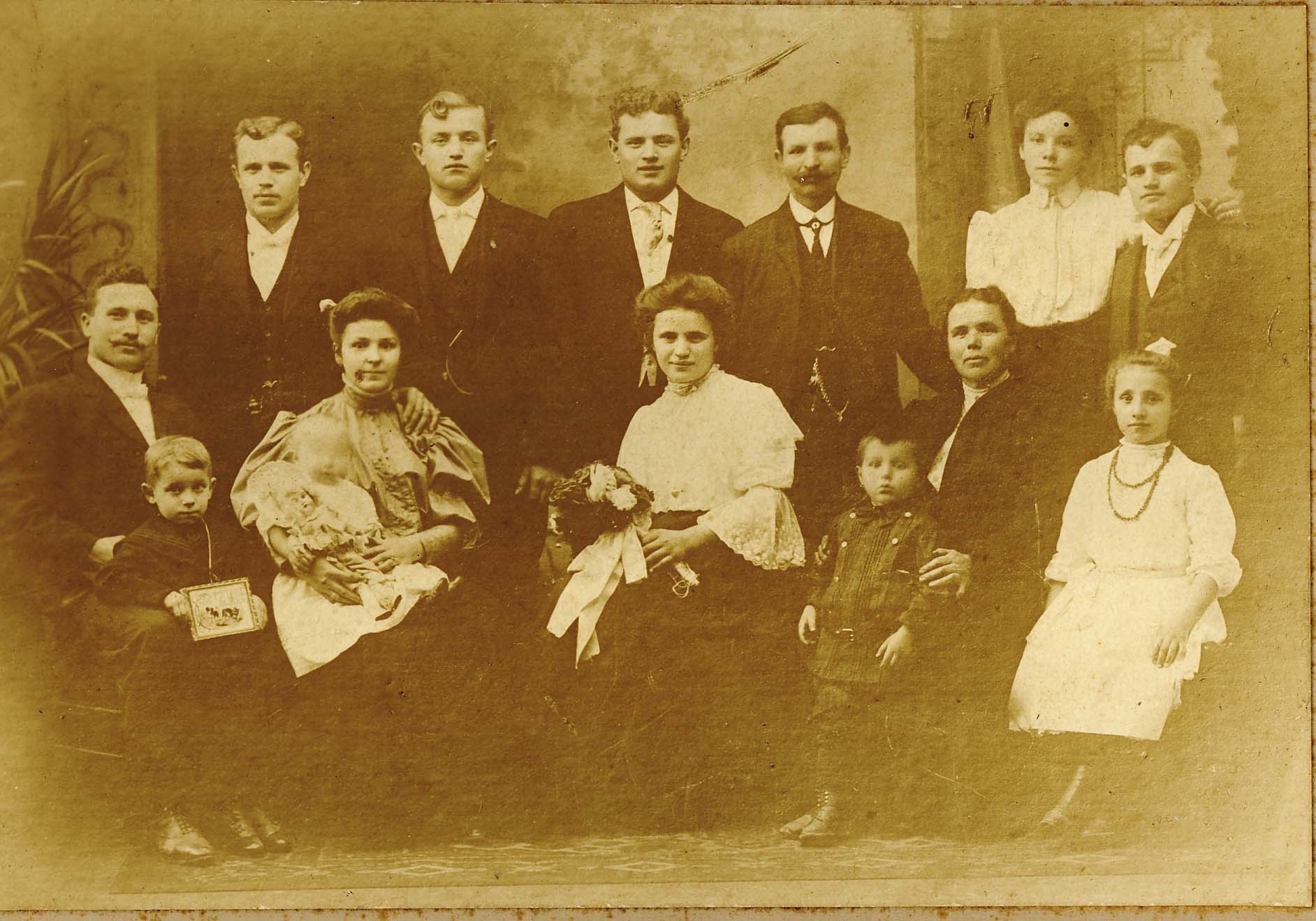
Posluszny /Bonk family late 1907/early 1908

Konrad is listed in the Yonkers city directories fairly consistently. In 1905, at 41 Jefferson Street to 50 Jefferson Street, to their final residence of 98 Jefferson Street from 1908 through 1921. This would be the location for the birth of their first four children – Antoinette Gertrude, Conrad, Louis, and Julianna.
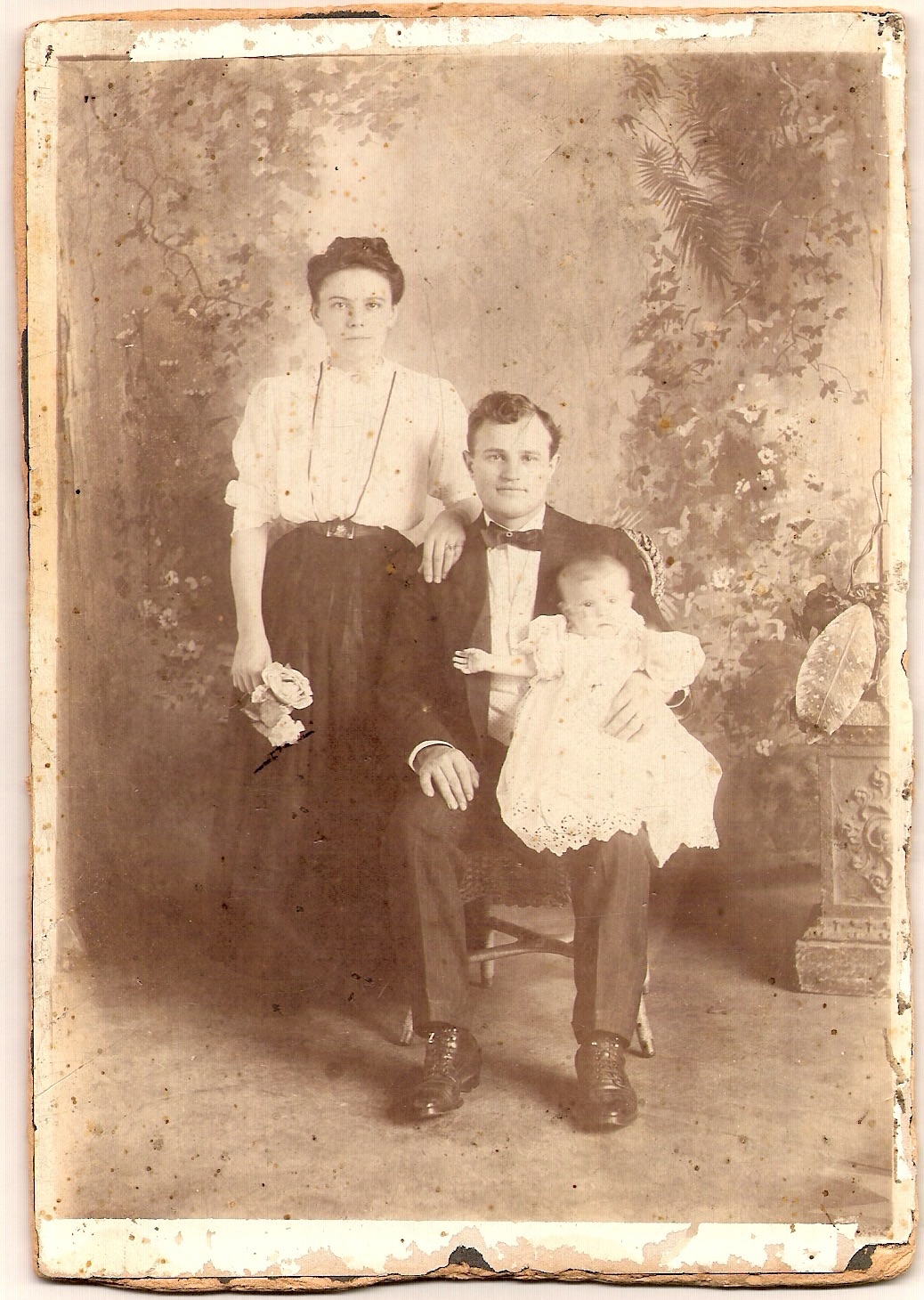
Julianna, Konrad and Antoinette

Antoinette was the firstborn on January 7, 1909, in Yonkers, NY, and this photo is the only one of Konrad and Julianna with any of their children when they were young.

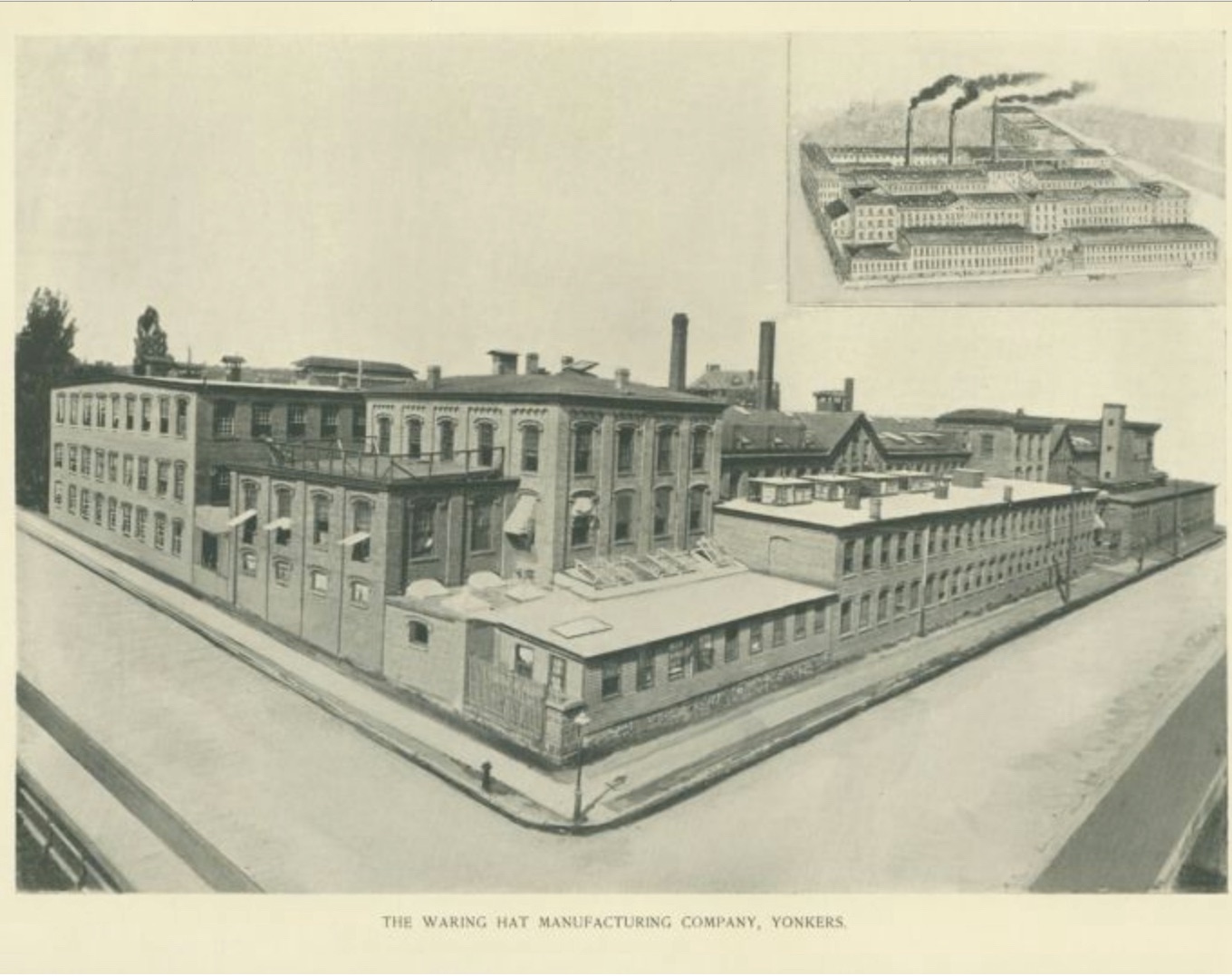
Konrad was an employee of Waring’s, a hatmaker in Yonkers, which was a block and a half from their home on Jefferson Street. In the 1905 directory, he’s listed as a Presser. Pressers worked with steam, heat, and heavy hydraulic machinery to press and shape felt (often made from rabbit or beaver fur) into the final form of a hat. Come to find out, these were the men who worked with toxic mercury nitrate, which could lead to chronic mercury poisoning. In other directories, he’s listed as an employee or a hatter still at Waring’s.
Konrad became a naturalized citizen of the United States on April 29, 1921. It was also in 1921 that something unthinkable happened. Julianna had a relationship with a cousin whose connection to her I still haven’t fully determined, but possibly first or second cousin, and she became pregnant with my mother. Did Konrad know? Was he suspicious? I don’t know. But Konrad, Julianna, and their four children moved north to Easthampton, Massachusetts sometime in mid to late 1921.

From there, they moved to New Britain, Connecticut, where they lived in one of the apartments of Julianna’s relative at 15 Derby Street. My mother, Elizabeth, was born on April 5, 1922.

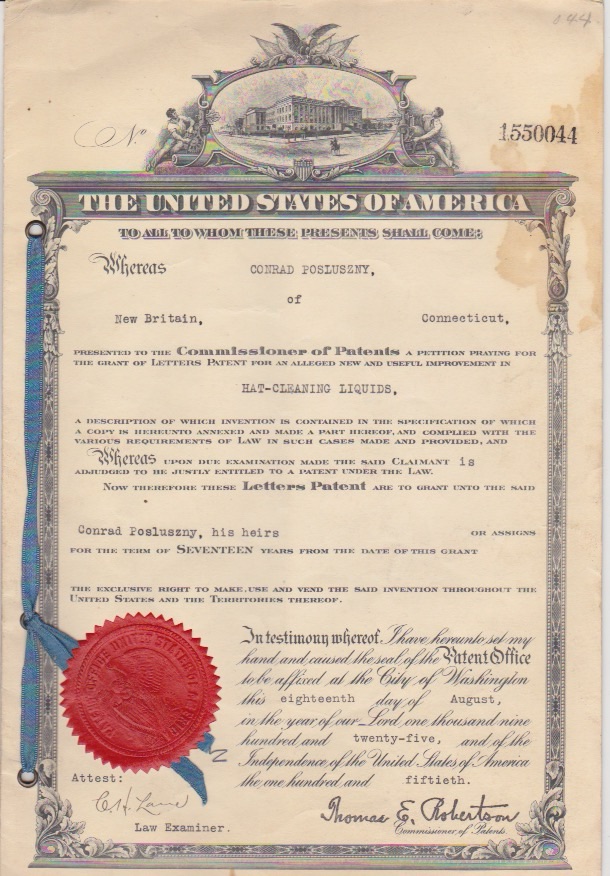
In New Britain, my grandfather opened up a hat store called the Conrad Hat Company, and in 1923, it was at 43-45 Broad Street before moving to 317 Main Street. In 1924, he applied for a patent on a cleaning solution for straw hats and was awarded it in 1925. I don’t know if he ever made any money from it, but he still holds the patent. Unfortunately, in the summer of 1924, in the span of two weeks, there were fires in his store, and that was the end of his hatting career.
The family moved to Wallingford in 1925, and they purchased a new home at 121 Clifton Street. Konrad was hired at the Wallingford Steel Mill, which was practically in their backyard. The railroad tracks for the cars from the steel mill to meet up with the main tracks ran along the side of their house, and the rumble and shriek of brakes during the night was enough to wake the dead. His job in 1935 was a roller, someone who manually guided the red-hot sheets through the roller with tongs and steel forks. I wonder if it brought back memories of his job as a presser at the hat factory. In the following years, he was a gateman, and in the last directory before he died, a janitor.
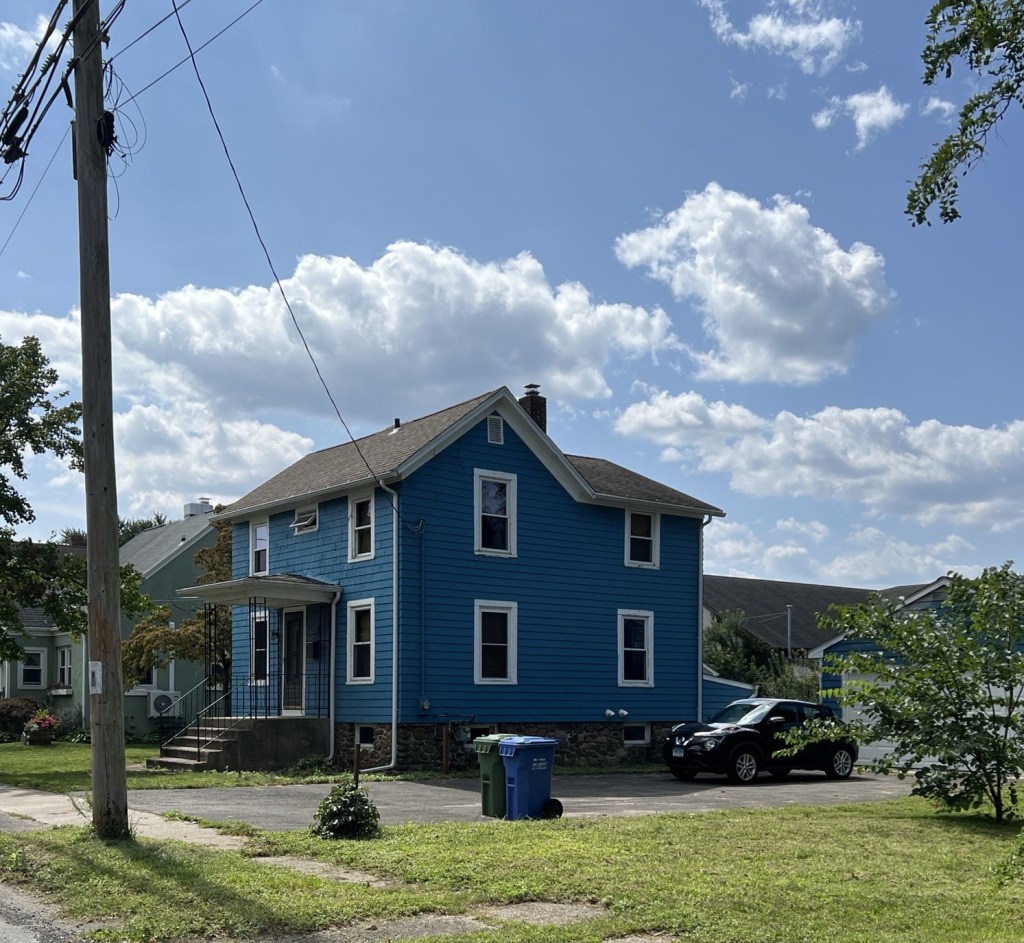
121 Clifton Street today

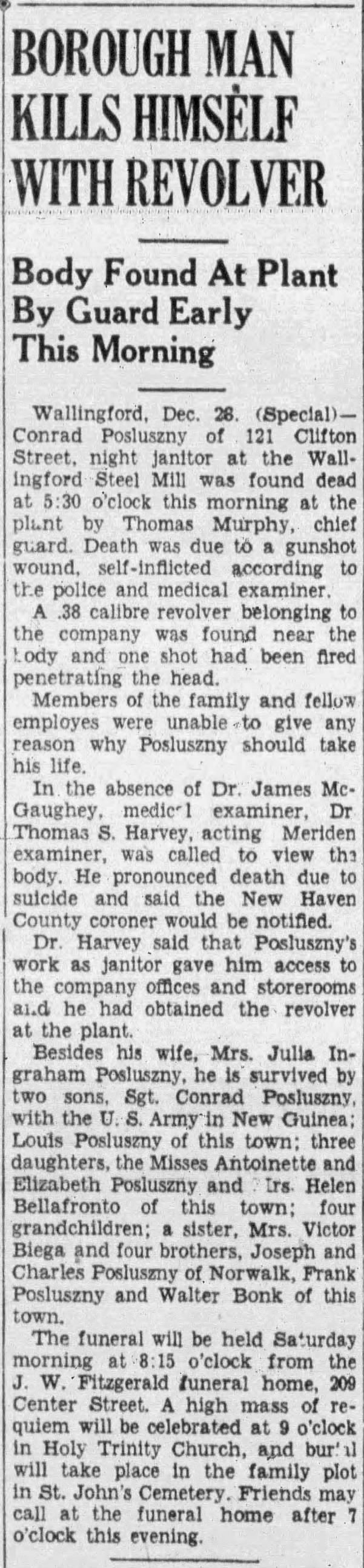
My Aunt Tootsie (Antoinette, the firstborn) told a story about a gypsy who told her father he would die by a gun. “This is why he didn’t allow guns in the house”, she told us. Unfortunately, he got access to a gun in the late night or early morning hours of December 28, 1944, at his job as a janitor at the steel mill. It was a self-inflicted gunshot to the head from a .38 revolver. He was found by the chief guard at 5:30 in the morning. No one in the family could give any reason for this act, but other newspaper articles say he was concerned for his son Conrad’s safety in the Army, having recently been sent to New Guinea. He was given a high funeral mass and buried in the family plot in St. John Cemetery.
Obviously, he didn’t die by a gun because a gypsy said he would! He suffered from severe depression. Aunt Tootsie casually mentioned how he was able to “have beer when he was in the hospital” because the doctor said he needed it. She never mentioned why he was in the hospital, and I never asked, but depression was something that ran in the family and affected a younger brother and a younger sister.

He was gone for 16 years before I was born, and would have only been 74 years old if he had lived. I wish I had met him. We never talked about him or his death with my mother and it wasn’t until the late 1990s that I would sit with Aunt Tootsie and she would share the photos and stories as she remembered them. Such precious time lost.

A conversation with my Aunt Judy about Julianna and Konrad gives some more in-depth stories about them.
Mental Health

The topic for Week 36 of 52 Ancestors in 52 Weeks is “We Don’t Talk About It”.

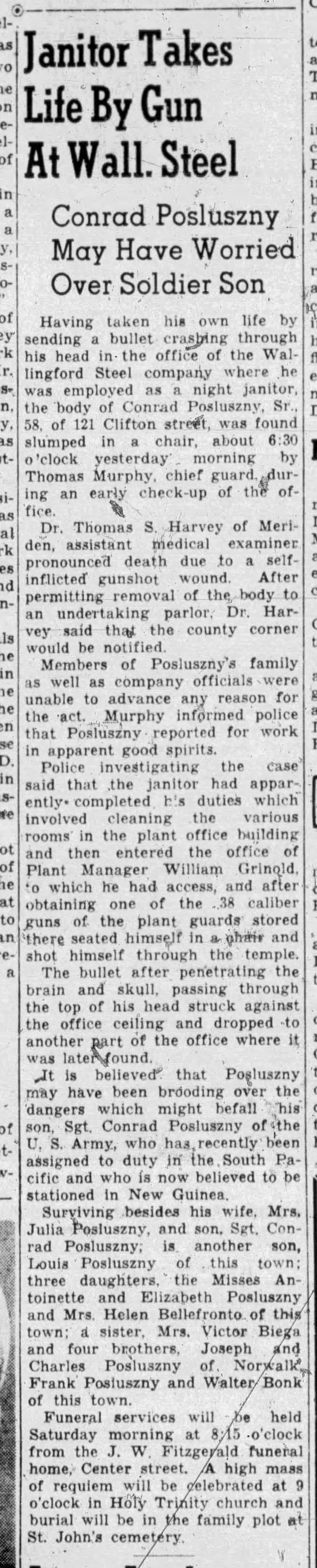
My grandfather, Konrad Posluszny, committed suicide in the early morning of December 28, 1944. He was a night janitor at the Wallingford Steel Mill, where he had access to the offices and storerooms and that is where he got the gun he used. It was written up in the afternoon Meriden Daily Journal on the 28th, and then the next day, the morning paper, the Meriden Record, had a much more dramatic telling of the tragedy.

Years after it happened, my Aunt Tootsie told me “a gypsy told my father he was going to die by a gun and so he didn’t allow them in our home”.

As the second article mentions, he might have been “brooding over the dangers that might befall his son” my Uncle Connie who was assigned to duty in New Guinea. My uncle was a cook in the Army but I never found any records for him in the Fold3 website. My Aunt Judy did talk about him having to “pack up the kitchen” when they were being relocated.

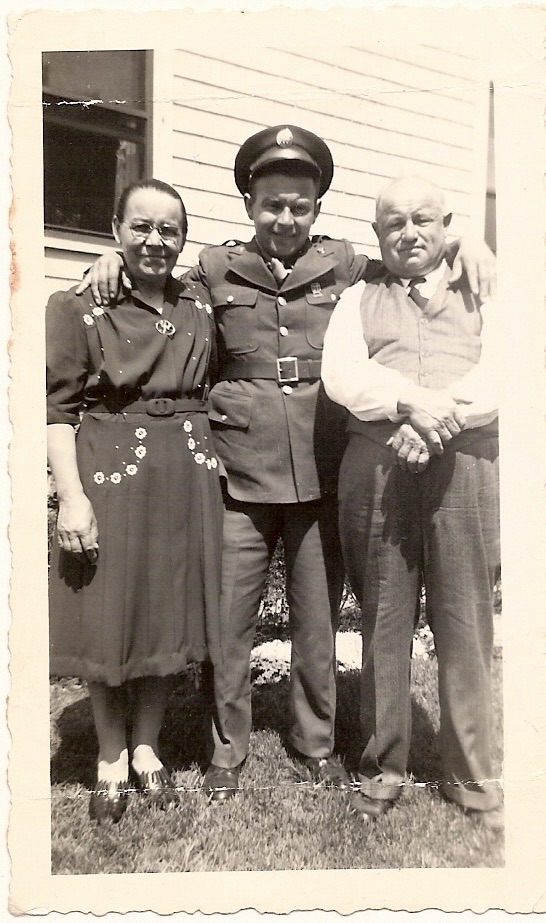
Julianna (Gram), Connie, Konrad (Gramp) 1943 or 1944

Would he have committed suicide because he was worried about his son? Not likely, unless there were mental health issues to begin with.

Which brings me to something else my Aunt Tootsie told me in one of our conversations. She said “when he was in the hospital”, the doctor allowed him to have beer because “he needed it”. Crazy right? It makes me think he was maybe in a hospital for mental health issues. This post from conversations with my Aunt Judy and my cousin Judy, talks about my grandfather and grandmother relationship.

Konrad with his daughter Julia in 1937

Another piece of the puzzle comes from my first experience with a medium in 2013. I realize a lot of people don’t believe in mediums or what they say, but hey, my grandfather believed what the Gypsy said! This medium said my grandfather committed suicide, was there with my mother, he later mentioned the gun shot and the depression he suffered from all his life. If you’re interested you can go to YouTube, search for CT Buzz and the look for Medium and Life Guide Phil Quinn. It’s 7:40 long and you might recognize a younger me in the screenshot. During either this reading or another, Phil told me that my grandfather suffered from profound depression and he didn’t have a joyful day in his life.

That makes me think about how he started out as a hatter, ended up with a hat company of his own, he had a patent for a cleaning solution for straw hats, but died as a janitor at a steel mill. I told the story about the family profession here. I feel such sadness for him to have had so much and then nothing. Was it because of this depression that caused my aunt to say her mother had more balls than her father?

Unfortunately, he wasn’t the only person in the family suffering from mental illness…

My great-uncle Frank Posluszny, spent at least 10 years in the Essex County Hospital (for the Insane) in Cedar Grove, New Jersey. The 1910 and 1920 censuses, show his occupation as a Hatter. However, by the April 27, 1930 census, he was an inmate at the hospital and was there again in the 1940 census. A section in this census asks if this is the same residence as 1935, and the response for Frank is “same residence”. I have not been able to find any death record for Frank but it might be safe to say he spent the rest of his years at the county hospital. He and his wife had three children.

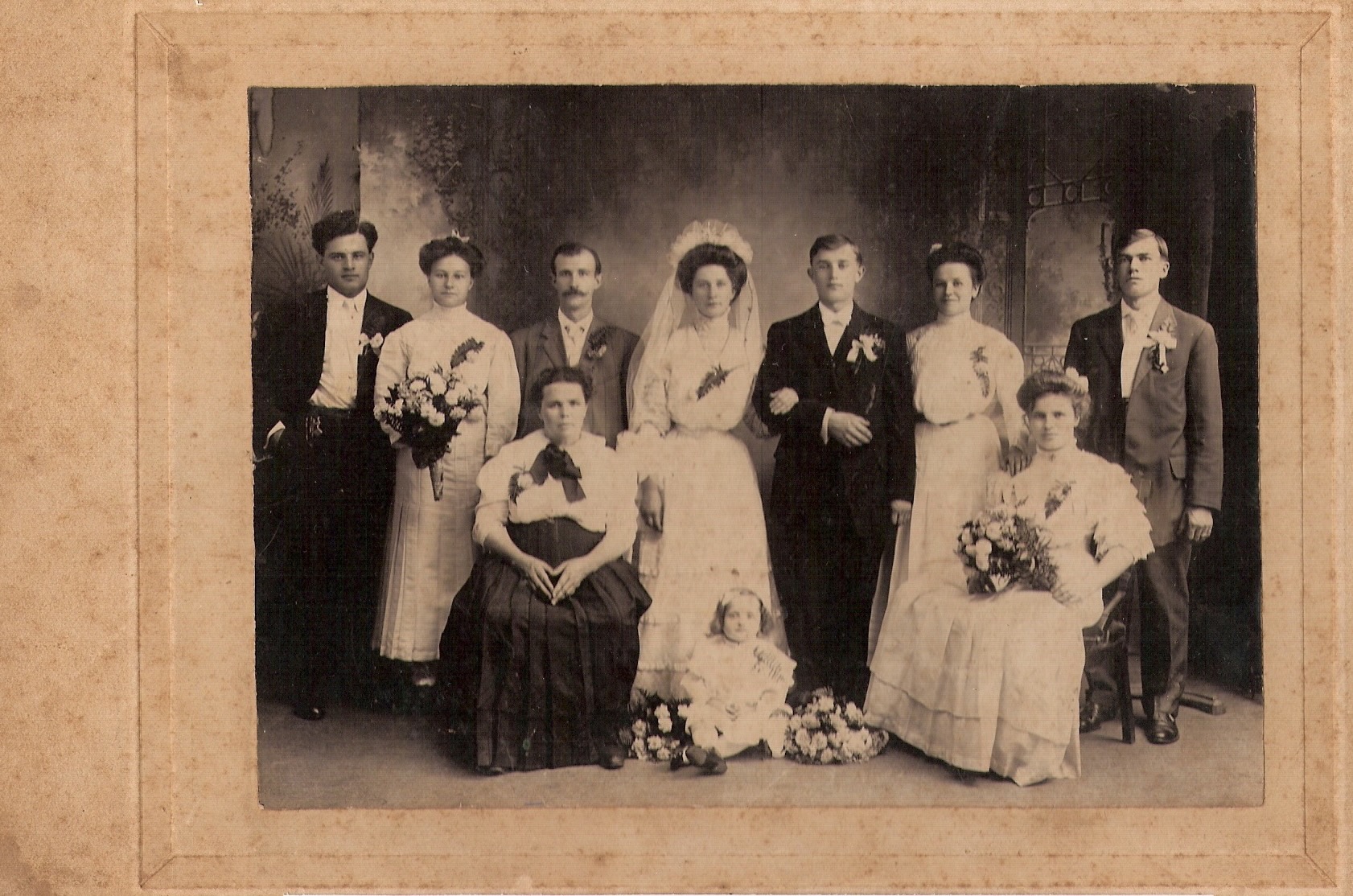
Frank and Josephine Posluszny wedding photo.  Brother Charles back left, step father Jon Bonk, back third from left, mother Caroline seated left, sister Mary seated right
Frank and Josephine’s wedding photo. His brother Charles is top left, stepfather Jon 3rd from left, mother Caroline seated left, and sister Mary seated right

My great-aunt Elizabeth Posluszny Laçz, left her husband and two children behind and disappeared in 1923 or 1924. Her sister Mary, hired a private detective but he never found her. She came up in a medium reading I had years ago and I was told she had a complete breakdown and created an entirely new life. I have never found records of her or her children but I wonder if there is a trace of them among any of my DNA matches.

The Posluszny Family.  Elizabeth is bottom right, next to her mother.  She is approximately 9 years old.
Posluszny family photo – Frank 2nd from left in back, Konrad back far right, Elizabeth front right seated

I never had a conversation with my mother about the death of her father. She was 22 when it happened and I can’t imagine how they felt getting that knock on their door that morning. All I knew as I was growing up was that he died a long time ago.

Today we are all better educated about mental health and we are able to express how we are feeling either to each other or a therapist. A little part of me knows that the DNA we got from our dad’s side of the family evened us all out!

The Family Profession

The topic for Week 6 of 52 Ancestors in 52 Weeks is – Earning a Living so I am turning this week to the Posluszny side of the family to tell you about my grandfather and his brothers.

My grandfather, Konrad Posluszny, and his four brothers were hatters. The occupations on their ship manifests say “laborer” so it’s likely they picked up the trade when they immigrated to the United States.

The Posluszny Family abt. 1909. Men from left – John, Joseph, Frank, Charles, stepfather Jon, and Konrad

In the early 1900s, hat making was booming and during that time period, Konrad and his brother Charles lived in Yonkers New York. They held jobs as finishers at the Waring Hat Manufacturing Company. The factory was on the corner of Riverdale Avenue and Vark Street which was only a block and a half from their home on Jefferson Street.

Waring Hat Manufacturing Company, Yonkers NY

His other three brothers John, Joseph, and Frank all lived in Newark New Jersey. I don’t know which company they worked in but there were 34 hat companies in Essex County making it the hat capital of the world! They would have had their pick of any and they also worked as finishers.

The 1920 census showed all five brothers still in the hat making industry. Konrad and his family were still in Yonkers, John and Frank in New Jersey, Joseph and Charles with their families in Norwalk Connecticut.

The 1920s brought about a slowdown in the hat making industry and many companies merged. John left hat making and because a proprietor of a restaurant/saloon in Newark.

Unfortunately Frank turns up in the 1930 and 1940 federal census as an inmate in the Essex County Hospital for the Insane. We know the old saying “mad as a hatter” but in this case it was hereditary rather than occupational.

Charles worked for the American Hat Company and Joseph for the Hat Corporation of America, both in Norwalk. They worked has hatters until they retired.

But, the more interesting story is that of my grandfather. I’ve told the story of the family’s move to Easthampton Massachusetts where they lived very briefly before they moved to New Britain and lived in a two family house with my grandmother’s relatives where my mother was born in 1922.

In New Britain, my grandfather opened up a hat store called the Conrad Hat Company and in 1923 it was at 43-45 Broad Street before moving to 317 Main Street.

In 1924, he applied for a patent for a cleaning solution for straw hats and was awarded with the patent on 1925. I don’t know if he ever made any money from it but he still holds the patent to it.

Unfortunately, in the summer of 1924, in the span of two weeks there were fires in his store.

I found these news clippings while researching this story and I wonder if it plays into what my Aunt Judy said in her recorded conversations about not being a business-type guy but he would have been successful if he was. She said he was too soft hearted and the politicians in New Britain would come in, have a hat made and say they’d pay him later but they never would. He couldn’t pay his insurance, had those two (suspicious!) fires a few weeks apart and had to go out of business.

The family moved to Wallingford and he went to work at the Steel Mill until his death in 1944.

Julia, son Conrad, Konrad abt. 1942